How to Do Yellowstone in an RV: A 4-Day Trip Itinerary
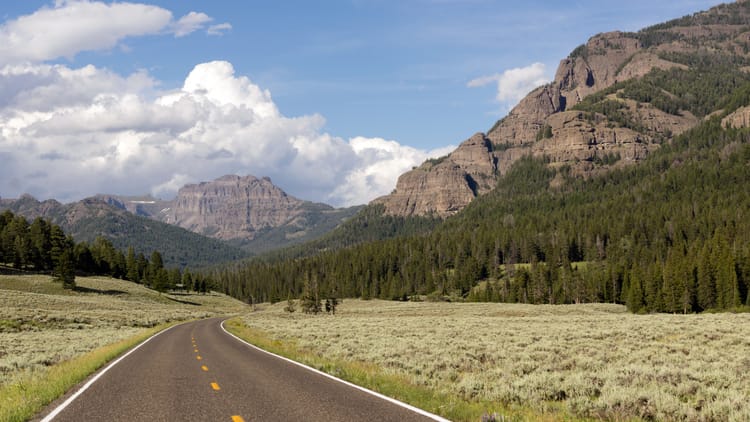
Yellowstone was laid out for stagecoaches and horses, and in a lot of ways it still drives like it. The roads are narrow, the pullouts fill by mid-morning, and a bison the size of a chest freezer can decide your schedule for the next forty minutes. None of that is a reason to leave the RV at home. It just means a Yellowstone RV trip goes a lot smoother when you plan the logistics as carefully as the sightseeing.
The good news: you can absolutely see the best of the park from an RV. Plenty of people do Yellowstone this way every summer, and the ones who enjoy it are the ones who sorted out three things before they arrived, which are where they would sleep, whether their RV would fit, and how far they would actually be driving each day. Get those right and the park opens up.
This is a realistic four-day itinerary built for RVers, not a bucket-list photo dump that assumes you can teleport between geysers. It covers the size limits, the campground trade-offs, and a day-by-day route you can actually run without spending your vacation white-knuckling a motorhome around a cliff.
Can You Drive an RV Through Yellowstone
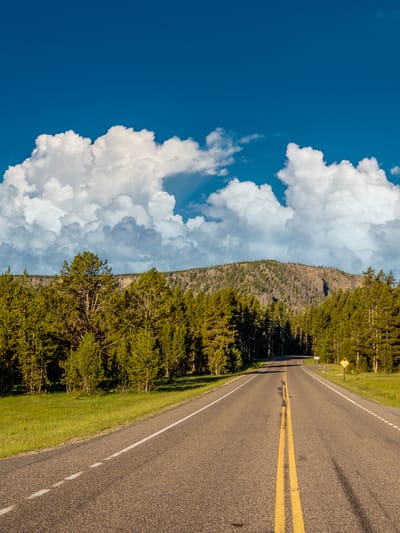
Yes, you can drive an RV through Yellowstone, and thousands of people do it every summer. The park's interior runs on the Grand Loop Road, a figure-eight of about 140 miles that connects nearly every headline sight, fed by five entrances. It carries RVs, trailers, and motorhomes all season long. Just know going in that these are old roads doing a modern job, so they ask for patience more than skill.
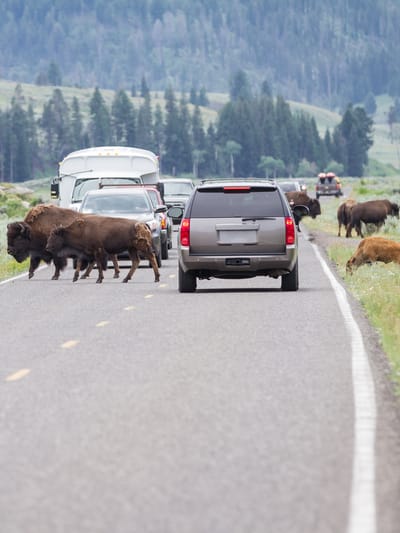
What nobody tells first-timers is how slow it is. Posted limits top out at 45 mph and drop far lower through construction zones and geyser basins, and the real bottleneck is wildlife. A single bison on the centerline can stack traffic for a mile, and there is no shoulder to escape to. Plan your driving math around 35 mph averages, not highway speeds, and you will stop being surprised.
A few realities worth internalizing before you go: cell service inside the park is patchy to nonexistent, fuel is available at the major junctions but priced like you have no other option (because you don't), and the interior roads are seasonal. Most open from late April into early November, then close to regular vehicles for winter. Because the exact opening and closing dates shift with the snowpack every year, check the current Yellowstone road status before you finalize anything. It is the single most important page on the park's site for an RVer. If you are aiming at the shoulder season, the order the roads clear in is predictable even when the calendar is not, and our breakdown of Yellowstone road opening dates walks through that sequence.
If this is your first big western-park run, our guide to your first RV trip out West covers the wider logistics of distance, elevation, and mountain driving that Yellowstone assumes you already know.
RV Size Limits: Will Your RV Fit
Here is where the "which campground" question gets decided for you, because Yellowstone's in-park campgrounds each have a hard RV length limit, and they vary a lot. Your length doesn't determine whether you can visit the park. It determines where inside it you can sleep.
The catch is that these are combined limits, meaning your RV plus anything you tow behind it, not just the RV. The maximum combined length allowed at each in-park campground, per the National Park Service and the park's camping concessioner:
- Fishing Bridge RV Park — up to 95 feet, and the only campground with full hookups
- Bridge Bay — up to 40 feet
- Madison — up to 40 feet
- Grant Village — up to 40 feet
- Canyon — up to 40 feet
- Mammoth — up to 45 feet in summer, 30 feet in winter
- Tower Fall — up to 30 feet, no hookups
Those are ceilings, not guarantees, and the combined math is what catches people out: a 32-foot trailer behind a full-size truck can bump a 40-foot cap faster than you would expect. Even at a campground that technically accepts 40 feet, only a handful of sites may actually hold it, so a shorter setup gives you more options and less stress. If you are not sure what you are working with, remember that advertised length and real towable length are different numbers, the same way what your trailer actually weighs rarely matches the brochure. The road caps, the campground-by-campground numbers, and what to do when your setup is simply too long for the good sites are all worked through in our guide to RV length restrictions in Yellowstone.
The turning and parking reality matters as much as the sleeping one. Day-use lots at Old Faithful and the canyon overlooks have RV and oversized-vehicle sections, but they fill early and they are not forgiving of a 38-foot motorhome that arrives at 11 a.m. This is the strongest argument for towing a car or driving a smaller RV: a toad or a van lets you leave the big vehicle parked at camp and actually find parking at the sights. If you are newer to hauling, our walkthrough on towing a travel trailer is worth a read before you take on a mountain pass.
Where to Camp: In-Park RV Sites vs Gateway Towns
Every Yellowstone RV trip comes down to one lodging fork: sleep inside the park with limited hookups, or base yourself in a gateway town with full amenities and drive in each day. Both work. They just serve different travelers.
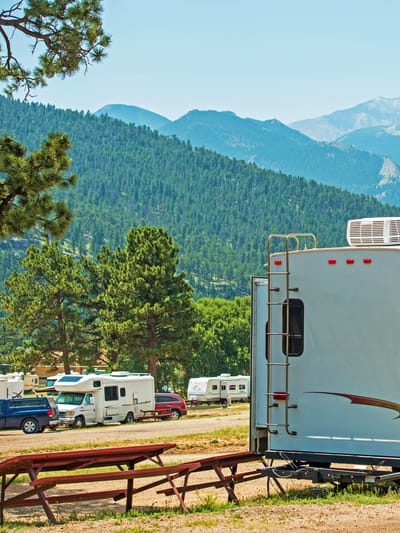
Inside the park you trade comfort for location. Fishing Bridge RV Park is the only campground in Yellowstone with water, sewer, and 50-amp electric hookups, and because it sits in prime grizzly habitat, it accepts hard-sided RVs only, meaning no tents and no pop-up campers. Every other in-park campground gives you a dump station and potable water but no site hookups, so you are effectively boondocking with a nice bathroom nearby. If that is your plan, know how long you can boondock on your tanks before you commit to four nights without a sewer connection.
Booking splits by campground. The larger concessioner-run sites (Bridge Bay, Canyon, Fishing Bridge, Grant Village, and Madison) reserve through Yellowstone National Park Lodges, while the smaller Park Service campgrounds book through Recreation.gov. Both open reservations months ahead and the good sites vanish fast, especially anything near the Fourth of July. There is usually a campground or two closed for the season in any given year, so confirm what is open when you book rather than assuming the full list is available.
In a gateway town you trade location for comfort. West Yellowstone, Gardiner, Cody, and the Grant/south corridor toward the Tetons all have private RV parks with full hookups, laundry, strong wifi infrastructure, and a grocery store within reach. The cost is a longer daily drive to and from the sights, and the entrance-gate line every morning. For families working remotely or anyone who wants a real shower and a level concrete pad after a long day, the gateway option is often the better trade. This is increasingly the default for bigger RVs anyway, since the largest fifth wheels and Class A coaches simply do not fit the in-park size limits. If you would rather see the actual sites ranked against those three numbers instead of by ambiance, that is what our guide to the best RV campgrounds in Yellowstone does.
Outside the park entirely is the third option, and it is free. The national forests that ring Yellowstone allow dispersed camping, which means no hookups, no water, no dump, and access roads that run from smooth gravel to something that will rearrange your cabinets. It is a real strategy for a self-contained RV and a bad surprise for anyone expecting a campground, so our guide to dispersed camping near Yellowstone sorts out which of those sites an RV can actually reach.
Two things make either option smoother. In-park sites are famously unlevel, so a set of interlocking leveling blocks pays for its storage space in the first ten minutes. And gateway-park power pedestals range from brand-new to alarmingly old, so a 50-amp surge protector that also reads the pedestal's wiring is cheap insurance against a bad hookup frying your electronics.
4-DAY YELLOWSTONE RV ITINERARY
GET THE FULL YELLOWSTONE RV ITINERARY, FREE
The 4-Day Yellowstone RV Itinerary
This route works two ways. The default is a single base camp: pick one central campground, day-trip in the smallest vehicle you have, and skip the two hours every RV move costs you. Madison and Canyon sit closest to the middle of the action. But if you are in a shorter RV and would rather follow the loop than backtrack to one site each night, each day below flags the closest in-park campground to its stops. Either way, the order minimizes backtracking on the Grand Loop, and the drive times are park-realistic, meaning they already assume you will lose time to bison, construction, and the irresistible urge to pull over.
Day 1: Geyser Country
Start where the park does its best-known trick. The Upper Geyser Basin holds the largest concentration of geysers on Earth, and Old Faithful is only the opening act. Check the predicted eruption times posted at the visitor center, then walk the boardwalk loop to Grand, Castle, and Riverside while you wait, because standing in one spot for ninety minutes is how you see exactly one geyser.
A few miles north, Grand Prismatic Spring is the shot that sold you on this trip in the first place. The boardwalk gets you close, but the color reads best from the Grand Prismatic Overlook trail, a short uphill from the Fairy Falls trailhead. Leave the big vehicle at camp for this day if you possibly can, because the Old Faithful and Midway Basin lots are the most contested real estate in the park by late morning.
Closest base for this day: Madison, parked at the junction that feeds the geyser basins. It takes combined lengths up to 40 feet, with a dump station but no site hookups.
Day 2: Canyon and Lake
The Grand Canyon of the Yellowstone is the day-two headline, and it deserves both rims. The South Rim gives you Artist Point, the postcard view of the Lower Falls; the North Rim gives you the Brink of the Lower Falls, where you stand at the top of a 308-foot waterfall and feel it in your chest. Both rim drives have RV-friendly parking, but they fill, so go early.
On the way in or out, Hayden Valley is the park's premier wildlife theater, especially at dawn and dusk when the bison herds move and the light does something worth waking up for. Keep the mandatory distances in mind here, covered below, because Hayden is exactly where people forget them. Round out the day at Yellowstone Lake, the largest high-elevation lake in North America, where the pace finally slows down.
Closest base for this day: Canyon puts you minutes from both rims, or Bridge Bay sits right on the lake if you would rather end the day at the water. Both cap at 40 feet combined, with a dump station and no site hookups.
Day 3: Mammoth and the North
Head north for Mammoth Hot Springs, a landscape that looks less like a hot spring and more like a frozen travertine waterfall someone built out of chalk. The Lower Terraces have a boardwalk system; the Upper Terraces have a one-way drive with size restrictions, so check signage before you commit a longer RV to it. Mammoth is also the park's year-round hub, which means real services, a visitor center, and the historic Fort Yellowstone district if the geology starts blurring together.
The drive up from Norris is one of the prettier stretches of the Loop, and the north end of the park runs cooler and less crowded than the geyser basins. It is a good day to slow the tempo before the early start Day 4 asks of you.
Closest base for this day: Mammoth, the only campground this far north and steps from real services. It holds RVs up to about 45 feet in summer, with no hookups.
Day 4: Lamar Valley Wildlife
Save the Lamar Valley for last and treat it like the finale it is. Often called America's Serengeti, this northeast corner is the best place in the Lower 48 to see wolves, and it reliably delivers bison, pronghorn, elk, and grizzlies working the hillsides. The catch is timing: the animals move at first light and last light, so this is an alarm-clock day, not a leisurely one.
Bring binoculars or a spotting scope, because the best sightings are across the valley, not next to the road. The Lamar road is paved and manageable, but it is a genuine out-and-back from most base camps, so factor the return drive into your evening. If you booked in a gateway town, this is the day that drive feels longest, and the day it is most worth it.
Closest base for this day: Slough Creek or Tower Fall, the small northeast campgrounds that leave you in the valley at first light. Both cap around 30 feet with no hookups, so this is genuinely smaller-RV country, and the trade is that you wake up already close instead of driving out in the dark.
How Many Days Do You Need in Yellowstone
Four days is the sweet spot for a Yellowstone RV trip, and the reason is specifically an RV reason. Every time you break camp, you spend an hour packing up and an hour setting back down, so a base-camp-and-explore rhythm beats hopping campgrounds every night by a wide margin. Four days lets you settle in once and still reach all four corners of the park.
You can compress to three by combining Mammoth and Lamar into a single long north day, though you will feel the rush. You can also stretch to five, six, or seven, and if you have the time, the smartest addition is Grand Teton National Park just to the south, which pairs naturally with Yellowstone and is far more RV-manageable. A week gives you both parks without hurrying either, and our Yellowstone and Grand Teton RV road trip lays out the route, the connector road's seasonal catch, and where to camp between the two. Anything less than three days in an RV means you spend more of the trip driving and leveling than looking at anything, which is the last thing you want on a trip like this.
RV Planning Tips Before You Go
A handful of specifics separate a smooth Yellowstone RV trip from a stressful one.
Book absurdly early. Popular in-park and gateway sites open reservations months ahead and sell out the day they do, particularly around holidays. Set a reminder for the morning your target campground's window opens and book at the top of the hour.
Handle water and waste deliberately. With only one full-hookup campground in the park, most RVers dump and refill at stations rather than at their site. Carry a drinking-water-safe fresh water hose that you keep separate from anything that touches the sewer side, and if you are staying at older gateway parks, an inline water pressure regulator protects your plumbing from campgrounds that push too much pressure.
Plan your power. If you are staying at any in-park campground other than Fishing Bridge, you have no electrical hookup, so a portable power station you can top up with a folding solar panel keeps devices and a fridge running without a generator, which several in-park campgrounds either ban outright or limit to set daytime hours.
Respect the wildlife distances, because they are rules, not suggestions. The Park Service requires you to stay at least 100 yards (about the length of a football field) from bears and wolves, and at least 25 yards from bison, elk, and everything else. Bison injure more visitors than any other animal in the park, almost always because someone got too close for a photo. Keep your safety and food-storage habits tight.
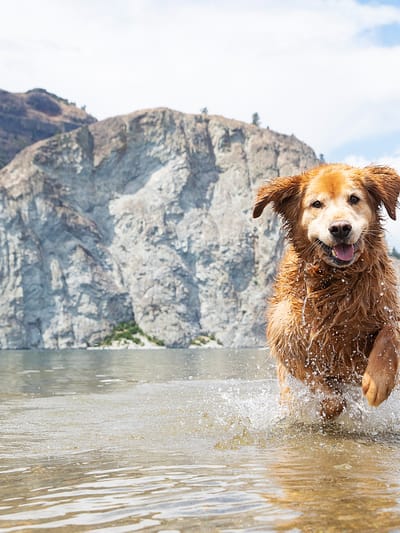
Sort out the dog before you leave home. Yellowstone is one of the least pet-friendly parks in the system: dogs are barred from every trail, every boardwalk, and every thermal area, which is roughly the entire reason people drive here. It is still workable from an RV, because the dog already has somewhere to be, but it takes planning, and our guide to dog-friendly Yellowstone lays out exactly where the lines fall.
Prep the RV for altitude and rough road. Much of the park sits above 7,500 feet, which changes how engines and appliances behave, and a few approach roads are genuinely rough on a big RV. Run through a quick pre-trip maintenance check before you leave, and dial in your setup routine so arriving at a new site in fading mountain light is boring instead of frantic.
Budget for the gate. A seven-day Yellowstone vehicle pass runs around $35, or the $80 America the Beautiful annual pass pays off fast if you are also hitting Grand Teton or other parks on the same trip.
Yellowstone is one of the best RV destinations in the country, and the planning is a real part of what makes it work. Sort the logistics, respect the pace, and the park hands you four days you will still be talking about years later. If you want this itinerary in your hands at the campsite instead of on your phone in a dead-signal zone, download the free Yellowstone 4-Day RV Guide with per-day maps and a packing checklist. For more parks that suit this kind of trip, see our roundup of the best national parks for RV camping in the West, or if you like this day-by-day format, our New River Gorge RV itinerary runs the same playbook for an eastern park.
FAQs
Can you drive an RV through Yellowstone?
Yes. Yellowstone's interior runs on the Grand Loop Road, a roughly 140-mile figure-eight that RVs, trailers, and motorhomes drive all summer. The roads are narrow and slow, with speed limits topping out around 45 mph and frequent wildlife-related stops, so plan your driving math around a 35 mph average rather than highway speeds. Interior roads are seasonal, generally open from late April into early November, and close to regular vehicles in winter.
What size RV is allowed in Yellowstone?
There is no single park-wide RV size limit, but each in-park campground caps combined length, meaning your RV plus any tow vehicle. Fishing Bridge RV Park accepts combined lengths up to 95 feet and is the only campground that takes the largest RVs. Bridge Bay, Madison, Grant Village, and Canyon all cap at 40 feet combined, Mammoth allows up to 45 feet in summer and 30 feet in winter, and Tower Fall tops out at 30 feet. Those are maximums, and most campgrounds have only a limited number of sites that actually reach the top of their range, so shorter setups have more options.
Does Yellowstone have RV hookups?
Only one campground in the park has full hookups. Fishing Bridge RV Park offers water, sewer, and 50-amp electric, and it accepts hard-sided RVs only because it sits in grizzly habitat. Every other in-park campground provides a dump station and potable water but no hookups at the individual sites, so you are essentially boondocking. RVers who want full hookups usually base themselves in gateway towns like West Yellowstone, Gardiner, or Cody.
How many days do you need to see Yellowstone in an RV?
Four days is ideal for an RV trip because it lets you base-camp in one spot and still reach all four corners of the park without breaking camp every night. You can compress to three by combining the northern sights into one long day, or extend to five to seven days, especially if you add neighboring Grand Teton National Park to the south. Fewer than three days means you spend most of the trip driving and setting up rather than sightseeing.
Is it better to stay inside Yellowstone or in a gateway town?
It depends on your RV and your priorities. Staying inside the park puts you closest to the sights but limits you to one full-hookup campground and several dump-station-only ones, with strict size caps. Gateway towns like West Yellowstone, Gardiner, and Cody offer full hookups, laundry, and groceries in exchange for a longer daily drive and the morning entrance-gate line. Larger RVs and remote-working families often prefer gateway parks; travelers with smaller RVs who prioritize sunrise-and-sunset access often prefer camping inside. If you would rather not choose blind, our free Yellowstone RV itinerary maps the full four days from a West Yellowstone base, one of the most popular gateway setups.
Should you explore Yellowstone in your RV or in your tow vehicle?
In your tow vehicle whenever you have the choice. Day-use parking lots at Old Faithful, the canyon overlooks, and other headline sights fill early and are hard to navigate in a large motorhome, so leaving the big RV at camp and exploring in a towed car or smaller second vehicle makes for a far easier day. If you are traveling in a drivable RV without a toad, plan to arrive at popular sights early in the morning before the oversized-vehicle sections fill.
Related Posts
Subscribe to the Swervia Newsletter
The best RV stories, tips, and destinations—expertly curated and always free.