Free & Dispersed Camping Near Yellowstone: A Boondocker's Guide
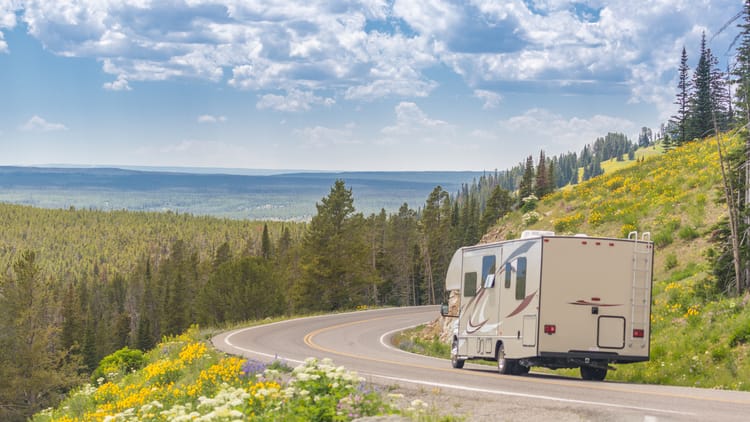
Search "free camping near Yellowstone" and you will find a hundred lists of sites and almost nobody telling you the one fact that decides the whole trip: none of that free camping is inside the park. Yellowstone does not have a single spot where you can pull off a road, level up, and spend a free night. If you want to sleep near Yellowstone without paying for a hookup site, you are really asking about the national forests and public land that ring the park, and those come with their own rulebook.
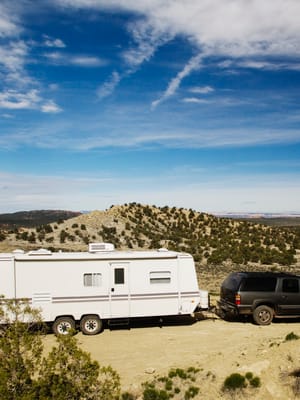
The good news is that the ring of public land around Yellowstone is enormous, genuinely free, and some of it is scenic enough to make you forget you saved money doing it. The catch is that "free" out here means no water, no dump, no hookups, and roads that range from smooth gravel to something that will rearrange your cabinets. This guide covers where the free sites actually are, which ones an RV can reach, and the rules that keep a free night from turning into a fine.
If you are still deciding between boondocking out here and reserving a hookup site closer to the action, our full Yellowstone in an RV itinerary handles the in-park campgrounds and gateway-town parks in depth, so this guide can stay focused on the free stuff. For the paid side of that decision on its own terms, we ranked the best RV campgrounds in and near Yellowstone by length, hookups, and how far ahead you have to commit.
First, the Thing Everyone Gets Wrong: You Can't Camp Free Inside Yellowstone
Yellowstone allows overnight camping only in its developed campgrounds, and every one of them charges. The park is explicit about it: no overnight vehicle parking is allowed in pullouts, parking areas, or anywhere other than a designated campground. Rolling in at midnight to "just sleep in a lot" is how you meet a ranger, not how you save fifty dollars.
The only free way to sleep in the park at all is backcountry camping, which means hiking to a permitted site with everything on your back. That requires a backcountry permit reserved year-round and leaves your RV parked at a trailhead, so it is not an RV strategy in any useful sense.
So the entire conversation about dispersed camping near Yellowstone happens outside the park boundary, on the four national forests and the pockets of BLM land that surround it. That is not a downgrade. It is where the free sites live, and a lot of them put you within a short morning drive of an entrance gate.
Where the Free Camping Actually Is
Free camping near Yellowstone concentrates around the entrances, on national forest and BLM land where dispersed camping is allowed by default unless a sign says otherwise. Here is how it breaks down by which gate you are aiming for.
West Entrance: Custer Gallatin, Caribou-Targhee, and Henry's Lake
The West Yellowstone side has the most free options and the most competition for them, because it is the busiest gateway. Most of the dispersed camping here sits on Custer Gallatin and Caribou-Targhee National Forest land, plus a stretch of BLM ground near Henry's Lake just over the Idaho line.
Denny Creek Road, roughly ten minutes from West Yellowstone, is the closest reliable dispersed area and stays passable for camper vans and smaller trailers. The Henry's Lake BLM pull-outs have room to spread out and level even a big RV, with a basic vault toilet and not much else, and they fill by evening in July. Several sites tucked into the Hebgen Lake district are lovely and genuinely tight, with low branches and no turnarounds that punish anything longer than a van. The pattern here is simple: the closer and easier a free site is, the earlier it is gone.
South and the Teton Side: Spread Creek and Bridger-Teton
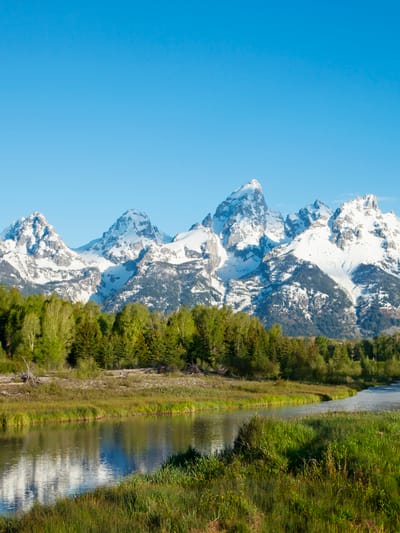
If you are entering from the south or pairing Yellowstone with Grand Teton, the marquee free site is Spread Creek Dispersed on the Bridger-Teton National Forest, just outside Grand Teton near Moran. It is a string of about 14 numbered sites strung along four-plus miles of Forest Service road, and a handful of them hand you a straight-on Teton view for the price of zero dollars, which is the kind of math boondockers live for.
Spread Creek is free but not lawless. It is designated dispersed camping with a five-day limit from May 1 through Labor Day, first-come and walk-the-road-to-claim-a-spot, no hookups, no dump, and no promise of a level pad. Shorter self-contained RVs, under about 24 feet, have the easiest time on the gravel, though the road can technically handle bigger in dry weather. Check road conditions with the Blackrock Ranger District before you commit, because "impassable when wet" is not a figure of speech on a Forest Service two-track.
North Entrance: Gardiner and the Custer Gallatin Backroads
North of the park around Gardiner, the dispersed camping runs into the Custer Gallatin high country, and this is where the roads get opinionated. Several of the free areas sit up windy dirt routes that turn to grease in a thunderstorm and are no place for a long motorhome. A few meadow-edge spots off the better-graded roads will hold a larger RV comfortably, but you have to scout them, because the good ones are unmarked and word-of-mouth.
The Gardiner side rewards patience and a willingness to drive a little farther from the gate than the West side crowd will. It is also cooler and quieter, and it puts you closest to the Lamar Valley for a dawn wildlife run if that is on your list.
4-DAY YELLOWSTONE RV ITINERARY
GET THE FREE 4-DAY YELLOWSTONE RV ITINERARY
The Rules That Keep It Free and Legal
Dispersed camping is free because it runs on self-regulation, and the rules are short enough that there is no excuse for breaking them. Stay limits are the big one, and they vary by forest, not just by land type. BLM land generally allows 14 days within a 30-day window. On the Montana side, Custer Gallatin caps a single site at 16 consecutive days, with no more than 32 days total in a calendar year. Over in Idaho, Caribou-Targhee holds you to 14 days in one spot and then makes you move at least five road miles. And on the Teton side, the Bridger-Teton's Jackson and Blackrock districts drop to five days between May 1 and Labor Day, which is where Spread Creek's short leash comes from. Check the number for the specific forest you are on, because overstaying is the fastest way to get a spot closed to everyone.
The rest is standard public-land etiquette that our guides to national forest camping rules and BLM camping cover in full: camp at least 100 to 200 feet from any water source, use existing bare sites instead of crushing new ground, and pack out everything, because there is no trash service and no toilet at most of these spots. A permit is generally not required for dispersed camping under the stay limit, but rules shift by district, so a two-minute call to the local ranger station settles it. Leave No Trace is not a bumper sticker out here; it is the set of principles that keeps this land free and open, and one trashed site is all it takes for a district to post it closed.
Can Your RV Actually Get There
This is the question that separates a great free night from a three-point turn on a cliff edge in the dark. Forest roads to dispersed sites are unpaved, often narrow, sometimes lined with branches at exactly RV-roof height, and rarely built with a turnaround for anything long. A site that a van reaches in comfort can be genuinely dangerous for a 34-foot fifth wheel.
Two habits keep you out of trouble. First, scout on foot or in your tow vehicle before you commit the whole RV, especially at the end of a dead-end road where reversing is the only exit. Second, treat the drive in like the technical part of the trip it is. Washboard gravel is hard on tires and hard to feel from the cab, so a tire-pressure monitor you can watch in real time turns a slow leak into a warning instead of a blowout miles from pavement. And because almost none of these sites are level, a stack of interlocking leveling blocks is the difference between sleeping flat and sliding toward the door all night.
Going Off-Grid: Power, Water, and No Dump Station
Every free site near Yellowstone is a full boondocking situation, which means you arrive self-contained or you do not arrive at all. There is no shore power, no water spigot, and no sewer, so your comfort is entirely a function of what you brought and how you ration it. Our breakdown of how long you can boondock on your tanks is worth reading before you plan a multi-night stay.
Power is usually the first thing people run short on, especially with a residential fridge and a few devices charging. A solar setup that pairs a battery bank with a foldable panel keeps the lights and the fridge going without a generator, which matters more than it sounds: some districts and designated dispersed areas restrict generator use outright, others just lean on quiet hours, and you won't know which you're in until you read the sign at the road. If your RV runs on a single old lead-acid battery, adding a lithium house battery roughly doubles your usable capacity and buys you an extra night or two between refills. Arrive with full fresh water and empty holding tanks, know where the nearest dump and fill station is before you head out, and the whole system runs like it is supposed to. If boondocking is new to you, our complete guide to camping without hookups covers the full water-and-power routine.
This Is Bear Country, and That Is Not Negotiable
Every acre of this land is home to both grizzly and black bears, and the food rules that feel excessive at a developed campground are genuinely life-or-death at a dispersed site with no bear boxes and no neighbors nearby. The forests around Yellowstone run under seasonal food storage orders that spell out the standard precisely, and the precision is the useful part. Food, trash, toiletries, and anything with a scent must be either stored in a hard-sided vehicle or a certified bear-resistant container, or attended — and attended has a definition: someone within 100 feet with a direct line of sight to it. At night it's stricter. Everything is stored, or attended by a person who is awake. So the cooler on the picnic table while you're sitting right there is legal. The same cooler while you drive to the Lamar Valley for sunrise is a violation, and an invitation.
Practically, that means you pack up before you leave and before you sleep, every time — the two moments people skip. Keep the site clean, don't leave food out unattended even for the twenty minutes it takes to walk down to the creek, and carry bear spray where you can reach it fast, not buried in a bin. A bear that gets a meal from a campsite is often a bear that ends up dead, so the strict habit protects the animals as much as it protects you. This is the one area of dispersed camping where "close enough" is the wrong standard.
When the Forest Roads Are Actually Open
The free camping around Yellowstone is a summer-and-early-fall proposition, and the limiting factor is not the calendar but the snow. These sites sit at high elevation, so many forest roads do not dry out and open until late spring and can close again with the first serious storm of autumn. A road that is glorious in August may be a mud trench in late September.
Two things save the trip. Check current road and fire status with the relevant ranger district before you drive out, every time, because fire restrictions and closures change fast in a dry year. And pack for cold nights even in midsummer, because elevation does not care what the forecast says down in town. A layer of reflective window insulation holds heat surprisingly well when you are running off battery and cannot lean on an electric heater. Get the timing right and the surrounding forests hand you quiet, free, wide-open nights a few miles from one of the best parks in the country. For the days you actually spend inside the gates, our free Yellowstone 4-Day RV Guide maps all four of them stop by stop — useful precisely because it reads fine out here where there is no signal.
FAQs
Can you camp for free inside Yellowstone National Park?
No. Yellowstone allows overnight camping only in its developed campgrounds, all of which charge a nightly fee, and it prohibits overnight parking in pullouts, lots, and anywhere outside a designated campground. The only free option is backcountry camping, which requires a permit and hiking to a site on foot, so it does not work for an RV. All free and dispersed camping near Yellowstone is on the national forests and BLM land surrounding the park, outside the boundary.
Where is the best free dispersed camping near Yellowstone?
The three strongest areas are the West Yellowstone side (Custer Gallatin and Caribou-Targhee forests plus Henry's Lake BLM), the Grand Teton side (Spread Creek Dispersed on the Bridger-Teton National Forest), and the Gardiner side to the north (Custer Gallatin backroads). Spread Creek is the most popular for its Teton views and its 14 designated sites. Henry's Lake has the most room for larger RVs. The West-side sites closest to town fill earliest, often by mid-afternoon in July.
Can you boondock near Yellowstone in a big RV?
Sometimes, but it depends heavily on the site. Open areas like the Henry's Lake BLM pull-outs and some Spread Creek sites have handled big Class A motorhomes and fifth wheels in dry conditions, though the Forest Service publishes no length maximum for dispersed sites, so treat those reports as anecdote rather than a spec. The real limit is usually maneuverability, not length: narrow roads, low branches, and nowhere to turn around rule out plenty of sites a 40-footer would otherwise fit in, which is why many forest-road spots are realistically van-and-small-trailer territory. Always scout a site in your tow vehicle before committing a large RV, and skip any dead-end road you cannot reverse out of.
How long can you stay at dispersed sites near Yellowstone?
Stay limits vary by forest, not just by land type. BLM land generally allows up to 14 days within a 30-day period. Custer Gallatin National Forest on the Montana side caps a single site at 16 consecutive days and 32 days per calendar year, while Caribou-Targhee in Idaho allows 14 days in one spot and then requires you to move at least five road miles. On the Bridger-Teton's Jackson and Blackrock districts, including Spread Creek, the limit drops to five days within a 30-day period between May 1 and Labor Day. These limits are posted on site or available from the local ranger district.
Do you need a permit for dispersed camping near Yellowstone?
Generally no. Dispersed camping on national forest and BLM land near Yellowstone does not require a permit as long as you stay within the posted day limits and follow the rules. Some specific designated areas may charge a small fee or have extra restrictions, and fire restrictions can add requirements in dry conditions, so confirm current rules with the ranger district for the area you are heading to. A backcountry permit is required only for camping inside Yellowstone's boundary.
Is dispersed camping near Yellowstone safe with bears around?
It is safe when you follow bear rules strictly, and risky when you do not. This is active grizzly and black bear habitat with no bear boxes at most dispersed sites, and the surrounding forests run under food storage orders. Food, trash, and scented items must be either stored in a hard-sided vehicle or a certified bear-resistant container, or attended, which the orders define as someone within 100 feet with a direct line of sight to it. At night everything must be stored or attended by a person who is awake. In practice that means packing up whenever you leave camp and before you sleep, keeping the site clean, and carrying accessible bear spray. Following these habits protects both you and the bears, since a food-conditioned bear is often euthanized.
Related Posts
Subscribe to the Swervia Newsletter
The best RV stories, tips, and destinations—expertly curated and always free.