Dispersed Camping vs Boondocking vs Stealth Camping Explained
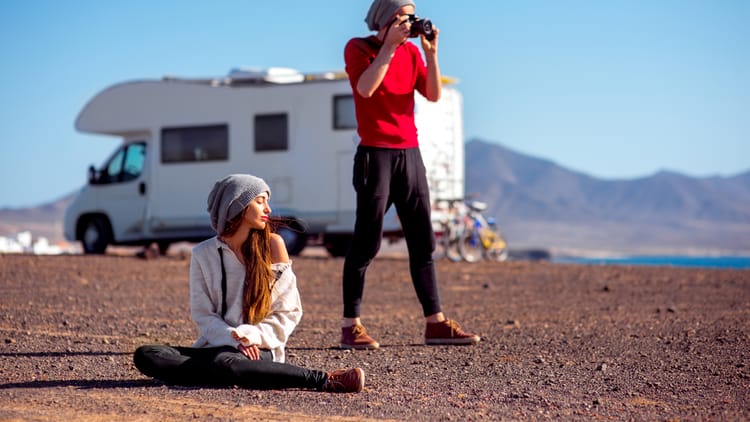
Three terms get used interchangeably in RV Facebook groups, gas-station conversations, and every campground laundry room in the West: dispersed camping, boondocking, and stealth camping. They sound like synonyms. They are doing three different jobs.
Mixing them up is not a vocabulary problem — it is a planning problem. The rules are different. The legal exposure is different. The water, power, and gear strategy is different. People who treat all three as the same thing end up surprised by a city ordinance, a 14-day relocation order, or a fresh-water tank that ran dry on night three because they packed for a paved overnight and woke up forty miles from a spigot.
Here is what each one actually means, what makes each one legal (or not), and how to know which one you are doing before you commit to a route, a forecast, and several hundred miles of fuel.
What Dispersed Camping Actually Means (And Where It's Legal)
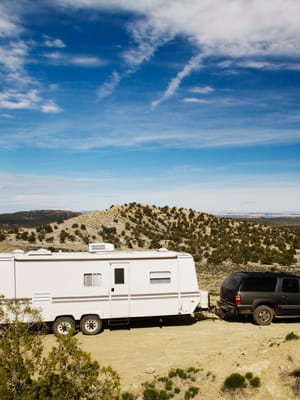
Dispersed camping is overnight camping on federal public land outside of designated campgrounds. No hookups, no fee booth, no reservation, no neighbor's slide-out pressing against your kitchen window. Just a flat spot, a fire ring someone before you scratched into the dirt, and whatever sky the area gives you.
The term is a federal one, not a folk one — which is why "dispersed" sounds bureaucratic and "boondocking" sounds like something you do in a flannel shirt. The Bureau of Land Management defines dispersed camping as camping anywhere on public lands outside a developed recreation area, generally subject to a 14-day stay limit per location. The U.S. Forest Service uses the same framework on the 193 million acres of National Forest land it manages — same 14-day window in most districts, same expectation that you camp at least 100 to 200 feet from water sources and existing roads.
What this looks like in practice: you drive a Forest Service road or a BLM two-track until you find an established pull-off — meaning a previous camper has already flattened the vegetation and ringed a fire pit — and you set up there. You do not pioneer new sites. The damage of one new flattened spot is the entire reason dispersed camping has rules at all, and the entire reason the next person should not be cursing your tire tracks in five years.
Where it is legal in the US: BLM land (most heavily in the 12 western states), National Forest, and a small number of state-trust and state-forest parcels that allow it. National parks almost universally do not — the answer at a national park is "go book a campsite, please." Our beginner-friendly walkthrough at BLM camping for first-timers covers the BLM half in detail.
What Boondocking Means, and Why It's the Broader Term
Boondocking is the RV community's umbrella term for any camping without hookups — no shore power, no city water, no sewer connection. Sometimes called dry camping, which is more accurate and less fun to say. The location is irrelevant to the definition; what makes it boondocking is the absence of utilities.
This is where the term-swapping starts. All dispersed camping is technically boondocking, because you cannot get hookups on BLM land no matter how nicely you ask the sagebrush. But not all boondocking is dispersed camping. A paved overnight in a casino parking lot, a stay at a winery host site, a no-hookup site at a state park, three nights in a Walmart lot — all boondocking, none of it dispersed. The full mechanics of how to run an RV without hookups — power budgeting, water rationing, the gear that makes it possible — live in our pillar on boondocking without hookups.
The practical reason this distinction matters: when someone tells you they boondock, you still need to ask where. A driveway overnight and a five-night stay on BLM land are both boondocking, and they require radically different prep. One needs an extension cord and a level pad. The other needs a serious power system, water conservation discipline, and a plan for the moment something breaks 40 miles from the nearest paved road and one bar of signal.
What Stealth Camping Is — and Why It's a Different Activity Entirely
Stealth camping is overnight sleeping in a vehicle in an urban or developed area where camping is not officially permitted, while doing your best to remain unnoticed. It is the term that does not belong in the same conversation as the other two, and the one most often misused by people who think they are dispersed camping behind a hardware store.
This is not RV resorts at $40 a night. This is not free BLM land. This is parking a Sprinter behind a Trader Joe's at 11 p.m., closing the reflective window insulation panels, sleeping until 6, and leaving before anyone notices a vehicle was occupied. It is street parking in Denver with the curtains drawn. It is a quiet rest area where overnight sleeping is technically prohibited but local enforcement does not run a sweep.
Two things define stealth camping that do not apply to the other two. First, it is rarely legal in any straightforward sense. Municipal ordinances across most US cities prohibit sleeping in a vehicle on public streets, and several major cities — Los Angeles, San Francisco, Denver, Portland — have specific anti-vehicle-dwelling laws on the books. Others enforce general "no overnight parking" rules selectively, which is a fancy way of saying the rule exists when someone wants it to. Walmart's corporate policy nominally allows overnight RV parking, but individual store managers and local ordinances override it constantly; the official answer is to walk in and ask the customer service desk.
Second, the risk profile is policing-based, not weather-based. On BLM land, the thing that ends a trip early is a storm or a generator failure. In a Whole Foods parking lot, the thing that ends a trip early is a knock on the window at 2 a.m. and a flashlight aimed at your sleeping face. Different planning category entirely.
Stealth camping has a legitimate use — long cross-country drives where the goal is to sleep eight hours and keep moving, not to camp. It is not a substitute for dispersed camping or boondocking, and treating it like one is how perfectly competent RVers end up with citations they did not see coming.
The Quick Comparison: Three Cards, One Page
For the screenshot crowd, here is the disambiguation in three quick blocks.
Dispersed Camping at a Glance
- Where: BLM, U.S. Forest Service, and a small number of state-trust lands
- Hookups: none, ever
- Legal status: legal on most federal public land, 14-day stay limit typical
- Typical stay: one to fourteen nights
- Main risk: weather, road conditions, distance from the nearest spigot
- Term overlap: always also qualifies as boondocking
Boondocking at a Glance
- Where: anywhere without hookups — paid or free, paved or dirt, host's farm or interstate pull-off
- Hookups: none (that is the entire definition)
- Legal status: legal wherever the host or land manager allows it
- Typical stay: one night to two weeks, depending on where
- Main risk: power and water management, in that order
- Term overlap: sometimes also dispersed camping, sometimes a paid no-hookup state-park site
Stealth Camping at a Glance
- Where: urban or developed areas where camping is not officially permitted
- Hookups: none, almost by definition — no one runs a sewer line to a parking lot
- Legal status: usually prohibited; enforcement varies block by block
- Typical stay: one night, ideally invisible
- Main risk: citations, towing, and the 2 a.m. knock
- Term overlap: technically boondocking; never dispersed, no matter what the Facebook group called it
The two-line version: dispersed camping is where, boondocking is how, stealth camping is a different activity that happens to use the same rig and the same level of upholstery hatred for unwanted visitors.
Which One You're Actually Doing (Three Real Scenarios)
The cleanest way to figure out which term applies to a trip is to describe the trip in plain language and see which definition catches.
Scenario One: Three Nights on the Alabama Hills in California
You are on BLM land, no hookups, no fees, no reservation, free fire ring already present, and your nearest neighbor is a Sprinter parked a respectful quarter-mile away. This is dispersed camping, which is also boondocking (since there are no hookups). The relevant rules: 14-day stay limit, Leave No Trace, fire restrictions during dry months, a level-enough pad to keep the fridge running before the propane runs the other way.
Scenario Two: A No-Hookup Site at a State Park, Twelve Dollars a Night
You paid, you are at a developed site with a picnic table and a vault toilet, you have a registration tag on your dashboard, and you have exactly zero hookups. This is boondocking — and only boondocking. It is not dispersed camping (developed campground rules apply, not federal dispersed rules) and it is not stealth (you have permission, a receipt, and a friendly camp host). The rules: the campground's quiet hours, the camp host's preferences, and the limits of your own tank capacity.
Scenario Three: One Night in a Cabela's Parking Lot
You arrived at 10 p.m. on the drive from Denver to Salt Lake City, asked at the customer service desk, parked at the far edge of the lot under a sodium light, slept eight hours, and left at 6 a.m. without unfolding anything. This is stealth camping in spirit and a permission-based overnight in practice — which means it sits on the legitimate end of the stealth spectrum. It is not boondocking in the cultural sense (most boondockers would not count this), and it is definitely not dispersed camping. The rules: store policy, local ordinance, and not running the generator at 4 a.m. unless you want to meet the entire night shift.
Three terms, three sets of rules, one weekly read that keeps them straight. Subscribe to our weekly newsletter.
SWERVIA WEEKLY — EVERY WEDNESDAY. ONE EMAIL. FREE.
How the Right Term Changes What You Pack
The gear you bring should match the term you are actually doing, not the term the algorithm fed you on a Saturday afternoon. Mismatched packing is the most expensive mistake in this whole category, and it almost always announces itself at hour 36 of a planned five-night trip.
Gearing for Dispersed Camping
The load-bearing systems are power and water. Most dispersed sites in the West are 20 to 100 miles from a refill, which means everything you arrive with is everything you have, and the gas station you remember from last year may or may not still be there. A serious house battery setup — a 100-amp-hour lithium house battery is the modern floor, not the ceiling — plus solar is the standard. Our RV solar setup on any budget walks through the math; the short answer is that 200 watts of panel keeps a frugal rig going indefinitely, and 400 watts is when you stop thinking about it entirely. For backup, a portable solar generator with around 1,000 watt-hours carries you through a cloudy day without panicking at the inverter alarm. Water-side, fill the fresh tank through an inline carbon water filter for fresh-tank fills — campground spigots vary wildly in sediment and chlorine, and dispersed sources are not always potable to start with. Our deeper dive on portable water filter systems for RVs covers the gravity and pump-fed options for fully off-grid resupply.
Gearing for Broader Boondocking
The same systems apply, but the stakes scale with the trip length. A one-night driveway boondock needs almost nothing beyond a level rig and a working fridge. A seven-night winery-host stay with no shore power is closer to dispersed-camping prep, just with prettier surroundings and possibly a tasting flight. The honest test: how far is the nearest dump and fresh-water spigot, and how long can your tanks and battery actually go? If you do not know that number cold, your trip is shorter than you think. Our piece on why your RV battery keeps dying is the diagnostic for anyone who has hit hour 14 of a dry-camp and watched the lights dim in real time.
Gearing for Stealth Camping
The gear list is shorter, weirder, and unmistakably its own thing. Reflective window insulation panels are the signature item — they block exterior light, hide whatever is going on inside, and double as thermal insulation against a hot parking lot or a cold city street. A powered roof vent fan with rain cover lets you sleep without cracking a window, which matters for both temperature regulation and not advertising occupancy with the slow rise and fall of a Maxxair. Beyond that: a level rig, a working fridge that runs quietly on battery, and a plan to be moving before the morning shift change. The RVers who skip campground fees entirely tend to mix all three modes across a long trip, and the gear they share between modes is the dispersed-camping list plus the stealth additions for transit nights.
A reminder that applies across all three: know your tanks. Our RV plumbing fundamentals explainer is a one-time read that saves a lifetime of black-tank surprises.
The Legal Stuff That Trips People Up (By Land Type)
Each of the three sits on top of a different legal floor. Memorize this section once and most of the gotchas stop being gotchas.
On BLM Land
Dispersed camping is allowed in most areas, with a 14-day stay limit per location. After 14 days, you must move at least 25 miles for the next 28 days — the rule exists specifically to keep one rig from settling in like a homesteader. Some popular areas (Quartzsite long-term visitor areas, certain California desert districts) have their own variations. Field offices can issue temporary closures for fire, wildlife, or land management; the local field office website is the source of truth, not the friend of a friend on the Facebook group.
On National Forest Land
Same 14-day general framework, but every forest is administered separately, which means consistency is more aspirational than enforceable. Some districts impose a 5-day limit during peak season. Fire restrictions vary widely — Stage 1 restrictions limit campfires to designated rings, Stage 2 bans open flame entirely. Check the specific forest's website before assuming, because "I didn't know" does not work on a ranger holding a citation pad.
In National Parks
Dispersed camping is essentially not a thing. The National Park Service framework is developed campgrounds plus permitted backcountry, and it is enforced with the kind of seriousness that comes from running a system with 325 million annual visitors. Sleeping in a vehicle outside of a designated campground inside a national park boundary is a citation in most parks. A few exceptions exist for specific roadside pullouts in places like Death Valley, but the default is no.
In Rest Areas
State law governs. Some states (Texas, Arizona, Florida) allow overnight rest-area sleeping with no time limit. Some (California, Virginia) cap it at eight hours. Some prohibit it outright, and post signs about it the size of small billboards. The signage at the rest area itself is enforceable; do not improvise on the assumption that the rule was for someone else.
On City Streets and in Parking Lots
Local ordinance, which is the legal way of saying "it depends on the block." Walmart's corporate policy permits RV overnight parking; local managers and city ordinances override it constantly. Cabela's, Cracker Barrel, casinos, truck stops, and many breweries explicitly allow it, sometimes preferring it. Always ask, never assume, and never set up — no awnings, no chairs out, no leveling blocks if you can help it. The "set up" is what turns an overnight into a citation, because a parked rig is a vehicle and a leveled rig with chairs is a residence.
Leave No Trace, Three Ways
The Leave No Trace seven principles apply across all three, but the application differs by mode. The same impulse — be a good guest of a place — translates into three different sets of small behaviors.
On Dispersed Sites
The principles are at their most literal: pack out all trash including gray water, use existing fire rings only, camp at least 200 feet from water, and do not pioneer new sites no matter how tempting that untouched pull-off looks under golden hour. The damage from one new site lasts decades in arid country — sagebrush does not grow back the way a lawn does. Our beach RVing for boondockers guide gets into the saltwater-specific version of these rules, which apply to dispersed coastal camping in the small number of places it is legal.
On Broader Boondocking
At host sites or developed campgrounds, the principle that matters most is "respect the host." A winery, brewery, or farm that lets you overnight expects you to buy something, leave the site cleaner than you found it, and not run a generator at 9 p.m. when the tasting room is closing. The membership networks that aggregate these hosts are blunt about it: violate the host's hospitality and the whole program loses sites, which means everyone in the network loses sites, which means you have made yourself a problem.
On Stealth Nights
The principle is "be invisible." Pack everything in, take everything out — including the granola bar wrapper that fell under the rig and the gum your kid spat onto the asphalt before you could intervene. The faster you can leave at sunrise without leaving anything behind, the longer the spot stays viable for the next person and the next year. Stealth spots burn out the moment one person leaves a mess; that is how an accommodating store manager turns into an angry one.
The Bottom Line
The right term for your trip is the one that matches your trip's actual logistics. Pick that one first, and the rules follow on their own without much further thinking.
If you are headed to BLM land or a National Forest for a few nights with no hookups, the term is dispersed camping, and the rules are federal. If you are pulling into any spot — paved or dirt, free or paid — without shore power, water, and sewer, the term is boondocking, and your tank capacity is the limit. If you are sleeping in a vehicle in an urban area where camping is not officially permitted, the term is stealth camping, and the rules are local, variable, and unforgiving in the wrong city on the wrong night.
The three terms exist because the planning categories really are different. Use the right one and most of this stops being confusing — and most of the surprises stop being expensive.
FAQs
What's the difference between boondocking and dispersed camping?
Dispersed camping is a specific federal land-use category — overnight stays on BLM, National Forest, or similar public land, outside of any developed campground, typically with a 14-day stay limit. Boondocking is the broader RV term for any camping without hookups, regardless of location. All dispersed camping qualifies as boondocking, but boondocking also includes paid no-hookup sites at state parks, parking-lot overnights, and host-network stays at wineries or farms. The location and legal framework define dispersed; the absence of utilities defines boondocking.
Is stealth camping the same as boondocking?
Technically a stealth-camping night also qualifies as boondocking (no hookups), but the two terms describe different activities. Boondocking is a sanctioned overnight without utilities, almost always with permission or on land that allows it. Stealth camping is overnight sleeping in a vehicle in an urban or developed area where camping is not officially permitted, attempting to avoid notice. The risk profiles are completely different: boondocking risks are environmental and mechanical, stealth-camping risks are legal and policing-based.
Can you stealth camp legally in a Walmart parking lot?
Sometimes, with conditions. Walmart's corporate policy permits overnight RV parking at most locations, but individual store managers and local city ordinances frequently override that policy. Always go inside and ask the customer service desk before parking. Park at the edge of the lot, do not set up — no awnings, slides out only if absolutely needed, no chairs — and leave by 7 or 8 a.m. Cracker Barrel, Cabela's, casinos, and many breweries have similar policies. Calling ahead is the only reliable way to know.
How long can you dispersed camp on BLM land?
The general BLM rule is a 14-day stay limit at any one location within a 28-day period. After 14 nights, you must move at least 25 miles before camping again. Some popular long-term areas like the Quartzsite long-term visitor areas in Arizona have different rules — Quartzsite permits stays of up to 7 months with a permit. Always check the specific BLM field office website for the area you are visiting before planning longer trips.
Do you need a permit for dispersed camping in a national forest?
No, in most cases. For most National Forest dispersed camping in the US, you can drive in, find an established pull-off, and camp without a permit. The exceptions are permitted wilderness areas (some require backcountry permits), seasonal restrictions (fire-closure areas, wildlife-management closures), and a small number of high-use forests that issue free dispersed-camping permits to manage capacity. Each forest is administered separately, so the specific forest's website is the source of truth.
Is dispersed camping safe for first-time RVers?
Yes, when you start with the easier sites. Established BLM areas with maintained dirt access roads — Alabama Hills in California, the Valley of the Gods in Utah, Quartzsite in Arizona — are well-trafficked, generally cell-signaled, and not technically difficult to reach. Avoid first attempts at backcountry sites that require high-clearance four-wheel-drive access, remote canyon routes with no signal, and any spot where the road conditions vary by recent weather. Bring more water than you think you need, arrive with a fully charged battery, and tell someone where you are going.
Categories
Related Posts
Subscribe to the Swervia Newsletter
The best RV stories, tips, and destinations—expertly curated and always free.