Top 6 National Parks for RV Camping in the West
Let's be honest—scrolling through Instagram feeds of epic national park adventures while sitting in your cubicle hits different. But here's the thing: those jaw-dropping western vistas aren't just for the hardcore backpackers anymore. The best national parks for RV camping in the West have evolved to welcome your home-on-wheels with open arms (and proper hookups).
Whether you're a weekend warrior looking to escape the suburbs or contemplating your first cross-country adventure, these parks prove you don't need to sacrifice comfort for those million-dollar views. We're talking about places where you can wake up to geysers erupting outside your window, then make your morning coffee with actual running water—the best of both worlds. If you're still deciding what kind of rig to take on these trips, our complete guide to buying your first RV is a solid place to start.
Yellowstone National Park: Where Comfort Meets Chaos (In the Best Way)
Yellowstone isn't just America's first national park—it's also the OG of RV-friendly adventures. With 12 Yellowstone campgrounds spread across 2.2 million acres, you've got options that would make a digital nomad jealous. Bridge Bay, Canyon, Grant, and Madison campgrounds handle the big rigs like champs, accommodating vehicles and trailers up to 40 feet combined. Meanwhile, Fishing Bridge RV Park is basically the VIP section, welcoming 18-foot trucks with 35-foot trailers.
Here's what makes Yellowstone a game-changer: you're literally camping next to some of the planet's most active geology. Old Faithful performs its show every 90 minutes like clockwork, and Grand Prismatic Spring serves up colors that make your photo filters obsolete. Plus, the wildlife viewing is unmatched—we're talking bison traffic jams that put LA rush hour to shame.
Pro tip: If you can't snag a spot within the park, West Yellowstone, Montana, works as your perfect alternative basecamp with several RV parks within walking distance of downtown and just minutes from the entrance. Yellowstone Grizzly RV Park is our personal fave. Before you make the drive out, run through our RV maintenance checklist — the roads into Yellowstone aren't forgiving on rigs that haven't been prepped.
Yosemite National Park: Instagram-Worthy Views Without the Backpack
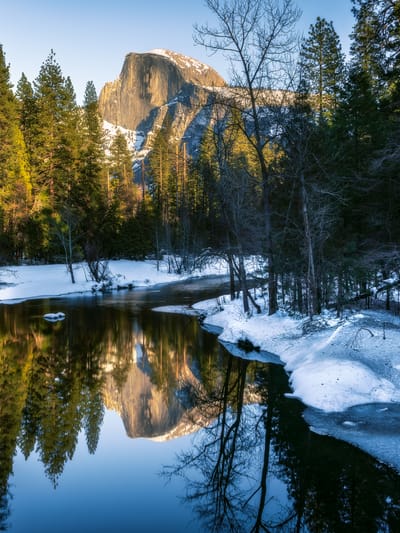
Yosemite's granite monoliths and waterfall selfie-ops have been breaking the internet since before the internet existed. The park welcomes RVs up to 40 feet at Upper Pines, Lower Pines, and North Pines campgrounds—prime real estate in Yosemite Valley where Half Dome and El Capitan dominate your morning view. None of these campgrounds offer hookups, but they do provide restrooms, potable water, and bear boxes (absolutely essential).
Wawona Campground offers a different vibe entirely. Tucked away near the Mariposa Grove of Giant Sequoias, it accommodates RVs up to 35 feet and operates year-round with first-come, first-served sites available in winter. If your rig exceeds these limits or you need hookups, Yosemite Pines RV Resort in Groveland provides full hookups and welcomes larger rigs—it's about 25 miles from the park's Big Oak Flat entrance and offers a perfect compromise between comfort and access. Spending multiple nights without hookups? A countertop gravity water filter keeps your drinking water clean when you can't connect to a campground water line.
Fair warning: Yosemite reservations are basically the Coachella tickets of the camping world. They drop at 7 AM Pacific time exactly five months in advance and disappear faster than your data plan in the backcountry. In recent years, you also need a day-use entry reservation during peak season.
Yosemite's Game Plan:
- Valley campgrounds (Upper/Lower/North Pines): 40-foot max, no hookups
- Wawona: 35-foot max, no hookups, year-round availability
- Alternative: Yosemite Pines RV Resort (full hookups, larger rigs welcome)
- Reservations: 5 months ahead at 7 AM PT, sell out in minutes
- Additional entry reservations required peak season
Glacier National Park: Montana's Crown Jewel
Glacier National Park doesn't mess around when it comes to dramatic scenery. We're talking about landscapes so pristine they make National Geographic photographers weep with joy. Apgar and St. Mary campgrounds roll out the red carpet for RVs up to 40 feet, positioning you perfectly at opposite ends of the famous Going-to-the-Sun Road. Neither offers hookups, but both provide restrooms, potable water, and dump stations.
If your rig exceeds 40 feet or you prefer full hookups, West Glacier KOA and West Glacier RV Park sit practically at the park's west entrance—you're talking a five-minute drive to Apgar. Both offer full hookups and can accommodate larger rigs, making them perfect staging areas for your Glacier adventure without sacrificing comfort.
Here's the seasonal reality: Going-to-the-Sun Road typically opens fully by early July and closes by the third Monday in October, weather permitting. Lower elevation sections stay open year-round, but the alpine portion over Logan Pass depends entirely on snowpack. Fish Creek Campground brings the cozy vibes with sites nestled among towering pines, accommodating RVs up to 35 feet—it opens partially in mid-May and fully by late May.
The reservation game changed in recent years with timed entry requirements. From June through September, you'll need a vehicle reservation to access Going-to-the-Sun Road from the West Entrance between 7 AM and 3 PM. These reservations open in March for the season, but if you miss that window, remaining spots become available at 7 PM Mountain Time for next-day entry starting in June. The roads through Glacier are demanding enough that a reliable tire pressure monitoring system is worth having running the entire time you're in the park—the road dimensions on Going-to-the-Sun are tight, and an underinflated tire on a switchback is not a situation you want to improvise.
Glacier's Specifics:
- Apgar/St. Mary: 40-foot max, no hookups, dump stations available
- Fish Creek: 35-foot max, no hookups, opens mid-May
- Alternatives: West Glacier KOA/Campground (full hookups, larger rigs)
- Going-to-the-Sun Road: 21 feet wide, 8 feet high, 40 feet long max
- Timed entry reservations required June-September for west entrance
- Road typically fully open early July through mid-October
The best western parks book out in minutes. Subscribe to our weekly newsletter.
EVERY PARK, EVERY RIG SIZE, EVERY RESERVATION WINDOW — EVERY WEDNESDAY, FREE.
Grand Canyon National Park: South Rim Without the Rim-Shot Prices
The Grand Canyon South Rim keeps things refreshingly straightforward for RVers. Mather Campground plants you right in Grand Canyon Village—walking distance to viewpoints, visitor centers, and that shuttle system that saves your sanity. Sites accommodate RVs up to 30 feet combined length (vehicle plus trailer) with no hookups, but restrooms, showers, and a dump station keep you civilized.
For those craving full hookups, Trailer Village RV Park sits right inside Grand Canyon Village and offers the best of both worlds—full hookups (water, sewer, electric) for RVs up to 50 feet, plus you're still within walking distance of the rim trail and visitor facilities. It's the only full-hookup option within the park boundaries and books up well in advance.
Desert View Campground offers the insider's experience at the park's eastern entrance. It's seasonal (mid-May through mid-October) and smaller, accommodating RVs up to 30 feet, but the sunrise views? Chef's kiss. No hookups here either, but pit toilets and water spigots handle the basics.
The reservation system opens 6 months in advance for peak months (March-November), with applications due in January for the entire season. If you miss the deadline, check Recreation.gov starting March 1 when remaining sites release at 10 AM Mountain Time, exactly five months ahead of your planned stay date. If you're newer to RV travel, our breakdown of RV rental vs. buying is worth reading before you commit a full summer's itinerary to a rig you haven't lived in yet.
Grand Canyon Essentials:
- Mather: 30-foot max combined length, no hookups, year-round
- Trailer Village: 50-foot max, full hookups, inside park boundaries
- Desert View: 30-foot max, no hookups, mid-May to mid-October
- Lottery reservations due January 20 for March-November
- Remaining sites release 5 months ahead at 10 AM MT
Zion National Park: Red Rock Therapy
Zion's towering red sandstone walls form a breathtaking amphitheater of nature that leaves even the most seasoned travelers speechless. Watchman Campground serves as RV headquarters, featuring electrical hookups and sites that welcome rigs up to 40 feet. The location near the main entrance means you're steps from the visitor center and shuttle system.
South Campground provides backup options for smaller RVs, though space fills up faster than a Taylor Swift concert, and check to ensure it is open following its rehabilitation project. But here's the insider secret: several nearby private campgrounds offer full hookups and often provide their own shuttle service directly to Zion's entrance. Zion River Resort, Zion White Bison Resort, and Zion Canyon Campground all deliver the full-hookup experience while positioning you perfectly for park access.
This setup actually works in your favor. Since parking inside Zion is basically impossible, and the park requires you to use their shuttle system once you're inside anyway, staying at a nearby campground with shuttle service becomes a strategic advantage. You literally never need to move your vehicle—shuttle from your campground to the park entrance, then hop on Zion's shuttles to explore the park. It's like having a personal chauffeur system that takes you from your RV door to the base of Angels Landing without the headache of finding parking spots that don't exist. If you want to extend this approach beyond the national parks into true off-grid freedom, our complete boondocking guide covers everything you need to camp confidently without hookups.
Rocky Mountain National Park: Colorado's High-Altitude Playground
Rocky Mountain National Park delivers that classic Colorado experience—alpine lakes, 14,000-foot peaks, and wildlife that couldn't care less about your presence. Moraine Park, Timber Creek, Aspenglen, and Glacier Basin campgrounds welcome RVs up to 30-40 feet while serving up mountain views that make your screensaver jealous. None offers hookups, but provide restrooms, potable water, and dump stations.
The seasonal game here runs May through September for both campgrounds, with Moraine Park extending into October weather permitting. Reservations open five months in advance at 8 AM Mountain Time, and summer sites disappear within hours. The elevation (around 8,000 feet) means temperatures drop significantly at night even in summer—pack accordingly. Shared campgrounds also mean noise at all hours; a pair of reusable noise-reducing earplugs is the difference between a good night's sleep and staring at your ceiling at 2 AM because someone's generator didn't get the memo.
Trail Ridge Road earns its reputation as one of America's highest paved roads, though it can challenge larger RVs with steep grades and switchbacks that would make a sports car nervous. The road typically opens fully by Memorial Day but can close temporarily for weather through October. Alternative routes ensure you won't miss the essential Rocky Mountain experience, just maybe skip the vertigo-inducing sections. Our guide to roads that are hardest on RVs includes what to watch for on high-elevation mountain routes specifically.
And if you're in need of hookups or a larger spot, there are nearby options like kid-friendly KOA and Jellystone or quieter Estes Park Campground at Mary's Lake in Estes Park or check out the Sun Outdoors in Granby near the west entrance.
Rocky Mountain Reality:
- Moraine Park/Glacier Basin: 40-foot max, no hookups, dump stations
- Season: May-September (Moraine Park sometimes into October)
- Reservations: 6 months ahead at 8 AM MT
- Elevation: ~8,000 feet (pack warm clothes for nights)
- Trail Ridge Road: Opens Memorial Day, weather permitting
Making It Happen: Your Western Parks Game Plan
Real talk: success in western national park RV camping comes down to planning like your vacation depends on it (because it does). Reservations open months in advance and vanish like free coffee at a startup. Summer dates book first, but shoulder seasons offer better availability, fewer crowds, and often better weather. Before any long drive to a remote park, make sure your rig is ready—our RV setup checklist covers arrival logistics, and keeping a portable tire inflator onboard is non-negotiable on roads this remote. If you're new to towing, our first-time towing guide will help you approach mountain grades and switchbacks with the right technique.
Your Essential Toolkit:
- Recreation.gov for securing those coveted campground spots
- National Park Service for real-time conditions and restrictions
- Individual park websites for the nitty-gritty RV details
Pre-Trip Reality Check:
- Double-check vehicle and trailer length restrictions (seriously, measure twice)
- Research generator policies—some parks are stricter than others
- Prepare for spotty cell service (analog detox, anyone?)
- Pack for weather that changes faster than your playlist
The Bottom Line
The western United States serves up some of the planet's most incredible scenery, and the best part? You don't need to sacrifice comfort to experience it. These national parks have figured out how to blend natural wonder with RV-friendly infrastructure, creating experiences that satisfy both your Instagram feed and your need for a decent night's sleep.
From Yellowstone's geothermal light show to Yosemite's granite cathedrals and Glacier's pristine wilderness, these destinations prove that the best national parks for RV camping aren't just accommodating your lifestyle—they're enhancing it. So fire up that route planner, check your tire pressure, and get ready to trade your weekend Netflix binge for sunrise views that no streaming service can deliver. Curious how the parks themselves earn their protected status? Our piece on how a park becomes a national park is a surprisingly good read for anyone who spends this much time inside them.
FAQs
What is the best national park for RV camping in the West?
Yellowstone is the most RV-friendly national park in the West by sheer volume of options—12 campgrounds across 2.2 million acres, with several accommodating rigs up to 40 feet combined length. Fishing Bridge RV Park is the only option inside a national park in the West that offers full hookups specifically for RVs. Zion and Grand Canyon's Trailer Village are close runners-up if hookups are your priority.
How far in advance do I need to book a national park campsite for an RV?
It depends on the park. Yosemite releases reservations exactly 5 months ahead at 7 AM Pacific—and they're gone in minutes. Rocky Mountain opens 5 months out at 8 AM Mountain Time. Grand Canyon's lottery for peak-season sites (March–November) closes in January. For all of these parks, same-week or even same-month bookings are nearly impossible for summer dates.
Which western national parks allow the largest RVs?
Grand Canyon's Trailer Village accommodates RVs up to 50 feet and offers full hookups—it's the largest-rig-friendly option among the parks in this guide. Yellowstone, Yosemite (Valley campgrounds), Zion's Watchman Campground, and Glacier's Apgar and St. Mary campgrounds all max out at 40 feet combined length. Rocky Mountain campgrounds cap at 30–40 feet depending on the specific site.
Do national parks have RV hookups?
Most national park campgrounds do not offer hookups. The exceptions in this guide are Yellowstone's Fishing Bridge RV Park (full hookups), Grand Canyon's Trailer Village (full hookups: water, sewer, electric), and Zion's Watchman Campground (electric only). All other campgrounds listed provide restrooms, potable water, and dump stations—but no site-level connections.
What should I do if I can't get a reservation inside a national park?
Book a private campground or RV park near the park entrance. Most parks have strong nearby options—West Glacier KOA for Glacier, Yosemite Pines RV Resort for Yosemite, and several full-hookup private campgrounds just outside Zion's entrance that run their own shuttle to the park. You get the comfort of hookups and often easier access than trying to navigate parking inside a crowded park.
How do I find water and dump stations when camping without hookups at national parks?
Every campground in this guide with no hookups provides potable water and dump stations on-site—including Apgar, St. Mary, Fish Creek (Glacier), Moraine Park and Glacier Basin (Rocky Mountain), and Mather (Grand Canyon). If you're boondocking between park stops, a gravity-fed water filter extends how long you can go between fills. Plan your dump station stops using the National Park Service website or your GPS unit's campground database.
Is it worth visiting multiple western national parks in one RV trip?
Yes, and the parks in this guide cluster well geographically. Zion and Grand Canyon are within 2.5 hours of each other and pair naturally as a southern Utah/Arizona swing. Glacier and Yellowstone are a 3-hour drive apart and make a strong Montana-Wyoming pairing. Yosemite stands more alone in California but fits naturally into a Pacific Coast route—our Pacific Coast Highway RV itinerary shows how to connect it with other California stops efficiently.