How Does a Park Become a National Park? The Process Explained
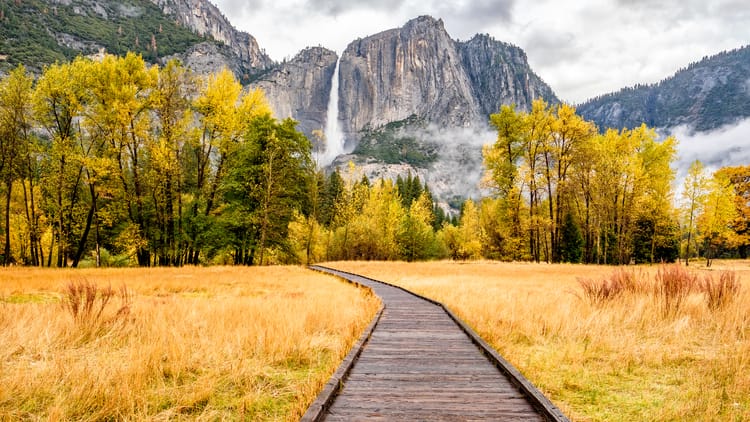
The United States has 63 officially designated national parks — and not one of them got there by accident. Behind every iconic name on that list, from Yellowstone to Zion to the newest addition in West Virginia, there is a long, deliberate, and often hard-fought process that can take years, sometimes decades, to complete. If you have ever pulled into a park entrance, stared out at some jaw-dropping vista, and wondered how did this place get here?, you are in the right place.
Here is everything you need to know about how a park becomes a national park — the two main pathways, the criteria a landscape has to meet, who holds the power to make it official, and what is in the pipeline right now.
First, Let's Get the Terminology Straight
A lot of people use "national park" as a catch-all for any wild place managed by the federal government. That is understandable, but technically it is not accurate — and the distinction matters more than you might think.
The National Park Service manages 433 units across more than 85 million acres, spanning all 50 states, Washington D.C., and U.S. territories. All of those places are part of the National Park System. But only 63 of them carry the specific designation of "national park" — and that title is not handed out casually.
Of those 63, 51 are in the contiguous lower 48 states, 8 are in Alaska, 2 are in Hawaii, and 2 are in U.S. territories (the Virgin Islands and American Samoa). California leads the pack with 9 national parks; Alaska is second with 8. Notably, 20 states have no national park at all — only units of other designations, or nothing in the NPS system at all.
Beyond those 63 national parks, the NPS manages roughly 19 different types of designated units. That includes 89 national monuments managed directly by the NPS (out of 138 total national monuments in the U.S., with the rest managed by the Bureau of Land Management, U.S. Forest Service, and other agencies). The system also includes national recreation areas, national seashores, national lakeshores, national rivers and wild and scenic riverways, national preserves, national historic sites, national historical parks, national battlefields, national memorials, national parkways, national scenic trails, and more. Each designation reflects a different set of resources, purposes, and management rules.
The title "national park" has traditionally been reserved for large, spectacular natural areas with a wide variety of outstanding natural features, ecological resources, and cultural significance. National parks also tend to come with the strictest protections: mining, hunting, and extractive commercial activities are generally prohibited in ways they would not be in other types of federal land. According to the National Park Foundation, that designation helps enforce meaningful restrictions on public use so a park's resources stay intact for future generations.
So when someone asks how does a park become a national park, the process they are really asking about is this specific, congressionally guarded designation — not just any addition to the federal land system. If you are building a national parks road trip and want to know which western parks are worth anchoring your itinerary around, our guide to the top national parks for RV camping in the West covers the best options by rig type and experience level.
The Two Paths to National Park Status
There are two primary ways a place can become part of the National Park System, and they work very differently.
Path 1: An Act of Congress
This is the only way a place can earn the specific designation of "national park." Full stop. As Congress.gov explains, units of the National Park System are generally added by acts of Congress, and the "national park" title in particular requires a congressional vote. No president, no cabinet secretary, and no agency director can unilaterally designate a national park.
A congressional act creating a new national park typically defines the unit's purpose, sets its official boundaries, provides directions for land acquisition and operations, and authorizes funding. This is a high bar — and intentionally so. The idea is that only the most exceptional, most nationally significant, most irreplaceable landscapes earn that designation.
Path 2: Presidential Proclamation Under the Antiquities Act
The President of the United States has a separate, faster power: the ability to create national monuments through executive proclamation using the Antiquities Act of 1906. Signed into law by President Theodore Roosevelt, this landmark legislation was originally designed to protect Native American ruins and archaeological sites on public federal lands from being looted or destroyed by private collectors.
Since then, 18 presidents from both parties have used the Antiquities Act more than 150 times to establish national monuments — every president from Roosevelt forward, with the exception of Nixon, Reagan, and George H.W. Bush. A presidential monument designation can happen quickly, without requiring a congressional vote — which makes it a powerful conservation tool when there is urgency, such as when a landscape faces imminent development pressure.
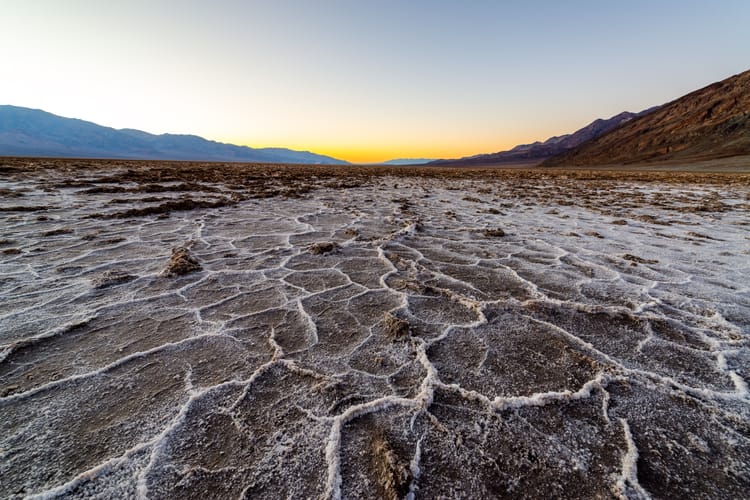
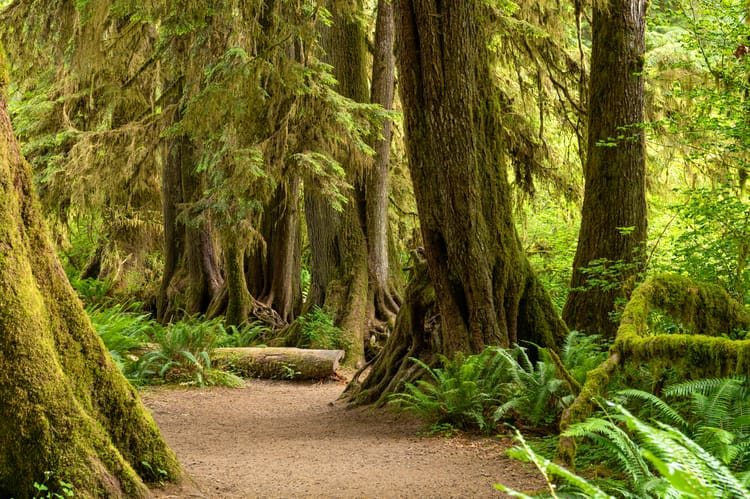
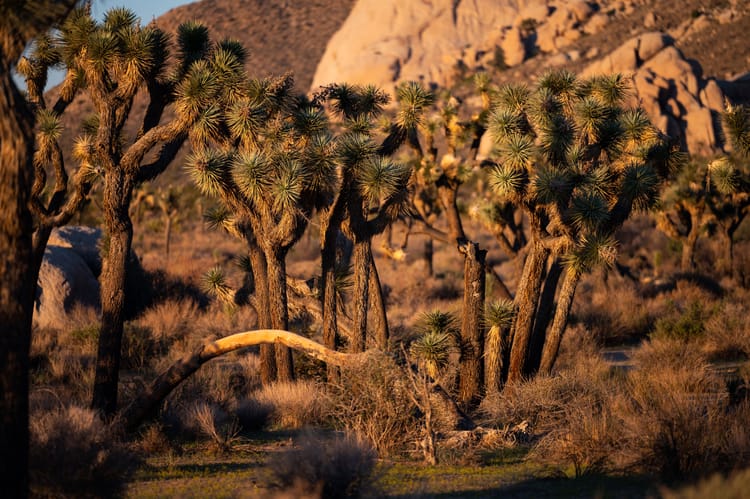
The critical thing to understand is that a national monument is not automatically a national park. They are different designations with different management structures. However — and this is where it gets interesting — many of today's most beloved national parks started their lives as presidential monuments. The Grand Canyon, Acadia, Joshua Tree, Death Valley, Olympic, and more than 30 others were first protected as national monuments before Congress eventually upgraded them to national park status. According to the National Trust for Historic Preservation, over 30 current national parks were first designated as monuments.
The Step-by-Step Process: How Does a Park Become a National Park?
Here is how the congressional path typically unfolds, from the first glimmer of an idea to the official national park sign going up.
Step 1: Someone Has to Propose It
The process almost always starts with people — often a community, a local government, a tribal nation, a conservation organization, or even a member of Congress — who believe a particular landscape or place deserves national recognition and protection. Members of the public, states, local entities, tribal nations, and even the National Park Service itself can put forward proposals.
Step 2: Congress Authorizes a Special Resource Study
Before Congress passes any legislation to create a new park unit, it typically first passes a separate law directing the National Park Service to conduct a Special Resource Study. This is the formal evaluation process — a rigorous, multi-year examination of whether a site actually deserves to be added to the National Park System.
According to the NPS, a Special Resource Study evaluates a potential site according to four congressionally established criteria. All four must have positive findings for an area to be considered eligible for inclusion. As the NPS confirms, if a site fails even one of these criteria, the study process is typically discontinued for that location.
Step 3: The Four-Criteria Evaluation
This is where the rubber meets the road. Here are the four tests a site must pass:
1. National Significance The area must be an outstanding example of a particular type of resource and must possess exceptional value in illustrating natural or cultural themes of the nation's heritage. It must offer superlative opportunities for public use or scientific study. Crucially, it must retain a high degree of integrity as a true, accurate, and relatively unspoiled example of that resource. Average is not good enough. The bar is extraordinarily high.
2. Suitability The area should represent a natural or cultural theme or type of resource that is not already adequately represented and protected elsewhere in the National Park System. In other words, there should be a genuine gap. If the same type of resource is already being managed equally well by a state park or another federal agency, NPS may not recommend adding it to the national system.
3. Feasibility The area must be large enough and configured in a way that allows for long-term protection and meaningful public use. The study also weighs land ownership, acquisition costs, access, current land uses, threats to the resource, public support, and staffing requirements. Privately owned land whose owner is unwilling to sell could, for example, make a site infeasible even if it meets all other criteria.
4. Need for Direct NPS Management This one surprises a lot of people. Even if a site is nationally significant, suitable, and feasible, NPS will not recommend adding it to the system if another arrangement — a state government, tribal authority, another federal agency, or private stewardship — could already provide sufficient protection and public access. National park designation is not the only form of conservation, and the NPS is careful to avoid adding units it cannot properly resource and manage.
Step 4: Public Engagement
The Special Resource Study process is not done behind closed doors. An important part of the study involves gathering public input — community meetings, online comment periods, and coordination with tribal nations, local governments, businesses, and other stakeholders. The level of local and public support is itself a factor the NPS considers in its evaluation.
Step 5: The Secretary of the Interior Makes a Recommendation
Once the study is complete, the NPS submits its findings to the Secretary of the Interior, who then makes a formal recommendation to Congress. That recommendation identifies the Secretary's preferred management option for the area.
Step 6: Congress Passes Legislation
With the NPS study and the Secretary's recommendation in hand, Congress can then consider legislation to establish the new park unit. Congressional committees hold hearings, debate the bill, and vote. This is where advocacy, political will, and bipartisan support become critical. Bills can sail through quickly in some cases or languish for years in others — it depends enormously on the political landscape, local support, and competing priorities.
Step 7: The President Signs It Into Law
Once both chambers of Congress pass the bill, it goes to the President for signature. When that signature lands, the new national park officially exists. The NPS then gets to work on the practical side: updating signage, revising maps, staffing up, building infrastructure, and developing a management plan.
Planning a national parks road trip this season? Subscribe to our weekly newsletter.
THE BEST RV STORIES, TIPS, AND DESTINATIONS — EVERY WEDNESDAY, FREE.
A Real-World Example: New River Gorge
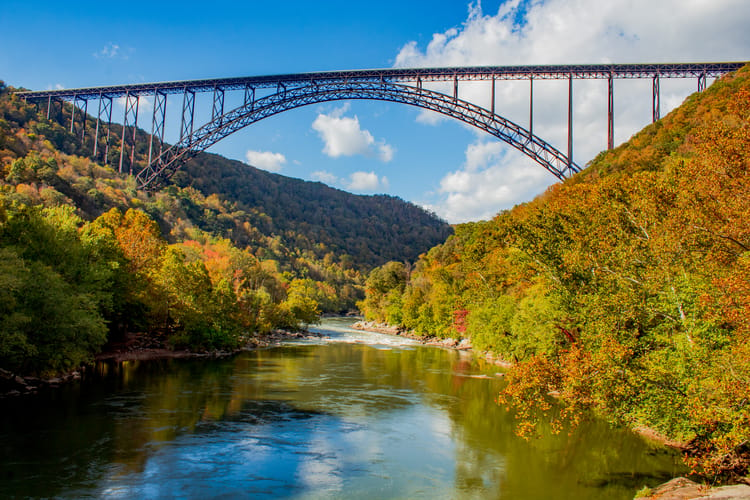
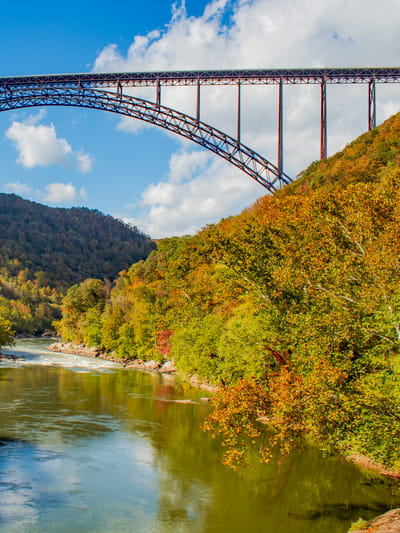
Want to see what this process actually looks like? Look no further than New River Gorge National Park and Preserve in West Virginia — the most recent addition to the list of national parks, officially designated in December 2020.
So what made New River Gorge worthy of the designation? A lot, it turns out. The New River is among the oldest rivers on the continent — some geologists consider it one of the oldest rivers in the world, predating the Appalachian Mountains themselves. It runs north, which is unusual and ecologically significant: that orientation creates a natural corridor for animal migration in a region where most valleys run east–west. The gorge it has carved is the deepest and longest river gorge in the Appalachian Mountains, plunging to depths of up to 1,600 feet and stretching over 53 miles of free-flowing river. The park is home to more than 1,400 species of plants, endemic fish found nowhere else on Earth, over 1,500 established rock climbing routes on its signature Nuttall sandstone cliffs, and some of the best commercial whitewater rafting in the country, with rapids ranging from Class III to Class V. On top of all that, the gorge contains the ruins of coal mining towns and industrial heritage sites that tell a uniquely American story of boom, bust, and regeneration. It is, in short, a place that checks every box on the national significance checklist.
The area was first protected in 1978 by President Jimmy Carter as the New River Gorge National River, making it a unit of the National Park System, but with the less prominent "national river" designation. For decades, local business owners, outdoor recreation companies, conservationists, and West Virginia's Congressional delegation worked toward elevating it to national park status — recognizing that the specific "national park" brand carries enormous economic and tourism weight.
In October 2019, Senators Shelley Moore Capito and Joe Manchin introduced the New River Gorge Park and Preserve Designation Act. That legislation was ultimately folded into the larger Consolidated Appropriations Act and signed into law by President Donald Trump on December 27, 2020.
The redesignation was not just symbolic. Visitation surged by roughly 30 percent in the park's first year as a national park, and local tourism revenue climbed significantly. The park now draws over 1.5 million visitors annually. For a region where coal's decline had hit the economy hard, the national park designation opened a new chapter.
If you are planning a visit, a solid RV setup checklist will save you from the kind of campground fumbling that costs you daylight hours better spent on the trail. And before you hit the road, a solar-charged tire pressure monitoring system is an easy addition that gives you real-time readouts on all four (or more) tires through a connected display — particularly useful when you are running mountain roads with significant elevation changes.
Who Manages What? NPS, BLM, and the Forest Service — A Quick Cheat Sheet
One of the most common sources of confusion for travelers, especially first-time public lands explorers, is figuring out which federal agency manages which piece of land. Here is the short version.
The National Park Service (NPS), housed within the Department of the Interior, manages its 433 units with a dual mission: protect the resources and make them accessible for the public. NPS tends to prioritize preservation above all else. Hunting, mining, and most extractive uses are prohibited in national parks and strictly limited elsewhere in the NPS system. You will generally find the best visitor infrastructure — maps, rangers, campgrounds, and interpretive programs — on NPS-managed lands.
The Bureau of Land Management (BLM), also part of the Department of the Interior, is the largest federal land management agency by acreage, overseeing roughly 245 million acres, almost entirely in the western United States. BLM land is managed under a "multiple use" mandate, meaning it is open to a wide range of activities: hunting, fishing, grazing, off-road vehicle use, mining, and recreation can all coexist on the same landscape. This makes BLM land popular with dispersed campers and off-grid travelers, since free camping (called dispersed camping) is allowed in most BLM areas without a reservation or fee. For a deeper look at making the most of free camping on public land, our complete guide to boondocking without hookups covers everything from power management to finding legal spots.
The U.S. Forest Service (USFS), housed in the Department of Agriculture (not Interior), manages about 193 million acres of national forests and grasslands. Like the BLM, national forests operate under a multiple-use principle that allows timber harvesting, grazing, hunting, and recreation. Most national forests allow dispersed camping, and many have developed campgrounds as well. Snowmobiling, ATVs, and logging are common on Forest Service land in a way they would not be in a national park.
The practical upshot for RVers: NPS land is where you go for iconic, well-managed experiences with strong infrastructure. BLM and Forest Service land is where you go for dispersed camping, more freedom, and often far fewer crowds. Many RVers string together NPS visits with adjacent BLM or Forest Service camping to get the best of both worlds. If you are heading off-grid between park stops, a portable solar generator is one of the most practical investments you can make for keeping devices, lights, and small appliances running without shore power — our RV solar setup guide walks through sizing and components for every budget. And for quick setup on uneven terrain at dispersed sites, a set of interlocking plastic leveling blocks gives you stable, rattle-free footing without the back-and-forth guesswork.
National Park vs. National Monument: Why the Difference Matters for RVers
If you are planning your travels and seeing both "national park" and "national monument" on the map, here is what you practically need to know:
National parks tend to have the most visitor infrastructure — paved roads, established campgrounds, ranger programs, well-maintained trails, and entrance stations. They come with entrance fees in most cases, and the America the Beautiful pass covers entry at all of them.
National monuments vary wildly. Some have full visitor infrastructure on par with a national park. Others are remote, minimally developed, and better suited for experienced backcountry travelers. Critically, national monuments are managed by different agencies — the NPS manages 89 of the 138 total U.S. national monuments, but others fall under the BLM, U.S. Forest Service, Fish and Wildlife Service, or NOAA. Each agency has its own rules on camping, fires, vehicles, and fees. Always check which agency manages a monument before you show up expecting a traditional park experience.
Beyond parks and monuments, keep an eye out for national recreation areas (typically centered on water, often with boating and swimming), national seashores and lakeshores (coastal and Great Lakes shoreline protection), and national rivers and wild and scenic riverways (free-flowing river corridors). These designations often offer incredible experiences with lighter crowds and, in some cases, more flexibility on things like fishing and hunting than you would find in a national park. Our beach RVing guide covers several of these coastal national seashore units in detail, including legal access points, tide considerations, and what to expect on arrival.
The good news: all of these types of land can be spectacular. Some of the least-crowded, most dramatic landscapes in the country are national monuments or recreation areas that have not earned — or do not want — the full "national park" designation. Whatever federal land type you are exploring, a thorough pre-trip RV maintenance checklist before you leave home is one of the most reliable ways to avoid being sidelined by a preventable mechanical issue when you are hours from a service center.
What Places Are in the Pipeline?
The Special Resource Study process is ongoing. As of the most recently updated NPS records, studies currently underway include the Battle of Matewan (West Virginia), the Dearfield Homestead (Colorado), and the Flushing Remonstrance (New York), among others. Each of these is being evaluated against the four criteria described above.
Meanwhile, Newsweek recently reported that the NPS is conducting a special resource study of the Los Angeles coastline, evaluating whether portions of the Southern California coast meet the four criteria for potential inclusion in the National Park System. Public comment periods are open, and the findings will eventually go to Congress.
You can track the current status of all active Special Resource Studies directly through the NPS Park Planning portal. If you are building a multi-stop itinerary around parks — current and future — it is also worth reviewing our guide to the best highways to avoid in your RV, which covers the routes most likely to cause tire and suspension damage on long-haul national park circuits. A weatherproof, solar-charged backup camera is another worthwhile addition for navigating unfamiliar campground roads and reversing into sites you have never seen before — it mounts magnetically and requires no hardwiring.
The Bottom Line
How does a park become a national park? It takes an outstanding landscape, a rigorous federal evaluation process, years of public advocacy and political will, and ultimately an act of Congress. There are no shortcuts to the specific "national park" designation — and that exclusivity is precisely what makes it mean something.
The 63 national parks that exist today represent the places that cleared every bar. They are the landscapes and sites that, by congressional consensus and national agreement, are too extraordinary, too irreplaceable, and too important to leave unprotected. And as the Special Resource Study process continues to churn along, more places are working their way through the pipeline, waiting for their moment.
Which means the next epic stop on your RV route might still be in the making. When it arrives — and eventually, it will — you will know exactly how it got there.
FAQs
How does a park officially become a national park in the United States?
A place earns the specific designation of "national park" only through an act of Congress. No president or federal agency can unilaterally create a national park. The process typically begins with a congressional authorization for the National Park Service to conduct a Special Resource Study, which evaluates the site against four criteria: national significance, suitability, feasibility, and the need for direct NPS management. If all four criteria are met, the NPS submits a recommendation to the Secretary of the Interior, who sends it to Congress for a vote. Once both chambers pass the legislation and the President signs it, the national park officially exists.
What is the difference between a national park and a national monument?
A national park requires an act of Congress and is the most exclusive designation in the National Park System. A national monument can be created by a president alone through the Antiquities Act of 1906, without a congressional vote. National monuments vary widely in size, infrastructure, and managing agency — the NPS manages 89 of the 138 U.S. national monuments, with the rest managed by the BLM, Forest Service, Fish and Wildlife Service, or NOAA. More than 30 current national parks, including the Grand Canyon and Acadia, began as national monuments before Congress upgraded their designation.
How many national parks are there in the United States?
As of 2026, there are 63 designated national parks in the United States. California has the most with 9; Alaska has 8. The most recent addition is New River Gorge National Park and Preserve in West Virginia, designated in December 2020. Beyond those 63 parks, the National Park Service manages 433 total units covering more than 85 million acres across roughly 19 different designation types, including monuments, recreation areas, seashores, and historic sites.
What are the four criteria the NPS uses to evaluate a potential national park?
The National Park Service evaluates every potential new unit against four congressionally established criteria. First, national significance: the site must be an outstanding, relatively unspoiled example of a particular resource type with exceptional value to the nation's natural or cultural heritage. Second, suitability: the site should represent a theme or resource not already adequately protected elsewhere in the NPS system. Third, feasibility: the area must be large enough to protect long-term and practical to manage, considering land ownership, access, threats, and costs. Fourth, need for direct NPS management: the NPS must conclude that no other arrangement — state, tribal, or federal — could provide equivalent protection and public access. All four must be satisfied for NPS to recommend adding a site.
How long does it take for a place to become a national park?
There is no fixed timeline, and the process can range from a few years to several decades depending on political will, funding, land ownership complexity, and public support. The Special Resource Study itself typically takes multiple years to complete. After that, legislation must make its way through congressional committees, both chambers, and to the President. Many proposals spend years in limbo waiting for the right political conditions. New River Gorge, for example, was first protected as a national river in 1978 and did not receive full national park designation until 2020 — a 42-year journey.
Can the President create a national park without Congress?
No. The President can create national monuments using the Antiquities Act of 1906, but that is a different — and lower — designation. The specific title of "national park" can only be conferred by an act of Congress. Presidential proclamations cannot create national parks, though they can protect land quickly and set the stage for future congressional designation. In some cases, this is exactly what happened: the Grand Canyon, Joshua Tree, and Death Valley all began as presidential monuments before eventually being elevated to national park status by Congress.
What is the America the Beautiful pass and does it cover all public lands?
The America the Beautiful pass, sold for $80 per year, covers entrance fees at all 63 national parks and most other federal recreation sites managed by the NPS, BLM, Forest Service, Fish and Wildlife Service, and Bureau of Reclamation. It does not cover camping fees, tours, or amenity fees — only site entry. The pass covers the cardholder and all passengers in a personal vehicle, making it an excellent value for RVers doing a multi-park season. Some federal lands, including most BLM dispersed camping areas, charge no entrance fee at all, so the pass is most valuable when your route includes multiple national parks with standard entrance fees ranging from $15 to $35 per vehicle.


Categories
Related Posts


Subscribe to the Swervia Newsletter
The best RV stories, tips, and destinations—expertly curated and always free.