Which National Parks Actually Have RV Hookups
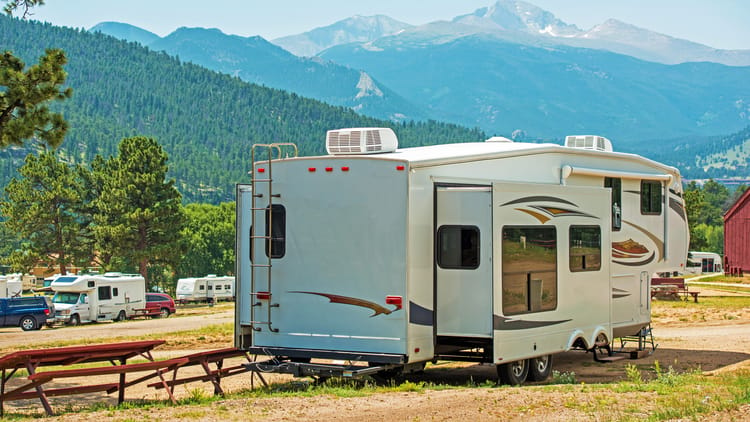
There's no rule saying you have to pick between seeing a national park and sleeping comfortably in one. You can want both, and plenty of RVers do.
The catch is that most park campgrounds aren't built to give you both. Plenty of them offer nothing at your site but a picnic table and a fire ring, which is lovely right up until the second night, when the batteries are low and the water heater has opinions. The parks that do have full hookups are almost all concessioner-run RV parks, and there aren't many, so they tend to book up months ahead. Anywhere else, you're running on your own tanks and batteries for however long you stay.
It's worth sorting out before you reserve anything, because a week with hookups and a week without really are two different weeks. In one of them you're keeping a quiet eye on your water level. In the other one you're just on vacation.
And if you'd rather have the dry site regardless, you're in good company. A lot of RVers go looking for those on purpose, and after a night at one it's not hard to understand why.
Most National Park Campgrounds Have No RV Hookups
The floor is lower than most people expect. Yosemite states it flatly: electrical, water and sewer hookups aren't available anywhere in the park. The Grand Canyon says the same about its Park Service campgrounds. Yellowstone runs eleven campgrounds and exactly one has a pedestal.
This isn't neglect. Most of these loops were laid out generations ago, when camping meant a canvas tent and a percolator, and the Park Service has never treated utility infrastructure as part of what it protects. The roads got paved and some sites got wider. They didn't get wired.
So plan for dry and treat a hookup as a lucky break. For the wider planning picture, start with our guide to RVing in national parks.
The National Parks With Full RV Hookups
Full hookups means electric, water and sewer right at your site. The list is longer than people think. It's just bunched into a few places, and almost all of it is run by concessioners.
Yellowstone's Fishing Bridge RV Park is the headliner: water, sewer and 50-amp service, RVs up to 95 feet, and hard-sided vehicles only, so no tents or tent-trailers. Grand Teton has Colter Bay RV Park, 112 full-hookup sites split between pull-throughs and back-ins. The pull-throughs take 45 feet of RV and tow vehicle combined; the back-ins stop at 30, which is worth knowing before you book one sight unseen. Just north of there, Headwaters Campground at Flagg Ranch adds 97 more full-hookup pull-throughs at 45 feet. Headwaters sits on the Rockefeller Parkway rather than inside either park, which matters for trivia and not much else when you're driving between the Tetons and Yellowstone.
Death Valley has two as well. Furnace Creek keeps 18 full-hookup sites, each wired for both 30 and 50 amp with water and sewer, and Stovepipe Wells RV Park adds hookups and a dump station across the valley. Then there's the one nobody predicts: at Hot Springs, all 40 sites at Gulpha Gorge are full hookups with both 30- and 50-amp service, which makes it the rare national park where every single RV site has everything.
Big Bend's Rio Grande Village RV Park runs 25 full-hookup sites with a 38-foot maximum. Trailer Village carries the only full hookups at the Grand Canyon, where the Park Service campgrounds have none, though it is closed as this publishes: flash flooding on August 29, 2026 wrecked roughly 40 percent of the Transcanyon Waterline, and the Stage 4 water restrictions that followed shut it on August 31. Closures run through September 30, and arrivals from October 1 are being honored for now. South Rim camping is dry only in the meantime. And Mesa Verde's Morefield Campground keeps a block of hookup sites inside a much larger campground.
Almost all of them are concessioner-run rather than Park Service-run. That's why they exist at all, and it's why they stay small. A private operator can justify wiring a loop and charging for it. A federal campground budget has other things to pay for.
Park pedestals in remote places can be rough, and a 50-amp surge protector is cheap insurance against the night the loop browns out and takes your converter with it.
Subscribe to our weekly newsletter.
KNOW WHAT'S AT THE SITE BEFORE YOU PULL IN. FREE, EVERY WEDNESDAY.
The Middle Tier: Zion, Schoodic Woods, and Electric-Only Sites
There's a middle tier most people don't know about, and it's bigger than the full-hookup list.
Zion's Watchman Campground has electric sites across two loops, no full hookups anywhere in it, and a dump station with potable water at the entrance. Most of those sites are 30 amp, with only a handful wired for 50. Show up with a 50-amp cord and you'll be standing at a 30-amp receptacle doing arithmetic you could have done at home. An adapter that steps your cord down to the receptacle you find makes it a non-event, and our guide to RV shore power hookup mistakes covers what happens when it goes wrong.
Acadia's Schoodic Woods has RV sites with electric, and some with electric and water, at 20, 30 and 50 amp. Grand Teton adds 39 electric sites at Gros Ventre. Badlands wires Cedar Pass for 30 and 50 amp with no water or sewer at the site, and takes RVs up to 60 feet, which is unusually generous for a park campground. Everglades ran electric to a block of 41 sites in one loop at Flamingo. Pinnacles offers RV sites at 120 volts and 30 amps. Crater Lake keeps a set of electric RV sites at Mazama Village through its short summer.
One thing to plan for: electric at the site does nothing for the gray tank, which fills at exactly the rate it always did. Towing a portable waste tote over to the dump station lets you empty it without breaking camp, stowing everything and re-leveling when you get back. Over a week that saves you moving the whole house twice.
Two of these carry a rule worth knowing before you commit: generators aren't allowed at Watchman, and Pinnacles bans them park-wide. If a generator was your fallback for a dry night, it isn't one at either.
Electric-only isn't half a hookup. It's a different trip: the furnace and the fridge run all night, and your fresh tank still empties right on schedule.
What Makes a Park RV-Friendly When There's No Hookup
Forget the pedestal for a minute, because a campground is still either easy or hard to live in without one.
Dump stations do most of that work. Yosemite has no hookups anywhere in the park and still keeps dump stations with fresh water, which is why a week there is genuinely workable. You fill and dump on a rhythm instead of by emergency.
Generator rules are the other variable, and they're set campground by campground rather than park-wide.
Then there's tank math, which is a skill and not a personality trait. Two people who use the campground bathhouse and wash dishes like they mean it will stretch a fresh tank days past two who never think about it. Our guide to boondocking without hookups works through the system.
Why the Pedestals Never Arrived
It would be easy to call this the Park Service falling behind. It's closer to a decision.
A loop with 60 pedestals needs transformers, trenching, a maintenance crew and a power bill, in places where getting a service truck out there is its own project. Multiply that across hundreds of campgrounds and the money goes to roads, water systems and rangers instead. What you get back is what people drove out there for: no compressor cycling two sites over, no string lights through the trees at midnight.
There's a version of this trip where you plug in and sleep as well as you do at home. Those places exist, and there aren't many. There's another where you fill the tank, top off the batteries, and spend three nights somewhere the sky does something you'll be describing to people for years. Neither one is the serious version. They're just different weeks.
FAQs
Do national parks have RV hookups?
A modest number do, out of hundreds. Full hookups, meaning electric and water and sewer at the site, show up at Fishing Bridge in Yellowstone, Colter Bay in Grand Teton, Furnace Creek and Stovepipe Wells in Death Valley, Gulpha Gorge at Hot Springs, Rio Grande Village in Big Bend, Trailer Village at the Grand Canyon (closed since August 31, 2026 under Stage 4 water restrictions, currently through September 30) and Morefield at Mesa Verde. Headwaters at Flagg Ranch adds another on the parkway between Grand Teton and Yellowstone, just outside both. Nearly all are concessioner-run rather than Park Service-run. Plenty of other parks offer electric-only sites, and many of the most famous ones, Yosemite included, have nothing at all.
Which national park has the best campground for a large RV?
Fishing Bridge RV Park in Yellowstone takes RVs up to 95 feet with water, sewer and 50-amp electric, the most accommodating full-hookup option in the system for a large coach or fifth wheel. It accepts hard-sided vehicles only, so tents and tent-trailers are out. Cedar Pass in Badlands takes RVs up to 60 feet on electric-only sites, and Colter Bay in Grand Teton caps at 45 feet on its pull-throughs and 30 on its back-ins. Big Bend's Rio Grande Village caps at 38, closer to the norm, and the longest sites go first everywhere.
Can you run a generator at a national park campground if there are no hookups?
Sometimes, and it's not safe to assume. Generator rules are set campground by campground, not park by park. Many allow them only inside posted daytime windows, some designate generator-free loops, and some ban them completely. Zion's Watchman doesn't allow them at all, and Pinnacles prohibits them park-wide. Both of those catch out anyone planning to bridge a dry site with a generator, so check the page for the exact campground on your reservation.
Related Posts
Subscribe to the Swervia Newsletter
The best RV stories, tips, and destinations—expertly curated and always free.