Dogs in National Parks: Where Your Dog Can Actually Go, Park by Park
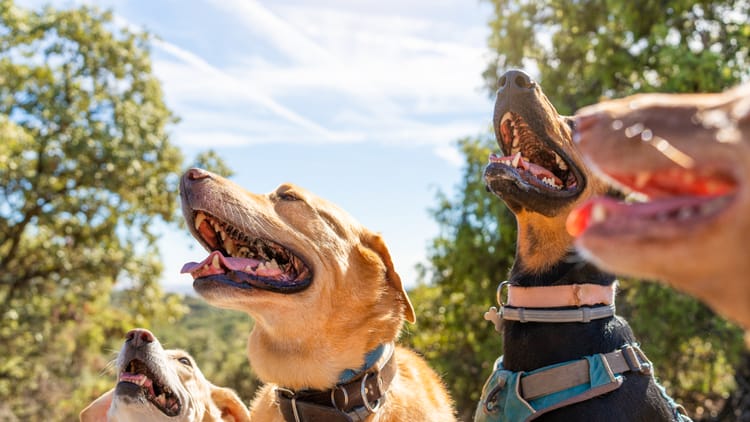
A dog who has spent eleven hundred miles asleep on the dinette has no idea Angels Landing is off limits to it. You do, or you're about to.
A car tourist gets to decide whether to bring the dog. You already brought the dog, which makes this a different question. Not whether dogs in national parks are allowed, but what yours does for the six hours you're on a trail it can't set a paw on, in a park that won't let you leave it behind.
Dogs Are Welcome in Most National Parks, but Trails Are a Different Story
Plenty of people arrive believing dogs are banned from national parks. They aren't. Pets are generally welcome across the developed parts of a park, which covers most of the places an RV actually goes: campgrounds, parking areas, paved roads, picnic areas.
Past the pavement is where it changes. Trails, backcountry, park buildings and ranger-led programs are the standard exclusions, which is how a park can be genuinely dog-friendly and still wreck your itinerary.
The leash rule is more literal than people assume. Six feet, physically held, at parks including Zion and White Sands. A retractable lead paid out past six doesn't satisfy it, even with the dog still technically attached to you. Our guide to RVing in national parks covers the rest of the access questions.
What a BARK Ranger Is, and Why the K Is the One That Bites
The Park Service runs a program for this, and it's more useful than the name suggests. B.A.R.K. Ranger stands for Bag your pet's waste, Always leash your pet, Respect wildlife, and Know where you can go. Parks from Great Smoky Mountains to Hot Springs run it, with a pledge and a tag the dog wears on its collar. Kids lose their minds over the tag.
Three of those four travel with you unchanged. The fourth doesn't. "Know where you can go" is written differently at every entrance station in the system, and it's the one you look up again at every park boundary.
Then there's the rule that isn't in the acronym. You can't leave your dog unattended. Yellowstone and Yosemite both put it in writing, and Yellowstone adds that tying a pet to an object and walking off doesn't count either.
Subscribe to our weekly newsletter.
EVERYTHING YOU NEED TO PLAN A NATIONAL PARK RV TRIP. FREE, EVERY WEDNESDAY.
The National Parks That Allow Dogs on Trails
Acadia opens 100 miles of hiking trails and 45 miles of carriage roads to leashed dogs. The carriage roads are the prize: crushed gravel, gentle grades, no cars. You can walk a dog a whole morning there without once thinking about footing. A handful of trails are closed, and Acadia names them.
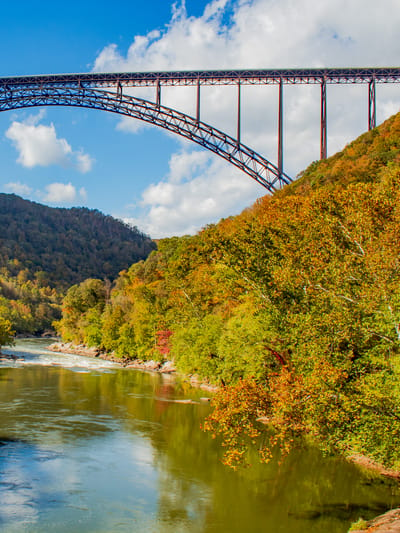
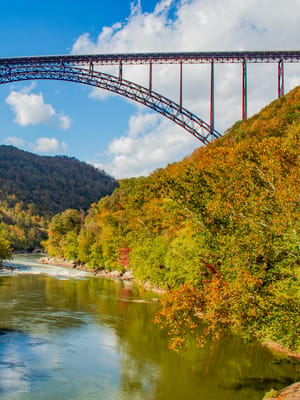
Shenandoah allows leashed pets on most of a trail system past 500 miles, with roughly ten named trails closed. Pets are allowed on every trail in New River Gorge, and we've already mapped three days there in an RV. Petrified Forest opens any paved road or trail plus all designated wilderness, and Cuyahoga Valley 100+ miles including the Towpath. White Sands lets them onto the dunes, and a dog discovering cool sand in the middle of a desert is one of the better things you'll watch all trip.
Zion, Yellowstone and Yosemite: Where the Answer Is Mostly No
The parks everyone is actually driving toward are the strictest.
At Zion, the Pa'rus Trail is the only trail open to pets, and pets aren't allowed on the shuttles. Since the shuttle is how you get up the canyon while it's running, that pair of rules closes the canyon to your dog without anybody saying so outright.
Yellowstone keeps pets within 100 feet of roads, parking areas and campgrounds, and off boardwalks, trails, backcountry and thermal areas. Carrying doesn't buy an exemption. Arms, backpack, stroller, none of it counts, and that's what turns people around at the boardwalks. Our dog-friendly Yellowstone guide has the full version.
Yosemite gives you paved roads, sidewalks, bike paths and the Wawona Meadow Loop. Grand Canyon splits the difference: leashed pets above the rim on the South Rim, in Mather and Desert View campgrounds, never below it.
Rocky Mountain bans pets on every trail it has, plus the tundra and the meadows. Everglades bans them on every trail too, boardwalks included. Great Smoky Mountains allows exactly two, the Gatlinburg Trail and the Oconaluftee River Trail, and the park's own advice is to consider leaving the dog at home.
Plan these as split days.
The Six Hours You Didn't Plan For
Two rules are true at the same time. Your dog can't come on the trail, and your dog can't be left alone.
Split the group: whoever wants the summit takes it, the other takes the dog and the carriage road. Or alternate days, one built around the trail and one around the water bowl. Pick the parks above for the trips where the dog is the reason you're going. Check what your campground permits before you book, because those aren't always the park's rules. And treat boarding as a bonus rather than a plan: the Grand Canyon's South Rim has a kennel, its North Rim says plainly that it has none.
For the hours the dog is at the campsite, an elevated shaded bed with a weather cover beats hot gravel, and a GPS collar with escape alerts is worth carrying in an unfamiliar campground where a dog who slips a leash has no idea which way home is.
One distinction gets people turned around at trailheads. Service dogs may go anywhere visitors can go. Emotional support animals are not service animals under the Park Service's definition, and parks treat them as pets.
Pick the Parks That Fit the Dog You Brought
Bringing the dog doesn't shrink the trip. It changes which parks belong on it. Acadia in October with a dog on the carriage roads beats Zion with a dog in a parking lot, and Zion will still be there on a trip when nobody's waiting in the RV.
FAQs
Can dogs go to national parks?
Yes, in most of them, though the access splits. Pets are generally allowed in developed areas, meaning campgrounds, parking areas, paved roads and picnic areas, and generally not on trails, in the backcountry, inside buildings or at ranger-led programs. The leash requirement is 6 feet and physically held, and at Zion a retractable lead extended past that doesn't count.
Which national parks let dogs on the trails?
Acadia opens 100 miles of hiking trails and 45 miles of carriage roads to leashed pets, and Shenandoah most of a trail system past 500 miles. New River Gorge and Hot Springs allow pets on every trail they have, Cuyahoga Valley on 100+ miles including the Towpath, and White Sands on the dunes.
What do you do with your dog while you hike in a national park?
You plan for it, because the two rules collide: the dog can't join you on most trails and can't be left unattended. The answers are splitting the group, alternating trail days with dog days, or choosing a park that allows pets on trails at all. A few parks have kennels, including the Grand Canyon's South Rim, and gateway towns near Zion board dogs.
Related Posts
Subscribe to the Swervia Newsletter
The best RV stories, tips, and destinations—expertly curated and always free.