Death Valley National Park in November: The RV Guide to the Month the Desert Turns Back On
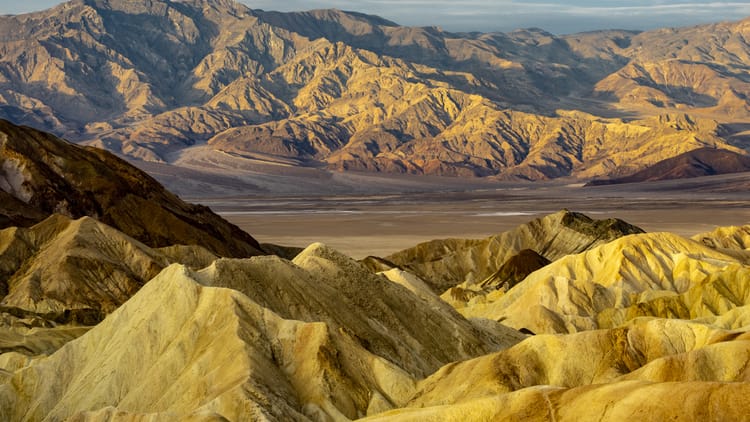
Pull into Furnace Creek on a November afternoon and you'll step out of the RV in a t-shirt. Eight hours later you'll be up rummaging for the second blanket, because the same air that felt like May at four o'clock has given all of it back to a cloudless sky.
That swing is why November is one of the best months to visit Death Valley, and why the month is trickier than it looks in a vehicle you sleep in. The heat that closes trails in July is gone. The seasonal campgrounds are back open, which means the park has roughly double the places to put a large vehicle that it had in September. The salt flat is walkable at noon. And the country's darkest big park gets its long nights back right as the meteors show up.
If your window is flexible, February and March have a real case: warmer nights, and the wildflower years everybody chases. Take it. But November has something those months don't: a park that just changed state. Capacity comes back, the low canyons open up to anybody with shoes, and the high country starts checking out for the year.
Why November Is the Month Death Valley Turns Back On
The machine that makes this place lethal in July is the same one that makes it pleasant in November. The valley floor sits below sea level in a basin walled off by mountains, with almost no moisture in the air to soften anything. Air sinks, compresses, heats, and gets trapped. In summer that produces the hottest reliably measured temperatures on Earth. By November it's just running warm, and the park stops being somewhere you drive through with the air conditioning on and becomes somewhere you stay.
Elevation does the rest. Temperatures drop roughly 3 to 5 degrees for every 1,000 feet you climb, and Death Valley climbs a lot. So while the floor is finally comfortable, the campgrounds up in the Panamints are heading into their off season. Same park, same week, two different climates stacked a vertical mile apart. Plan November around the valley floor. That's the half of the park that's in season.
Where to Camp in Death Valley in November, and Why Sunset Is the Answer
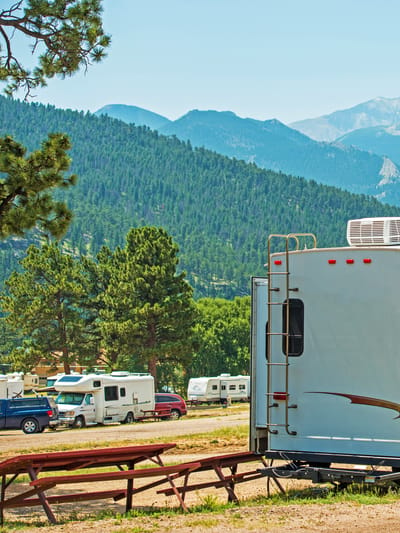
Three of the park's campgrounds are seasonal. Sunset, Stovepipe Wells and Texas Springs close for the summer and come back for the cool months, and November is comfortably inside that window. A summer visitor would tell you Death Valley is tight on camping. They'd be describing a different park than the one you're driving into.
Furnace Creek is the year-round one and the only National Park Service campground here with full hookups, a short row of sites in a park where power is otherwise something you brought with you. It's also the only one you can reserve, and November falls inside its reservation window. Everything else in the park is first come, first served.
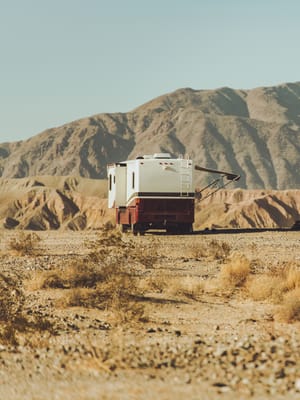
The Park Service says outright that Furnace Creek and Texas Springs fill on weekends and holidays, and that Sunset almost always has sites, even in peak season. Sunset is a big gravel apron rather than a landscaped loop, which is exactly why it never fills, and it sits a few minutes from the same trailheads and overlooks as the campground people book six months out. If you'd rather not build a desert trip around a reservation, that's your answer. Bring leveling blocks and expect gravel.
Length sorts the rest. Furnace Creek takes vehicles up to 100 feet, so almost nothing is too long for it. Mesquite Spring, at the quiet north end, caps at 35 feet. The high-elevation trio (Wildrose, Thorndike and Mahogany Flat) caps at 25 and is a different climate anyway. Emigrant is tents only and has been closed indefinitely for water-system repairs. It's the same pattern you'll find anywhere in the system, and our breakdown of RV size limits in Yellowstone shows how consistent it is across RVing in national parks.
One more number, if you're wintering south: camping in Death Valley is capped at 14 days per year, park-wide. That's a snowbird constraint, not a vacation constraint, but it's the kind of thing people discover in week two.
Subscribe to our weekly newsletter.
EVERYTHING YOU NEED TO PLAN A DESERT RV TRIP THAT WORKS. FREE, EVERY WEDNESDAY.
Death Valley Has Two Novembers
Ask someone who comes every year and they'll tell you the month splits in half.
The front half still runs warm, and it carries the Death Valley '49ers Encampment, which has gathered in this valley every year since 1949 and now runs at Stovepipe Wells. It's cowboy music, a wagon train, gold panning, art shows and history talks, held in the same basin where a party of gold-rush emigrants nearly died in 1849 trying to shortcut their way to California. A hundred-plus years of people choosing to come back to a place that once tried to kill them is a good story, and it's a good weekend. It also puts a crowd at one end of the valley, so if you want the dunes to yourself, take the other end.
The back half is Thanksgiving, which is the park's holiday fill. Furnace Creek and Texas Springs go first, nights are colder than they were three weeks earlier, and Sunset is where you'll end up whether you planned on it or not.
The middle of the month is the quiet stretch. Fewer people than either end, nights cold enough to be interesting but not punishing, and the best sky of the month.
Stargazing in Death Valley: November's Long Nights in the Darkest Park on Earth
Death Valley holds Gold Tier dark-sky certification, the highest rating there is, over the largest designated dark-sky area in the world. That's not a plaque on a visitor-center wall. It's the practical difference between seeing a few dozen stars and seeing the Milky Way throw a shadow.
In November the sky is fully dark early enough that you're watching it after dinner instead of setting an alarm for three in the morning, and because there's no light dome to escape, you're watching it from a camp chair outside the RV. No driving to a dark spot. You're already in it.
The Leonids peak mid-month, and they're worth knowing about without being oversold. In an ordinary year you get a steady trickle of very fast, very bright meteors rather than the storm the shower is famous for. Those come around roughly every three decades, when Earth crosses a fresh ribbon of debris from comet 55P/Tempel-Tuttle. On a normal November night here, a pair of astronomy binoculars does more for you than waiting on a meteor. Point them at Orion's sword and you'll spend an hour there.
Death Valley Weather in November: Warm Day, Cold Night, Same Twenty-Four Hours
On the valley floor, November averages near 77 degrees in the day and 48 at night. That's a 29-degree swing inside one day, and it's a specific problem for a vehicle you're sleeping in.
You run the warm-weather side of the day and the cold-weather side of the night, at a campground that most likely has no hookups. So the furnace burns propane you can't top up at a trailhead, and the nearest refill is a mountain range away. The battery works harder in November than it did in October, right when the furnace fan is pulling more out of it, and the numbers on your monitor mean something different at 48 degrees than they did at 70. Sort out your overnight margin before the first cold night, not during it. Our breakdown of how long you can boondock covers the math, and desert boondocking covers the habits that make the distances between services feel routine.
The cheap fix that veteran desert campers land on: stop heating the whole vehicle overnight. A heated blanket draws a fraction of what a furnace cycle does, and it turns a 48-degree night into a non-event. Run the furnace in the morning when you actually want to stand up in it.
What Opens in November, and What Stays Closed
In November the salt flat and the low canyons become walkable in the middle of the day, which they are not for half the year. Badwater Basin sits 282 feet below sea level, and walking out onto it at noon in a light jacket, in a place that would be a medical emergency in August, is the thing people remember about this park. Golden Canyon and the badlands behind Zabriskie Point come back for the same reason. Meanwhile the high campgrounds and the Panamint trails are going the other direction. Any full Death Valley itinerary is really a floor itinerary in November, and the floor is where the strange stuff is anyway.
Some of the park stays shut, and none of it is a November problem specifically. Titus Canyon Road is closed through September 30, 2027 for the second phase of flood repairs, so it's out for this November and next. Scotty's Castle remains closed for flood recovery with no announced reopening. Darwin Falls Road washed out and isn't expected back before summer 2027, though the falls themselves are still reachable on foot from the highway, which is a better way to arrive at them anyway. Check current conditions before you commit a day to anything unpaved.
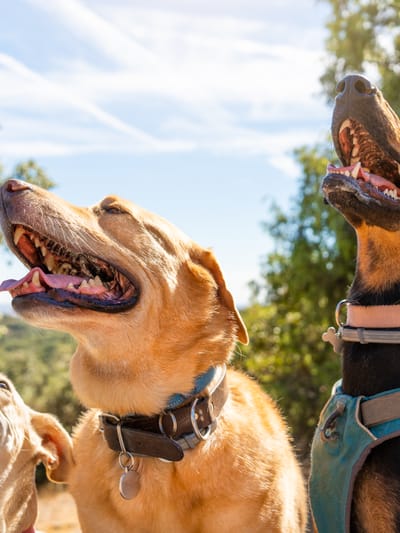
If the dog is coming, one useful wrinkle: leashed pets are allowed on the park's backcountry roads, including Twenty Mule Team Canyon Road, which is more freedom than most national parks hand you.
The Short Version
- Early November: still warm, and the '49ers Encampment puts a crowd at the Stovepipe Wells end of the valley.
- Mid-November: the quiet stretch. Best sky, thinnest crowds, nights cold but not punishing.
- Thanksgiving week: the park's holiday fill and the coldest nights of the month.
- Camping: Furnace Creek is reservable and takes vehicles to 100 feet; everything else is first come, first served. Sunset almost always has sites. Mesquite Spring caps at 35 feet, the high-elevation campgrounds at 25.
- Weather: near 77 degrees by day and 48 at night on the floor, minus 3 to 5 degrees per 1,000 feet of elevation.
- Closed: Titus Canyon Road through September 30, 2027; Scotty's Castle indefinitely; Darwin Falls Road until at least summer 2027.
FAQs
Is November a good time to visit Death Valley in an RV?
It's one of the two or three best months of the year for it. Daytime highs on the valley floor average near 77 degrees, which makes the salt flats and low canyons walkable at midday instead of dangerous, and the seasonal campgrounds at Sunset, Stovepipe Wells and Texas Springs are open again after the summer closure. That combination gives a large vehicle roughly twice the camping options it would have had in September. The trade is cold nights and a park that other people have also figured out, especially over Thanksgiving.
How cold does Death Valley get at night in November?
Lows on the valley floor average around 48 degrees, which sounds mild until you're in it after a 77-degree afternoon. The bigger factor is elevation: temperatures fall roughly 3 to 5 degrees per 1,000 feet, so a campground a mile above Furnace Creek is running 15 to 25 degrees colder on the same night. That's why the high-elevation campgrounds are ending their season while the floor is starting its best one, and why plenty of people run a heated blanket instead of a furnace all night.
Is Death Valley crowded in November?
It depends which November you mean. The first weekend draws the '49ers Encampment to Stovepipe Wells, and Thanksgiving week fills Furnace Creek and Texas Springs, both of which are reservable-or-lucky situations. The middle two weeks are the quiet stretch. Even at the busy ends, the park covers 3.4 million acres, so crowding here means a full campground and a busy overlook, not a line of cars. Sunset Campground almost always has room regardless.
Can you see the Milky Way in Death Valley?
Yes, and it's one of the best places in the country to try. Death Valley is a Gold Tier International Dark Sky Park, the top certification level, and the largest designated dark-sky area in the world. There's no city glow to drive away from, so the valley floor itself is the seat. November helps by giving you long nights that go fully dark early in the evening rather than after midnight.
Why do the rocks move in Death Valley?
The sailing stones of the Racetrack Playa leave long tracks across the dry lakebed, and the mechanism turns out to be gentle rather than mysterious: a thin sheet of ice forms on the shallow-flooded playa overnight, breaks up in the morning sun, and a light wind pushes the floating ice panels, which shove the rocks along the soft mud. Getting there is the harder part. The Racetrack sits at the end of a long, rough backcountry road that shreds tires and is no place for a large vehicle, so treat it as a separate high-clearance day, not a stop.
Do you need a reservation to camp in Death Valley in November?
Only if you want a specific campground. Furnace Creek is the park's one reservable campground and November falls inside its reservation window, so if you want hookups or a guaranteed site, book it. Every other campground in the park is first come, first served, and the Park Service notes that Sunset almost always has sites even in peak season. Plan around Sunset and you can arrive in Death Valley in November without a reservation at all.
Categories
Related Posts
Subscribe to the Swervia Newsletter
The best RV stories, tips, and destinations—expertly curated and always free.