How to Buy Your First RV Like a Pro – The Ultimate Guide

Ready to join the millions hitting the road in their home-on-wheels? You're in good company—and honestly, you're shopping at the perfect time. With new RV sales down 6-8% in 2024 and used RV values dropping, buyers have more leverage than they've had in years. But here's the thing: a great deal means nothing if you end up with a rolling money pit or a rig that doesn't match your actual travel style.
This isn't your typical "buy an RV" guide. We're going beyond the shiny brochures to give you the real talk on RV types, financing tricks dealers don't want you to know, and the inspection secrets that separate road trip heroes from roadside breakdown stories. If you're still working out which rig is right for your lifestyle, our guide to choosing the right RV type breaks down every category by how you actually plan to travel.
RV Types Explained: Finding Your Perfect Rolling Home
The RV world has more options than a diner menu, and just like ordering breakfast, the wrong choice can ruin your whole day. Here's the breakdown of what's actually out there, with the pros, cons, and real-world costs you need to know.
Class A Motorhomes: The Rolling Mansions
These are the big kahunas of the RV world—think Greyhound bus meets luxury hotel. Class A motorhomes range from 26 to 45 feet long and start around $100,000 for entry-level models, climbing to $1,000,000+ for the luxury coaches you see in Instagram RV lifestyle content.
Pros:
- Maximum living space and storage
- High-end amenities (washer/dryer, residential fridge, king beds)
- Impressive presence at campgrounds
- Often include tow capability for a "dinghy" or "toad" car
Cons:
- Fuel costs that'll make you weep (6-10 MPG)
- Challenging to drive and park
- High maintenance costs on the chassis
- Limited campground access due to size
Who They're Perfect For: Full-timers and luxury travelers who prioritize comfort over adventure access. Think less "rough it in Moab" and more "winter in Arizona with the country club crowd."
Red Flags to Watch: Older Class A units with high mileage on expensive chassis (Caterpillar, Cummins engines). Transmission rebuilds can cost $15,000+.
Class B Motorhomes: The Swiss Army Knives
Van life made mainstream. Class B RVs are built on van chassis (think Mercedes Sprinter, Ford Transit) and typically run $80,000-$200,000 new. They're having a moment thanks to #vanlife social media and remote work trends.
Pros:
- Easy to drive (handles like a large van)
- Excellent fuel economy (15-20 MPG)
- Stealth camping capabilities
- Can park anywhere a van can go
Cons:
- Limited headroom and living space
- Minimal storage
- Higher price per square foot
- Weather can feel cramped quickly
Who They're Perfect For: Digital nomads, weekend warriors, and couples who prioritize mobility over space. Ideal for off-grid adventurers hitting national parks.
Reputation Issues: Some brands have had persistent electrical problems. Research specific model year issues before buying.
Class C Motorhomes: The Goldilocks Option
Built on truck chassis with that distinctive "cab-over" bed area. These hit the sweet spot for many families, ranging from $70,000-$150,000 for most models.
Pros:
- Easier to drive than Class A
- Good fuel economy (10-14 MPG)
- Extra sleeping space in cab-over
Cons:
- Can feel top-heavy in wind
- Cab-over bed access can be awkward
- Less luxurious than comparable Class A
Who They're Perfect For: Families and casual RVers who want drivability without sacrificing too much space.
Travel Trailers: The Budget-Friendly Workhorses
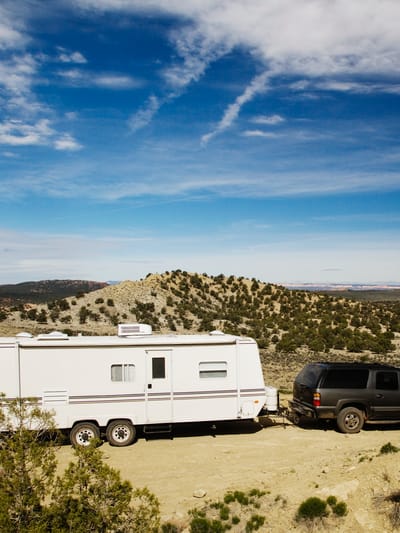
The most popular RV type for good reason. Prices range from $15,000 for basic models to $60,000+ for luxury units. You'll need a capable tow vehicle, but the flexibility is unmatched. Before you commit, read our guide on towing a travel trailer for the first time — the learning curve is real but very manageable with the right prep.
Pros:
- Lowest entry cost
- Leave the trailer, keep the truck
- Huge variety of floor plans and sizes
- Can often fit in your driveway
Cons:
- Towing learning curve and anxiety
- Need proper tow vehicle
- Setup/breakdown time at each stop
- Weather affects towing significantly
Popular Size Categories:
- Ultra-light (under 3,500 lbs): Perfect for smaller SUVs, but often sacrifice quality for weight
- Mid-size (4,000-7,000 lbs): Sweet spot for most families
- Large (8,000+ lbs): Residential features but need heavy-duty trucks
Brands to Research: Many brands have a large market share but quality control issues. Do your research and pay close attention to common complaints of water leaks and structural issues.
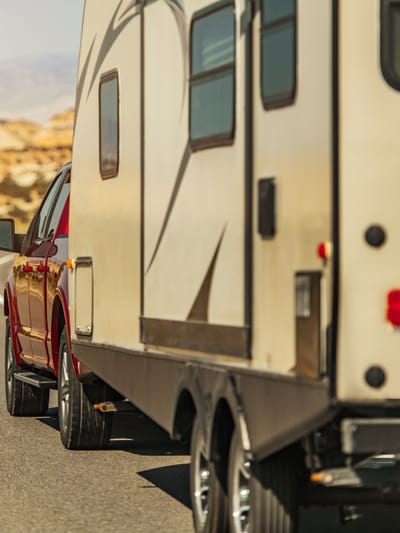
Fifth Wheels: The Apartment on Wheels
These hitch in the truck bed and offer some of the most spacious RV living available. Expect $40,000-$120,000 for most models.
Pros:
- Maximum living space for the footprint
- Separate "bedroom upstairs" feel
- Stable towing (better than travel trailers)
- Often include residential appliances
Cons:
- Require heavy duty pickup truck with proper hitch
- High profile affects fuel economy
- Can't access truck bed when hitched
- More expensive than comparable travel trailers
Who They're Perfect For: Full-timers and long-term travelers who prioritize space and can commit to a truck setup. Our breakdown of the real cost of full-time RV living can help you stress-test your budget before you commit to a fifth wheel lifestyle.
Toy Haulers: Adventure Gear Included
Built with a garage space for ATVs, motorcycles, or bikes. Available in travel trailer and fifth wheel formats. Prices typically run 20-30% higher than comparable non-toy hauler models.
Pros:
- Bring the adventure toys
- Garage doubles as patio space
- Often include fuel stations and generators
- Higher resale value in many markets
Cons:
- Less living space when carrying toys
- Heavier (fuel costs and towing requirements)
- More complex systems
- Higher purchase price
New vs Used: The Real Money Talk
Here's where the rubber meets the road—or in this case, where your bank account meets reality. The RV market in recent years has created some interesting opportunities, but you need to know the game.
New RV Advantages
The Good News:
- Longer loan terms and potentially better interest rates make monthly payments manageable
- Full warranty coverage (typically 1-2 years)
- Latest safety features and technology
- Dealerships carrying more inventory means better negotiating power
The Reality Check:
- New RVs depreciate about 20% in the first year
- Higher property taxes and insurance costs
- You're the guinea pig for any manufacturing defects
- Higher monthly payments despite longer terms
Best New RV Strategy: Shop end-of-model-year clearances (October-December) when dealers need to move inventory. Focus on established floor plans rather than first-year models. Our deep dive on the best time to buy an RV maps out exactly which months give buyers the most leverage.
Used RV Advantages
The Sweet Spot:
- Used RV values have dropped significantly, making now one of the best times to buy
- Someone else absorbed the depreciation hit
- Established track record for common problems
- Good selection still available at most dealers
The Gotchas:
- Unknown maintenance history
- Potential for expensive repairs
- Limited or no warranty
- Financing rates typically higher than new
Sweet Spot Years: 3-5 years old often provides the best value balance. You avoid the steepest depreciation while still getting relatively modern features and remaining warranty coverage. If you're weighing whether to buy outright or rent first to test the lifestyle, our RV rental vs. buying breakdown walks through the numbers honestly.
NEVER BOUGHT AN RV BEFORE?
GET OUR FREE 75-PAGE GUIDE TO BUYING YOUR FIRST RV
Financing Options: Beyond the Dealer's F&I Office
RV financing isn't like car financing—the terms are longer, the stakes are higher, and the options are more varied. Here's your roadmap through the financing maze.
Traditional RV Loans
Current Market Reality:
- Higher interest rates have made financing more expensive, creating hesitation among buyers
- Terms typically range from 10-20 years
- Interest rates vary widely based on credit, loan amount, and age of RV
- Financing rates are holding steady for now but may increase later in the year
Where to Shop:
- Credit Unions: Often offer the best rates for qualified borrowers
- Banks: Traditional but may have limited RV lending experience
- RV-Specific Lenders: Good Sam, Bank of the West specialize in RV loans
- Dealer Financing: Convenient but shop the rate independently first
Alternative Financing Strategies
Personal Loans: For smaller RVs (under $50,000), personal loans might offer competitive rates without the RV as collateral.
Home Equity: If you have home equity, HELOCs often provide lower rates than traditional RV loans.
Cash vs. Finance Decision: Even if you can pay cash, financing might make sense for tax advantages or keeping your emergency fund intact. Before you finalize numbers, check whether an RV membership program belongs in your first-year budget — the campsite savings can meaningfully offset financing costs.
Financing Red Flags
- Dealers pushing "payment only" conversations
- Extended warranties sold as "required" for financing
- Loan terms longer than you plan to keep the RV
- Monthly payments that stretch your budget beyond comfort
Pro Tip: Get pre-approved before shopping. It speeds up the process and prevents dealers from marking up your interest rate.
Professional Inspection: Your $500 Peace of Mind
Whether you're buying new or used, a professional inspection is the smartest money you'll spend. Here's your comprehensive checklist to avoid buyer's remorse.
Exterior Inspection Priorities
Structural Issues (Deal Breakers):
- Inspect windows, ceilings, and doors for cracks and discoloration—which may indicate exterior damage or leaks
- Look for soft spots in sidewalls or roof (water damage)
- Check for separation between different materials
- Examine tire condition and age (replace if over 5 years old). A wireless tire pressure monitoring system is one of the first things worth adding after purchase — it gives you real-time readings on all tires while driving, which matters especially on the first few trips when you're still learning how the rig handles.
Sealing and Weather Protection:
- Inspect seals around windows and doors for any signs of wear, damage, or leaks
- Check roof membrane condition
- Test all exterior lights and electrical connections
- Verify awning operation and fabric condition
Interior Systems Check
Appliances and Electronics:
- Turn on the TV, test run the microwave, and ensure that the furnace heats
- Test air conditioning under load
- Check refrigerator on both electric and propane
- Verify all USB ports and 12V outlets function
Plumbing System:
- Run faucets and flush toilets to ensure the plumbing works properly
- Check for leaks under sinks and around toilet
- Test hot water heater on electric and gas
- Verify pump operation and pressure
Electrical Systems:
- Test GFCI outlets and reset buttons
- Check 30/50 amp shore power connection — our guide to RV shore power hookup mistakes covers exactly what to test and what to watch for before you plug in at your first campground
- Verify generator operation (if equipped)
- Test battery charging system and monitor panel. A battery state-of-charge monitor is worth adding during inspection — it shows real-time voltage and charge percentage, which helps you catch a failing battery before it strands you. A 50-amp RV surge protector should also be on your buy-immediately list; campground power quality varies wildly, and a power surge can damage your converter, appliances, and electronics in seconds.
Mechanical Inspection (Motorhomes)
Engine and Drivetrain:
- Check fluid levels and condition
- Listen for unusual noises during idle and rev
- Test transmission shifting (both forward and reverse)
- Verify cooling system operation
Chassis and Suspension:
- Check for rust or damage to frame
- Inspect shock absorbers and springs
- Test steering responsiveness
- Verify brake operation and feel
Documentation Review
Title and Registration:
- Clear title with no liens (unless you're assuming loan)
- Matching VIN numbers on title and RV
- Current registration and tags
Maintenance Records:
- Oil change history
- Warranty documentation
- Repair receipts (especially for known issues)
- Manual and documentation package
When to Walk Away
Some issues aren't worth the headache:
- Any signs of significant water damage
- Structural problems or frame damage
- Engine or transmission problems in motorhomes
- Multiple electrical issues
- Signs of water damage like mold, mildew, or discoloration
Professional Inspection Services: Consider hiring an NRVIA (National RV Inspectors Association) certified inspector. Cost runs $300-600 but can save thousands in hidden problems. After the inspection, bookmark our complete RV maintenance checklist — it covers everything you'll need to stay on top of from day one, organized by system and season.
Negotiation Tips: Getting Your Best Deal
The RV market has shifted in buyers' favor, but you still need strategy to maximize your advantage. Here's how to negotiate like a pro without being that customer.
Research and Preparation
Know the Market:
- Check NADA RV values for baseline pricing
- Research comparable units within 200 miles
- Understand seasonal pricing patterns (winter = better deals)
- With inventory tightening but prices creeping back up, timing matters
Dealer Cost Intelligence:
- New RV dealer markup typically 25-35%
- Used RV markup varies widely (10-40%)
- Trade-in values are usually wholesale minus reconditioning costs
- Extended warranties have high profit margins
Negotiation Strategy
Start with the Right Mindset:
- Focus on total cost, not monthly payments
- Negotiate each component separately (RV price, trade value, financing, add-ons)
- Be prepared to walk away
- Timing matters—end of month/quarter provides urgency
Effective Tactics:
- Start negotiations on total price before discussing trade or financing
- Get all offers in writing
- Use competitive quotes as leverage
- Bundle negotiations (if buying multiple items, negotiate package deal)
What's Actually Negotiable:
- Purchase price (obviously)
- Extended warranties (huge markup here)
- Accessories and add-ons
- Delivery/prep fees
- Sometimes financing rates (if dealer has multiple lenders)
Common Dealer Tricks to Avoid
The Payment Focus: Dealers love to ask "what payment can you afford?" This lets them manipulate loan terms to hit your payment while maximizing their profit.
The Four-Square Method: Drawing out payment, trade value, price, and down payment to confuse the negotiation. Insist on negotiating one item at a time.
Add-On Pressure: Extended warranties, paint protection, fabric protection sold at high markup. Research these independently.
Urgency Tactics: "This price is only good today" or "someone else is looking at this tomorrow." Quality RVs don't disappear overnight in today's market.
Closing the Deal
Final Walkthrough:
- Complete the inspection checklist again
- Test all systems one more time
- Verify all promised repairs are completed
- Check that all accessories and manuals are included
Documentation:
- Review all paperwork carefully
- Understand warranty terms and limitations
- Get contact information for service department
- Schedule any follow-up work in writing
Making Your Decision: Beyond the Spreadsheet
You've done the research, crunched the numbers, and maybe even survived a dealer's sales pitch. But here's the final reality check: the best RV isn't the one that looks perfect on paper—it's the one that matches how you actually plan to travel.
Ask Yourself:
- How many nights per year will you realistically use this?
- What's your true comfort level with maintenance and repairs?
- Does your travel style match this RV type?
- Can you afford not just the payment, but insurance, maintenance, storage, and fuel?
The Market Timing Reality: With used RV values dropped and inventory available, buyers have leverage they haven't had in years. But demand is expected to push prices back up, so if you've found the right rig at the right price, don't overthink it.
The perfect RV doesn't exist, but the right RV for your lifestyle and budget does. Do your homework, trust your inspection, negotiate fairly, and then get out there and make some memories. One of the first things you'll want to sort out after purchase is a solid arrival routine — our RV setup checklist walks you through exactly what to do when you pull into camp, so you're not guessing through the first few hookups. And if you've ever wondered whether an RV battery dying is a sign of something bigger, our guide covers the most common causes and the fixes that actually work.
If you want the whole process in one place, download the free Ultimate RV Buyer's Guide for the inspection checklist, the financing math, and the questions to ask before you sign.
FAQs
What is the best type of RV for a first-time buyer?
For most first-time buyers, a travel trailer or Class C motorhome offers the best combination of price, livability, and ease of use. Travel trailers start around $15,000-$20,000, leave your tow vehicle free when you're set up, and come in a huge range of floor plans. Class C motorhomes eliminate the towing learning curve and run $70,000-$150,000 for most models. The right answer depends on whether you already have a capable tow vehicle and how often you plan to move versus stay put.
How much should I budget for my first RV purchase?
Your purchase price is only part of the budget. Beyond the sticker price, plan for annual maintenance of 1-2% of the RV's value, campground fees ranging from free on public land to $100+ per night at full-hookup resorts, insurance ($500-$2,000 per year depending on rig type), storage ($50-$300 per month if you can't park at home), and fuel. A $40,000 travel trailer will realistically cost $6,000-$10,000 per year in additional expenses on top of any loan payment.
Is it better to buy a new or used RV?
Used RVs in the 3-5 year range typically offer the best value — someone else absorbed the 20% first-year depreciation hit, common problems are already documented, and prices have dropped significantly from recent highs. New RVs offer full warranty coverage and the latest features but come with higher upfront cost and the risk of being the first owner to discover manufacturing defects. If budget allows, a 3-5 year old model from a reputable brand with verifiable maintenance records is usually the smarter buy.
Do I need a special license to drive an RV?
In most U.S. states, a standard Class C driver's license covers motorhomes up to 26,000 lbs GVWR, which includes the vast majority of Class A, B, and C motorhomes available to buyers. Larger rigs may require a non-commercial Class B license in some states. Travel trailers and fifth wheels don't require any additional licensing in most states, though some states have weight-based requirements for trailer combinations. Always check your specific state's requirements before purchase.
What should I look for during an RV inspection?
The highest-priority items are any signs of water damage — soft spots in walls, floors, or ceiling; staining around windows, roof vents, or seams; and any mold or mildew smell. Water damage is the leading cause of expensive RV repairs and can compromise structural integrity over time. After water damage, check tire age (replace anything over 5 years regardless of tread), test all appliances under load, and verify the electrical system on both shore power and battery. Budget $300-$600 for an NRVIA-certified inspector on any used purchase.
How do I get the best price when buying an RV?
Get pre-approved for financing before you set foot in a dealership — it removes the dealer's ability to mark up your interest rate and lets you focus negotiations on total purchase price rather than monthly payment. Shop in fall and winter when dealers are motivated to move inventory. Research NADA values for any specific unit and pull comparable listings within 200 miles. Negotiate the RV price, trade value, and financing rate separately, never as a bundled package. Extended warranties carry 40-60% dealer margins and are almost always negotiable.
What are the ongoing costs of RV ownership I should know about before buying?
The most commonly underestimated costs are tires (a full set of travel trailer tires can run $800-$1,500; motorhome tires $3,000-$8,000), roof resealing (most RVs need annual roof inspection and periodic resealing at $200-$600), and unexpected repairs that aren't covered by warranty. RV insurance typically runs $500-$2,000 per year depending on rig value and coverage level. Storage adds $50-$300 per month if your HOA or municipality restricts parking. Build a maintenance reserve of at least $1,500-$2,000 per year into your ownership budget from day one.






Categories
Related Posts



Subscribe to the Swervia Newsletter
The best RV stories, tips, and destinations—expertly curated and always free.