What You Need to Know Before Your First RV Trip Out West
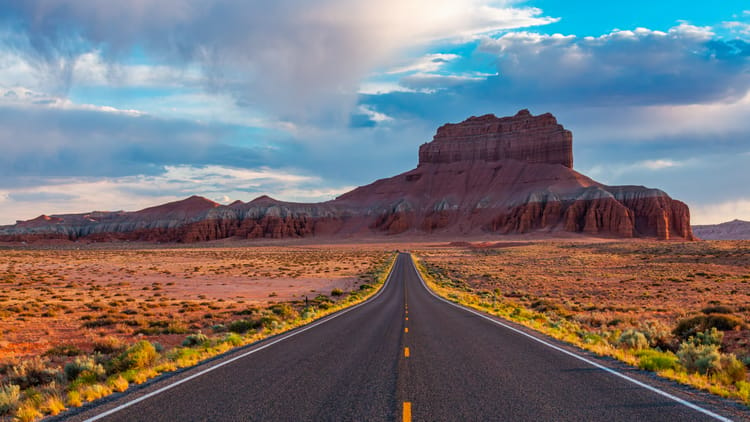
If you've spent any amount of time scrolling through western RV trips online, you've probably gotten a very specific impression: endless canyon views, golden hour photos taken from camp chairs, and itineraries that somehow fit Yellowstone, Zion, the Grand Canyon, and the Pacific Coast into two weeks. What those posts tend to leave out is the part where someone's tow vehicle is crawling up a six percent grade at 35 mph, the cell signal disappeared two hours ago, and Denver is four states away.
RVing out west is genuinely one of the best things you can do with an RV. The landscapes are unlike anything in the eastern half of the country, the open roads reward slower travel, and the sheer variety available — desert, alpine, coastal, high plains — means there's something for every kind of traveler. But it requires a different kind of planning than a trip to the Smoky Mountains or the Outer Banks. The distances are bigger, the elevation is real, and the logistics are specific enough that going in without a framework tends to produce either a rushed, exhausting trip or a drive home with a list of things you wish someone had told you first.
This guide is that list.
What "Out West" Actually Means for RVers
The American West is not a single region. It's five or six distinct ones, each with its own character, driving demands, climate, and best season — and understanding the differences before you plan your route will save you a lot of second-guessing once you're on the road.
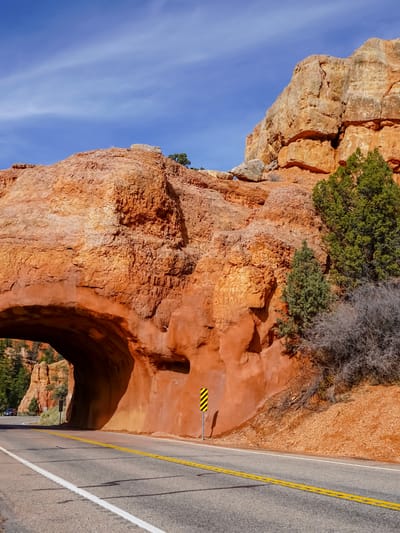
The Southwest desert corridor — Utah, Arizona, New Mexico, southern Nevada — is classic canyon country. Red rock formations, slot canyons, dramatic open skies. Utah's Mighty Five parks (Zion, Bryce Canyon, Capitol Reef, Arches, Canyonlands) are clustered closely enough that you can build an efficient loop, and the region is genuinely RV-accessible. The tradeoff: summer heat in the lower desert can be punishing, with triple-digit temperatures that stress both your rig's systems and your sanity. Spring and fall are the prime windows here.
The Pacific Northwest — Oregon and Washington — is lush, green, and dramatically different from Utah. Crater Lake, the Oregon coast, Olympic National Park, and the Cascades all live here. The shoulder seasons (late spring and early fall) offer some of the best driving in the country with lighter crowds. Summer is excellent but draws big crowds to the coast. Rain is a variable you plan around rather than avoid.
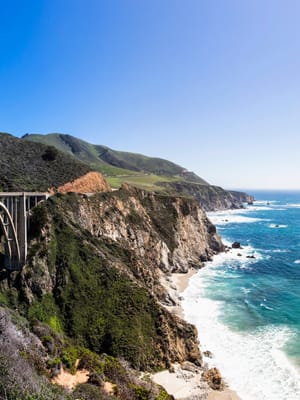
California is its own continent, essentially. The Pacific Coast Highway from San Diego to San Francisco, the Sierra Nevada including Yosemite and Sequoia, the Eastern Sierra corridor on US-395, and the Redwood Coast in the north are all very different experiences. Plan by region, not by "doing California."
The Rocky Mountain states — Colorado, Wyoming, Montana — give you the alpine experience: big peaks, big skies, cooler temps even in summer, and some of the most demanding driving conditions you'll encounter in your RV. This is where elevation becomes a real planning factor.
The decision about which region to prioritize shapes everything else — how long you need, what your driving days look like, and what time of year makes sense. Many first-timers try to hit multiple regions on one trip and end up spending more time in transit than anywhere interesting. Pick one region, do it well, and come home already planning the return.
How Long You Actually Need for RVing Out West
This is the question that catches most first-timers off guard: the West is enormous in a way that doesn't fully register until you're in it.
If you're coming from the Southeast or the East Coast, transit alone deserves serious consideration. Driving from Atlanta to Utah, for example, is roughly 1,800 miles one way. At a realistic RV pace, that's five to six days of driving before you've seen a single canyon. If your total window is two weeks, you'll spend the majority of it getting there and back. For trips of that length from the eastern US, it's worth honestly considering flying to a western city and renting an RV locally. Denver, Las Vegas, Phoenix, and Salt Lake City all have RV rental options, and starting your trip from one of those hubs means your two weeks actually go toward experiencing the West rather than crossing Kansas. Our RV rental vs. buying guide walks through exactly that decision if you're weighing your options before the trip.
If you're driving from the Midwest or the Mountain West, two weeks is a workable window for one well-chosen region. Three weeks gives you more room to breathe. For anyone with the flexibility of a longer trip, the West rewards it.
How to Think About Daily Mileage
A reasonable planning benchmark for RVers is 200 to 300 miles per driving day — but context matters considerably.
Full-timers and experienced long-haul RVers often push past this, covering 400 miles or more when they're in transit mode and not stopping to explore. When you have weeks or months on the road, burning a day to cover ground between destinations is a manageable trade. But if you're working with two or three weeks of vacation time, spending four of those days driving 400 miles through featureless interstate isn't the trip you planned. The smarter approach for shorter trips is to drive less and stop for things worth stopping for — a state park you didn't know existed, a small western town with an unexpectedly good lunch spot, a pull-off with a view that isn't in any travel guide. The West has a lot of those.
On mountain routes specifically, mileage estimates from standard mapping apps don't account for the reality of driving a loaded rig up a sustained grade. What shows as a three-hour drive can take four or five once elevation, truck stops, and slower speeds on grades are factored in. Build that buffer in rather than discovering it mid-route.
Regions vs. Park-Hopping: How to Structure Your Route
Most first-timers plan their western RV trip around a list of national parks. This approach makes sense — the parks are spectacular and they give structure to a route — but it comes with a specific set of logistics problems that can make the trip feel like an obligation rather than a vacation.
National park campgrounds book out months in advance for peak season, often six months out on Recreation.gov. Showing up without a reservation at Yosemite in July is not a strategy. For parks like Glacier and Yellowstone, popular sites can be gone within minutes of opening. If your trip is built around specific parks and you haven't secured those reservations, the trip may not survive contact with reality.
A better framework for first-timers: anchor your route around a region, pick one or two parks as bookends, and fill the middle with state parks, national forests, BLM land, and smaller destinations that don't require advance planning at the same scale. If you're new to camping without hookups, our complete boondocking guide covers everything you need to know before pulling onto BLM land for the first time. The small-town stops, the state parks with open hookup sites, the scenic byways between the marquee destinations — that's where the western RV experience actually lives for most people.
Utah's Highway 12 Scenic Byway between Bryce Canyon and Capitol Reef is a good example. It runs through Grand Staircase-Escalante National Monument and connects two national parks with some of the most dramatic landscape in the country, and most of the campgrounds along the route don't carry the same reservation pressure as the parks themselves. Montana's Beartooth Highway between Red Lodge and the northeast entrance of Yellowstone is another: one of the highest paved roads in the United States, jaw-dropping by any measure, and largely overlooked by people who fly straight to the Old Faithful parking lot.
Planning a western route is half the trip. Subscribe to our weekly newsletter.
THE WESTERN RV PLANNING GUIDE YOUR INBOX DESERVES — EVERY WEDNESDAY, FREE.
What Elevation Actually Does to Your RV
First-timers often underestimate how much elevation changes the experience of RVing out west, both for them personally and for their equipment.
For your rig: naturally aspirated gas engines lose roughly three percent of their rated power for every 1,000 feet of elevation gain. That's not dramatic at 3,000 feet, but it becomes very noticeable on a sustained climb to 10,000 feet — which is not unusual in Colorado, and common in parts of Wyoming and Montana. Turbocharged diesel engines handle altitude considerably better, losing less than one percent per 1,000 feet, which is one practical reason diesel tow vehicles are popular among RVers who spend time in mountain terrain. Your tow vehicle or motorhome will work harder, run hotter, and burn more fuel on mountain grades regardless of fuel type. Brake wear increases significantly on long descents; use engine braking rather than riding the brake pedal, which can cause brake fade on extended grades.
If you're towing a trailer, verify your brake controller is properly calibrated before any mountain driving — an under-adjusted controller puts the full braking load on your tow vehicle alone, which is more than it's designed to handle. If mountain towing is new territory for you, our first-time towing guide covers brake controllers, weight distribution, and grade descents in detail. A solar-powered tire pressure monitoring system is also worth having before a western trip — tire blowouts on mountain grades are far more dangerous than they are on flat interstate, and knowing your pressures in real time removes one variable from the equation.
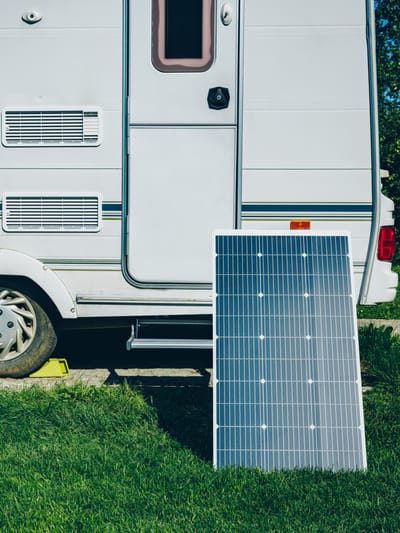
Propane appliances can struggle above 5,000 to 6,000 feet due to lower atmospheric oxygen, which disrupts the air-fuel mix a flame requires. Your propane fridge may need to switch to battery or shore power at higher elevations. Your water heater may need a high-altitude kit. These aren't emergencies, but they're worth knowing before you're parked at 8,000 feet wondering why your coffee maker isn't behaving. If you're planning to run on battery power at elevation, our guide to building an RV solar setup will help you size your system before the trip.
For you personally: altitude sickness is real and affects people differently. Symptoms typically start with headache, fatigue, and mild nausea. The standard advice is to ascend gradually, drink more water than you think you need, avoid alcohol for the first day or two at elevation, and descend if symptoms worsen. Most people feel noticeably better after 24 hours as they acclimatize. Children and older adults can be more susceptible. If you have existing heart or lung concerns, talk to your doctor before planning a high-altitude itinerary.
Cell Service, Connectivity, and Going Offline
One of the more practically important things to understand about western RVing is that cell service is genuinely spotty across large stretches of the region. The big carriers have solid coverage in population centers and along major interstates, but once you're on two-lane highways in eastern Utah, the central Nevada desert, or anywhere in rural Montana, the bars disappear and stay gone.
This affects navigation, which means you download offline maps before you leave a town with reliable signal. Google Maps, Maps.me, and Gaia GPS all support offline use and are worth having loaded before you need them. It affects communication, which means leaving an itinerary with someone at home and checking in when you have signal rather than assuming you always will. And it affects your expectations: the West's dead zones are not bugs. For many people, they end up being a feature.
If reliable connectivity is genuinely important to your trip — for work, for kids, for peace of mind — Starlink has changed the satellite internet landscape dramatically for RVers in recent years and covers much of the western US where traditional carriers don't. It's an additional investment but worth understanding before you go. For digital nomads who need reliable connectivity on the road, our breakdown of the best RV internet options for remote work covers Starlink alongside cellular boosters and mobile hotspot strategies.
Timing: When to Go and When to Think Twice
Season matters more in the West than in many other parts of the country, and the decision affects both the experience and the logistics.
Summer (June through August) is peak season across almost all western destinations. National park crowds are at their highest, campground reservations are at their most competitive, temperatures in the desert can exceed 110 degrees, and some mountain roads don't fully open until June or July depending on snowpack. Going-to-the-Sun Road in Glacier National Park typically doesn't fully open until early July. If summer is your only window, plan earlier and reserve aggressively. The parks are worth the crowds if you go in with realistic expectations.
Spring and fall are broadly the best times to be RVing out west, but both seasons have narrower sweet spots than the calendar suggests. The actual windows are roughly mid-May through early June and mid-September through mid-October. Outside of those, conditions work against you in ways that are easy to underestimate.
In spring, mud season runs from late March through May across much of the Rockies and Southwest. Unpaved roads and trail access can be impassable or closed entirely. Higher trails hold snow well into June. Snowmelt sends rivers running high and fast, which makes casual rafting more dangerous than the same routes in late summer. Many mountain towns go through a dead period between ski season closing and summer tourism picking up, so outfitters, restaurants, and services may be limited or closed.
Fall closes fast and on its own schedule. Early snowstorms can hit mountain passes in September, sometimes October at lower elevations. Campgrounds and park roads occasionally close ahead of their published dates when snow arrives early. Several of the high-elevation routes that define a western itinerary — Beartooth Highway, Trail Ridge Road in Rocky Mountain National Park, Going-to-the-Sun Road in Glacier — may already be shutting down by late October. Mountain towns also have a post-Labor Day lull before fall foliage peaks, so services thin out again. The upside is real: when you hit either season in its sweet spot, the desert Southwest is at its most comfortable, the national parks are accessible but nowhere near summer crowds, wildflower and foliage seasons can be exceptional, and campground reservations are considerably easier to secure.
Winter RVing out west is viable in the lower-elevation desert regions — parts of Arizona, southern Utah, southern California — but requires preparation for freezing nights, potential road closures, and the reality that most national park infrastructure scales back significantly. For the Pacific Northwest and Rocky Mountain states, winter is a serious undertaking.
Route Planning Tools Worth Using
The routing tools built for regular passenger vehicles give you a useful starting point but don't account for RV-specific concerns like bridge heights, weight limits, propane restrictions in tunnels, and steep grades that challenge certain rigs.
Recreation.gov is where you reserve national park and national forest campgrounds. If your trip involves any national parks during peak season, get comfortable with this site before your trip dates are set — reservations open exactly six months in advance for most sites and fill fast.
The National Park Service website is underutilized by first-timers. Individual park pages contain RV-specific length and height restrictions, road condition updates, timed entry requirements, and seasonal closure information that can meaningfully change your route planning.
An America the Beautiful pass costs $80 and covers entrance fees to all national parks and federal recreation areas for a year. If your western itinerary hits even two or three national parks, it pays for itself.
Before you leave home, run through our RV maintenance checklist — mountain driving surfaces problems that flat-road RVing masks entirely, from brake wear to battery health. A campground-ready surge protector is also worth packing; power quality varies widely at smaller campgrounds near popular western parks, and the wrong voltage spike can damage onboard electronics. Once you're set up at camp, a set of leveling blocks will make uneven terrain at dispersed sites considerably less frustrating — the West has a lot of sloped ground. Our RV setup checklist covers the full arrival routine so nothing gets missed when you pull in tired after a long drive day.
The Most Common First-Timer Mistakes
Trying to cover too much distance in too little time tops the list. An ambitious itinerary that works on paper tends to collapse around day four when everyone's tired, the kids are done with the truck, and you still have six hours to drive before your reserved site. Give yourself fewer destinations and more time at each one.
Not checking road and height restrictions for your specific rig. Some of the most iconic routes in the West have RV-specific limitations. Going-to-the-Sun Road in Glacier has restrictions for vehicles exceeding 21 feet in combined length. Parts of Zion require using the park shuttle rather than driving your own vehicle into the canyon. Researching your rig's actual dimensions and cross-referencing with park restrictions before you leave prevents real problems on the road.
Planning for summer peak without booking campgrounds months out. Six months in advance is not an exaggeration for major parks in July. If you miss the reservation window, look for first-come-first-served options or campgrounds adjacent to the parks rather than inside them. Many of the best western RV experiences happen just outside park boundaries anyway.
Underestimating the cost of a western RV trip. Fuel is the big variable — a large motorhome or heavy tow setup getting eight to ten miles per gallon across several thousand miles of mountain driving adds up fast. Factor in entry fees, campground costs, and the reality that grocery stores thin out in rural areas and smaller stores charge accordingly when you need to resupply. For a detailed look at what a longer western trip costs at the full-time level, our full-time RV living cost breakdown has benchmarks worth knowing even if you're just planning a vacation trip. And since battery health is something mountain driving can stress quickly, it's worth reading our RV battery troubleshooting guide before you go — a dead house battery 200 miles from the nearest dealer is not where you want to learn about it. If you're planning to camp off-grid at any point, a portable solar generator gives you a reliable power source for devices and small appliances without relying on hookups or running your engine.
The Upside of All of It
Here's the honest counterpoint to every practical consideration above: RVing out west tends to produce the kind of trip that people talk about for years. The scale of the landscape is different from anywhere else in the country. There's something about waking up in your own bed inside a canyon or at the edge of an alpine meadow that a hotel room simply doesn't replicate.
The planning has a learning curve. The execution requires patience. And the result, for most people who do it even once, is a fairly immediate desire to go back and do it again.
Start smaller than you think you need to. One region, two weeks with realistic mileage, or three if you can swing it. Give the route room to breathe. The West will meet you halfway.
FAQs
How long should my first RV trip out west be?
For most first-timers, two to three weeks is the realistic minimum for one western region. If you're driving from the eastern US, factor in five to six days of transit each way — which effectively means flying to a hub city and renting an RV locally is a better option for shorter trips. Denver, Las Vegas, Phoenix, and Salt Lake City all have RV rental options. If you're driving from the Midwest, two weeks is workable for one well-chosen region, and three weeks is more comfortable.
What is the best time of year for RVing out west?
The actual sweet spots are narrower than the calendar suggests: roughly mid-May through early June and mid-September through mid-October. In spring, mud season (late March through May) can close unpaved roads and trail access across the Rockies and Southwest. Higher trails hold snow into June, snowmelt makes rivers run high and fast, and many mountain towns are in a lull between ski season and summer tourism. In fall, early snowstorms can hit mountain passes in September, high-elevation roads like Beartooth Highway and Going-to-the-Sun Road may close ahead of schedule, and services thin out again after Labor Day. Hit either season in its window and you get comfortable temperatures, lighter crowds, and much better campground availability. Miss it and you may encounter more closures than you planned for.
Do I need to book campgrounds in advance for western national parks?
Yes, especially for summer travel. National park campgrounds on Recreation.gov open reservations exactly six months in advance and fill quickly — within minutes for popular parks like Yellowstone and Yosemite in peak season. For shoulder season travel, availability improves significantly. Key points:
- Reservations open six months in advance on Recreation.gov
- Peak summer sites at Yellowstone and Yosemite fill within minutes of opening
- National forest and BLM campgrounds adjacent to parks carry far less reservation pressure
- Many adjacent campgrounds are free or low cost under dispersed camping rules
How much does an RV trip out west cost?
Costs vary widely by rig, route, and travel style. Fuel is typically the largest variable expense. Key benchmarks to plan around:
- Fuel: an RV getting 8 to 10 mpg over a 3,000-mile western trip will spend $600 to $900 on gas at current prices; mountain driving reduces efficiency further
- America the Beautiful pass: $80 covers all federal land entrance fees for a year and pays for itself quickly on a western itinerary
- Campground costs: the range is wider than most people expect — free on dispersed BLM land at one end, $175 or more per night at peak-season resort-style campgrounds like a Glacier-area KOA at the other; a western RV trip can scale to almost any budget, but the tradeoff is real: free dispersed sites mean no hookups, no amenities, and sometimes a rough road to get there, while premium campgrounds give you full hookups and showers at resort prices
- Resupply: grocery stores thin out in rural western areas; budget for higher prices at smaller stores along remote routes
What western states are easiest for first-time RVers?
Utah's national park corridor and Colorado's Front Range are commonly recommended starting points. Both offer well-developed RV infrastructure, clearly marked scenic routes, and a mix of park and non-park camping options. The Southwest desert corridor is generally more forgiving for first-timers than the Pacific Northwest or high Rocky Mountain routes, which involve more demanding mountain driving.
Does elevation affect my RV?
Yes, in several practical ways:
- Gas engines lose roughly 3 percent of rated power per 1,000 feet of elevation gain — noticeable on sustained climbs above 6,000 to 8,000 feet; turbocharged diesel engines handle altitude considerably better, losing less than 1 percent per 1,000 feet
- Propane appliances can underperform above 5,000 to 6,000 feet due to thinner air
- Your propane fridge may need to run on battery or shore power at higher elevations
- Brakes wear faster on long descents — use engine braking on mountain grades rather than riding the brake pedal; if you're towing, verify your brake controller is properly calibrated before mountain driving, as an under-adjusted controller puts the full braking load on your tow vehicle alone
Do I need a special license to drive an RV out west?
In most cases, no. A standard driver's license is sufficient for most RV classes in all western states, though specific requirements vary by vehicle weight and class. Check the requirements for your specific rig and state of registration before you go. Some larger Class A motorhomes may require a non-commercial Class B license in certain states.
What should I know about cell service while RVing out west?
Expect significant dead zones. Major interstates and population centers have reliable coverage, but two-lane highways through the desert Southwest, rural Montana, and eastern Oregon routinely have no signal for hours at a time. Practical steps:
- Download offline maps before leaving coverage areas — Google Maps, Maps.me, and Gaia GPS all support offline use
- Leave your itinerary with someone at home and check in when signal is available
Starlink provides satellite coverage in most western regions where carriers don't reach, and has become a popular option for RVers who need reliable connectivity


Categories
Related Posts

Subscribe to the Swervia Newsletter
The best RV stories, tips, and destinations—expertly curated and always free.