Winter RV Camping Prep: What to Do Before the First Freeze
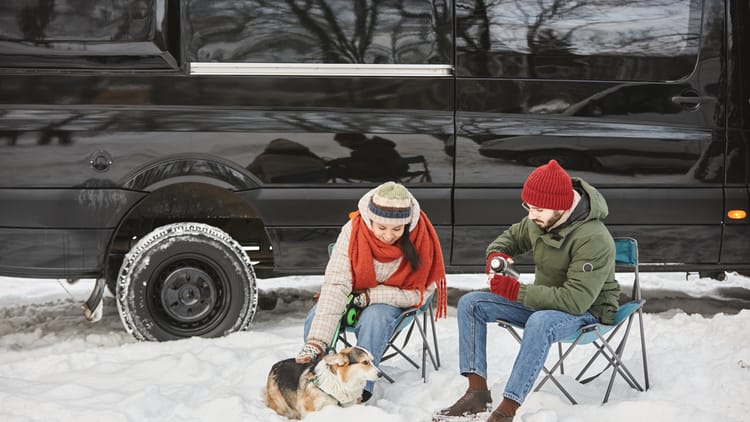
The first cold trip teaches you the sound of your own furnace. Not the noise it makes. The rhythm. It fires, runs a few minutes, quits, and comes back, over and over, and somewhere in the small hours you stop sleeping and start doing arithmetic about how much propane is left in a twenty-pound bottle you filled on the way out of town.
That's winter camping. It's a good trip. It just runs on a completely different set of assumptions than the one you took in June, and almost nobody tells you which ones until you're standing outside in socks at 6 degrees trying to figure out why the faucet went quiet.
So answer one question before you drain anything or buy anything: is this RV getting used this winter, or put away for it? People get that backwards every October, and it costs them either the trip or a set of split pipes. A winterized RV is not a winter-ready RV. It's a storage unit with a bed in it.
Storing It or Camping in It
Winterizing means the water comes out. Fresh tank drained, water heater drained, lines cleared with compressed air or filled with pink RV antifreeze, plumbing left dry until spring. Nothing can freeze because there's nothing left in there to freeze.
Which is perfect, right up until you want a shower.
Every year somebody runs antifreeze through an RV in October and books a February week in Moab, and those two facts don't fit in the same season. A winterized RV has no faucets, no shower, and no toilet flush until you de-winterize it, which means flushing the antifreeze out, sanitizing the system, refilling, and hunting for the leak you created. Call it an afternoon of your life.
So: will this RV see a campground before April? If the answer is no, go do the other job and enjoy the peace of mind. How to winterize an RV walks through it for a motorhome, how to winterize a travel trailer covers the trailer version, and blowing out the water lines is the compressed-air method for anyone who'd rather not put antifreeze in their plumbing. If you're also deciding where it sits for five months, our guide to where to store your RV covers that.
If the answer is yes, you never winterize. The water stays in and the temperature drops anyway, which is the whole problem, and the rest of this is how you win it.
What Cold Breaks First
Water expands about nine percent when it freezes, and a copper or PEX fitting has nowhere to put that. It splits. That single physical fact is behind nearly every winter failure an RV has, and the failures happen in a predictable order.
The hose goes first. Always the hose. A garden hose lying on frozen gravel between the spigot and your city-water inlet has no insulation, no heat, and the smallest volume of water in the system, and it can freeze solid in a few hours of wind while the inside of your RV is a comfortable 68 degrees. Then the low-point drains hanging below the floor. Then whatever lines run through an unheated underbelly. Then, last, the holding tanks, because sixty gallons of gray water takes a long time to give up its heat.
Here's the cruel part: a split fitting doesn't announce itself. It happens at 15 degrees in January and does absolutely nothing until the thaw, and then one warm afternoon in March it quietly fills the cabinet under your bathroom sink while you're at the grocery store.
The failures nobody warns you about aren't plumbing at all. A lead-acid bank at 20 degrees delivers noticeably less usable amp-hours than the same bank in July, and that's exactly when the furnace blower starts drawing 5 or 6 amps every time it cycles. Propane disappears at a rate that looks like a leak. And a sealed RV with two people breathing in it turns into a terrarium.
All of that is fixable, and none of it is fixable in an RV that was already behind on maintenance. If yours has a soft spot in the roof or a seal you've been meaning to get to, our RV maintenance checklist comes before any of this.
Keeping RV Pipes From Freezing
Buy the heated hose. If you buy one thing on this page, buy that.
Skirting saves more heat overall, and I'll get to it, but the hose is the part that fails first, fails fastest, and fails in the most annoying possible way, which is halfway through a shampoo. A heated drinking-water hose with its own thermostat runs a low-wattage element down its length and plugs into shore power, and it turns the weakest link in the system into one you stop thinking about. Wrap the spigot and the inlet fitting too — the hose can't protect the brass on either end of itself. The campground's spigot is a chunk of metal sticking out of frozen ground.
Then go look underneath your RV with a flashlight, before the first cold trip, in your driveway where it's easy.
You're checking for one of three situations. Some RVs run the plumbing inside an enclosed underbelly with furnace ducting routed past the tanks, which is the good version. Some have an enclosed underbelly with nothing heating it, which insulates beautifully on the brochure and freezes at 20 degrees like everything else. And some just leave the tanks hanging in the open air under the floor. What you find decides how much of the next paragraph is your problem. If you're unsure which tank is which down there, our RV plumbing primer sorts it out in five minutes.
For exposed tanks, the fix is adhesive tank heating pads with an automatic thermostat, wired into the 12-volt system so they switch themselves on as the temperature drops. Not glamorous. A fraction of what a cracked gray tank costs to replace.
When a hard freeze is coming, do the opposite of what instinct says. Stop defending the water system and disconnect it.
Pull the hose, run off the fresh tank, and refill during the warm part of the day using a drinking-water-safe hose you coil up and keep inside between fills. You've now removed the most vulnerable component from the equation entirely. For a genuinely brutal stretch, days that never climb above freezing, leave the water off and haul jugs. It's less comfortable and it cannot freeze, and it's why there's a line at the campground bathhouse in January.
One thing you'll see everywhere and shouldn't trust: a single temperature at which RV pipes freeze. Twenty degrees for six hours with a 20 mph wind is far more dangerous than 25 degrees on a still, sunny afternoon. Duration and wind beat the headline low, every time. Watch the shape of the forecast, not the number.
Looking for more cold-weather RV intel? Subscribe to our weekly newsletter.
WHAT WINTER RVERS KNOW THAT NOBODY PUTS IN THE OWNER'S MANUAL — FREE, EVERY WEDNESDAY
RV Skirting and the Rest of Holding Heat In
An unskirted RV is a box on stilts with January blowing underneath it. Your floor is maybe an inch and a half of framing and thin luan between your socks and the wind, and no amount of furnace fixes a floor the wind is standing under.
Close that gap and the space beneath the RV becomes a pocket of still air, a few degrees warmer than outside, doing nothing but sitting there being useful. It's the difference between a floor you can cross barefoot in the morning and one that makes you keep slippers by the bed.
Pick between the options on setup time, not price. Skirting panels made for travel trailers and fifth wheels go on in well under an hour once you've fitted them, which suits anyone who parks somewhere for a season. Foam board costs the least and insulates the best of the three, but it's a half-day of cutting and it does not survive being moved twice. Inflatable skirting is quick up, quick down, and made for people still driving through winter. Buy for the trip you actually take.
The cheap wins are worth more than they sound. Reflective window insulation cut to each pane, a cushion jammed in the roof vent, and a fresh seal on the door that's been whistling since August will together do about as much as the skirting for a tenth of the money.
And then, after all that sealing, you have to deliberately let the warm air out.
Four people breathing, one pot of pasta, and one shower put a startling amount of water into the air of a 300-square-foot box, and in winter every bit of it condenses on the coldest surface it can find. Window glass first, because you can see that. Then the aluminum window frames. Then the wall behind your mattress and the ceiling of the closet, where you find it in February as a black bloom you have to cut out. So crack a roof vent even though it costs heat. Run the bathroom fan through the whole shower and five minutes after. Put a small dehumidifier in the hallway and empty it, which will teach you more about your RV than this paragraph can.
Sealing an RV tighter makes condensation worse. That's the one people get backwards.
Propane and Power Run Out Faster in the Cold
A twenty-pound bottle that ran your fridge, stove, and water heater for three easy weeks in July can go in two or three days once the furnace is doing real work. Not twenty percent faster. Multiples. That's the number that surprises people, and it's the number that ends trips early.
So carry more than you think you need, know where the nearest refill is before you leave, and put a tank-level sensor on the bottle so it can't surprise you in the dark. If you plan on more than one cold trip a year, the second bottle stops being optional.
Batteries are stranger, and lithium is strangest. Cold cuts usable capacity in any chemistry, but most lithium batteries have a battery management system that refuses to accept a charge below about 32 degrees. The battery will discharge happily at 10 degrees. It simply will not take power back until it warms up, unless it has internal heating or lives in a heated compartment. Every winter a batch of people who just upgraded to lithium discover this on day two, with full sun on the panels and a bank that won't come off 40 percent. A battery monitor on the dinette wall is how you find out over coffee instead of finding out from a dark refrigerator. If the bank was already misbehaving before the cold, start with why an RV battery keeps dying.
On full hookups the whole calculation changes: a 1,500-watt space heater runs on the campground's electricity instead of your propane. Let electric carry the mild days and save the furnace for the cold snaps. Just remember that on most floorplans the furnace is also what warms the underbelly, so it can't sit out the trip entirely, and check what your RV shore power pedestal can actually carry before you plug heaters into three circuits and go to bed.
Is Your RV Built for Winter Camping?
"Four-season" is a marketing word. No standards body certifies it, no test has to be passed, and what it means changes between two manufacturers and sometimes between two model years of the same trailer.
So ignore the badge and go read the build. You want an enclosed underbelly with furnace air genuinely ducted into it, factory tank heating pads, dual-pane windows, and insulation values the manufacturer will put in writing. Four things. An RV with all four handles a cold snap while you sleep. An RV with none of them handles it while you stay up watching it.
And that second RV can still go. Almost any RV can. The build only decides how much of this page lands on you and how much propane you burn making up the difference. That's a cost in effort, not a locked door. If you're shopping with winter in mind, the questions worth asking are which is the best RV for winter and what actually makes good cold-weather travel trailers, and our breakdown of which type of RV fits your travel style is where to start today.
How to Prepare Your RV for Winter Camping: The Countdown
The people who look relaxed in a snowy campground in January bought their gear in September. That's the entire secret.
Weeks out. Get on the roof and check every seal and every seam, because water that sneaks in during a rainy October becomes ice that pries a seam open in January. Order the heated hose and the skirting while they exist — both sell out the week the first real cold front crosses the country. Have the batteries load-tested. Check tire pressure, which drops roughly 1 psi for every 10 degrees the temperature falls, and a tire-pressure monitor will tell you about it before the highway does. If your route crosses a mountain pass, carry chains and read the rules for the states you're driving through.
The week before. Fit the skirting once in your driveway, where a mistake costs nothing but daylight. Cut the window insulation. Fill the propane. Then run the furnace through a full cycle, because a furnace that's been asleep since March will absolutely choose the coldest night of your trip to reveal its problem, and you would much rather it reveal that problem at home.
The night before the first freeze. Energize the heated hose or disconnect and switch to the fresh tank. Open the cabinet doors under both sinks so the RV's warm air can reach the pipes. Confirm the tank pads are on. Crack a vent. Then go to bed a full day ahead of the weather, which is the only part of winter camping that feels like cheating.
Where Winter RV Camping Gets Good
Two kinds of winter trip, both worth taking.
The first one chases warmth, and the desert Southwest in winter is what the desert Southwest was pretending to be all summer. Hikeable at noon. Sleepable at night. Lit like a postcard from four in the afternoon until the sun goes. Death Valley in winter turns from an endurance event into the trip people plan a year around, and your prep load is lighter out there, because a desert winter night flirts with freezing rather than committing to it.
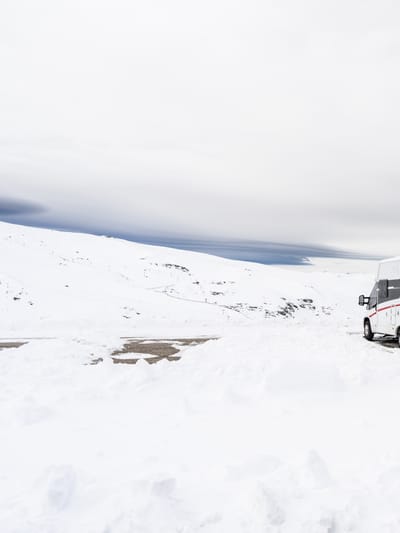
The second kind goes toward the cold deliberately, and gets something you cannot buy in July: an open loop in a national park campground, a trailhead with one other car in it, and the specific muffled quiet of a campground under six inches of snow. That's where every paragraph above stops being optional.
Either way, where you park matters as much as what you drive, and the winter RV parks that keep the water on year-round, plow their loops, and heat their bathhouses turn a hard trip into an easy one. The campground is the easy part, though. What winter camping in an RV feels like day to day and what RVing in cold weather asks of you on the driving days are the two things nobody mentions before your first one.
The Short Version
- Storing it until spring: winterize, drain and treat the water system, skip this page.
- Camping in it: never winterize. The job is keeping water liquid, heat in, tanks thawed.
- Buy first: the heated hose. It fails first and fails worst.
- Buy next: skirting matched to how long you park, reflective window insulation, a vent cushion.
- Then undo some of it: ventilate on purpose, or condensation finds the wall behind your mattress.
- Propane: budget in multiples of summer use, not percentages. Carry a second bottle.
- Batteries: cold cuts capacity, and most lithium won't accept a charge below about 32 degrees without internal heating.
- The RV itself: ignore "four-season," verify a heated underbelly, tank pads, and dual-pane glass.
- Forecast: duration and wind beat the headline low.
FAQs
What's the difference between winterizing an RV and prepping it for winter camping?
Opposite jobs. Winterizing takes all the water out so the RV can sit unused through freezing weather. Winter camping prep keeps the water system running while you live in it, using a heated hose, tank heating pads, skirting, and extra propane to hold everything above freezing. One prepares an RV for storage, the other for use, and doing the wrong one either cancels your trip or splits your pipes.
Can you camp in an RV that's already been winterized?
You can sleep in it. You'll have no faucets, no shower, and no flush. Some people do exactly this for a weekend, hauling jugs and using the bathhouse. For anything longer you'd de-winterize first: flush the antifreeze, sanitize, refill, check for leaks. That's most of an afternoon, which is why it's worth deciding in October whether the RV is storing or camping this season.
At what temperature do RV pipes freeze?
There's no single number, and the combination matters more than the low. Twenty degrees for six hours in a 20 mph wind will do more damage than 25 degrees on a still, sunny day. What decides it is how far below freezing, for how long, how much wind, and whether your plumbing runs through a heated underbelly or hangs in open air. The exposed hose always goes first.
Do you need skirting for winter RV camping?
Depends almost entirely on how long you're parked. For a weekend or a rolling trip through mild country, skirting is more setup than it's worth and the heated hose plus window insulation do the work. Parked for weeks in real cold, it becomes the thing everything else leans on, because it stops the wind from stripping heat off your floor and tanks from underneath, which cuts propane use and takes strain off every other system.
Why does my RV get so wet inside in the winter?
Condensation, and there's more of it than you'd guess. Cooking, showering, and breathing put a lot of water vapor into a small heated space, and all of it lands on the coldest surface available: glass first, then metal window frames, then the places you can't see, like the wall behind the mattress. Ventilate on purpose. Crack a roof vent, run the bathroom fan through the whole shower, and accept the heat loss. Sealing it tighter makes it worse, and moisture nobody manages becomes mold.
Is a four-season RV built for winter?
Not in any certified way. No standards body defines "four-season" or "arctic package," so each manufacturer decides what its own badge means. Verify the build instead: furnace air actually ducted into an enclosed underbelly, factory tank heating pads, dual-pane windows, stated insulation values. An RV without them can still winter camp. It just leans harder on skirting, tank pads, and a heated hose, and burns more propane doing it.





Categories
Related Posts
Subscribe to the Swervia Newsletter
The best RV stories, tips, and destinations—expertly curated and always free.