How to Find Free Camping in the US: 7 Methods That Actually Work
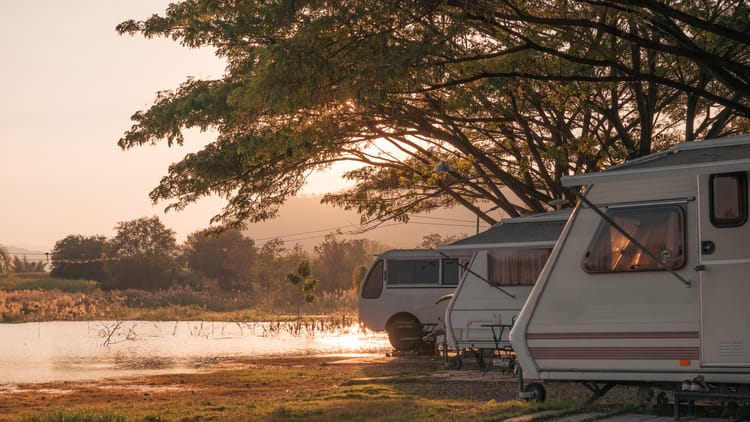
The average private RV campground night in the US runs $50 to $80, and the premium-tier resorts have crossed $200. Meanwhile, the federal government manages around 640 million acres of public land — and on a significant chunk of it, dispersed overnight camping is legal, unmetered, and free.
The trick has never been the existence of free camping. The trick is finding the right spot before sundown, on a road your rig can actually handle, with enough of a clearing to level out and enough of a signal to know what tomorrow's weather is doing.
Below are the seven methods that actually work — the federal land you can roll up to without a reservation, the apps that don't gatekeep what they know, the host networks that trade a $25 wine purchase for a quiet night, and the discount-rate workarounds for the in-between nights when a real free site isn't worth the detour. Each method comes with the asterisk it deserves, because "free" almost always means you're paying in some other currency.
What "Free Camping" Actually Means in the US
Before the methods, the definitions — because Google, ChatGPT, and the regular at the campfire next to yours all use these terms slightly differently.
Free camping is the umbrella term for any overnight stay with zero per-night fee. It includes dispersed camping on federal land, overnight stays in commercial parking lots that allow them, and free-to-stay opportunities through hosted networks (where the membership has a cost but the night does not).
Dispersed camping is the specific subset that happens on federal public land — usually BLM or National Forest — outside of developed campgrounds. No hookups, no picnic table, no host. The default stay limit is 14 days in a 28-day window in most BLM and USFS districts, though local exceptions exist.
Boondocking is the lifestyle version of dispersed camping — the boondocking without hookups skill set that lets you stay out for days on solar, freshwater tanks, and a degree of self-sufficiency that no $80 campground will ever require of you.
Free camping is where. Boondocking is how. The seven methods below answer the first question. The link above answers the second.
Method 1: Dispersed Camping on BLM Land
If there's a single answer to "how to find free camping in the US," it's the Bureau of Land Management. BLM administers roughly 245 million acres, almost all of it west of the Mississippi, and most of it allows dispersed camping for up to 14 days at a time.
The catch is that BLM land is not a destination — it's a status. A patchwork of federal acreage interleaved with private land, state trust land, and other federal designations like National Monuments and Wilderness Areas (where the rules tighten significantly). The acreage doesn't show up as a single green blob on a road map; you have to know how to read the map to find it.
The legal-stay basics:
- 14-day stay limit in a 28-day window in most field offices. Move 25 miles after that.
- Pull-offs that have been used as campsites before are the right call — fresh tire tracks into virgin desert are not.
- Pack out what you pack in, including the unmentionable. Some BLM districts now require portable toilet systems for any stay over 24 hours.
- Fire restrictions change weekly in summer. Check the local BLM field office before lighting anything.
Power and water are entirely on you. A portable solar generator with around 1,000 watt-hours of capacity and a 200W panel handles a small rig's fridge, lights, and laptop for several days of partly-sunny weather. Pair it with a real RV solar setup and the 14-day window stops being limited by power and starts being limited by your freshwater tank.
The official starting point for finding actual acreage is the BLM visit portal. State-level pages list field offices, and field-office pages link to the Motor Vehicle Use Maps (MVUMs) that show which roads are legally open to vehicles.
Method 2: Dispersed Camping in National Forests
The US Forest Service manages 193 million acres across 154 national forests and 20 grasslands. Like BLM, most of it allows dispersed camping for free, with stay limits and local restrictions that vary by ranger district.
National Forest dispersed camping skews greener and higher-elevation than BLM. Where BLM tends to be the slot canyons, the high desert, and the sage-scrub of the interior West, the national forests are the pine-shaded creek pull-offs at 7,000 feet that you've seen on every aspirational reel ever made.
The mechanical reality is grittier than the reel:
- Forest roads are not RV roads by default. Many MVUM-legal roads are passable in a half-ton with a 25-foot trailer; many others are not. The road you saw on a screenshot last week may be different by the time you reach the trailhead this week — washouts happen.
- Cell signal is often worse than BLM because tree cover blocks line-of-sight. Plan to navigate in offline mode.
- Stay limits run 14 days in most districts, sometimes shorter near high-traffic destinations.
- Camp at least 100 to 200 feet from water sources per most district regs and per the Leave No Trace seven principles that NPS, USFS, and BLM all use as the baseline.
Water filtration becomes a quiet superpower in national forests, where creeks and streams are abundant and freshwater tanks are not. A gravity-fed water filter lets you fill a couple of gallons in twenty minutes without burning power. The deeper rabbit hole on this is in our roundup of portable water filter systems — which one fits your rig depends mostly on whether you're filtering for cooking or for the whole rig's plumbing.
Per-forest information lives at fs.usda.gov/visit/destinations, with district contact pages that are still, in 2026, the single best way to confirm whether the spot you saw on an app is currently legal, accessible, and open.
Method 3: The Federal Mapping Tools That Most People Ignore
The free camping app market is loud. The federal mapping tools are not. They are, however, free, definitive, and updated by the people who actually decide whether the road is open.
The two that matter most:
Motor Vehicle Use Maps (MVUMs)
Each National Forest district publishes an MVUM showing which roads are open to which vehicle classes. They're downloadable as PDFs from the forest's site and as layers in the free USDA Forest Service Visitor Map. If a road isn't on the MVUM as open to your vehicle type, you cannot legally drive it, and rangers are within their rights to ticket you for trying.
Recreation.gov
Recreation.gov is the federal portal for reservable campsites across NPS, USFS, BLM, USACE, and FWS lands. It's not where free dispersed sites live — those are unreservable by definition — but it's where the free-but-permitted sites live. Many free or low-cost first-come-first-serve sites have permit pages here, and some popular dispersed areas now require a free reservation in peak season to manage volume.
Both tools point you back to actual federal land managers, which is the data hierarchy you want for anything you'd hate to be wrong about. Apps come and go; the BLM field office's webpage was right last year, is right this year, and will be right next year.
Quiet Wednesday wins: free-camping leads, route shortcuts, and the gear we actually trust. Subscribe to our weekly newsletter.
SWERVIA WEEKLY. EVERY WEDNESDAY. ONE EMAIL. FREE.
Method 4: Free Camping Apps and Crowdsourced Maps
This is the category most people start with and most people overrate. The apps are useful, but they are not the source of truth — they are a layer of community reporting on top of the source of truth, which is federal land status.
What to actually look for in a free-camping app:
- Map data backed by public land boundaries, not just user pins
- Recent reviews with photos and dates from within the last 6 to 12 months
- Filters for vehicle size, road condition, and cell signal
- Offline maps that work when you lose service in a canyon
A few sober rules for using crowdsourced data:
Trust the most recent review more than the highest-rated one. A spot that was a five-star secret in 2022 may be a closed gate in 2026.
Read between the lines on road condition. "Easy access" from a van-life user with a 4x4 Sprinter means something different than easy access from a 38-foot fifth wheel with a half-ton truck on bald tires.
Don't trust a single pin. Cross-reference any candidate site against the BLM or USFS map. If the pin is just inside private land or just inside a wilderness boundary, you're trespassing or violating the regs even if the app says otherwise.
The land-boundary layer is where a paid tool earns its keep. onX Offroad overlays public/private parcel boundaries on satellite imagery and tells you exactly when the road you're on crosses from BLM to private — the single most useful piece of information for anyone vetting a dispersed site. It's not a free-camping app per se; it's the verification layer that turns a crowdsourced pin into a confidently legal one.
For the people-side of the same question, the community piece on the RVers who never pay for a campsite covers how experienced boondockers actually source their spots over years on the road.
Method 5: Overnight Host Networks
Host networks are the gray area between "free" and "paid," and Harvest Hosts is the big one — a network of thousands of wineries, small farms, breweries, museums, and golf courses across the US that welcome RVers for overnight stays. The annual membership has a cost, sometimes $90 to $130. The individual nights at member locations have no per-night fee, with a soft expectation that you'll spend something — often $20 to $30 — at the host business.
Whether the math works depends on how you travel:
- For long-haul travelers crossing the country who like a one-night cultural stop, the math is excellent. A $25 bottle of wine on a private vineyard with electric hookup beats a $50 night at the truck-stop-adjacent campground next to the interstate.
- For families with full-hookup needs and a kid amenity requirement, the math is bad. Host stays don't have pools, playgrounds, or laundry. They're a long-haul tool, not a vacation tool.
- For boondockers who already enjoy unique stays and have full power and water onboard, the network is functionally a free spot with a tasting flight built in.
Our guide on RV memberships before you sign up walks through which programs fit which travel styles, so the membership math works out for the way you actually travel.
Method 6: Travel-Stop Chains, Big-Box Overnighters, and Roadside Stops
This is the catch-all "I just need to close my eyes for six hours" category, and it has shrunk meaningfully in the last five years.
What still works:
- Major truck stop chains that explicitly post RV-friendly overnight policies. You sleep next to running diesel engines. The trade is fluorescent lighting and a hot meal at 4 a.m. if you want it.
- Cracker Barrel locations that designate overnight RV parking. Confirm by phone before you commit — corporate policy is location-discretionary.
- Cabela's, Bass Pro Shops, and some Camping World locations that allow overnight parking. Walk into the store and ask the manager; don't assume the website is current.
- Casino lots in much of the West — many have free RV parking, some have free hookup spots if you sign up for the player's club.
What used to work and increasingly doesn't:
- Walmart overnight parking — once the universal default, now banned at a growing share of locations due to municipal pressure and lot-management decisions. Check the specific store before counting on it. Many require a phone call to the manager.
- Rest areas — state-by-state legality. Many states allow rest-stop sleep for safety, with strict no-camping rules (no slides, no awning, no setup beyond closing your eyes inside the rig).
These stays are functional, not enjoyable. They're the move when you're between destinations and the goal is to wake up and keep driving — not when you're trying to actually camp.
Method 7: State Trust Lands, WMAs, and the Local Stuff Nobody Talks About
The federal land conversation eats most of the airtime. The state-level free camping conversation is quieter, regional, and where the genuinely empty spots tend to live.
State Trust Lands (or State Land in some states) — particularly in Arizona, New Mexico, Montana, Idaho, and Wyoming — allow recreational use including dispersed camping, sometimes with a low-cost annual permit ($15 to $25). The permit covers a calendar year of access. Read the rules carefully; some states require the permit to camp, others just to drive on the access roads.
State Wildlife Management Areas (WMAs) are administered by state fish-and-wildlife agencies. Many allow primitive camping outside of hunting seasons, with restrictions during. Hunters often know these areas cold; RVers rarely do, which is exactly what makes them appealing in May and September.
National Wildlife Refuges, managed by the US Fish and Wildlife Service, generally do not allow dispersed camping but do offer designated free or low-cost campgrounds at a meaningful share of their 500+ refuges. Worth checking by region.
County and municipal land — the locally-known stuff. A surprising number of small western towns maintain free RV pads next to community parks as a way to draw travelers into Main Street. They don't advertise widely. The local visitor center is the cheat code.
How to Vet a Free Site Before You Commit
Driving 12 miles up a forest road to find a closed gate, a private-land sign, or a clearing that has visibly been used as a dump is a real RV experience. Avoiding it is a method in itself.
Before you commit to a free site:
- Confirm the land status. Federal app or federal website, not a single user pin.
- Confirm the access road. Cross-reference the road against the MVUM and against recent reviews. Use satellite view to look for switchbacks, washouts, or low-clearance bridges.
- Confirm the clearing. Satellite view again. Look for evidence of prior camping — fire rings, leveling, vehicle tracks.
- Confirm a turnaround. This is the one most boondocking-curious RVers forget. If the road dead-ends and there's no place to turn a 30-foot trailer, backing out at dusk is your evening.
- Confirm the level. Most dispersed sites are not level. A set of stackable leveling blocks earns its place in the basement bay specifically for these nights.
- Confirm power awareness. Boondocking with no idea what your house battery is doing is how RVers learn why their RV battery keeps dying. A shunt-based battery monitor takes the guessing out of it.
- Confirm you can air back up. Dispersed-camping roads chew through tire pressure. A 20V cordless tire inflator goes from "nice to have" to "essential" the day you discover your spare is also low.
For first-timers planning a free-camping trip through the West, the additional context in your first RV trip out west covers the regional logistics that decide whether the trip is fun or just hard.
The Real Cost of "Free" Camping
The $0/night sticker price is genuine. What you trade for it is also genuine.
The trades worth pricing into the decision:
- Time. Vetting a free site, driving to it, and unhooking takes longer than pulling into a reserved 50-amp pad with a hookup hose ready.
- Self-sufficiency. No hookups means you arrived already topped up on fresh water, with battery and solar enough for your stay length, and with somewhere to put your gray and black tanks. A 36-gallon portable waste tote buys you a few extra days; an empty freshwater tank does not refill itself.
- Internet variance. Cell coverage on free land is the wildcard. Remote workers who need a known-good signal are better off at a resort with a verified backbone; the long version of that math is in our guide to the best RV internet for remote work.
- Comfort trade. A premium resort's pool, laundry, and concrete pad are not vanity — they're what keeps a working-from-the-road family functional during a workweek. Free camping is the variety, not the baseline.
The honest math the audience runs: free camping is most valuable as part of a mixed-mode itinerary. Three nights dispersed, two nights at a resort with a dump and a shower, repeat. The free nights extend the trip's budget; the paid nights keep the trip livable.
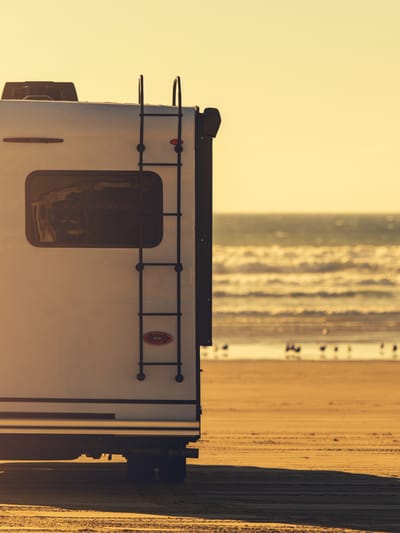
If beach setups are part of the plan, beach RVing for boondockers covers the sand-specific version of every variable above.
FAQs
Where can you camp for free in the US?
The largest sources of free camping in the US are dispersed camping on Bureau of Land Management (BLM) land and in National Forests, both of which generally allow stays of up to 14 days in a 28-day window. Free camping is also available through host networks like wineries and farms (membership-based), at some travel-stop chains for overnight roadside stays, on state trust lands with a low-cost annual permit in Western states, and at a small share of county and municipal RV pads in small towns. BLM and USFS land together cover over 430 million acres, almost all of it west of the Mississippi.
Is it legal to just pull off and camp on public land?
It's legal on most BLM and National Forest land outside of developed campgrounds, designated wilderness areas, and posted restricted zones — but only on roads and pull-offs that are already open to motor vehicles per the local Motor Vehicle Use Map (MVUM). Pulling off into virgin terrain is not legal, even on otherwise camp-friendly land, because it damages vegetation and can result in fines. The legal default is: use a road and a pull-off that already exist, stay within 100 to 200 feet of that pull-off, and pack everything out.
How long can you stay at one free dispersed camping site?
The standard limit on both BLM and National Forest land is 14 days within a 28-day window in any given area. After 14 days, the rule typically requires moving at least 25 miles away. Some high-use districts have shorter limits (7 days or 10 days), and a handful of low-impact areas have longer permitted stays. Always confirm with the local field office or ranger district — the limits are posted on the federal agency's website for that area.
Are RV apps for finding free camping worth paying for?
The data they aggregate is largely free at the federal source. What you're paying for with most paid apps is convenience: a single map with filters, offline mode, and crowdsourced reviews. For occasional free-camping use, a free app and the federal BLM/USFS portals will get you 90 percent of the way there. For full-time RVers or anyone planning a multi-state dispersed-camping itinerary, the paid version often pays for itself in time saved. Test the free tier first; subscription fatigue is real and the paid features rarely change the answer for casual users.
Can you boondock with a large fifth wheel or Class A motorhome?
Yes, but the universe of accessible sites narrows fast as rig length grows. Dispersed sites suitable for a 40-foot fifth wheel are a small subset of the dispersed sites suitable for a 25-foot travel trailer. The biggest constraints are forest road grades and turnarounds — many forest roads are passable in a big rig but lack the turnaround a 40-footer requires. The workaround for larger rigs is to base-camp at a free site close to a paved road and use a tow vehicle for the deeper exploration.
What's the difference between dispersed camping and boondocking?
Dispersed camping is the legal status — camping outside of developed campgrounds on public land where it's permitted. Boondocking is the practice — camping without hookups using onboard power, water, and waste systems. Most boondocking happens on dispersed-camping land, but not all dispersed camping is boondocking; you can dispersed-camp in a tent or with a generator. The terms overlap in everyday RVer use, but the federal land managers care about the dispersed-camping definition and the gear conversation cares about the boondocking definition.
Do you need a special vehicle or 4x4 to find free camping?
No. A meaningful share of BLM and National Forest dispersed sites are accessible by a regular two-wheel-drive truck and trailer on graded gravel or dirt roads. The deeper sites typically require higher ground clearance, but the accessible ones are abundant enough to camp on for years without ever putting a transfer case in 4-Low. The bigger constraint is rig length and weight, not drivetrain. A half-ton truck towing a 28-foot trailer has more free-camping options than a one-ton dually pulling a 42-foot fifth wheel.

Categories
Related Posts
Subscribe to the Swervia Newsletter
The best RV stories, tips, and destinations—expertly curated and always free.