The Off-Grid Adventurer's Guide to RV Security Cameras That Actually Work in the Wild
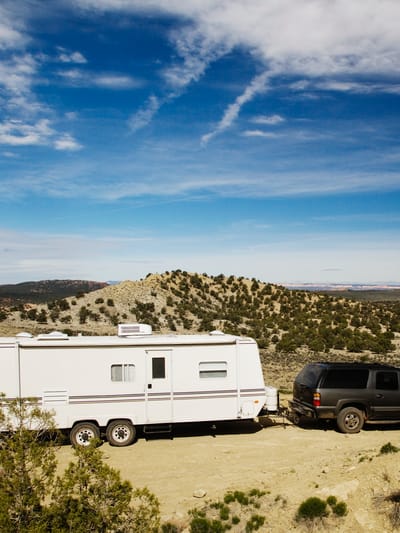
You're camped at a stunning dispersed site in Utah's backcountry, ready to tackle that epic slot canyon hike you've been planning for months. Your rig is perfectly positioned with killer views, but it's also completely isolated and visible from the dirt road. As you lace up your hiking boots for an all-day adventure, that familiar worry creeps in – what happens to your rolling home while you're miles deep in the wilderness?
Off-grid RV security isn't just about keeping curious wildlife at bay (though bears really do know how to work door handles). When you're parked in remote locations where help is hours away, a reliable off grid security camera RV system becomes your digital lifeline. The real challenge? Finding tech that actually works when you're beyond cell towers, Wi-Fi signals, and sometimes even GPS coverage. If you're still building out your off-grid power setup to support this kind of system, our guide to building a complete RV solar setup on any budget is a smart place to start.
Solar Camera Technology: Your RV's New Best Friend
Traditional security cameras are power-hungry divas that expect a constant electrical feed and reliable internet. But off-grid RV life doesn't play by those rules. That's where solar camera technology steps in like the hero of every good road trip story.
Modern solar-powered security cameras can deliver 2K to 4K resolution video while maintaining power independence through upgraded solar panels and large battery systems. The best systems combine substantial battery capacity (we're talking 9,000+ mAh) with efficient solar charging that can keep your cameras running indefinitely under normal sun conditions.
But here's what manufacturers don't always tell you: solar efficiency varies dramatically based on your location, season, and weather patterns. A camera that works perfectly in Arizona's blazing sun might struggle during Oregon's cloudy spring months. Smart off-grid adventurers plan for worst-case scenarios.
AI Detection: Smarter Than Your Average Bear
Some newer cameras use AI to distinguish between humans, animals, and vehicles, reducing false alerts that plague traditional motion detection systems. This technology becomes crucial when you're camped in wildlife-heavy areas where deer, elk, or curious bears might trigger dozens of false alarms nightly.
Advanced AI systems can differentiate between a person approaching your RV and a raccoon investigating your trash. The result? You get alerts that actually matter instead of waking up to 47 notifications about wind-blown branches.
The latest systems even offer customizable detection zones and sensitivity levels for different types of movement. You can set the system to immediately alert for human detection while only recording (without alerting) for animal movement – perfect for those who want wildlife footage without 3 AM wake-up calls.
Thermal Cameras: The Wildlife Advantage
In areas with heavy wildlife activity, thermal cameras offer distinct advantages over traditional visible-light systems. High-powered thermal cameras equipped with night vision and artificial intelligence can detect humans, wildlife, or vehicle movements at night, providing clear identification regardless of lighting conditions.
Thermal imaging works by detecting heat signatures rather than relying on visible light, making it effective in complete darkness, fog, or heavy rain. For RVers camping in bear country or areas with aggressive wildlife, thermal cameras can detect animal approaches long before they become a problem.
The power consumption trade-off is real – thermal cameras typically consume 15-25% more power than conventional cameras. But for serious off-grid adventurers in wildlife-heavy areas like Alaska or the Canadian Rockies, the enhanced detection capability justifies the extra power draw. For a deeper look at how boondockers approach remote camping in these environments, our beach RVing and boondocking guide covers site selection and setup decisions that affect your security posture too.
Zero-Cell Area Communications
Here's where things get interesting for truly remote adventures. Some cameras can relay alerts in zero-cell areas through integration with satellite communicators or mesh network systems. These setups typically work by connecting your security camera to a satellite communicator like a Garmin inReach or SPOT device through Bluetooth or Wi-Fi protocols.
When motion is detected, the camera triggers the satellite communicator to send a preset emergency message or location ping. It's not real-time video streaming, but it provides critical "something's happening at camp" alerts when you're completely beyond cellular coverage.
Mesh network systems represent another emerging solution where multiple connected devices create a communication network that can relay signals across distances. While still developing for consumer use, some RV communities in remote areas are experimenting with these systems for shared security monitoring.
Auto-Adjustment and Battery-Saving Modes
Modern solar camera systems now include intelligent auto-adjustment modes that extend battery life by adapting to conditions. These systems automatically reduce video quality during low-light periods, decrease recording frame rates when battery levels drop, and enter deep sleep modes during inactive periods.
Smart power management includes features like scheduled recording (only active during certain hours), weather-based adjustments (reduced activity during storms), and location-based profiles that remember optimal settings for frequently visited campsites.
Some advanced systems even integrate with weather APIs, automatically switching to power-saving modes when extended cloudy periods are forecast. This prevents the frustrating scenario where your cameras die halfway through a week-long storm.
Miles from camp doesn't mean out of the loop. Subscribe to our weekly newsletter.
GEAR THAT WORKS OFF-GRID, TESTED BY PEOPLE WHO ACTUALLY GO THERE — EVERY WEDNESDAY, FREE.
360-Degree Views and Strategic Coverage
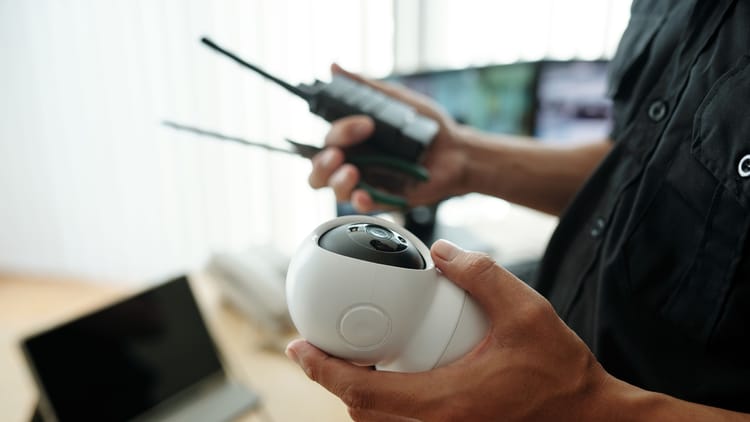
Traditional security cameras create blind spots that experienced thieves exploit. Motion detection systems with 360-degree capability or strategic multi-camera placement eliminate these vulnerabilities. PTZ (pan-tilt-zoom) cameras offer remote control of viewing angles, letting you actively monitor different areas from your phone – essential when cellular data is limited.
Some RVers prefer 360-degree fisheye cameras mounted on roof corners, providing complete perimeter coverage with a single device. The trade-off comes in image quality at the edges and higher power consumption for the advanced processing required.
The sweet spot for most off-grid setups involves 2-3 strategically placed cameras covering entry points, the hitch area (a common theft target), and high-value external gear like generators or bicycles. This approach balances comprehensive coverage with manageable power consumption. For a broader look at how RV security systems succeed and fail in real-world use, our piece on why most RV security systems fail on the road covers the systemic issues that off-grid camera setups alone won't solve.
Power Reality Check: The Numbers That Matter
Before diving into camera features, let's talk real-world power consumption. A typical security camera's power ranges from 4 to 15 watts, with most quality units averaging 6-10 watts during active recording. Over 24 hours, that's 144-240 watt-hours daily – roughly equivalent to running LED lights for 4-6 hours.
Here's where it gets interesting for off-grid RVers: a 100-watt solar panel can produce about 30 amp-hours per day, which translates to approximately 360 watt-hours in a 12V system with decent sun exposure. That means a single 100W panel can theoretically power a security camera with energy left over – but only under ideal conditions.
The math changes when you factor in cloudy days, winter sun angles, and your other power needs. Smart off-grid adventurers plan for 200-300 watts of solar capacity to comfortably run a security camera system while maintaining power for essentials like refrigeration and device charging. If your battery is already struggling to keep up with basic loads, our guide to why RV batteries keep dying diagnoses the most common causes before you add another draw to the system.
Starlink Changes the Game
The portability of Starlink allows users to set up their connection wherever they have a clear view of the sky, and this has revolutionized remote RV security. Many RV and motorhome owners who travel to locations where connectivity is unavailable use Starlink to get online, and security cameras can leverage this high-speed satellite connection for reliable remote monitoring.
The power trade-off is significant though – Starlink dishes consume 50-75 watts continuously, essentially doubling your communication power budget. But for serious off-grid adventurers who need reliable connectivity, the combination of Starlink and Wi-Fi enabled security cameras creates a robust monitoring system that works virtually anywhere with sky visibility.
Theft Reality and Notification Systems
Let's address the elephant in the campground: camera theft. Your $300 security camera mounted outside your RV can become someone else's prize if it's easily accessible. Smart mounting involves height advantage, tamper-resistant brackets, and strategic positioning where cameras watch each other.
When motion is detected and you're miles away on a hiking trail, notification systems become critical. Cellular cameras send immediate alerts to your phone, but only if you have signal. Battery-powered cameras with local storage can record incidents even without connectivity, though you won't know about them until you return.
Modern systems offer customizable alerts – from simple push notifications to email alerts with snapshot attachments. Some advanced setups can even integrate with satellite communicators for emergency notifications in truly remote areas.
Installation Tips for Off-Grid Success
Installing security cameras on an RV requires different thinking than home installation. Your house doesn't move, face constant vibration, or need to navigate low-hanging branches. Here are the practical considerations that separate successful installations from expensive mistakes:
Mounting Strategy: Battery-powered cameras eliminate the need for new holes and wiring, but RV-specific mounting becomes crucial. Standard home mounts often fail under road vibration and wind stress. Invest in heavy-duty, vibration-resistant mounts designed for mobile applications.
Solar Panel Positioning: Solar efficiency depends on panel angle and orientation. Unlike rooftop installations, security camera solar panels need positioning that balances charging efficiency with camera field of view. Consider adjustable mounts that let you optimize for different camping orientations.
Weatherproofing: IP65 ratings are minimum requirements, but real-world performance varies. Look for cameras tested in actual outdoor conditions, not just laboratory splash tests. Pay attention to temperature ranges – desert heat and mountain cold both stress electronic components.
Power Management for Extended Adventures
Battery management becomes critical during extended off-grid stays. Off-grid security cameras can operate without Wi-Fi or cellular networks using local storage like SD cards, which can significantly extend battery life by eliminating power-hungry transmission features.
Smart power management involves:
- Recording only on motion detection rather than continuous recording
- Adjusting video quality based on available power reserves
- Using local storage as primary with cellular backup for alerts
- Planning camera positioning to maximize solar charging throughout the day
Real-World Scenarios: When Things Go Wrong
Scenario 1: The Generator Grab — You're day-hiking in Olympic National Forest when your cellular camera sends an alert at 2 PM. Someone's examining your generator locked to your RV's bumper. The camera's two-way audio lets you announce "Smile, you're on camera!" through your phone. Most opportunistic thieves bolt immediately.
Scenario 2: The Midnight Visitor — Your solar camera detects movement at 3 AM in Joshua Tree. Instead of immediately alerting (and waking) you, smart systems can distinguish between wind-blown debris and actual threats. When it identifies human movement patterns, the alert comes through with a 10-second video clip showing someone checking your door locks.
Scenario 3: The Multi-Day Departure — You leave your RV at a dispersed camping area while backpacking the John Muir Trail for five days. Cellular coverage is spotty, but your cameras record locally. When you return, you can review a week's worth of time-lapse footage in minutes, seeing exactly who visited and when.
These scenarios highlight why notification customization matters. Day hikers want immediate alerts, while extended backcountry adventurers need comprehensive recording with delayed review capabilities.
Final Thoughts: Security That Travels
The best off grid security camera RV system balances your specific needs with practical limitations. Weekend warriors might prioritize simple setup and low maintenance, while full-time off-gridders need robust systems that handle extended deployments.
Remember, no security system is perfect, but the right setup provides both deterrence and documentation. More importantly, it lets you fully embrace those remote adventures without constantly worrying about what's happening back at camp.
The technology keeps improving, batteries get bigger, and solar panels become more efficient. But the core principle remains unchanged: good security gives you freedom to explore further and stay longer in those perfect spots that make RV life worthwhile. If you're still figuring out your full off-grid setup — power, water, connectivity — our look at what type of RV to buy covers how rig choice affects every one of these decisions before you spend a dollar on accessories.
FAQs
What is an off-grid RV security camera system?
An off-grid RV security camera system is a combination of cameras, power sources, and communication tools designed to monitor a parked RV in locations without shore power, Wi-Fi, or cellular coverage. These systems typically rely on solar panels and onboard batteries for power, local SD card storage for recording, and — in more advanced setups — satellite communicators or mesh networks to deliver alerts when the owner is away from the rig.
What is the best type of security camera for boondocking?
The most practical cameras for boondocking are solar-powered units with local storage, AI-based motion detection, and at least an IP65 weatherproof rating. Look for cameras with 9,000+ mAh battery capacity, 2K or higher resolution, and the ability to operate entirely without internet connectivity. Thermal cameras add meaningful capability in wildlife-heavy environments but consume 15–25% more power than standard units.
How much power does an RV security camera use?
Most quality security cameras draw between 4 and 15 watts during active recording, with the majority averaging 6–10 watts. Over a 24-hour period, that translates to 144–240 watt-hours of consumption. To comfortably run a camera system alongside other essential loads like refrigeration and device charging, plan for 200–300 watts of solar panel capacity minimum.
Can RV security cameras work without cell service?
Yes. Cameras with onboard SD card storage record continuously or on motion detection regardless of connectivity. Alerts in zero-cell areas can be delivered by pairing a camera with a satellite communicator — such as a Garmin inReach or SPOT device — which sends a preset message or location ping when motion is detected. This approach doesn't support live video streaming but provides critical notification that something is happening at camp.
Does Starlink work for RV security camera monitoring?
Yes. Starlink's portable setup works at most dispersed camping locations with clear sky visibility and supports Wi-Fi enabled cameras for live remote monitoring. The power cost is significant — Starlink dishes draw 50–75 watts continuously — which roughly doubles your communication power budget. For full-time off-grid RVers who already run Starlink, layering in Wi-Fi cameras is a straightforward addition.
How do you prevent security cameras from being stolen off an RV?
The most effective approach combines height, hardware, and redundancy. Mount cameras high enough that removal requires a ladder, use tamper-resistant brackets rated for mobile applications, and position cameras so they have overlapping fields of view — meaning one camera covers another. Local storage ensures footage is preserved even if a camera is taken before you return to review it.
What is the difference between AI motion detection and standard motion detection in RV cameras?
Standard motion detection triggers on any movement within the frame — wind, shadows, animals, and humans all generate the same alert. AI-based detection analyzes movement patterns and shapes to classify what triggered the event, distinguishing between human figures, animals, and vehicles. For RVers in wildlife-heavy areas, AI detection dramatically reduces false alerts and allows separate handling of animal versus human movement — for example, recording animal activity without sending a 3 AM notification.






Categories
Related Posts

Subscribe to the Swervia Newsletter
The best RV stories, tips, and destinations—expertly curated and always free.