Beach RVing for Boondockers: How to Camp on the Sand
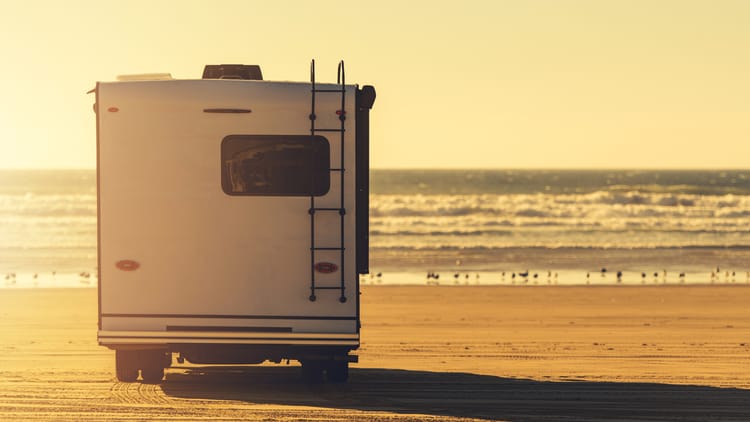
Beach RVing is one of those experiences that never quite leaves you. You wake up, slide open the door, and there it is — waves, salt air, a horizon that goes on forever. No neighbors. No check-out time. Just sand and sky and the low hum of a well-run off-grid rig.
But here's what most guides don't tell you: the beach is fundamentally different from desert BLM or mountain forest camping. The hazards are weirder, the rules are more complex, and the consequences of getting it wrong — a rising tide surrounding your Class A, a seized slide mechanism from salt corrosion, or an ORV permit violation that closes your favorite stretch to everyone — can be expensive, embarrassing, or both.
This is the guide for boondockers who already know the basics and want to understand what's actually different about camping where the land meets the sea. If you've never boondocked before, start with our complete guide to boondocking without hookups first. Then come back here when you're ready to get your wheels in the sand.
The Legal Landscape Is Nothing Like BLM Land — Here's the Map
Most seasoned boondockers default to BLM land because the rules are relatively consistent: BLM generally allows dispersed camping for up to 14 consecutive days, after which you need to move at least 25 miles. Easy enough. Beach camping runs through a completely different set of agencies, and treating them the same will get you ticketed, towed, or worse.
National Seashores: The Permit-Required Premium Tier
National Seashores are managed by the National Park Service and represent some of the most spectacular — and most regulated — beach camping in the country. They are not interchangeable.
Padre Island National Seashore allows primitive beach camping and vehicle access on the south beach, with free camping permits available through the NPS.
Cape Hatteras National Seashore requires an ORV permit through Recreation.gov before you can drive on the beach at all — and seasonal closures for nesting birds can shut down significant stretches from spring through late summer.
Assateague Island National Seashore has its own tiered OSV permit system with fees and designated camping zones in Maryland — and certain areas prohibit travel trailers entirely.
The takeaway: look up the specific NPS unit you're visiting, not just "National Seashores" in general. Each one has its own permit system, seasonal closures, and vehicle requirements. This same research discipline applies when planning any trip to our top national parks for RV camping in the West — every unit operates differently.
State Beaches and Parks: A Patchwork Quilt
State-level rules are all over the map — literally. Some state parks in Florida, the Carolinas, and the Pacific Northwest allow vehicle access on certain stretches of beach; others prohibit it entirely. A few sections of the Oregon coast offer designated dispersed camping adjacent to beach access. Others treat beach camping as day-use only.
There is no single resource that covers all of them. Your research needs to go directly to the state parks department website for the exact beach you're targeting.
Camping apps and community databases are invaluable for general boondocking research, but beach-specific OSV and camping rules change frequently due to wildlife protection orders and erosion management. Always verify current rules directly with the managing agency before you pull out.
Finding Legal Beach Boondocking Without Going Down a Research Rabbit Hole
For free or low-cost spots, filter for beach-adjacent or coastal locations in camping databases. Read the user reviews carefully — current condition reports matter more than base listings. Then cross-reference whatever you find with the land manager directly.
That extra 10-minute phone call to a ranger station has saved more than a few RVers from a very bad day. If a coastal detour puts you near fresh water, our guide to RV-accessible swimming holes is worth bookmarking for the trip.
Tide Charts Aren't Optional — They're Your Insurance Policy
Every boondocker knows how to read a weather forecast. Almost none of them know how to read a tide chart before their first beach camping trip.
That gap has stranded rigs, soaked interiors, and cost people thousands in recovery costs.
The Basics: What You're Actually Looking At
Most coastal areas experience two high tides and two low tides every 24 hours, with the cycle shifting by roughly 50 minutes each day.
The tidal range — the difference in water height between high and low tide — varies enormously by location. On the Gulf Coast, tidal ranges can be small and diurnal (one high tide and one low tide per day). On the Maine coast, they can exceed 12 feet. That difference determines whether the water "gets close" or surrounds your rig.
Pull up the nearest tide station to your camping location and study the full week's pattern — not just today. Identify the highest predicted high tide during your stay, then factor in that onshore winds and storm surge can push water above predicted levels.
How to Camp Without Getting Trapped
Before you set up camp, walk the beach at low tide and look for the high tide line — the band of seaweed and debris marking the previous high cycle. Set up well above that line.
Identify at least two exit routes from your campsite and verify that both are passable at high tide. If the access road crosses a low section of beach, know at what tide height it floods.
Download tide data for offline use before you leave cell service. King tides — exceptionally high tides that occur during certain lunar cycles — are predictable well in advance. If you're planning a multi-week stay, check whether any fall during your window.
Sand, salt air, and everything your rig needs to survive it. Subscribe to our weekly newsletter.
BEACH RVING INTEL THAT ACTUALLY KEEPS YOUR WHEELS ON THE SAND — EVERY WEDNESDAY, FREE.
Sand Driving Your RV: The Gear, the PSI, and the Rules Nobody Talks About
Sand driving is where beach RVing separates serious off-grid travelers from people who get expensive tow bills.
Air Down Before You Get On the Sand — Not After You Get Stuck
Lowering tire pressure increases your tire's footprint, distributing weight over a larger surface area so it floats instead of sinks.
For most rigs, the soft beach sand range is roughly 15–20 PSI, but heavier rigs may need higher pressures based on load rating. Start higher and adjust down as needed based on sand conditions.
A quality portable tire inflator and a reliable tire pressure gauge are non-negotiable on any beach trip. Driving highway speeds at low PSI damages tires. Every beach trip starts with airing down and ends with airing back up. Pair that inflator with a solar-powered tire pressure monitoring system so you can track all four corners in real time without climbing under the rig.
RECOVERY KIT MUST-HAVES:
- Full-size shovel
- Traction boards
- Recovery rope rated for your vehicle weight
- Portable compressor
This isn't overkill. It's insurance.
Technique: Low and Slow Is the Only Speed
Maintain steady momentum without spinning tires. Spinning digs you in. If you feel resistance building, ease off before wheels break traction.
Use 4WD high as your baseline. Drop to 4WD low only when necessary.
Drive on hard-packed wet sand near the waterline when tide conditions allow. It's dramatically more stable than dry dune sand.
Know What Your Rig Can't Do
Long fifth-wheels and Class A motorhomes require wide turning radii and have low-clearance undercarriages that drag in deep ruts.
The more maneuverable your rig, the easier your beach experience.
If you're towing, ask yourself: can the tow vehicle recover itself if needed? If not, plan accordingly. Our full RV setup checklist covers the arrival routine regardless of terrain, and most of those principles apply just as much when your campsite is on sand as when it's on gravel.
Salt Air Is Actively Trying to Destroy Your RV — Here's the Defense Plan
Salt corrosion at the coast is relentless. The combination of sodium chloride, moisture, and heat creates an electrochemical reaction that attacks exposed metal — and it works fast.
What Gets Hit First
- Undercarriage components
- Axles and suspension parts
- Electrical connections
- Storage hinges and latches
- Propane fittings
- Air conditioning coils
Salt particles travel inland, so risk doesn't end when you leave the sand. A disciplined approach to corrosion prevention is as important as your annual RV maintenance checklist — and beach trips should prompt a full inspection on return.
Before, During, and After: The Salt Defense Protocol
Before your trip: Apply corrosion-inhibiting spray to exposed metal and undercarriage components. Wax exterior paint and gel coat.
During your stay: Rinse with fresh water every few days — daily in windy conditions. Don't skip the undercarriage.
After returning home: Do a thorough freshwater wash before storage. Inspect hinges, latches, and wiring for early corrosion signs. If you're seeing issues with your battery system after a coastal trip, our breakdown of why RV batteries keep dying covers the corrosion-to-failure pathway in detail.
Every day near the ocean without a rinse is a day the salt is winning.
Off-Grid Systems on the Coast: What's Different About Sun, Wind, and Water Management
Coastal environments introduce real performance variables to even the most dialed-in boondocking systems.
Solar in a Coastal Environment
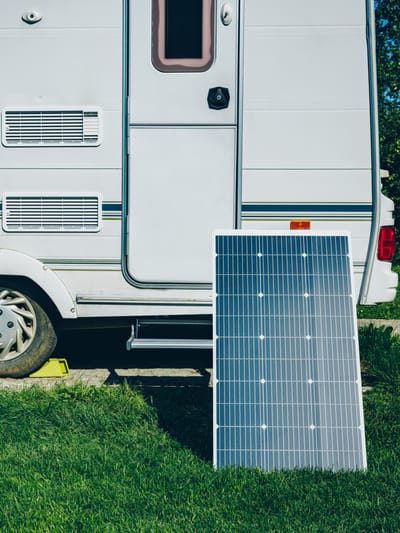
Solar panel efficiency decreases in extreme heat. Panels covered in salt film produce less power.
Clean panels with fresh water every few days. If you're running a full off-grid setup, our guide to building the perfect RV solar setup on any budget walks through sizing and system design — the same principles apply at the beach, with the added variable of salt management. A portable solar generator is a solid backup option for extended coastal stays when panel output dips from salt film or persistent cloud cover.
Wind on exposed beaches is stronger and more consistent than inland areas. Stow your awning before bed. No exceptions.
A battery monitor mounted inside the rig lets you track your state of charge without guessing — especially useful when coastal conditions are affecting your solar input more than usual.
Connectivity at the Coast
Satellite internet works well at remote beaches, but high winds and salt air are tough on mounts and cables. Secure hardware and rinse connection points during your freshwater rinse routine. If connectivity is central to your beach trip — for remote work or otherwise — our rundown of the best RV internet options for remote work covers how different solutions perform in low-infrastructure environments.
Water and Waste: The Coastal Off-Grid Reality
Beach sites rarely have nearby dump stations. Gray and black water discharge is illegal and environmentally destructive.
Know your tank capacity. Plan dump and fill stops before heading onto the beach.
Research:
- Potable fill stations
- Marine fuel docks with freshwater
- RV parks offering dump services for a fee
Coastal Leave No Trace: What's Different at the Beach and Why It Matters
Leave No Trace is the foundation of boondocking culture. At the beach, it's amplified.
Dunes Are Ecosystems, Not Parking Zones
Dune vegetation stabilizes the shoreline. Driving on dunes damages root systems and accelerates erosion.
Stay on marked vehicle tracks. Never drive on vegetated dunes.
Nesting Birds and Wildlife Closures
Beaches are nesting habitat for protected bird species and sea turtles. Seasonal closures protect these areas.
Closures are not suggestions.
Minimize exterior lighting in nesting zones. Keep lights pointed away from the waterline. Teaching this to kids before a trip makes enforcement easier — our piece on raising kids who follow RV Leave No Trace rules has practical approaches that work in the field, not just in theory.
Beach Access Is a Privilege the Community Earns
When RVers violate permit rules or wildlife closures, access disappears.
The short version:
- Pack out everything
- Stay on established tracks
- Respect closure markers
- Obtain permits before arrival
- Have a backup plan
Beach RVing Rewards the Prepared and Punishes the Sloppy
The best beach RVers treat preparation as part of the adventure.
- They pulled permits in advance.
- They downloaded tide charts.
- They aired down before touching sand.
- They rinsed the rig before unpacking camp chairs.
Beach RVing isn't harder than mountain or desert boondocking. It's just different. The physical demands on your body shift too — long beach days in sun, wind, and sand are a different kind of workout. Our guide to RV healthy living on the road covers how to stay physically sharp even when your campsite changes weekly.
And when you get it right — when the sun sets over the water from your doorstep — it's worth every bit of prep.
The Beach RVing Pre-Trip Checklist
- Verify current rules, permits, and seasonal closures
- Obtain required ORV/OSV permits before departure
- Download tide predictions and identify highest tide of stay
- Confirm compressor works and traction boards are packed
- Apply corrosion inhibitor to exposed metal
- Identify dump and fill stations along route
- Clean solar panels and inspect awning hardware
- Secure satellite hardware before high wind
- Review current wildlife closure maps
FAQs
Is beach RVing legal, and do I need a permit to drive on the sand?
Beach RVing legality depends entirely on the specific location. National Seashores managed by the National Park Service — like Cape Hatteras, Padre Island, and Assateague — require ORV or OSV permits before you can drive on the beach. State beaches vary widely: some allow vehicle access with a daily fee, others prohibit it entirely. There is no blanket national rule. Always verify current regulations directly with the managing agency, not through third-party camping apps, as closures and permit requirements change seasonally.
How low should I air down my tires for beach driving in an RV?
For most rigs driving on soft beach sand, the recommended range is 15–20 PSI. Heavier rigs — particularly fifth-wheels and Class A motorhomes — may need to stay toward the higher end of that range to avoid sidewall damage under load. Start higher, drive a short test distance, and adjust down as needed based on how the rig tracks. Always carry a portable compressor and reinflate to highway pressure before leaving the beach; driving at low PSI on pavement at speed causes significant tire wear and can cause failures.
How do I protect my RV from salt corrosion after a beach trip?
The salt defense protocol has three phases. Before the trip, apply corrosion-inhibiting spray to exposed undercarriage metal and wax the exterior. During the stay, rinse with fresh water every few days — daily in windy conditions — focusing on the undercarriage, hinges, latches, propane fittings, and electrical connections. After returning home, do a full freshwater wash before putting the rig away and inspect any areas where salt tends to pool. Salt corrosion is cumulative — skipping even one post-beach rinse accelerates the damage timeline significantly.
What happens if the tide comes in while I'm camped on the beach?
A rising tide surrounding your rig can result in a stuck, damaged, or totaled vehicle. Before setting up camp, walk the beach at low tide and locate the high tide debris line — seaweed, shells, and foam mark the previous high water level. Set up well above that line. Identify two exit routes and confirm both are passable at high tide. Download tide data before leaving cell service and check for king tides — exceptional lunar-cycle tides that exceed normal predictions — during your planned stay window.
Can I run solar panels and satellite internet while beach camping?
Yes, but both require extra maintenance in coastal environments. Salt film on solar panels reduces output noticeably — rinse panels with fresh water every few days to maintain efficiency. Satellite internet hardware is vulnerable to salt air on mounts and cable connections; secure all hardware before bed and include connection points in your freshwater rinse routine. Strong consistent coastal winds are the primary mechanical threat to both systems, so stow anything that can be stowed before overnight winds.
What are the best beach locations for RV boondocking in the US?
The most accessible options for legal beach RV camping include Padre Island National Seashore in Texas, which allows free primitive camping on the south beach with an NPS permit; Cape Hatteras National Seashore in North Carolina, which has ORV-accessible zones with seasonal bird closure restrictions; and Assateague Island National Seashore on the Maryland-Virginia border, which has tiered permit zones. Several Oregon coast state parks offer beach-adjacent dispersed camping. Rules and availability change seasonally, so direct contact with each site's ranger station before departure is the most reliable way to confirm access.
How do I handle waste water when there's no dump station near a beach?
Plan your tank capacity before arriving. Gray and black water discharge on beaches is illegal under most jurisdictions and causes significant environmental damage. Research dump stations and potable fill locations along your route before pulling onto the beach — marine fuel docks with freshwater, nearby campgrounds offering dump access for a fee, and state park day-use facilities are common options. Many experienced beach boondockers keep tank usage conservative on the first day or two of a beach stay to give themselves margin if a planned dump stop is unavailable.

Categories
Related Posts


Subscribe to the Swervia Newsletter
The best RV stories, tips, and destinations—expertly curated and always free.