9 Epic RV Accessible Swimming Holes Every Road Tripper Needs to Experience
You've been driving for hours, your RV cutting through everything from desert highways to mountain passes. Sometimes you pull into a state park and find a waterfall steps from your site. Other times, you're parking at a remote trailhead for a challenging day hike—but either way, you're returning to your own shower and cold beer after the adventure.
Most people think epic swimming holes require backpacking gear or settling for crowded beaches. They're missing the RV advantage. America's most incredible natural pools, hot springs, and waterfalls are perfectly positioned for RV travelers—whether you're driving right up to the water or using your rig as basecamp for day hikes to remote spots. If you're still in the research phase and haven't committed to a rig yet, our first-time RV buying guide is a good place to start before planning trips like these.
Why Your RV Changes Everything
Your mobile basecamp means you're not limited by what you can carry or where hotels happen to be located. You can chase perfect weather, stay multiple days, and tackle serious hikes knowing comfort is waiting at the trailhead.
Here are nine swimming holes that showcase exactly what your RV can unlock—from steaming alpine hot springs requiring serious backpacking to crystal-clear desert pools you can practically drive to. Each one offers something different, but they all deliver the kind of experiences that make RV life worth it. Before you head out, make sure your rig is in shape — our RV maintenance checklist covers everything you need to check before a long drive.
Remote Alpine Hot Springs Worth the Drive
1. Conundrum Hot Springs, Colorado
Nothing beats soaking in steaming natural pools while surrounded by 14,000-foot peaks. Conundrum Hot Springs sits at 11,200 feet elevation, offering some of the most dramatic mountain views you'll find at any swimming spot in the country.
The logistics require some planning. You'll park your RV at Silver Bell Campground near Aspen, which accommodates smaller rigs up to about 25 feet. From there, it's an 8.5-mile backpacking trip to reach the springs themselves. Yes, you'll need to pack overnight gear unless you have 17 miles in you for the day, but having your RV as a comfortable base camp makes the whole adventure more civilized.
Pro tip: Permits are required and they book up fast. Start checking availability in February for summer visits. The U.S. Forest Service handles reservations and can provide current trail conditions.
2. Goldstrike Hot Springs, Nevada
Located near Hoover Dam, Goldstrike Hot Springs offers a completely different desert hot springs experience. The contrast is striking—you're literally minutes from one of America's most famous landmarks, yet these cascading hot springs feel like a hidden oasis.
The RV setup works well here. Boulder Beach Campground at Lake Mead National Recreation Area accepts smaller RVs and puts you within reasonable distance of the trailhead. The hike down is steep and rocky—about 3.5 miles round trip—but the payoff is incredible. Multiple pools of varying temperatures cascade down the canyon walls.
Fair warning: this isn't a hike for everyone. The terrain is challenging and the Nevada desert doesn't forgive poor preparation. But for agile travelers with good boots and plenty of water, it's an unforgettable experience. A portable tire pressure monitoring system is worth having on board for any desert driving — heat and rough roads are hard on tires.
Desert Oases That Defy Logic
3. Blue Hole, Santa Rosa, New Mexico
Santa Rosa's Blue Hole is one of those places that makes you question everything you thought you knew about New Mexico. This perfectly circular, crystal-clear spring maintains a constant 62 degrees Fahrenheit year-round, creating an otherworldly swimming experience in the high desert especially on a hot summer day.
The RV logistics are straightforward. Santa Rosa Lake State Park, about 30 minutes away, offers full hookup sites and serves as an excellent base camp. The park itself has its own lake with cliff jumping opportunities, making it a destination in its own right. If you just need something super close to Blue Hole for the night, Santa Rosa Campground & RV Park is your best bet.
What makes Blue Hole special isn't just the swimming—it's the complete surreal nature of finding this brilliant blue pool in the middle of seemingly barren landscape. The water is so clear you can see straight down to the bottom at 81 feet deep.
Waterfall Swimming Holes in RV-Friendly Territory
4. Hamilton Pool Preserve, Texas
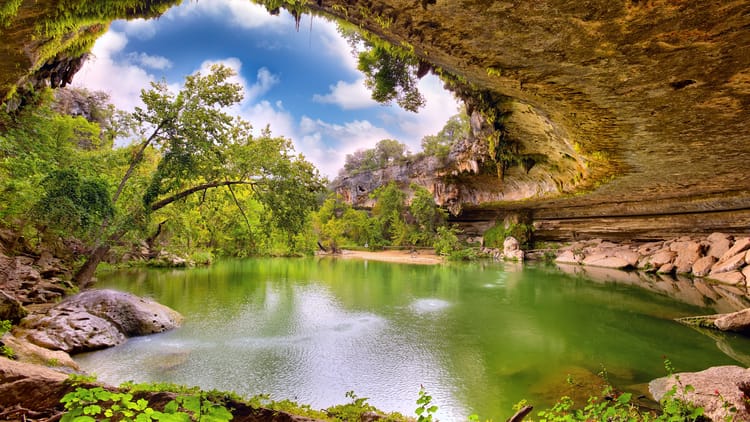
Austin area RVers have access to one of the most photographically stunning swimming holes in the country. Hamilton Pool Preserve features a 50-foot waterfall cascading into a jade-colored pool beneath a partially collapsed underground grotto. It literally looks like something from Jurassic Park.
The RV strategy here involves staying at one of the nearby RV Parks (5–20 minutes away) or Pedernales Falls State Park, which offers full hookup sites (about 30 minutes away). The state park itself has excellent swimming along the Pedernales River, so you're getting two distinct experiences.
Important logistics: Hamilton Pool requires advance reservations for swimming, and they're often booked weeks in advance during peak season. The Travis County Parks website handles bookings and provides current access information.
Swimming holes like these are why so many people never go back to resort vacations. If you're curious what the full-time version of this life actually looks like — and costs — our breakdown of the real cost of full-time RV living is worth a read before you start planning bigger trips.
his is why so many people never go back to resort vacations. Subscribe to our weekly newsletter.
THE BEST RV STORIES, TIPS, AND DESTINATIONS — EVERY WEDNESDAY, FREE.
5. Havasu Falls, Arizona
The turquoise waterfalls of Havasu Falls represent the holy grail of Southwestern swimming holes. Located on the Havasupai Reservation within the Grand Canyon, these cascading pools offer some of the most dramatic scenery you'll find anywhere.
RV access requires some planning. You'll park at Hualapai Hilltop—there's no RV camping directly at the trailhead, but nearby Peach Springs has RV-friendly accommodations. The hike to the falls is 10 miles each way, making this a multi-day backpacking adventure that benefits enormously from having your RV as a comfortable staging area.
The reservation system for Havasu Falls is notoriously challenging, with permits releasing on specific dates and selling out within hours. Check the Havasupai Tribe website for current procedures and availability.
Easy Access Swimming Holes with Full RV Amenities
6. Johnson's Shut-Ins State Park, Missouri
Sometimes the best RV swimming experiences come with zero hiking required. Johnson's Shut-Ins State Park offers some of the most unique water features in the country—natural rock chutes and slides carved by centuries of flowing water—with on-site RV camping that includes electric hookups.
The shut-ins themselves are a geological marvel. Billion-year-old rhyolite bedrock has been carved into smooth slides, pools, and chutes by the Black River. It's like a natural water park designed by geological forces over millennia.
The Missouri State Parks system maintains excellent facilities here, including restrooms, picnic areas, and well-maintained camping areas that can accommodate larger RVs. When you pull in after a full day in the water, you'll want your campsite setup dialed — our RV setup checklist covers the arrival routine so nothing gets missed.
7. Fall Creek Falls, Tennessee
Tennessee's Fall Creek Falls State Park combines spectacular waterfalls with excellent RV infrastructure. The main falls drops 256 feet, making it one of the tallest free-fall waterfalls east of the Mississippi River. Multiple swimming areas throughout the park offer different experiences, from shallow family-friendly pools to deeper swimming holes.
The RV campgrounds offer full hookups and can accommodate rigs up to 65 feet. What sets this apart is the combination of dramatic waterfalls, excellent swimming, and comprehensive amenities all in one location. You're not choosing between comfort and adventure—you're getting both. Families traveling with kids will also want to check our guide to roadschooling — a park like Fall Creek Falls is exactly the kind of place that turns a curriculum unit into something kids actually remember.
West Coast Hidden Gems
8. Umpqua Hot Springs, Oregon
Oregon's Umpqua Hot Springs offer a perfect Pacific Northwest hot springs experience with reasonable RV access. These tiered pools overlook the North Umpqua River and provide a quintessentially Oregon outdoor experience.
Toketee Lake Campground accommodates smaller RVs and puts you within a half-mile hike of the springs, but there are no hookups. The setting is classic old-growth forest with the kind of moss-covered, cathedral-like atmosphere that makes Oregon special. Diamond Lake or KOA Lemola Lake are your best options for full hookups.
The pools themselves are clothing-optional, which is worth knowing before you arrive. The U.S. Forest Service provides current access information and any seasonal restrictions.
9. Wild Willy's Hot Springs, California
Located near Mammoth Lakes, Wild Willy's offers some of the most accessible family-friendly hot springs in the Sierra Nevada. The shallow pools are perfect for kids and the mountain views are spectacular.
The RV approach involves boondocking on nearby Bureau of Land Management land, which appeals to off-grid adventurers seeking a more primitive experience. The springs are a short walk from where you can park larger RVs, making this an ideal introduction to high-country hot springs. Need a bougier setup? Reserve a full hookup spot at nearby McGee Creek RV Park. If boondocking is your style, our complete guide to boondocking without hookups will help you do it right the first time.
Seasonal Considerations and Planning Tips
Timing your visits requires understanding seasonal access patterns. Many popular spots require permits from May 15th through September 15th, while many high-elevation locations remain inaccessible until late spring or early summer.
Winter access varies dramatically by location. Desert hot springs like those in Nevada and New Mexico often provide year-round access, while mountain locations may be completely inaccessible from November through April. Always check current conditions before making the drive.
Water levels fluctuate seasonally as well. Spring snowmelt creates the most dramatic waterfall experiences, while late summer often provides the warmest water temperatures and clearest conditions for swimming. These are also the kinds of destinations where solar power gives you a real edge — our breakdown of how to build an RV solar setup on any budget is worth bookmarking before a remote trip like this.
Making the Most of Your RV Swimming Hole Adventures
The key to successful RV swimming hole adventures lies in thorough preparation and realistic expectations. These aren't resort experiences—they're raw, authentic encounters with some of America's most beautiful natural features.
Invest in quality hiking boots, pack more water than you think you need, and always have backup plans for weather or access issues. A solar-powered portable generator is a smart addition to any rig heading into remote territory — it keeps devices charged when you're days away from a hookup. A water pressure regulator is another piece of gear worth having aboard whenever you're pulling into unfamiliar campground hookups.
The best swimming hole trips combine careful planning with flexibility to adapt when conditions change. If you want the full picture of what it looks like to travel like this year-round, our guide to the real cost of full-time RV living lays out what full-timers actually spend on fuel, campsites, and everything in between. And for anyone wondering which rig makes the most sense for adventures like this, our piece on what type of RV you should buy is a practical place to land.
Your RV becomes more than transportation—it's your base camp, gear storage, and comfortable retreat after long days exploring. That combination of adventure and comfort is what makes RV-accessible swimming holes so special.
FAQs
What makes a swimming hole RV accessible?
An RV-accessible swimming hole is one where you can either drive your rig to within walking distance of the water, or park at a nearby campground that serves as a practical base camp for a day hike to the site. "Accessible" doesn't mean paved parking and zero effort — it means your RV is close enough to use as home base, which changes the entire logistics of the trip. Many of the best spots in this guide fall into the base camp category, where you're hiking 3 to 10 miles roundtrip and returning to a real kitchen and a real bed.
Do you need permits to visit places like Havasu Falls or Conundrum Hot Springs?
Yes, both require advance permits and they are competitive. Havasu Falls permits are released on a specific date each year through the Havasupai Tribe's reservation system and typically sell out within hours. Conundrum Hot Springs in Colorado uses a permit system managed by the U.S. Forest Service through Recreation.gov, with permits required from approximately May 15 through October 15. For both locations, plan to book months in advance and check the official reservation sites frequently.
What size RV can access campgrounds near these swimming holes?
It varies significantly by location. Fall Creek Falls in Tennessee can accommodate rigs up to 65 feet with full hookups. Johnson's Shut-Ins in Missouri handles larger RVs as well. At the other end of the spectrum, Silver Bell Campground near Conundrum Hot Springs in Colorado tops out around 25 feet, and Toketee Lake Campground near Umpqua Hot Springs has no hookups and limited space for larger rigs. Always check the specific campground's size limits on Recreation.gov or the state park site before booking.
Are hot springs safe to swim in?
Most developed hot springs featured here are considered safe for healthy adults, but there are a few things to know. Water temperatures vary — Conundrum sits around 100°F, which is comfortable, but some hot springs can reach temperatures that cause burns. Avoid submerging your head in natural hot springs, as warm water can harbor bacteria including Naegleria fowleri, a rare but serious amoeba. Pregnant travelers and people with heart conditions should consult a doctor before soaking. Always read posted signage at the springs and check for any current health advisories before getting in.
What should I pack for a day hike to a remote swimming hole from my RV?
For any hike over 3 miles to a swimming hole, pack at minimum: 2 to 3 liters of water per person (more in desert locations), high-SPF sunscreen, trail snacks with protein and electrolytes, a small first aid kit, trekking poles for rocky terrain, water shoes or sandals for the swimming area, and a dry bag for your phone and valuables. If you're hiking to hot springs specifically, add a towel and flip-flops. For longer hikes like Havasu Falls (10 miles each way), you'll need overnight backpacking gear entirely.
Can families with kids do these swimming holes?
Several on this list are ideal for families. Johnson's Shut-Ins in Missouri is often cited as one of the best family water experiences in the Midwest — the natural rock slides are gentle enough for kids and the campground has full amenities. Fall Creek Falls in Tennessee has designated family swimming areas. Wild Willy's Hot Springs near Mammoth Lakes, California has shallow pools that work well for kids. Havasu Falls and Conundrum Hot Springs are more demanding and better suited to older children and teenagers who can manage longer hikes.
What's the best time of year to visit RV-accessible swimming holes?
It depends on the region. For high-elevation locations like Conundrum Hot Springs in Colorado, the window is roughly late June through early October — snow can linger well into summer at 11,000 feet. For desert spots like Blue Hole in New Mexico and Goldstrike Hot Springs in Nevada, spring and fall are ideal since summer temperatures can make the hike dangerous. For Texas (Hamilton Pool) and Tennessee (Fall Creek Falls), late spring and early fall offer the most comfortable conditions with manageable crowds. Havasu Falls is open year-round but spring and fall are the most popular and temperate.
Categories
Related Posts
Subscribe to the Swervia Newsletter
The best RV stories, tips, and destinations—expertly curated and always free.