Adirondack Swimming Holes for RVers: Free Spots on the Ausable River
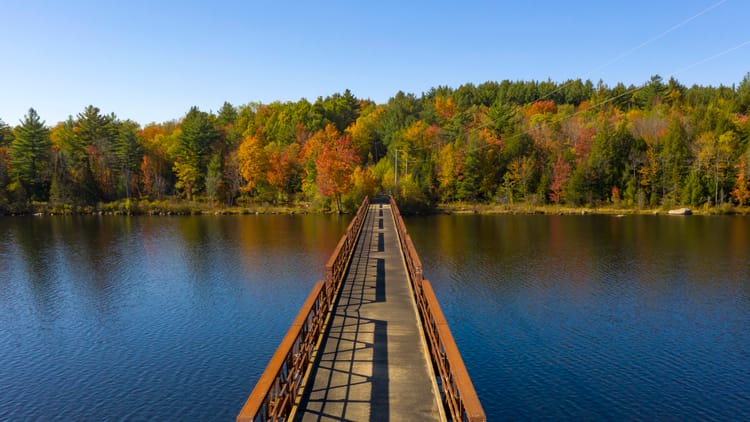
Some of the best afternoons of an Adirondack RV trip happen without leaving the campground. A shaded chair, a cold drink, the book you have been meaning to finish since March. That is a real vacation, and nobody should have to defend it.
But 20 minutes up the road, the Ausable River is running cold and clear over granite, and getting in costs nothing. The Adirondacks are stitched with free swimming holes, and the ones along the Ausable are the reason people leave a perfectly good campground pool behind to go find a rock to jump from instead.
This guide covers the free Adirondack swimming holes on the Ausable River, sorted by the kind of swimmer in your group, from a toddler who wants to sit in six inches of moving water to a teenager who wants a ledge. Every drive time below is measured from the Ausable Chasm area, the base for our full Adirondacks RV itinerary.
How Ausable River Swimming Holes Actually Work
The Ausable runs in two branches that behave like two different rivers. The West Branch drops out of the High Peaks and threads the Route 86 corridor between Lake Placid and Wilmington, which is where you find the flumes, the waterfalls, and the fast water. The East Branch runs mellower through the town of Jay, with flatter pools and gentler current. The two meet at Au Sable Forks and finish the run to Lake Champlain as one river.
For a swimmer, the branch matters more than the name of any single spot. West Branch water moves; East Branch water lingers. Match the branch to the group and half the decision is made before you park.
These spots are free for a simple reason: they are public water reached by roadside pull-offs and short footpaths, not gated attractions with a ticket booth. That also means there is no lifeguard, no posted depth, no closing time, and nobody checking the river level on your behalf. The freedom and the responsibility come in the same package, which is true of most of the good parts of RVing.
Reading the River Before You Get In
The single most useful skill at an Adirondack swimming hole is deciding not to swim. The Ausable is snowmelt-fed, so even in a July heat wave the water sits in the low 60s and takes your breath on the first step. That is the fun part. The current is the serious part.
After heavy rain the West Branch can go from clear and playful to brown and shoving in a matter of hours, and it does not announce the change politely. A pool that was waist-deep and calm on Monday can be a chest-deep push on Wednesday. Before you commit a kid to the water, check the flow: the USGS streamflow gauges track the Ausable in close to real time, and the Ausable Freshwater Center, the region's watershed nonprofit based right in Wilmington, is the local authority on river conditions and stewardship. New York's Department of Environmental Conservation posts safety guidance for swift water statewide.
The plain-language rule of thumb: if the water is loud, brown, or clearly pushing downstream faster than you would walk, it is a look-at-the-river day, not a get-in-the-river day. There is no swimming hole worth a rescue, and cold water plus current shortens the margin for error faster than most people expect.
The Jay Covered Bridge Swimming Hole (East Branch)
If you only run one swimming hole this trip, make it this one. The pools sit right beside the Jay covered bridge, an 1857 Howe-truss span closed to cars and the last of its kind in the Adirondacks, and the East Branch here spreads into a stair-step of shallow pools, flat sunning rocks, and small drops you can sit under like a cold shower you did not pay for. It is the rare wild swim that photographs like a postcard and swims like a kiddie pool.
With kids: This is the one that works with a range of ages at once. Little ones can wade the shallow edges and sit in the moving-but-gentle water while older kids work up the nerve for the deeper pools and the small falls. Parents can actually sit on a warm rock and watch instead of standing shin-deep in a panic. Bring something to sit on and plan to stay a while, because nobody leaves this spot on the first ask.
Without kids: A quieter play here is to arrive early, claim a flat rock upstream from the crowd, and treat it as a slow morning rather than a main event. The pools are deep enough for a real dunk, the bridge overhead earns its reputation, and by mid-afternoon in July it fills up, so the couple that shows up at 9 a.m. gets the version everyone else is hoping for.
It runs about 35 to 40 minutes from the Ausable Chasm area. Parking sits on both sides of the bridge, and short trails on the south side drop you to either bank.
You found one good guide. We send a new one every week, for wherever you're headed next. Subscribe to our weekly newsletter.
THE FREE, LOCAL, DRIVE-PAST-IT SPOTS OTHER GUIDES MISS — IN YOUR INBOX EVERY WEDNESDAY.
The Flume and Monument Falls (the Route 86 Corridor, West Branch)
The West Branch between Wilmington and Lake Placid gives you the two ends of the spectrum within a few miles of each other, and it is worth being honest about which is which.
The Flume, just outside Wilmington heading toward Lake Placid, is the dramatic one: rushing water, waterfalls, and scenery that stops traffic. It is also the one that demands the most respect. The water moves fast, the rock is slick, the roadside parking is a genuine traffic hazard, and there have been fatalities here in high water. This is not a young-kid spot and it is not a swim-after-rain spot. Strong adult swimmers who read the river carefully and stick to the calmer pools when the flow is low can enjoy it. Everyone else should come for the view, take the photo, and keep the kids well back from the fast chutes.
Monument Falls is the opposite temperament and sits a little farther along Route 86. It is an iconic roadside stop where the West Branch slides over broad ledges with Whiteface Mountain framed upstream, and the monuments beside it mark the 50th and 100th anniversaries of the Adirondack Park. Fly anglers stand in it for a reason. For a family it is a wade-and-splash and world-class photo spot more than a deep swim, which makes it the perfect low-stakes stop when the Flume down the road is running too high to touch.
With kids: Monument Falls is the pick here. Shallow ledges, big scenery, easy in and out, and a parking situation that does not require holding your breath.
Without kids: The Flume rewards a careful, low-water morning and a healthy sense of self-preservation. Read the flow honestly, and if it is up, drive on.
Lake Everest, When You Want a Beach and a Lifeguard Kind of Afternoon
Not every swim needs a footpath and a judgment call. In the middle of Wilmington, a small dam widens the West Branch into Lake Everest, and the town keeps a sandy public beach, a picnic area, and canoe and kayak rentals on it in summer. The current disappears, the bottom is sand instead of boulder, and the whole thing feels like the calm cousin of the swimming holes upstream.
This is the honest bridge between the two camps we opened with. If half your group wants a wild cold-water plunge and the other half wants to build a sand castle in flat, warm-ish water, Lake Everest lets everyone win in the same zip code. It is also the right call on a high-water day when the river spots are off the table, and a smart default for the working parent who needs the kids entertained and visible for a couple of hours. For the wider set of family-friendly options across the country, our roundup of RV-accessible swimming holes covers the criteria that separate a great family swim spot from a one-and-done.
A Bonus Just Off the Ausable: Split Rock Falls
One well-loved spot in the area is not actually on the Ausable at all, and it is worth saying so plainly rather than letting it ride as a river spot it is not. Split Rock Falls sits on the neighboring Boquet River, off Route 9 south of Elizabethtown, roughly 40 minutes from the Ausable Chasm area. It brings deeper pools, dramatic ledges, and a cliff-jumping reputation that draws a younger crowd. Treat it the way you treat the Flume: strong swimmers, low water, eyes open, and no jumping into water you have not checked first. It earns a spot on the list because it is close and it is good, not because it shares a river with the others.
What to Pack for a River Swim Day
A river swim is low-gear by design, but a few things turn a good afternoon into an easy one.
- A quick-dry towel that clips onto a daypack is worth more than a beach towel at a spot you have to walk into, since it dries on the drive to the next stop instead of living wet in a bag.
- A soft-sided insulated cooler bag light enough to carry down a trail covers the water and snacks, and the carrying part matters when the good rock is a few hundred yards from the car.
- Single-serve electrolyte packets earn their place on a hot day when you are in and out of cold water and forgetting to drink, which is most people by mid-afternoon.
- A six-pack of oversized towels for the whole crew lives in the tow vehicle all summer and saves the good camp towels from a life of river grit.
Two things the sheet will not sell you but the river will demand: closed-toe water shoes with real grip, because wet granite is exactly as slippery as it looks, and a dry bag or dry pouch for phones and keys, because the one time you skip it is the one time somebody slips off a rock. Pair a morning summit from our Adirondack day hikes guide with an afternoon swim and you have the whole reason people bring an RV to this corner of the park.
Leave No Trace at a Swimming Hole
The Flume made the news partly for a reason nobody likes to say out loud: popular free swimming holes get loved into a mess. Trash piles up, the banks erode, and the spot everyone posts about gets a little worse every summer. The fix is not complicated.
Pack out everything you bring in, including the stuff that feels compostable, like orange peels and apple cores, which do not belong in a river corridor. Leave the rocks where they are, because stacking cairns and building dams wrecks the small habitat that lives under them. Keep soap and sunscreen out of the water when you can, park only where parking is legal and safe, and follow the Leave No Trace principles that keep these places open and worth visiting. The Ausable Freshwater Center does the long-haul work of protecting this watershed; the least a visitor can do is not undo it in an afternoon.
Fitting a Swim Into the Week
The swimming holes are not really a destination on their own. They are the payoff you tack onto the rest of the day: the cold plunge after a summit, the way you cool three overheated kids down before dinner, the reason a travel day gets a happy 40-minute detour. Treating a swim as recovery rather than an event is also just good sense on a long trip, and it fits neatly with the broader idea of staying fit anywhere you park.
Base once, keep the river spots in your back pocket, and pull one out whenever the day needs it. For the full five-day version, including where to camp and how the swims fit alongside the peaks, ferries, and forts, see our complete Adirondacks RV itinerary. And if the Northeast lake-and-river template clicks for your family, our Seneca Falls RV itinerary runs the same base-camp play a few hours west in the Finger Lakes.
FAQs
Are the Adirondack swimming holes on the Ausable River free?
Yes. The main Ausable River swimming spots, including the Jay covered bridge pools, the Flume, and Monument Falls, are free public water reached by roadside pull-offs and short trails, with no entry fee and no ticket booth. Lake Everest in Wilmington is a town beach, which may charge a small day-use or parking fee in peak season. Because these are unstaffed spots, there are no lifeguards and no posted depths, so the trade for free access is that you manage your own safety.
How cold is the Ausable River in summer?
Cold enough to take your breath away. The Ausable is snowmelt-fed, so water temperatures typically sit in the low-to-mid 60s Fahrenheit even during a July or August heat wave, and shaded pools run colder. That is part of the appeal on a hot day, but it also means you cool down fast, so limit young kids' time in the water and warm up in the sun between dips.
Which Ausable swimming hole is best with young kids?
The Jay covered bridge swimming hole on the East Branch is the most forgiving for a mixed-age family, with shallow pools, flat sunning rocks, and gentle current. Lake Everest in Wilmington is the calmest option overall, with a sandy beach and no river current, which makes it the safest bet for toddlers or nervous swimmers. Skip the Flume with young children; its fast chutes and slick rock are for strong adult swimmers only.
Is it safe to swim at the Flume in Wilmington?
Only for strong, careful adult swimmers in low water, and never after heavy rain. The Flume has fast current, slick rock, and a history of fatalities during high flows, plus roadside parking that is a real traffic hazard. When the river is running high, loud, or brown, treat the Flume as a scenic stop and keep everyone well back from the water. Check the river level on the USGS gauge before you decide.
Can you swim in the Ausable River after it rains?
Usually you should wait. The West Branch responds quickly to rain and can rise from a calm swimming pool to a dangerous push within hours, and cold snowmelt water makes current harder to handle. Give the river a day or two to drop after a heavy storm, check the USGS streamflow gauge and local conditions, and choose a still-water option like Lake Everest if you want to swim while the river is up.
How far are the Ausable swimming holes from where you camp?
Measured from the Ausable Chasm area, the Jay covered bridge is roughly 35 to 40 minutes, the Route 86 spots (the Flume and Monument Falls) are about 45 to 55 minutes, Lake Everest in Wilmington is a similar drive, and Split Rock Falls on the Boquet River is around 40 minutes. Basing your RV once in the Ausable Chasm area and running the tow vehicle out to the swims keeps every one of them inside an easy day trip.
Do you need water shoes for Adirondack swimming holes?
They are strongly recommended. The Ausable's swimming holes are lined with granite and river rock that is slick underwater and hard on bare feet, and closed-toe water shoes with real grip prevent most slips and stubbed toes. They also make it easier to walk the short trails and rocky banks between the parking area and the good pools without changing footwear.

Categories
Related Posts
Subscribe to the Swervia Newsletter
The best RV stories, tips, and destinations—expertly curated and always free.