Seneca Falls RV Itinerary: 5 Days on Upper Cayuga Lake
Most Finger Lakes itineraries scatter — a night near Geneva, a night near Skaneateles, a night near Ithaca — because the lakes themselves spread out. If breaking camp every morning and unfolding the awning somewhere new by lunch is the whole appeal for you, the Finger Lakes reward that style, and we hope every new site sits level on the first try. This itinerary is for the other camp: travelers who'd rather level once, run light all week, and let the same campfire close out five different days.
The premise is a small reframing of the regional map. Seneca Falls is not a side trip from Watkins Glen. It's a base camp. From a campground 20 minutes west of the village in Phelps, you're inside 40 minutes of Auburn's Harriet Tubman home, 30 minutes from the Montezuma marsh, 45 minutes from Aurora and its restored Victorian-era farmhouse, and 25 minutes from a hot air balloon launch site outside Canandaigua. The 1848 Women's Rights Convention happened here partly because the Cayuga-Seneca Canal made Seneca Falls a real town instead of a clearing — and that same canal still runs through downtown, still locks boats up and down a 50-foot drop, and still anchors the village to a working waterway worth a quiet afternoon.
This is a five-day itinerary built around Junius Ponds Cabins & Campground in Phelps as base camp, with four themed day trips fanning out from it: the village walk and the lock, Auburn and the abolition story, Montezuma and the marsh, and the east-shore Cayuga drive. A sunrise hot air balloon on the way out closes the trip if the weather cooperates. It works whether you're traveling with kids or without — the suffrage-and-civil-rights spine has natural kid-relevance built in, and the active days (kayak, balloon, optional skydive) have adult-only versions when they're not.
Why Seneca Falls Works as an RV Base Camp
Seneca Falls sits at the north end of Cayuga Lake — the longest of the Finger Lakes — where the Cayuga-Seneca Canal meets the Erie. That junction is the reason any of this exists. In the 1840s, canal access turned a small village into an industrial hub for pumps, textiles, and farm machinery, which built a wealthy, educated, abolition-leaning middle class with both the means and the conviction to host a movement. That's why the 1848 Women's Rights Convention — the founding event of American feminism — happened in this small upstate town and not in Boston or New York or Albany. The whole upper-Cayuga corner — Seneca Falls, Auburn, Aurora, Montezuma — was knit together by water before the highway grid showed up, and the modern road network still follows the old logic.
For an RV trip, the consolidation is key. Auburn is a 40-minute day trip east — the longest drive of the week and the only one that runs over half an hour. Montezuma National Wildlife Refuge is 30 minutes north. Aurora is 45 minutes south down the east shore of Cayuga. Canandaigua — where the balloon company launches — is 25 minutes west. The village itself is 20 minutes east of camp, has a full-service main street, four small museums within a few blocks, a working canal lock you can walk to from any village parking lot, and enough restaurants to keep dinner rotation interesting through a four-night stay.
You burn one tank on the move-in, one on the move-out, and the tow vehicle does the rest. Tanks stay manageable because you're plugged in at the same site for four nights running. The history-day pace this itinerary leans into is one of those package deals where the RV format actually rewards the trip's content — museums are walk-in/walk-out, the village fits in an afternoon, and the energetic days (Montezuma, MacKenzie-Childs, optional skydive) hit harder because they're book-ended by the slow-walk days.
Where to Park the RV: Junius Ponds and Two Vetted Alternatives
Junius Ponds Cabins & Campground is the headline pick for full-hookup RV travelers building around the upper Cayuga itinerary. The campground sits in Phelps, 15 miles west of Seneca Falls village just off the Thruway, and runs 160-plus RV sites that mostly default to full hookup with 30 and 50-amp service, level gravel pads, and the kind of oversized pull-throughs that don't require a five-point turn to back into. The amenity layer is real — a heated outdoor swimming pool, three playgrounds spread across the property so the kids on the south end aren't fighting the kids on the north end for swing time, a catch-and-release fishing pond, a basketball hoop, an arcade room, a convenience store, a laundry room, clean restrooms with hot showers, and themed weekends on the summer calendar for families that want the activity scaffolding. Season runs April through October.
The trade-off worth knowing before booking is geography. Junius Ponds is west of Seneca Falls, which puts you closer to Canandaigua and the balloon launch (25 minutes) but farther from Auburn (40 minutes) than a Waterloo-area campground would. If the Auburn day is the trip's emotional centerpiece — and for a lot of travelers it is, between the Tubman house and the Seward connection — the longer drive is the small tax. The other four days all sit inside 30 minutes from camp.
If Junius Ponds is booked — which it does at high season — here are two vetted alternatives, each with a different trade-off.
Waterloo / Finger Lakes KOA Holiday (full hookup, on the Seneca-Cayuga Canal)
The most central option for this itinerary. The KOA sits on the canal corridor between Geneva and Seneca Falls, 12 minutes east of the village, which puts Auburn back inside 25 minutes and the rest of the day-trip cone roughly equidistant. Full hookups, 50-amp service, pool, jumping pillow, the standard KOA amenity package, and the canal-front vibe that the Waterloo location is known for. The right call if KOA loyalty already shapes the trip or if a 40-minute Auburn drive is a deal-breaker.
Cayuga Lake State Park Campground (Seneca Falls — electric only, no water/sewer at sites)
For travelers who want the lake-side option close to the village, Cayuga Lake State Park is the most credible electric-only choice in the area. East Camp has electric (30-amp) sites that fill up fast in summer; West Camp is non-electric for tents and smaller trailers up to 40 feet. No water at sites, no sewer hookups; the campground has a dump station and water fill point. You cap your stay at what your fresh tank and gray tank can handle — typically 3 to 4 days for most RVs running conservative — but you wake up walking distance to the swimming beach and 5 minutes from downtown Seneca Falls. Reservations through ReserveAmerica, season runs late April through mid-October. A drinking-water filter that screws onto the fill spigot is the small piece of gear that makes the electric-only stay work without thinking about it.
Sampson State Park, on the east shore of Seneca Lake about 25 minutes south, technically has 243 electric sites and works for RVs — but it puts you on the wrong lake for this itinerary. The day-trip cone shifts away from Auburn and Aurora and toward Watkins Glen, which is a different trip in a different itinerary altogether.
Day 1: Roll In, Walk the Village, Watch a Lock Through
Plan to arrive at Junius Ponds by early afternoon — check-in gets busy and you want unhurried time to level the RV, drop the awning, and set up the site. The RV setup checklist for arrival day is the part of the trip nobody talks about and everybody benefits from running through. A set of leveling blocks that work on slightly sloped gravel sites is the small thing that decides whether the awning sits right the whole week. Once you're settled, the village is 20 minutes east on Route 318.
Start at Women's Rights National Historical Park on Fall Street. This is the national park that exists because of one weekend in July 1848: roughly 300 people, most of them women, gathered in a small Wesleyan Methodist chapel on this street and signed the Declaration of Sentiments — the founding manifesto of the American women's rights movement, drafted by Elizabeth Cady Stanton and modeled on the Declaration of Independence with one substitution that changed the rest of American history: *all men and women are created equal*. Women couldn't vote, couldn't own property after marriage, couldn't keep their own wages, couldn't go to most colleges, and couldn't speak in public on most platforms in 1848. The convention argued they should be able to do all of those things. Seventy-two years later, the Nineteenth Amendment delivered the vote. The work that started in this room has never finished. Admission to the park is free.
The Wesleyan Chapel is the centerpiece — the actual building where the convention happened, with the original 1843 brick walls preserved inside the modern protective shell. Plan 90 minutes if you're reading the panels; 45 if you're skimming. The visitor center across the street holds the Declaration of Sentiments table and the bronze life-size statues of the convention's leaders.
Walk down Fall Street to the National Women's Hall of Fame at 1 Canal Street. The Hall moved into a restored 19th-century knitting mill on the canal in 2020 and runs rotating exhibits alongside the permanent biographical collection of every woman inducted since 1969 — inductees range from Susan B. Anthony and Sojourner Truth in the founding class to Sally Ride, Maya Angelou, Toni Morrison, and most recently Indra Nooyi and Serena Williams. Reading the wall of plaques is its own slow museum experience. Figure 45 minutes. The building itself earns the walk — two-story factory windows put the canal directly in your field of view as you read. Admission is $10 for adults, $9 for seniors, students, and veterans, and $8 for kids 12 and under.
Before you log the third museum of the day, step outside. The Ludovico Sculpture Trail starts at the back of the Hall of Fame and runs 0.9 miles along the Cayuga-Seneca Canal toward Van Cleef Lake, with 20-plus permanent sculptures installed since 1999 — most dedicated to the women's rights movement, the canal's industrial era, or the migratory waterfowl that pass through the marshes upstream. Flat, free, dog-friendly, shaded most of the way. Thirty to 45 minutes round trip, and it doubles as the day's dose of fresh air between museum stops. If you're itching to get on the water, save it for Day 3 — the liveries out by Montezuma put you on open canal, and paddling the marsh corridor at that end is the better use of a kayak than the village stretch anyway.
The It's a Wonderful Life Museum is the Frank Capra museum two blocks back up Fall Street, and it exists because of a quiet bit of pop-culture detective work: in 1945, the year before he shot the film, Capra is documented to have spent a night at the Hotel Clarence in Seneca Falls. The town's truss bridge over the canal — the one you cross on Bridge Street, also the site of a real 1917 rescue in which a local man jumped off the bridge to save a drowning woman and survived — looks suspiciously like the bridge George Bailey nearly jumps off in the film. Seneca Falls decided long ago that the resemblance was no coincidence, and the museum (currently at 76 Fall Street while the original building at 32 Fall Street is under structural repair) leans all the way in, with original costumes, props, set pieces, a small theater playing the film on loop, and a December festival the town builds around the connection. Admission is $5 per adult, Tuesday through Saturday, 11 to 4. Skip the museum if you've never seen the film. If you have, the 20-minute walk-through is one of the most affectionate small-museum stops in the state, and the bridge itself is a 90-second photo detour.
End the afternoon at the Seneca Museum of Waterways and Industry, the small canal-history museum that sits directly on top of Lock 1 at 89 Fall Street. The museum tells the story of how this town actually got built — the pumps and turbines and machine shops that made Seneca Falls a 19th-century industrial center because the canal could move heavy iron in cheaply and move finished goods out by the barge-load. It's a short visit on its own (figure 30 minutes), but the museum's lower-level canal-side walkway is the real reason to come: this is where you stand to watch a boat lock through. Lock 1 is one of two staircase locks in the Cayuga-Seneca Canal system — together they raise or lower vessels through about 50 feet of elevation change in around 15 minutes per chamber. The recreational boating season runs mid-May through mid-October. Pleasure boats lock through most warm afternoons, and the lockmaster's office (down the steps from the museum) will tell you what's queued. Watching a 40-foot cruiser disappear below the wall and reappear at a lower elevation is the kind of slow-engineering spectacle that doesn't make the brochure and stays in the trip memory. Free general admission (small fee for guided tours), year-round.
Bring dinner from the RV or grab a slice in the village — Fall Street has six restaurants walkable from the lock. Sunset behind the lock wall, on the bench by the museum, is free and takes no planning. For an alternative close, Cayuga Lake State Park is 10 minutes east at the north end of Cayuga Lake — natural-sand swimming beach (open in season with lifeguards), picnic shelters, easy parking. A sunset over Cayuga reads completely different than the canal-village one, and the drive home is a 12-minute glide. Worth it if the kid contingent has voted for a beach close to a museum day.
Day 2: Auburn and the Other Half of the Suffrage Story
Auburn is not the day-2 afterthought. It's the answer to a question Day 1 asks. The suffrage convention happened in Seneca Falls in 1848 — and the abolition movement, which the suffrage movement was already entangled with, had a parallel home 25 minutes east in Auburn, where Harriet Tubman lived for 54 years after the Civil War and where William Henry Seward — Lincoln's Secretary of State — wrote much of the legal and diplomatic infrastructure of emancipation. Pairing the two days is what makes each one land.
Drive east on Route 20. The trip is 40 minutes door to door — the longest single drive of the week, which is also why this day deserves the early-morning energy. Start at Harriet Tubman National Historical Park on South Street. The park is the smallest and newest in the National Park Service's roster — designated in 2017 — and it interprets three buildings on Tubman's property: her brick home (where she lived after buying the land from Seward in 1859), the Home for the Aged she founded for Black senior citizens, and the Thompson AME Zion Church where she worshipped for 22 years. Tours are ranger-led; check the park's site for the day's schedule, because they don't run continuously and the church requires a guide for interior access. Plan 90 minutes. Admission is free. The conversation in this park is harder and quieter than the conversation in Seneca Falls; rangers are good about pacing it for adult-only and family-with-kids audiences differently.
Lunch in downtown Auburn — Genesee Street has the highest restaurant density, and Curley's on Genesee Street has been there since 1933 if classic-diner is the lane.
If the morning's emotional weight needs to settle before the afternoon museum, Emerson Park is 5 minutes south on the north end of Owasco Lake — 135 acres of waterfront with a swimming beach (open 11 a.m. to 7 p.m. daily in season with lifeguards), paddleboard and kayak rentals through the on-site outfitter, paved walkways, a disc golf course, gardens, and the kind of "just walk by the water for 30 minutes" interlude that makes the Seward House land better in the afternoon. The park is also home to the REV Theatre Company at Merry-Go-Round Playhouse, one of the oldest professional musical theatre companies in upstate New York — worth a glance at the summer schedule if a Saturday matinee fits the trip.
The Seward House Museum at 33 South Street is the second half of the day. Seward's home is preserved largely as the family left it, with original furniture, books, and the desk where Seward negotiated the Alaska Purchase (the "Seward's Folly" deal that turned out to be the bargain of the century). Tours are guided, run on the hour, Tuesday through Saturday 10 to 5; admission is $10 for adults, $5 for students. The guides are trained and the tour runs about 75 minutes. The connection back to the Tubman house is direct: Seward sold Tubman the land for her home in 1859 against the laws of New York at the time and helped finance her work. Walking out of the Tubman park and into the Seward house in the same day puts the two stories in the same room.
If energy remains, the Cayuga Museum of History and Art on Genesee Street is a small museum ($10 adults) with a 19th-century mansion building and rotating local-history exhibits — 45 minutes if local-history is your lane, skippable without guilt if it isn't. Drive back to camp via the southern Route 5 route along Owasco Lake for the scenic version; via Route 20 for the faster version.
For families: kids tend to do well at the Tubman park if they're 8 and up — the AME Zion Church interior is striking and the ranger talks scale to age — and the Seward House is harder for under-10s because the tour is guided and you can't move at kid pace. Pair the Tubman park with an ice cream stop on the way back through Auburn (Sweet Treats on Genesee is the move) and call it a day if the Seward House feels like one museum too many. The day still has its weight.
The best RV trips aren't the longest — they're the ones with the right base camp. Subscribe to our weekly newsletter.
FOR RV PEOPLE WHO LIKE TO KNOW THINGS. EVERY WEDNESDAY. ONE EMAIL. FREE.
Day 3: Montezuma, Wings and Paddles
The Wildlife Drive at Montezuma is not a drive-through aquarium. It's a 3-mile sit-and-wait with the engine off and the windows down. Montezuma National Wildlife Refuge sits 30 minutes east of Junius Ponds where the Cayuga-Seneca Canal meets the Erie, and it's one of the most important migratory bird stopovers on the Atlantic Flyway — half a million ducks, geese, and shorebirds rest on the refuge's pools every spring and fall, and the year-round resident list includes bald eagles, ospreys, herons, and bitterns that the casual driver-by doesn't always see but the careful-watcher does.
Arrive at sunrise if you can. The light is right for photography, the birds are most active in the first two hours after dawn, and the Wildlife Drive is empty enough that pulling over to watch is a reasonable thing to do. The drive itself is one-way, 3 miles, with several pullouts and observation towers. Vehicles only — no pedestrians or bicycles on the drive — and anyone in an RV over 30 feet should leave the motorhome or trailer at the campground and take the toad or tow vehicle in. A pair of binoculars and an insulated cooler with breakfast saves the morning from getting eaten by a campground breakfast you can do anywhere; you can't do the marsh at dawn from anywhere else.
The visitor center opens at 10 and runs through 3 daily, April through November. Skip it if you're tight on time; go inside if the kids want to see the live displays or the staff has something pinned for the day. The Wildlife Drive runs sunrise to sunset, also April through November.
For the active version of the day, kayak. The Friends of the Montezuma Wetlands Complex and the Montezuma Audubon Center (2295 State Route 89, Savannah) rent solo kayaks for around $25 and canoes for around $40, and the Audubon Center runs naturalist-guided paddles on a schedule that varies through the season — check ahead. The refuge itself doesn't allow paddling inside its boundaries, but the canal that runs along the east side of the refuge is open water and is the actual paddler's route. Howland Island Wildlife Management Area, 20 minutes north of the refuge, has a 10-mile circumnavigation loop with bird density rivaling Montezuma proper and far fewer people. Best season for paddling is late spring and early summer; the aquatic vegetation thickens through August and makes the route harder.
In the afternoon, drive south along Cayuga Lake's north end and pick up two or three wineries on the Cayuga Lake Wine Trail — the first-organized wine trail in America (established 1983), with 16 member wineries strung along both shores. Hosmer Winery on the west shore (Romulus) and Swedish Hill on the east shore (Romulus, confusingly) are the two most consistently recommended for a non-overwhelming first visit. Tasting fees run $5 to $10. You're not doing the full trail in one afternoon and you shouldn't try; pick two and head home.
For RV-real consequences worth knowing: most campgrounds in this area enforce generator quiet hours until 8 a.m. If you're up at 5 for the Montezuma sunrise drive, run on house batteries until you're out of the loop or the neighbors will know. An RV battery monitor that flags low voltage before the inverter trips is the small piece of awareness that keeps the morning quiet.
Day 4: East Shore Cayuga — Aurora, the Farm, the Lake
Drive south down the east shore of Cayuga Lake on Route 90. Aurora is 45 minutes from Junius Ponds via Route 318 east to Route 90; the drive itself is a soft-curving lake road with farm land on the left and water on the right and is the prettiest stretch of road in this itinerary.
Start at the MacKenzie-Childs campus at 3260 State Route 90 in Aurora. MacKenzie-Childs is the high-end ceramics-and-home-goods company famous for its black-and-white checkered everything, headquartered on a 65-acre dairy farm above Cayuga Lake. The free farmhouse tour runs daily at 11 a.m. and 1 p.m. and is one of those genuinely strange and lovely afternoon stops — a working 15-room Victorian farmhouse decorated end-to-end with the company's own products, including a fully-set whimsical dining table that hasn't been touched since the design team last styled it. Production tours run Monday through Thursday at 1 p.m. and last 50 minutes; if checkered tableware is not your tribe, the production tour is still oddly compelling because you see the actual hand-painters at work. The store is open 10 to 5 daily. The grounds have an outdoor café and gardens that work for an hour of slow walking.
Continue south to Aurora village proper. The village is one street long, Victorian-era preserved, and home to Wells College and a handful of restaurants worth lingering over for lunch. The Aurora Inn on the lake has a porch that looks straight down Cayuga; reservations help in summer.
Drive 5 minutes south to Long Point State Park – Finger Lakes at 2063 Lake Road. This is the day-use Long Point — not the Lake Ontario park of the same name — and it's a stony swimming beach with a supervised lifeguard, a boat launch, a picnic area, and 4.5 miles of hiking trails through the woods above the lake. Parking is $7. The water is the standard Cayuga summer temperature (warm enough by August, cold enough in June to choose between dipping and hiking). A set of oversized pre-washed beach towels is the unsexy gear choice that turns a 90-minute beach stop into a real swim. There's no RV camping at this Long Point — there's one rental cottage on the lake with a Saturday-to-Saturday minimum in summer — which is the only reason this didn't become a base-camp option instead of a day stop.
Drive back via the back roads through Levanna and Union Springs to extend the lake views, or via Route 90 for the faster return. Either way, dinner is at the campground or in Seneca Falls; the village is quieter on a Wednesday or Thursday and you can usually walk into anywhere on Fall Street without a wait.
If You're Game: Skydive Day
If the afternoon mood runs adrenaline, Skydive Seneca Lake operates out of the small airport in Ovid — 25 minutes west of Aurora, 35 minutes south of Junius Ponds. Tandem jumps from 10,000 feet run $295 weekday and $325 weekend; the 13,000-foot option adds a longer freefall for $40 more. Booking through their online portal is the move; the drop zone gets busy in summer and walk-ins aren't guaranteed. Weight limits apply (typically 240 pounds clothed); check before assuming the whole party jumps. This is the alternative anchor for Day 4 if MacKenzie-Childs and the lake aren't the calorie target. Not a kid activity — the minimum age is usually 18 — so it's an adults-only or couples-only swap.
Day 5: Sunrise Balloon, Slow Morning, Easy Exit
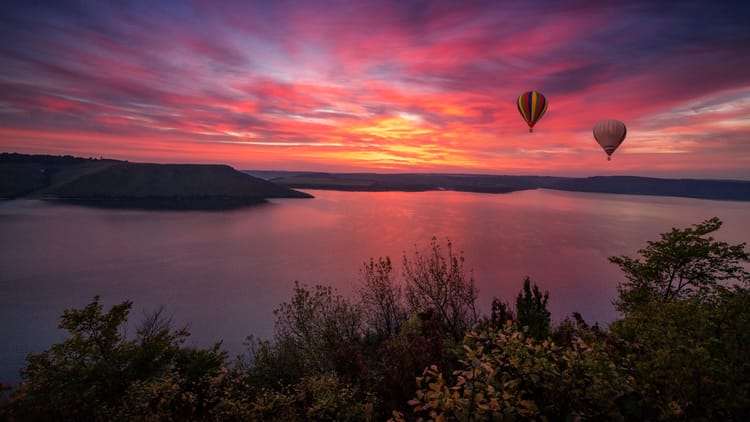
Liberty Balloon Company launches sunrise and sunset flights out of Canandaigua, 25 minutes west of Junius Ponds — the closest the trip puts you to the launch site. The Canandaigua launch site is the Chalet of Canandaigua bed and breakfast, on the north end of Canandaigua Lake. Sunrise flights are the move for this itinerary — they put you 1,000 feet up over the Finger Lakes during the gold-hour window when all eleven lakes catch light differently and the inland hills look like a topographic model, and they get you back to the campground with most of the day still ahead.
Booking is by reservation; sunrise flights through summer book two to three weeks out. Shared rides (up to four passengers in a basket) run roughly $295 per person; private flights for two run higher. Age and weight limits apply — check the Physical Requirements page on the company's site — and the most important thing to know is that balloon flights cancel routinely for weather. Wind above about 10 mph at altitude scrubs the flight; storms scrub the flight; fog usually scrubs the flight. A confirmed booking on Day 5 is not a confirmed flight, and the right move is to book the trip's first day open as the primary attempt and the last morning as the backup.
The cost-of-failure math is worth running before you book. If the flight scrubs and you've already broken camp, you've added 90 minutes of dawn driving for nothing. The fix is to ask the campground about a late checkout the morning of the flight — most are flexible at 10 or 11 instead of the standard 9 — and to pre-pack the night before so the RV is ready to roll the moment the balloon lands. A tire pressure monitor that's already been on the wheels for three days of sitting means the travel-day morning check is a glance, not a chore.
If the balloon scrubs and there's no backup window, the consolation prize is real: a slow campground morning, a coffee at the pond, and an easy drive out. The trip didn't need the balloon. It just earned more if it got it.
What This Itinerary Skips on Purpose
The Finger Lakes have more to see than five days can cover honestly, and the choices below are deliberate rather than oversights.
Ithaca's waterfall belt — Taughannock, Treman, Buttermilk, Cascadilla — is 30 minutes south of Seneca Falls and is one of the best sets of waterfalls in the Northeast. It's left out of this itinerary because it's the centerpiece of the Watkins Glen RV itinerary on the southern Finger Lakes corridor, where Ithaca is a 30-minute day trip from a different base camp. Doing both itineraries back-to-back across a longer trip is the move if you have nine days; trying to fold Ithaca into this itinerary makes the day-trip cone too wide and ruins the single-base logic.
Corning, the Corning Museum of Glass, and the Harris Hill glider rides in Elmira are skipped for the same reason — they're the Day 3 anchor of the Watkins Glen itinerary, about an hour south of camp and a stretch for a day trip from this base. Hammondsport and Keuka Lake belong to the western Finger Lakes corridor and are likewise covered in the Watkins Glen article.
Skaneateles, on its own lake east of Auburn, is the omission worth flagging: it's gorgeous, the village is on every "prettiest town in the Finger Lakes" list, and it's about 50 minutes from camp via Auburn. Adding it would have made Day 4 a two-hit instead of an Aurora-and-lake day, which felt forced. If a sixth day appears in the trip, Skaneateles is where it goes.
Bringing It Home
Five days in upper Cayuga is shorter than the region rewards and longer than most travelers give it. The trade is real: the lake-loop scatterer's version of the Finger Lakes hits more towns and more inns and more lake views per day, and that version is the right call for travelers whose joy is the move itself. The single-base version traded that breadth for depth — for sitting in the Wesleyan Chapel for an hour instead of 20 minutes, for watching the boat through Lock 1 instead of driving past the canal, for the Wildlife Drive at dawn instead of mid-afternoon when the birds are quiet.
The history is the spine, and the spine is what holds the trip together when the weather scrubs the balloon or the kayak rental is booked out or the museum tour runs long. The Tubman park, the Wesleyan Chapel, the canal lock, the marsh at dawn — those don't move and don't sell out, and they'll be here on the next trip too. The trick of an RV trip is showing up close enough to do them slowly. Seneca Falls is that close.
FAQs
How Many Days Do You Need in Seneca Falls and the Upper Cayuga Lake Region?
Five days is the right minimum if you're building around Seneca Falls as a single base camp. Two days isn't enough to do the suffrage-and-abolition pairing properly (Seneca Falls village is half a day, Auburn is most of another). Three days lets you add Montezuma but skip the active version. Five days fits the village, Auburn, the Montezuma marsh with kayak time, the east-shore Cayuga drive with MacKenzie-Childs, and a sunrise balloon morning with weather slack. Seven days would let you add Skaneateles and a wine-trail-only day. Most travelers under-budget time here because the history makes the days feel small on paper; in practice they fill out fast.
What's the Best RV Campground Near Seneca Falls With Full Hookups?
Junius Ponds Cabins & Campground in Phelps, 15 miles west of Seneca Falls, is the headline pick. It runs 160-plus full-hookup sites with 30/50-amp service, level gravel pads, a heated pool, three playgrounds, an arcade, a fishing pond, and a laundry room. The Waterloo / Finger Lakes KOA Holiday is the most central alternative — on the canal between Geneva and Seneca Falls, closer to Auburn — and the right pick if 40-minute Auburn drives are a deal-breaker. Cayuga Lake State Park is the credible electric-only state-park option for travelers who don't need full hookups and want walking distance to the village beach. The upper-Cayuga region is thin on lake-front full-hookup options that actually fit this itinerary's day-trip geography, so two real alternatives plus the state park is the honest count.
Can You Visit Harriet Tubman's Home in Auburn From Seneca Falls?
Yes, Auburn is a 25-minute drive east of Seneca Falls on Route 20, and Harriet Tubman National Historical Park is the centerpiece. The park interprets three buildings on the property she owned for 54 years: her brick home, the Home for the Aged she founded for Black senior citizens, and the Thompson AME Zion Church where she worshipped for 22 years. Tours are ranger-led with schedules that vary daily — the church interior requires a guide for access. Admission is free; plan 90 minutes. Pair it with the Seward House Museum 10 minutes away (where William Seward sold Tubman her land in 1859) for the full historical context. Two-park days in Auburn are a credible day trip from any campground around Seneca Falls.
Is Cayuga Lake State Park Good for RVs?
It's good for RVs that don't need full hookups and good for travelers who want the lakeside location more than the amenities. East Camp has electric (30-amp) sites; West Camp has non-electric sites for tents and trailers up to 40 feet. There's no water at sites and no sewer hookups, so stay length is capped by your fresh and gray tank capacity — typically 3 to 4 days for most RVs running conservative. The campground has a dump station and water fill point. Reviews are mixed: clean bathrooms and walking distance to a swimming beach on the plus side, sites described as muddy and cramped on the minus. Reservations through ReserveAmerica; season runs late April through mid-October. Full-hookup travelers will prefer Junius Ponds in Phelps or the Waterloo / Finger Lakes KOA.
Where Can You Go Skydiving or Take a Hot Air Balloon Ride in the Finger Lakes?
Skydive Seneca Lake operates out of the airport in Ovid, NY, with tandem jumps from 10,000 feet ($295 weekday, $325 weekend) or 13,000 feet ($335/$365). Booking is through their online portal; walk-ins aren't guaranteed in summer. Liberty Balloon Company runs sunrise and sunset hot air balloon flights out of Canandaigua at the Chalet of Canandaigua launch site — shared baskets run roughly $295 per person, private flights run higher. Flights schedule by reservation, Monday through Saturday year-round, and routinely cancel for weather. Book two to three weeks out for summer sunrise slots and assume you may need to rebook for weather. The two activities sit at opposite ends of the adrenaline spectrum and don't conflict scheduling-wise — Liberty does morning launches, Skydive Seneca Lake operates afternoons.
What's the Difference Between Staying in Seneca Falls vs Watkins Glen for an RV Trip?
Seneca Falls is the upper-Finger-Lakes history base; Watkins Glen is the southern-Finger-Lakes adventure base. Seneca Falls sits at the north end of Cayuga Lake and puts you within 25 minutes of Auburn, 15 minutes of Montezuma marsh, 30 minutes of Aurora, and 30 minutes of Canandaigua. The day-trip cone is suffrage history, abolition history, bird-watching, and the canal corridor. Watkins Glen sits at the south end of Seneca Lake and puts you within 30 minutes of Ithaca's waterfalls, 25 minutes of Corning's glass museum, 35 minutes of Keuka Lake, and 15 minutes of Elmira's glider rides. Both are 5-day single-base itineraries built around the same logic — level once, run light — but with different content. The two trips back-to-back across nine days cover the entire Finger Lakes region with one move-day in the middle. Either alone is a complete trip.
Related Posts
Subscribe to the Swervia Newsletter
The best RV stories, tips, and destinations—expertly curated and always free.