Niagara Falls RV Itinerary: 6 Days from HTR Niagara on Grand Island
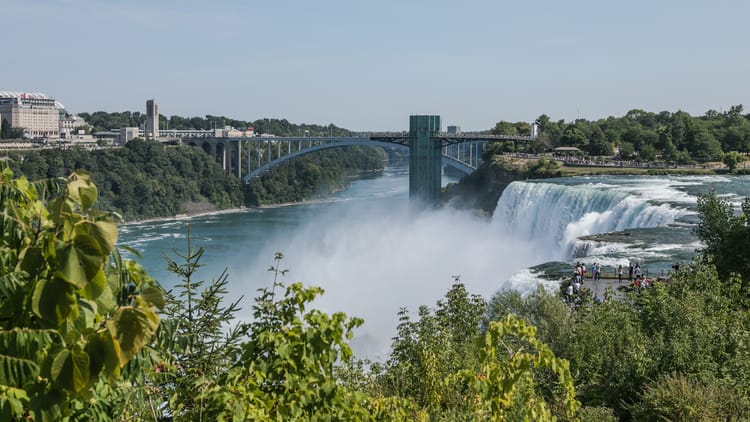
Grand Island is larger than Manhattan, sits in the middle of the Niagara River, and is the only address in the United States where you can be twenty minutes from the Maid of the Mist and twenty minutes from a Buffalo wing in the same morning. Most Niagara trips treat the Falls as the entire trip and Buffalo as the afterthought you skip when traffic looks bad. This itinerary uses the geography itself — an island parked between Lake Erie and Lake Ontario, with the Falls to the north and Canalside to the south — to make both of them the trip.
The case for one base camp on Grand Island, instead of moving the RV every other night between Niagara Falls NY, Niagara-on-the-Lake, and Buffalo, is structural. You'd otherwise pack up, drive an hour, set up, sleep, repeat. With a campsite on Grand Island, the towed vehicle does the moving and the RV stays leveled. Six days of day trips run in five different directions from the same campfire. The border is forty minutes one way, the Falls are twenty the other, the Lake Ontario shoreline is half an hour northeast, the Niagara Gorge trails are stacked along the river between you and the Falls, and Buffalo is twenty minutes south with a hot wing on it.
The itinerary works whether the rig has kids in it or whether it doesn't. The day trips bend in different directions depending on which version of the trip you're running. The Falls day is the obvious one; the Canada day is the unexpected one; the Lake Ontario day is the quiet one; the Gorge day is the active one; the Buffalo day is the slow-cooked one. Notes on which days hit harder for kids and which ones pull better adults-only are folded into each section.
Why Grand Island Works as an RV Base Camp
Most Niagara itineraries scatter — one night near the Falls, one night across the border in Niagara-on-the-Lake, maybe one in Buffalo on the way out — because the obvious anchors are spread along sixty miles of the Niagara corridor. If breaking camp every other morning is what makes a trip feel like a trip to you, the region rewards that style and you should run it that way with our blessing. This itinerary is for the other camp: travelers who'd rather drop the jacks once, leave the rig set up for a week, and stop spending the back half of every day on hook-up logistics.
Grand Island is the unobvious-but-correct anchor for that approach. It sits in the Niagara River about halfway between Lake Erie and Lake Ontario, connected to the mainland by two bridges, and it's the geographic midpoint between the two anchors most travelers come here to see. Niagara Falls State Park is roughly twenty minutes north; downtown Buffalo and the Canalside waterfront are roughly twenty minutes south; the Rainbow Bridge to Niagara-on-the-Lake is forty minutes once you account for the customs lane. Almost every other base-camp option puts you closer to one anchor and farther from the other. Grand Island puts you equidistant from both.
The radius cracks open in three useful directions from here. North gets you to the Falls, the Niagara Gorge trails on the US side, Lewiston village, Artpark, and the Old Fort Niagara peninsula at the mouth of Lake Ontario. South gets you to Buffalo, Elmwood Village, and the Erie Canal terminus. West-across-the-bridge gets you to the Canadian side of the Falls, the Niagara Glen Nature Reserve, Niagara-on-the-Lake's Queen Street, and the Whirlpool jet boats. Six days is enough to do all three rings without rushing; a seventh day buys you one piece of the outer ring — Letchworth, Toronto, or Rochester — without padding.
Where to Park the RV: HTR Niagara and Three Backup Options
HTR Niagara is the headline pick for this itinerary, and the campground we'd point most full-hookup travelers toward. It sits at 2659 Whitehaven Road on Grand Island, was previously known as Branches of Niagara, and is part of the Blue Water Development resort portfolio. The other three options below are real alternatives — which one fits depends on whether you need on-site amenities, whether you want a state-park beach experience, and whether you're willing to give up Grand Island's positional advantage for a quieter setting.
HTR Niagara (full hookup, on-site amenities, Grand Island)
The resort runs full-hookup sites with 30- and 50-amp service, and the site tiers — Standard, Preferred, Select, and Lakeview — track the usual upgrade ladder of pad surface, spacing, and water access. Select sites get a concrete patio for outdoor living, which is the upgrade that actually matters when you're parked for a week and the patio is where breakfast happens. The 2026 season runs April 10 through October 25.
The amenity stack is the structural reason to base here rather than at a quieter site. A heated outdoor pool, a private lake with kayak and canoe launches, mini-golf, ziplines, a sports court, laser tag, a gaga ball pit, and a craft room are all on the property. The translation: kids burn six hours a day on Day 1 without leaving the resort. Cabins, cottages, yurts, and tent sites round out the lodging mix if anyone in the group flew in to meet the group. The campground has its own general store, laundry, and big-rig-friendly pull-throughs.
The case against this campground is the same as the case for it: it's a resort, not a state park. If your idea of a base camp involves a tree-shaded site at a thirty-amp NYSDEC campground with the lake forty paces away, HTR Niagara is going to feel busier than you want. The two state-park options below run that play.
Four Mile Creek State Park (Youngstown, NY — Lake Ontario shore)
About thirty-five minutes north of HTR Niagara, Four Mile Creek is the state-park campground with electric hookups closest to the Falls — about ninety minutes of cumulative driving farther across the week than HTR Niagara, but with a Lake Ontario shoreline at the door. Sites are wooded; some loops have electric, others are no-hookup; reservations are through the New York State Parks system. The trade is real: you lose the geographic centering on the Falls/Buffalo midpoint, and you gain Lake Ontario as the morning view and the campfire backdrop. Worth choosing if your trip skews more toward the Old Fort Niagara/Wilson-Tuscarora side and less toward Buffalo, and if a more rustic basecamp is the version of camping you'd rather be doing.
Niagara Falls Campground & Lodging (Niagara Falls NY)
Closer to the Falls themselves and a workable alternative if HTR Niagara is booked for the dates you want. Worth checking site dimensions if you're in something over forty feet, and worth confirming 50-amp availability across the loop you'd be assigned — both are tighter here than at HTR Niagara. The trade: you cut the drive to the Falls roughly in half, but you add the same time on the Buffalo and the Canadian-Glen days, and you lose the on-resort amenity stack that makes Day 1 work.
KOA Niagara Falls North (Lewiston, NY)
About twenty-five minutes north of Grand Island in Lewiston, this KOA is the option for travelers who want a smaller, family-coded campground with full hookups and a pool, sited closer to the Gorge trails and the Lewiston village restaurant scene. It's the right choice if Lewiston is the day you're most excited about — the Day 5 plan below is closer to your door — and if you'd trade the Buffalo proximity for a quieter loop with shorter driveway angles.
For travelers new to the rhythm of a full-hookup resort week, our RV setup checklist is the running order to follow on arrival day — the difference between an unhurried Day 1 and a Day 1 that gets eaten by hook-up problems is whether the checklist is muscle memory yet. A set of reliable leveling blocks rated for uneven gravel is also worth more than its weight at the state-park options where pads aren't always concrete and the level reading is sometimes a suggestion.
Day 1: Roll In, Ride the Lake, Save the Falls for Tomorrow
Plan to arrive at HTR Niagara by early afternoon. The setup ritual at any new site is forty-five minutes minimum — level, chock, hook up, sewer, awning, settle the inside — and you want that done unhurried before you walk anywhere. The resort earns a full day, and Day 1 is when to spend it.
The on-site lake is the unexpected anchor of the afternoon. HTR Niagara's lake has canoe and kayak launches on the resort grounds; you don't need a roof rack and you don't need a boat permit. Paddle a loop, swim off the boat, come back to the campsite for lunch, then run the kids to the mini-golf course or the ziplines while the adult contingent figures out which patio chair is going to live outside the rig for the rest of the week. The pool opens in the afternoon if the kids burn through the lake first. The laser tag arena lives indoors, which makes it the rainout backup for the day weather decides to test you.
The strategic move on Day 1 is to not drive anywhere. The Falls will still be there tomorrow. Day 2 starts before nine, and Day 1's job is to set up camp and let the resort do the rest. Dinner at the site, a folding camp chair that actually survives a season of dragging parked next to it, and an early bed. The campground is more contained than a state park and gets quiet at the loop level once the kids hit the cabins.
For kids, Day 1 is the favorite day of the week before the kids have done anything yet — there's a lake, a pool, mini-golf, and lasers, and they don't have to ask permission. For adults-only travelers, the kayak launches and the patio chairs are the day. The resort doesn't punish either trip style. The point of the day isn't acceleration; it's the absence of it.
Day 2: The American Side of Niagara Falls, In One Long Day
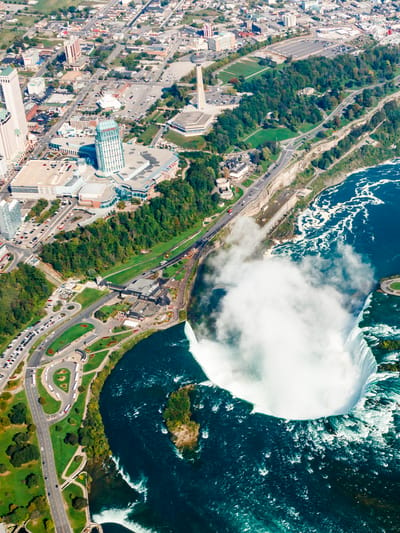
Day 2 is the headline day. Plan to leave the campground by 8:30 AM to be at the Niagara Falls State Park parking by 9:15. The park covers 400 acres on the US side of the river, gets crowded by 11 AM in summer, and runs four anchor experiences that together fill a full day if you sequence them right: the Maid of the Mist boat tour, the Cave of the Winds platform under the Bridal Veil, Three Sisters Islands at the head of the upper rapids, and Goat Island as the spine that connects them.
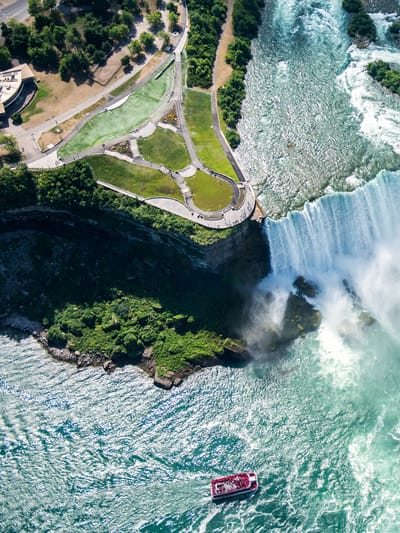
Maid of the Mist boats have been running the gorge since 1846, which makes them older than the lightbulb, the typewriter, and the state of California. The current fleet is all-electric, which is the rare green-upgrade story that didn't make the ride worse; the boats are quieter, the mist is the same. Tickets start at $30.25 for adults at the time of writing, the boarding is from the elevator at the base of the Niagara Falls State Park observation tower, and the ride is short enough — about 20 minutes — that it lives comfortably as the morning's first anchor rather than as the whole day. Boats are run by Maid of the Mist Corporation on the US side; the Canadian-side equivalent boats run from a different terminal across the river under a different operator's name.
Cave of the Winds is the second anchor and the one that puts you on a wooden platform called the Hurricane Deck, twenty feet from the foot of the Bridal Veil. Entrance is via elevator on Goat Island; the platforms are reconstructed every summer because the spray destroys them every winter, which means the experience is on a different schedule than the boat. Plan to be soaked. The poncho is included; you'll still need a towel for the drive afterward, which is exactly the use case for a quick-dry travel towel that packs to the size of a fist — the kind that lives in the daypack permanently after this trip.
Three Sisters Islands sit at the head of the upper rapids — three small islands connected by short stone bridges, accessed by walking from the Goat Island parking. The water rushes through the gaps at speeds that look like they belong in a different sport, and the rocks are wading-shallow at the upstream edges of the islands. This is the free part of the day. Pack a picnic and eat it on the rocks; this is also the part of the day a soft-sided cooler that lives between your seat and the trail makes the difference between a real lunch and a vending-machine substitute.
Goat Island connects all of it and has shaded picnic areas, a small visitor center, and the Terrapin Point overlook on the south side where the American Falls and the Horseshoe both come into the same frame. If you're going to take one Falls photograph that doesn't look like everyone else's, Terrapin Point at golden hour is the answer.
Dinner back on Grand Island, or at one of the Niagara Boulevard sit-downs on the south end of the island if you don't want to cook after a soaked-and-tired day. Day 2 is the one that justifies Day 3's slower start.
For kids, the Maid of the Mist is the favorite ride of the trip and the Cave of the Winds is the part they'll tell their friends about. The minimum age for the Maid is none (lap-held infants ride); the Cave of the Winds requires kids to be tall enough to use the platform stairs safely. For adults-only travelers, Three Sisters Islands and Terrapin Point are the parts the family contingent rushes past and you'll want to linger at.
Day 3: Across the Bridge — Niagara Glen, Niagara-on-the-Lake, and What Customs Actually Asks
Day 3 leaves the RV at HTR Niagara, drops everyone in the tow vehicle, and crosses into Canada via the Rainbow Bridge. The customs question on the way over is short, the customs question on the way back is shorter, and the day is genuinely better in two countries than in one. Plan for the bridge crossing to add 20–40 minutes to each direction in summer; weekday mornings are faster than weekend afternoons.
US citizens entering Canada by land need either a US passport, a passport card, a NEXUS card, or a New York Enhanced Driver's License. Bring two forms of ID for everyone in the party, including kids, even if you only need one to cross — borders are not the place to find out which document is in which drawer at home. Canada Border Services Agency keeps current entry requirements on its travel page, which is the right place to check the day before you cross rather than the morning of. ArriveCAN, the COVID-era pre-arrival declaration app, is no longer required for general entry. The customs officer will ask where you're going (Niagara-on-the-Lake), how long you're staying (the day), and whether you're bringing anything to leave in Canada (no). The day-trip frame is the right frame.
The morning is the Niagara Glen Nature Reserve — four kilometers (2.5 miles) of rugged hiking trails that descend into the gorge a few minutes north of the Whirlpool. The trails preserve 400 million years of geological history; the boulder fields are large enough that bouldering is a separate ticketed activity and serious enough that climbers come from across the region to use them. Parking and trail access are free; the optional bouldering permit is purchased at the Nature Centre. The hiking is moderate, the rock surfaces are slippery when wet, and the climb back out of the gorge is the part that earns the lunch. Plan two hours.
Lunch on Queen Street in Niagara-on-the-Lake is the back half of the day. The town is the wine-country heart of the Niagara Peninsula, the Shaw Festival theater season runs all summer in the historic Royal George and Festival Theatres, and the main street is four blocks of restored 19th-century storefronts that the local preservation board treats with a seriousness American downtowns rarely match. Treadwell Farm-to-Table on Queen Street carries a Michelin recommendation and books up for dinner reservations early; the lunch service is the easier reservation. If the trip pacing on Day 3 is loose, plug in an afternoon at the Whirlpool Jet Boat tour from the NOTL marina — a roughly 45-minute jet-boat run through the Class V rapids below the Falls. Tickets are around $75 CAD; you will get wetter than the Maid of the Mist. The boat company runs both a wet boat and a domed dry boat; choose your version of the soaking.
The return drive across the Rainbow Bridge to Grand Island runs forty minutes plus customs, and the Sunday-evening lane is the slowest of the week. Time the return for a weekday afternoon if you can.
Next time, let us plan your trip for you. Subscribe to our weekly newsletter.
FOR RV PEOPLE WHO LIKE TO KNOW THINGS. EVERY WEDNESDAY. ONE EMAIL. FREE.
Day 4: Lake Ontario — Old Fort Niagara, Wilson-Tuscarora
Day 4 is the slower one. The recovery from Day 2's soaked-and-tired and Day 3's two-country-customs hits hardest on Day 4's morning, which is exactly why Lake Ontario is the right call. The day pairs a fort with a shoreline trail, both on the lake's south shore, both an easy half-hour from HTR Niagara.
Old Fort Niagara is the morning. The fort sits on the bluff at the mouth of the Niagara River where it empties into Lake Ontario, was first occupied by the French in 1726, traded hands to the British in 1759, and then to the Americans after the War of 1812 — three flags, three centuries, one peninsula. The Old Fort Niagara Association has run it as an independent nonprofit since 1927, which is part of why the interpretation hasn't slid into the theme-park register the way some fort museums have. Musket demonstrations run on a posted schedule, the French Castle (the 1726 stone building at the heart of the fort) is open to walk through, and the staff is in period kit and answers questions like the questions are interesting. Plan two hours. The address is 102 Morrow Plaza in Youngstown.
The fort is also one of the better national-treasure-coded stops in the region for the history-traveler contingent, and the kind of place that hits different for kids who've been pulled through too many Falls overlooks the day before — the ramparts are walkable, the cannons fire on schedule, the gift-shop swords are the kind kids hold for the rest of the trip.
Lunch in Youngstown village (Ontario House Bar and Restaurant has been serving the dock crowd since the 1840s, which is older than every state on the Pacific Coast) and then thirty minutes east to Wilson-Tuscarora State Park for the afternoon. The park covers 476 acres on the south shore of Lake Ontario in the village of Wilson, with a four-mile nature trail through the creek mouth where Twelve Mile Creek meets the lake, a boat launch, and year-round disc golf. There's no swimming beach here, so bring the kayak rather than the swimsuit. Bring the oversized beach towels that handle four people for a picnic and the soft cooler you packed for Three Sisters on Day 2 — the lake-day version of the same gear.
Dinner back at the RV. Day 5 is the active day.
Day 5: A Gorge Hike, Lewiston, Artpark
Day 5 is the active day. The Niagara Gorge has nine miles of trails on the US side stacked into a corridor between the Whirlpool Rapids and the foot of the American Falls; the trail menu spans easy-rim-walk to scramble-down-to-the-river-and-back. The right choice on Day 5 depends on the weather, the legs in the rig, and how much elevation gain the group is willing to spend before lunch.
Devil's Hole Rapids Trail is the moderate-to-hard pick — a 1.6-mile loop that descends into the gorge via a 300-step stone staircase, runs along the river past the Devil's Hole rapids, and climbs back out. The descent is fine; the climb out is the part that earns lunch. The Gorge Rim Trail full loop is the easier alternative — a 3.5-mile loop along the top of the gorge with views down into the river without the elevation commitment. Whirlpool Rapids Adventure Trail is the hardest option in the corridor, with sections that include rope-assisted scrambles and unmaintained terrain; only attempt this one if the group is comfortable scrambling and the weather is dry. All three trails depart from the same Niagara Falls State Park trailhead network; parking is plentiful on weekdays and tighter on summer weekends.
For all of these, an electrolyte mix that earns its space in the daypack belongs alongside water and snacks. The Niagara humidity in July and August is genuinely a feature of the experience, and the climb out of any of the gorge trails is the place that punishes a casual hydration plan.
Lunch in Lewiston village is the afternoon transition. Lewiston is the small-town antidote to the Niagara Falls NY tourist strip — a real downtown of restored brick storefronts on the river, fifteen minutes north of the Falls. Center Street has a dense restaurant cluster, an independent bookstore, and the kind of ice-cream-on-the-stoop summer afternoon that older travelers remember from the upstate towns they grew up near.
Artpark, ten minutes north of Lewiston village, is the closer for the day. The 150-acre park sits on the Niagara River with riverfront walking paths, an outdoor concert amphitheater that runs free Tuesday-night shows in summer, and a kayak launch onto the lower river. The concert schedule is worth checking against the trip dates; the Tuesday-night shows are the kind of unplanned-evening anchor a base-camp trip is built to absorb.
Day 6: Buffalo — Canalside, Elmwood, and the With-Kids Pivot
Day 6 points south. Buffalo is twenty minutes from HTR Niagara via the South Grand Island Bridge and I-190, which makes it the easiest day-trip on the whole calendar. The afternoon plan is Canalside, dinner is Elmwood Village, and the seventh-grade-history-class detail that nobody mentions is that the Erie Canal terminus at Canalside is what made Buffalo Buffalo in the 19th century — the second-busiest port in New York State for most of the 1800s, hence the bones of the downtown architecture.
Canalside is the redeveloped waterfront at the head of the Buffalo River, sits where the original western terminus of the Erie Canal hit Lake Erie, and is the right anchor for a Buffalo afternoon because it's free, walkable, and gives you a quick read on what the city is doing now. Boat tours run hourly from the docks; the kayak and paddleboard rentals are by the hour; the lawn between the canals fills with families on summer weekends. The Buffalo and Erie County Naval & Military Park is across the inner harbor and lets you walk through a decommissioned destroyer and submarine for the price of the entry fee.
Dinner is Elmwood Village, a mile and a half north of downtown, which is Buffalo's restaurant corridor and the answer to "where do locals actually eat." The cuisine spans the city's full grammar — Italian, Polish, Vietnamese, Korean barbecue, the gastropub layer — and the after-dinner walk in Elmwood is the part that converts skeptics into people who come back. The home drive to Grand Island is twenty minutes; you'll be at camp before the kids are tired.
The with-kids version of Day 6 swaps Canalside for a different Buffalo. Darien Lake (operated as Six Flags Darien Lake during the summer season) is the regional theme park about an hour east of the city — a full-day commitment, not an afternoon, and worth swapping in for Day 6 entirely if the kids are at the age the rest of the trip has been adult-coded for. The Buffalo Zoo is the shorter-day kid alternative on the city's north side — AZA-accredited, three hours plus dinner runs the day, and the closer Day 6 swap if a city-zoo afternoon is your speed. The Day 4 trail-and-paddle stop at Wilson-Tuscarora and the Day 1 lake-and-pool stack at HTR cover the family-energy variant just fine without a ticket booth. The Transit Drive-In, twenty minutes east of Buffalo in Lockport, runs first-run double features on summer nights for a fraction of an indoor-theater ticket; this is the right Day 6 evening for the families who came for both the Falls and a slow night out.
Worth Adding If You Have a Seventh Day
A handful of pieces sit outside the six-day frame above but are real options if you have a seventh day or you want to swap one of the lighter mornings on the itinerary.
Letchworth State Park (southeast, ~90 minutes)
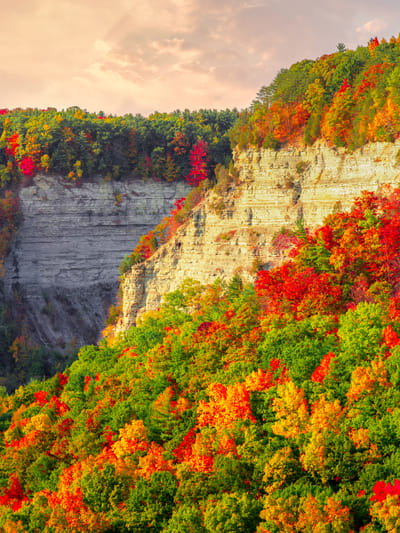
Letchworth bills itself as the "Grand Canyon of the East," and the marketing is closer to honest than most state parks let themselves be — the Genesee River cuts a 17-mile gorge through the park with cliffs up to 600 feet, three named waterfalls, and a network of trails that justify a full day on their own. The park is 90 minutes southeast of Grand Island, which makes it a long day-trip rather than an afternoon. The Lower, Middle, and Upper Falls are visible from the road; the trails do the real work.
Toronto (north, ~90 minutes plus border)
Toronto is the long-day option for travelers who want a real city in the seventh slot — 90 minutes plus the border, the city is genuinely worth the trip, and St. Lawrence Market plus the Distillery District plus a ferry to the Toronto Islands fills a day comfortably. Leave the RV at Grand Island and drive the tow vehicle; the parking in Toronto is fine but the highway driving in is the part to plan around. Same border-crossing logistics as Day 3.
Rochester / Seabreeze Amusement Park (east, ~75 minutes)
Seabreeze on Rochester's north side has been running since 1879, which makes it one of the oldest continuously-operating amusement parks in the country. The wooden Jack Rabbit coaster dates to 1920 and is the headline ride for travelers who like their amusement parks pre-OSHA. Worth the seventh day if the family contingent voted down Day 6's Darien Lake but still wants the coaster moment.
Trip Logistics: Driving, Border Math, Cell Coverage
Total driving across six days from HTR Niagara: about 220 miles in the tow vehicle (Day 2 to the Falls, Day 3 to Canada and back, Day 4 to Old Fort Niagara and Wilson-Tuscarora, Day 5 to Lewiston and Artpark, Day 6 to Buffalo). That's a real number worth knowing in advance — the day trips read short individually but stack up on whichever vehicle you brought.
Fuel on Grand Island is comparable to the Buffalo and Niagara Falls NY markets; the island has two stations on Grand Island Boulevard, and the next-cheapest is just over the South Grand Island Bridge in Tonawanda. HTR Niagara sells propane on-site. The dump station is on the resort grounds; tank math is plug-and-forget for the week.
For the Day 3 border crossing and the seventh-day Toronto option: US citizens need a passport, a passport card, a NEXUS card, or a New York Enhanced Driver's License. Bring two forms of ID for everyone in the party, including kids. Vehicles are usually waved through with a few questions; if the RV is crossing rather than the tow vehicle, the same questions apply plus a longer secondary lane on the way back. Our complete RV maintenance checklist covers the documentation a cross-border RV trip would actually need; for the day-trip-by-tow-vehicle version this itinerary recommends, the documentation is lighter.
Cell coverage on Grand Island is solid (Verizon, AT&T, and T-Mobile all reliable); satellite internet works clean since the resort sites aren't deeply tree-shaded. Cell coverage drops to roaming in Canada — turn off cellular data on the Day 3 crossing unless your plan covers Canada, or pick up a short-term international add-on for the day. The Niagara Gorge trails have spotty coverage in the lower sections; download maps before descending.
A Note on Pacing
Six days is the right length for this itinerary if you want one easy day, one heavy anchor day, one cross-border day, two moderate-active days, and one slow-cooked Buffalo day. Five days is workable if you compress: drop Day 6 if you don't care about Buffalo, drop Day 5 if you're not hiking, but don't drop Day 3 — the Canadian side is half the reason the trip is here. Seven days adds Letchworth or Toronto without padding. Setting up camp once on Grand Island and using the bridges in three directions, instead of moving every other night, is the structural difference between a trip that feels like a vacation and one that feels like a slow-motion tour.
This cluster will add six spokes around this pillar — a deep Niagara Gorge hikes spoke, a historic-Niagara spoke, a day-trips-when-six-days-isn't-enough spoke, a waterfront spoke (Lake Ontario beaches, Erie Canal cruise, Artpark kayak), a Lewiston-and-Niagara-on-the-Lake food spoke, and a free-Niagara spoke that runs a no-ticket two-day plan. Each one extends one piece of this itinerary into a full standalone guide. For a comparable single-base-camp approach in a different New York region, our Adirondacks RV itinerary across five days at Ausable Chasm + Lake Champlain runs the same structural play on a different geography. For a smaller-region first-time variant, our two best RV trips for beginners covers the weekends that teach you how everything works.
FAQs
How many days do you need at Niagara Falls with an RV?
Six days is the sweet spot if you want to cover Niagara Falls State Park, the Canadian side via Niagara-on-the-Lake and the Niagara Glen, Old Fort Niagara and Wilson-Tuscarora on Lake Ontario, a Niagara Gorge hike, and a Buffalo afternoon without rushing. Four days is enough if you focus only on the Falls and one direction of day trip — typically the Canadian side for international travelers or Buffalo for travelers who want the urban anchor. Seven days adds room for a Letchworth State Park day to the southeast, a Toronto day to the north, or a Rochester / Seabreeze day to the east — all of which are real options but pull harder than a six-day base-camp pace requires.
Is HTR Niagara the best RV park near the Falls?
For full-hookup convenience, on-site amenities, and the geographic centering between the Falls and Buffalo, HTR Niagara is the consensus pick — 30 and 50 amp full hookup, four site tiers including lakeview, a heated pool, a private lake with kayak and canoe launches, mini-golf, ziplines, a sports court, laser tag, and a 4/10–10/25 season. Four Mile Creek State Park in Youngstown is the credible state-park alternative for travelers who want a Lake Ontario shoreline at the door and are willing to drive farther across the week. Niagara Falls Campground & Lodging is closer to the Falls themselves but adds drive time on the Buffalo and Canada days. KOA Niagara Falls North in Lewiston is the option for families who want a smaller campground sited closer to the Gorge trails.
Can you drive an RV across the border to Niagara-on-the-Lake?
Yes — RVs cross the Rainbow Bridge, the Peace Bridge, and the Queenston-Lewiston Bridge regularly, and US citizens need a passport, passport card, NEXUS card, or New York Enhanced Driver's License to cross. The easier move for a day trip from a Grand Island base camp is to leave the RV at the campground and take the tow vehicle across. Canadian Border Services Agency maintains current entry requirements on its travel page; ArriveCAN, the COVID-era pre-arrival declaration app, is no longer required for general entry as of the time of writing. Bring two forms of ID for everyone in the party, including kids.
Is the Maid of the Mist or the Canadian-side boat better?
Both boats run the same gorge and get you the same close-up to the falls; the differences are operational. The Maid of the Mist runs from the US side (Niagara Falls State Park), starts at $30.25 per adult, and is the easier ticket if you're based on Grand Island and not crossing the border on the day you ride. The Canadian-side equivalent runs from a different terminal under a different operator's name, costs slightly more, and is the right pick if you're already across the border on the Canadian-side day (Day 3 of this itinerary). The Maid of the Mist fleet went all-electric in recent years, which made the rides quieter; the boats are still soaking-wet experiences and the ponchos do an honest 70% of the job.
What's the best time of year for a Niagara Falls RV trip?
Summer (mid-June through August) is peak season — Niagara Falls State Park runs all attractions at full capacity, the Niagara Glen trails are dry and walkable, Lake Ontario warms enough for swimming by July, and the Rainbow Bridge crossing wait times are predictable. Early September into mid-October is the underrated window: the Niagara Parkway color turn in the first three weeks of October is among the best foliage drives in the Northeast, crowds drop, and HTR Niagara's 10/25 season close means most resort amenities run through Columbus Day. Memorial Day weekend opens the resorts but the Maid of the Mist and Cave of the Winds typically don't begin full daily operations until mid-May to early June.
Can you visit Toronto from Niagara without driving an RV across the border?
Yes — Toronto is 90 minutes by car from Grand Island plus the border crossing, and the right play for a day trip is to leave the RV at HTR Niagara and take the tow vehicle. The Queen Elizabeth Way runs straight from the border to Toronto; downtown parking is straightforward but pricey. Same border-crossing documentation as the Day 3 NOTL crossing — passport, passport card, NEXUS, or NY Enhanced Driver's License. The Toronto Islands ferry from the downtown waterfront is the closer for a day in the city; St. Lawrence Market is the lunch anchor.
Is the Niagara Falls itinerary good for RVing with kids?
The itinerary holds up well for families because the day trips bend in different directions and HTR Niagara absorbs the off-day energy. Day 1's on-resort lake, pool, mini-golf, ziplines, and laser tag mean kids start the trip in a flat-out happy mood. Day 2's Maid of the Mist is the highest-rated kid experience of the trip; Cave of the Winds requires kids to be tall enough for the platform stairs. Day 3's Niagara Glen hike is moderate and may be too much for kids under eight; the NOTL afternoon is town-and-ice-cream paced. Day 4's Old Fort Niagara cannon firings and rampart walks are a sleeper hit for kids ages 6 to 12. Day 6's Buffalo afternoon swaps cleanly to Darien Lake, the AZA-accredited Buffalo Zoo, or the Transit Drive-In for the family-coded version of the day.
Categories
Related Posts
Subscribe to the Swervia Newsletter
The best RV stories, tips, and destinations—expertly curated and always free.