Historic Niagara by RV: From 1726 to the Underground Railroad
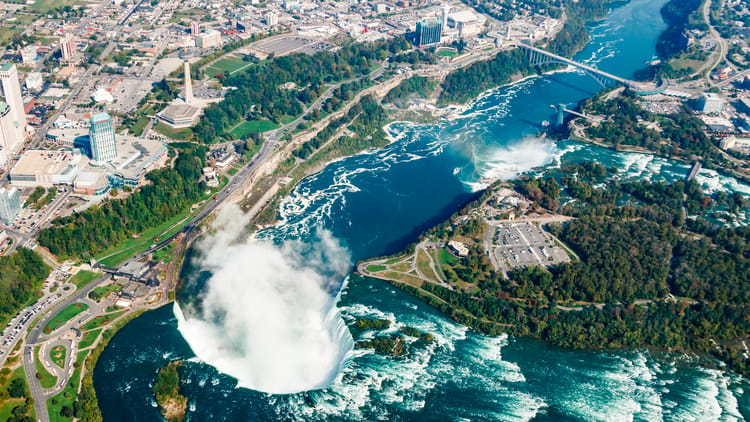
There's a stone house at the mouth of the Niagara River that's been standing for three centuries, and on an ordinary Tuesday you can walk in the door.
France built it, Britain besieged it, America lost it in the dark and got it back by treaty. It's thought to be the oldest building anywhere in the Great Lakes, it has a well in the floor and gun slots under the eaves, and it sits on a grass bluff with Lake Ontario on one side and Canada on the other. Fifteen miles south, in an old brick building beside a train station, is the story of the hotel waiters who spent decades rowing people out of slavery across that same river at night, while serving breakfast to the men those people were running from.
Here's what makes it a trip instead of a lecture. It all fits inside fourteen miles of riverbank, a free shuttle runs most of it, and one of the loveliest campgrounds on the Lake Ontario shore sits four miles from the fort with a stop at the entrance. You get muskets going off over open water, a museum that will follow you home, redcoats on a parade ground across the border, and a picnic on a rampart.
And if forts and museums aren't remotely why you came upstate, go be happy: our Niagara gorge hikes for RVers guide has a full day of trails and river overlooks instead.
The Fourteen Miles That Hold All of Historic Niagara Falls
Everything worth seeing here is strung along one stretch of river, which is a rare gift on a road trip.
The National Park Service calls the run from the falls north to Old Fort Niagara the Niagara Falls National Heritage Area. It's a designation rather than a park, so there's no gate and nothing to pay to be in it, and the reason so much happened along fourteen miles is simple: the falls are in the way. Boats came out of the water here and went around the drop on foot, and whoever held that detour could shut everybody else out of the interior of America. Three empires took that personally.
What the corridor does have is its own bus. The Discover Niagara Shuttle is free, needs no ticket, and hops between the sites along the river. It carries bikes on a rack and it'll take a leashed dog, which covers most of the reasons you'd otherwise be driving.
Old Fort Niagara: What There Is to Do on the Bluff
Most historic sites ask you to picture what used to be there. This one hands you the actual building.
The French put it up in 1726, having told the Haudenosaunee they were building a house where furs could be traded and men could talk peacefully. What went up was called the Maison à Machicoulis, and a machicoulis is the slot in a parapet you drop rocks and boiling things through onto whoever's at your wall. It also had a well inside, so nobody had to go out for water during a siege. Everyone understood the arrangement. Britain took it after a nineteen-day siege, America got it by treaty, and the British stole it back one December night by rowing over in the dark and walking through a gate somebody had left open. Three flags fly over the fort today for the three nations that took turns holding the hill.
Now the good part, which is that you get to poke around all of it. Plan four hours.
Walk through the French Castle. Actual rooms, actual 1726 stonework, no ropes keeping you at a polite distance. This is the thing you came for and it takes longer than you think.
Time your arrival for a musket demonstration. The crack goes out flat across the water, the smoke smells like the eighteenth century, and children who'd announced they were bored about a fort turn suddenly and completely present. Staff in period wool answer questions like the questions are interesting rather than tolerated.
Get up on the ramparts for the view. Open Lake Ontario one direction, Canada across the river mouth the other. There's a powder magazine, a parade ground, earthworks to walk, and stone redoubts the British threw up when the garrison got thin and their nerves got worse. Bring the sandwiches and eat them up here.
Go look at the lighthouse. Before there was a tower, the British simply set a lantern on the roof of the French Castle, which as far as anyone can establish made a fortified trading house the first navigational light on the Great Lakes. The octagonal limestone tower on the lawn took over the job in the 1870s and has been dark since the Coast Guard retired it. Ten minutes, and best late in the day when the light comes in low off the lake.
Then stay for the water. Fort Niagara State Park wraps around the fort with Lake Ontario shoreline, woodland trails, picnic grounds and a swimming pool in summer, all of which our Niagara waterfront for RVers guide handles properly. One practical note: the park publishes nothing whatsoever about where an oversized vehicle goes. Come in the car.
If the fort turns you into a person who wants to ride a canal boat, that's a real day too. The Erie Canal is what finally ended this place, since freight stopped needing the portage once the locks opened, and you can go ride them half an hour east. Our RV day trips from Niagara Falls guide gives that one the room it deserves.
More upstate New York history where this came from. Subscribe to our weekly newsletter.
THE FORTS WORTH A WHOLE DAY, THE MUSEUMS WORTH AN HOUR, AND THE BORDER CROSSINGS THAT CHARGE YOU BY THE AXLE — EVERY WEDNESDAY, FREE.
The Free Shuttle From Four Mile Creek, and the Beach an Army Landed On
Here's the detail that turns this from a nice fort into a reason to book one specific campground.
The shuttle runs a dedicated loop between Four Mile Creek Campground, the village of Youngstown, and Old Fort Niagara, and at Youngstown it meets the buses heading south to the falls. Camped at Four Mile Creek on the right day, a fort day costs you one ticket and nothing else. No fuel, no parking, no tolls, no conversation with anybody about where the coach fits. The loop doesn't run every day and the days shift with the season, so glance at the current schedule before you build the day around it.
And then there's this, which is the kind of thing that makes a trip. That British siege army came ashore at Four Mile Creek. Three thousand men landed at the mouth of the creek the campground is named for and marched inland from that beach to dig the trenches that took the fort. There's a camp store and a playground on that ground now, and a bus that'll drive you to the fort those men spent nineteen days shelling. Mention it to a ten-year-old on the walk to the shuttle stop and watch it land.
The Niagara Falls Underground Railroad Heritage Center: The Waiters Who Rowed People to Freedom
Before Niagara was a honeymoon it was a border, and a quarter mile of fast water was the last thing between a person and being free.
The story the Heritage Center tells turns on a hotel. The Cataract House stood right above the rapids, five stories of balconies over roaring water, and it was the first hotel in Niagara Falls to hire Black waiters. It was also a favorite of wealthy Southern families, who came north on holiday and brought enslaved valets and maids along to dress them for dinner. Sit with that arrangement a second, because the staff did. Those waiters spent their days serving slaveholders in the dining room and their nights getting the people those slaveholders had brought with them out of the country. The route went down a steep staircase in the gorge wall to a ferry landing below the falls, where small rowboats crossed to Canada, and the head waiter rowed people over himself, again and again, for years. One woman known to history only as Martha made it down those stairs to the boat with bounty hunters chasing her. The Heritage Area calls this one of the most important Underground Railroad sites in the country. It was run out of a kitchen by the men carrying the plates.
Budget an hour, and expect it to be the hour of this trip you're still turning over in the truck a week later. The permanent exhibition is called One More River to Cross, and it's built around self-liberation rather than rescue, which changes how the whole story sits. Take the guided conversation if the timing works. It's included with admission, and the staff are the reason to do it.
Then go outside and do two more things. Walk the murals around the building, which honor Niagara Falls people you've never heard of and should have. And look left: the museum sits beside where the old railway suspension bridge landed on this shore, the crossing Harriet Tubman used, and the stone abutments are still sitting there in the weeds. Not a plaque about a place. The place.
Parking's a small lot shared with a working train station, so come in the car or come on the shuttle. The shuttle's genuinely the better answer, and it stops out front.
Fort George: Redcoats, Fifes, and the Other Half of the Same War
The reason there's a fort on both banks is that Britain got evicted from the good one.
When the treaty ending the Revolution handed Fort Niagara to the United States, the British walked a mile up the Canadian shore and started over, because whoever held this river held the supply line to every British post further west. Isaac Brock ran the War of 1812 from here until Queenston Heights killed him. Then the two forts did what two forts a mile apart do: they spent an autumn shelling each other, the Americans flattened this one and moved in, then gave it up and burned the town on their way out, which is exactly why the British came across that freezing river in December and took Fort Niagara through an open gate.
That's the reason to do both. Stand on one set of earthworks, look across at the other, and the war stops being a chapter title and turns into two garrisons yelling across a river.
A few hours does it, and you can wander on your own or take a guided tour. Redcoats fire muskets on the green and fifes and drums carry across the parade ground, heaviest in summer when the military demonstrations and musical programs run most days. The stone powder magazine is the real thing and the oldest building in Niagara-on-the-Lake, though most of what you walk through is a careful reconstruction from the Royal Engineers' original drawings and Parks Canada says so without flinching. There's a lookout over the river, a picnic area, a gift shop that leans hard into early-nineteenth-century military and social history, and Navy Hall down by the water with a view straight back at Fort Niagara. Dogs are welcome on a leash. If you've got an extra hour on the way home, Brock's monument at Queenston Heights is up the escarpment on the same side of the river.
Two things about getting over there. Everyone in the vehicle needs a passport or passport card, kids included. And the Niagara Falls Bridge Commission charges a motorhome by the axle, with another axle charge for whatever you're towing, collected one way heading into Canada. Coming home is free. A car crosses for one flat fare, which is the whole argument for taking the car and leaving the coach on its levelling blocks.
There is a way to do it without driving, if you'd rather. Walk the bridge, which costs about a dollar, and pick up the seasonal Niagara-on-the-Lake shuttle on the Canadian side; it runs on a paid day pass and transfers at the Floral Clock, and the town also has an on-demand local service. It's a longer day with more moving parts, and it's genuinely pleasant if you've got the time. Our free things to do in Niagara Falls guide covers that pedestrian crossing properly.
Where to Camp for the History Days
The two obvious base camps here aren't remotely interchangeable.
Four Mile Creek State Park is the one that makes the whole thing easy: four miles from the fort, a shuttle stop at the entrance, and Lake Ontario spread out past the tree line for the sunset. It's a state-park campground, so it's quieter and greener and more modest than a resort. Not every loop has electric, so read the loop names rather than assuming, and there's no sewer at the site, which makes the dump station part of the plan and argues for a heavy-duty 20-foot sewer hose kit rather than whatever came with the coach. Bring the dog's actual rabies certificate, on paper. They do ask, and the tag on the collar won't do it.
HTR Niagara on Grand Island is the full-hookup alternative, more comfortable and better centered on the falls themselves, but it's off the shuttle loop and further from both forts. Our Niagara Falls RV itinerary works through both base camps properly. Short version: if this corridor is why you came, camp at Four Mile Creek.
How to Spend the Day, or Two
Old Fort Niagara is a full day if you're riding the shuttle, because the shuttle keeps its own schedule and you'll be standing at a stop for a while at some point. Bring a book. The Heritage Center plus downtown is a half day. Fort George is its own day, because a border is a border and nobody has ever accurately predicted a wait at one. Two days means one on the fort and one on the Heritage Center and the crossing. One day means the fort, and no regrets about it.
Pack the lunch either way. Food at the fort is limited, Youngstown is a village of a few hundred people, and the shuttle doesn't stop for anybody's sandwich, so an insulated cooler bag earns its space in the car. And from the ramparts you're looking straight across the river mouth at the Canadian shore where the other fort sits, close enough that they traded cannon fire for two autumns, which makes this the one stop on the trip where long-range binoculars turn a nice view into an explanation.
Do it in whatever order the weather hands you. But if you get one clear evening, spend it on the bluff at the fort with the lake going gold and Canada sitting there across the water, close enough to argue with. That's the one you'll describe to people when you get home.
FAQs
Where is Old Fort Niagara?
In Youngstown, New York, on the bluff where the Niagara River empties into Lake Ontario, about 15 miles north of the falls and four miles from Four Mile Creek State Park. It marks the northern end of the Niagara Falls National Heritage Area, the 14-mile "falls to the fort" corridor the National Park Service designates. That location is the whole reason the fort's there: whoever held this river mouth held the portage around the falls, and the portage was the only way freight moved between the Atlantic and the interior of the continent.
What is there to do at Old Fort Niagara?
Walk through the French Castle, which is the actual 1726 building and not a reproduction. Get up on the ramparts for the Lake Ontario and Canada views. Catch a musket demonstration, talk to the costumed interpreters, and wander the earthworks, the powder magazine, the parade ground and the stone redoubts. There's a retired lighthouse on the lawn, and the surrounding state park adds shoreline, woodland trails, picnic grounds and a summer swimming pool. Plan four hours, more if a reenactment weekend lines up with your dates.
Can you get to Old Fort Niagara without a car?
Yes, and it's the best logistical news in the region. The free Discover Niagara Shuttle runs a dedicated loop connecting Four Mile Creek Campground, the village of Youngstown, and Old Fort Niagara, meeting the falls-bound routes at Youngstown. No ticket, no fare, bike racks on board, leashed dogs welcome. The loop doesn't run every day and the schedule shifts seasonally, so confirm the current days first.
What happened at Fort Niagara?
Three nations took turns holding it. The French built the stone French Castle in 1726, having told the Haudenosaunee they were putting up a trading house. The British took it after a nineteen-day siege during the French and Indian War, it served as Britain's Great Lakes headquarters through the American Revolution, and it passed to the United States by treaty in 1796. The British captured it back in a night raid during the War of 1812 and held it until the war ended. What finally ended its military life wasn't a battle but the Erie Canal, which made the portage around the falls unnecessary.
Why is there a fort on both sides of the Niagara River?
Because Britain had to give one up. The treaty ending the American Revolution awarded Fort Niagara to the United States, and when the British handed it over they built Fort George on the Canadian bank a mile upriver, since controlling this river meant controlling the supply line to every British post further west. The two forts spent an autumn shelling each other, the Americans captured Fort George and held it for months, and the British retook Fort Niagara that December. Visiting both means hearing one war narrated from opposite banks.
What is the Niagara Falls Underground Railroad Heritage Center?
A museum in the old brick Custom House beside the Niagara Falls Amtrak station, telling the story of the falls as the last border crossing to freedom. Its focus is remarkably specific: the all-Black waitstaff of the Cataract House hotel, who for decades rowed freedom seekers across a quarter mile of the Niagara River at night while serving the Southern slaveholding families vacationing upstairs. Budget an hour, take the included guided conversation, then walk the murals outside and go look at the abutments of the old railway suspension bridge that Harriet Tubman crossed.
Do you need a passport to visit Fort George from the US side?
Yes. Everyone in the vehicle needs a passport or passport card, kids included. The other thing that shapes the day is the toll: the Niagara Falls Bridge Commission charges a motorhome by the axle, plus another axle charge for anything in tow, collected one way heading into Canada, while a car crosses for one flat fare. Coming back to the US is free. So take the car. If you'd rather not drive at all, you can walk the bridge for about a dollar and pick up the seasonal Niagara-on-the-Lake shuttle on the Canadian side, which runs on a paid day pass with a transfer at the Floral Clock.

Categories
Related Posts
Subscribe to the Swervia Newsletter
The best RV stories, tips, and destinations—expertly curated and always free.