When to RV Yellowstone: Road Opening Dates and the Best Time to Go
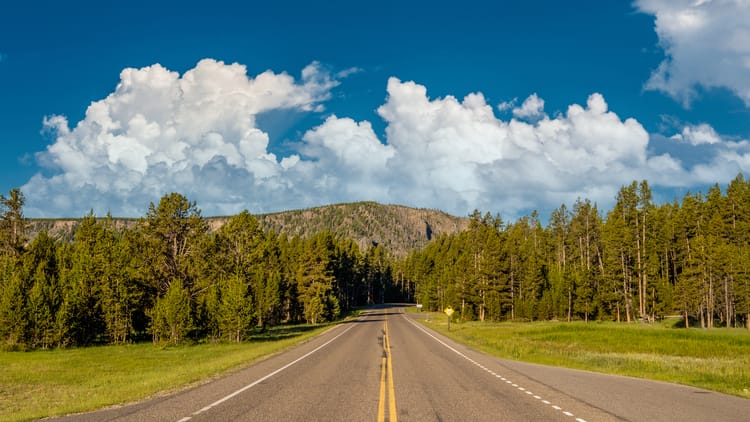
Yellowstone's roads open in phases between mid-April and late May, with the exact dates set each year by snowpack, plowing progress, and safety inspections. The lower entrance roads get cleared first; the high interior passes open weeks later. That pattern holds every year, even though the specific dates move around, so the smartest way to plan an RV trip here is to learn the sequence, then confirm the current-year dates on the NPS Park Roads page before you book anything.
For an RVer, "when does Yellowstone open" is not a trivia question. It decides which loops you can actually drive, which campgrounds have their water turned on, and whether the pass between you and Old Faithful is buried under twelve feet of snow. A car tourist can pivot to a hotel. You are towing your week's lodging behind you, and that changes the math.
The Short Answer On When Yellowstone's Roads Open
Roads open on a staircase, not a switch. In a normal year the West, North, and central corridors come online in mid-April, the East and South entrances follow through early and mid-May, and the highest passes — Dunraven, Beartooth, Sylvan — are last, usually not until late May. The first day of each opening happens at 8 a.m., which matters if you are trying to be through the gate before the crowd that had the same idea.
The reason the interior lags is elevation. Yellowstone sits on a high plateau, and its mountain passes hold snow long after the entrance roads are dry. Plows work through record-setting drifts for weeks, and the National Park Service will not open a pass until it is genuinely safe. So the loop you saw on a map in January is rarely fully drivable in early May, and planning as if it were is the fastest way to end up boxed out of half the park.
Yellowstone Road Opening Dates for the 2026 Season
For the 2026 season, the National Park Service scheduled its spring openings at 8 a.m. on the dates below. Treat these as a snapshot, not gospel — every one of them can shift with a late storm, and next year's dates will be entirely different. Confirm against the live NPS page before you leave.
Mid-April: The First Roads Open
On April 17, 2026, the first set of interior roads opened: West Entrance to Madison, Madison to Old Faithful, Madison to Norris, Mammoth Hot Springs to Norris, and Norris to Canyon Village. This is the geyser-country core, which is why the West Entrance at West Yellowstone is the default first-in gate for most visitors. If your whole trip is built around Old Faithful and the Norris basin, mid-April is your earliest realistic window — with the loud caveat that most in-park campgrounds are still closed and nights are still deeply cold.
Early May: The East Entrance and Canyon to Lake
On May 1, 2026, the East Entrance to Fishing Bridge road opened over Sylvan Pass, along with the Canyon Village to Bridge Bay stretch that gets you down to Yellowstone Lake. Sylvan Pass is a genuine mountain crossing, and it opens later than the western roads for exactly that reason. If you are coming in from Cody, Wyoming, this is your date, and it is worth watching closely, because a heavy snow year can push it back.
Mid-May: The South Entrance and the Lower Loops
On May 8, 2026, the South Entrance opened, connecting to West Thumb and the roads toward Old Faithful and Lake, plus the Tower-Roosevelt to Tower Fall segment. The South Entrance is the one that links Yellowstone to Grand Teton, so anyone stitching the two parks into a single RV trip is watching this date. Until it opens, the Teton-to-Yellowstone drive-through simply does not exist.
Late May: The High Passes Open Last
On May 22, 2026, the last and highest roads opened: Canyon to Tower Fall over Dunraven Pass, the Beartooth Highway, and the Chief Joseph Scenic Byway. Dunraven tops out above 8,800 feet, and the Beartooth climbs past 10,000 — these are the roads plows reach dead last, and they close first in fall. If your dream itinerary includes the Beartooth, one of the most spectacular drives in the country, you are looking at a late-May-or-later trip, full stop. There is no early-season shortcut over a pass that is still under snow.
Before you commit to any of these, open the NPS Park Roads page and read the current year's schedule. The Park Service updates it as plowing progresses, and it is the only source that reflects a late storm or an early thaw. A date printed in a blog — including this one — is a starting point, not a reservation.
When the Roads Close and What Stays Open in Winter
Fall runs the spring sequence in reverse. The high passes go first: for 2026, Dunraven Pass, the Beartooth Highway, and the Chief Joseph Scenic Byway closed to regular vehicles on October 12. Most other park roads followed on October 31. After that, the interior belongs to snow.
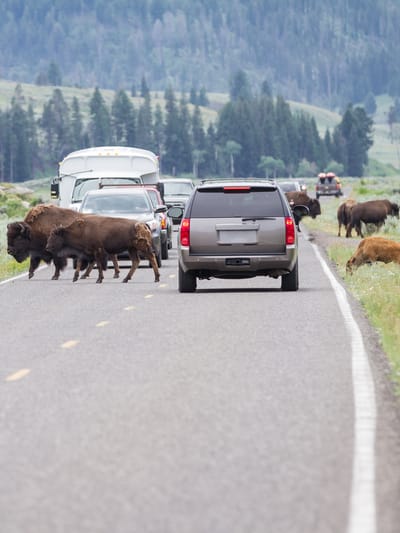
There is one exception that matters enormously to RVers. The road between the North Entrance at Gardiner, Montana, and the Northeast Entrance at Cooke City stays open to regular vehicles year-round, weather permitting. It is the only stretch of Yellowstone you can legally drive yourself in the depths of winter, and it runs through the Lamar Valley, the best wildlife-watching corridor in the park. You will not tour the geyser basins this way, but you can absolutely base near Gardiner and drive in for wolves and bison on a January morning.
Everything else in winter is over-snow travel only. Roughly mid-December through mid-March, the interior is reachable exclusively by commercially guided snowmobile or snowcoach — for the 2026-27 season the Park Service scheduled that window as December 15, 2026 through March 15, 2027, though those dates shift too. You cannot drive your own RV to Old Faithful in February. What you can do is park in a gateway town, sleep in your own bed, and book a guided over-snow day trip. Confirm the winter schedule on the NPS page, because the over-snow dates are set season by season.
4-DAY YELLOWSTONE RV ITINERARY
GET THE FREE 4-DAY YELLOWSTONE RV ITINERARY
Which Entrance Should RVers Choose
Yellowstone has five entrances, and they are not interchangeable when you are towing.
The West Entrance at West Yellowstone, Montana, opens first, sits closest to Old Faithful, and has the most RV services of any gateway town — fuel, groceries, dump stations, and private RV parks. For a first Yellowstone trip, it is the easy answer.
The North Entrance at Gardiner is the year-round gate and the base for anyone chasing winter wildlife in the Lamar Valley. Gardiner is smaller than West Yellowstone but fully RV-capable.
The East Entrance from Cody comes over Sylvan Pass and opens later, so it is a spring-and-summer option only. Cody itself is a worthwhile stop, but the pass adds real mountain driving to your arrival day.
The South Entrance is the Grand Teton connector, ideal if you are building a two-park trip, and it opens in mid-May. The Northeast Entrance near Cooke City is the quietest and most remote, beautiful in summer but a long haul with limited services.
For a sense of how Yellowstone stacks up against the other national parks worth building an RV trip around, it consistently lands near the top — but it also demands the most planning, largely because of these staggered openings.
The Best Time to RV Yellowstone
The right month depends on what you are willing to trade: crowds against weather against which loops and campgrounds are actually open.
Late Spring, May to June
This is the low-crowd, high-uncertainty window. Wildlife is at its best — bison calves, bears emerging, elk everywhere — and the roads that are open feel almost empty. The catch is that not every road or campground is online yet, and nights at 7,000-plus feet routinely drop near or below freezing well into June. Come prepared for genuine cold, and check which campgrounds have opened before you rely on one.
Summer, July to August
Everything is open, and everyone knows it. July and August are peak season, which means the geyser basins are drivable, all the campgrounds are running, and you will be sharing the park with the largest crowds of the year. In-park campgrounds book out months ahead, so this is the season to reserve early or plan to stay in a gateway town and drive in. Days are warm and reliable; the tradeoff is pure volume of people.
Fall, September to Mid-October
Many veteran RVers call this the sweet spot. The weather still holds, the elk rut brings dramatic wildlife activity, and the summer crowds thin out noticeably after Labor Day. The one thing you must plan around is the closure calendar — the high passes shut down around mid-October, and most roads follow by month's end. A fall trip is fantastic right up until the day the road you wanted closes, so build the itinerary backward from the closing dates. If this is your first RV trip out West, fall's thinner crowds make the learning curve a lot gentler.
RV Planning Tips for a Shoulder-Season Yellowstone Trip
Shoulder season leaves a much narrower margin for error than midsummer does. A few things separate a great early or late trip from a miserable one.
Cold is the first. Nights near freezing are normal in May, June, and September at elevation, and most in-park campgrounds have no hookups, so you cannot count on running an electric heater all night. A heated blanket draws a fraction of the power a furnace does and makes a 30-degree night a non-event. To run it, and everything else, without shore power, a portable power station with around 1,000 watt-hours covers a night or two off-grid comfortably.
The passes are the second. Dunraven, Beartooth, and Sylvan are real climbs, and altitude changes your tire pressure — a tire-pressure monitoring system lets you watch every tire in real time instead of discovering a problem halfway up a grade. First-come sites early in the season are also rarely level, so a set of leveling blocks earns its space in a storage bay fast.
Two more small things. Early-season water taps can be spotty or freshly turned on, so an inline water filter is cheap insurance for what comes out of an unfamiliar spigot. And because Yellowstone's wildlife is the entire point of a spring or fall trip, a pair of long-range binoculars keeps you a safe, legal, and frankly smarter distance from the bison that people insist on approaching every single year.
If you want the full route-and-campground breakdown, this article is one piece of planning a full Yellowstone RV trip; pair it with our broader guide to planning an RV trip to a national park before you lock in dates.
Planning Around a Moving Target
Yellowstone's calendar is not a fixed thing you memorize once. It is a pattern you learn — entrances first, high passes last, a reverse in fall, over-snow only in deep winter — and a set of dates you re-check every year. Get the pattern right and the dates become a quick confirmation instead of a scramble. Once the dates are settled, our free Yellowstone 4-Day RV Guide handles the rest of the plan — four days mapped stop by stop, plus passes and permits. It is worth understanding, too, that Yellowstone was the first place the country ever decided to protect this way; the story of how a park becomes a national park started here in 1872. The seasonal gates are part of the deal that keeps it wild.
FAQs
When do the roads in Yellowstone open?
Yellowstone's roads open in phases from mid-April to late May, set each year by snowpack and plowing. In 2026, the first interior roads opened April 17, the East Entrance May 1, the South Entrance May 8, and the highest passes (Dunraven, Beartooth) May 22, all at 8 a.m. Because dates change annually, confirm the current year on the NPS Park Roads page before planning.
What roads are open in Yellowstone right now?
That depends on the date and the current-year plowing schedule, which is why there is no permanent answer. In winter, only the North Entrance to Northeast Entrance road is open to regular vehicles; the rest is over-snow travel only. In summer, all roads are typically open. The live NPS Park Roads page is the only reliable source for real-time status.
Is Yellowstone open in winter?
The park itself is open 24/7/365, but most interior roads are not drivable in winter. From roughly mid-December to mid-March, the interior is reachable only by guided snowmobile or snowcoach. The single exception is the North Entrance (Gardiner) to Northeast Entrance (Cooke City) road, which stays open to regular vehicles year-round, weather permitting.
What is the best month to visit Yellowstone in an RV?
For most RVers, September is the sweet spot: good weather, dramatic fall wildlife, and far thinner crowds than July and August, though you must plan around mid-October road closures. Late May and June offer the best wildlife viewing and the fewest people, but expect near-freezing nights and some closed campgrounds. Summer has everything open but the largest crowds.
Which Yellowstone entrance opens first?
The West Entrance at West Yellowstone opens first, alongside the central geyser-country roads, typically in mid-April (April 17 in 2026). It is also the closest gate to Old Faithful and the most RV-friendly gateway town. The East, South, and high-pass roads open progressively later, into late May.
Can you drive through Yellowstone in an RV?
Yes. Yellowstone allows RVs up to 75 feet on its roads, though the real limits are at campgrounds, where most sites cap well below that. In-park roads are winding and often crowded with wildlife and slow traffic, so plan for slower-than-highway pace. In winter, you cannot drive the interior at all except the North-to-Northeast route.
Categories
Related Posts
Subscribe to the Swervia Newsletter
The best RV stories, tips, and destinations—expertly curated and always free.