Winter RV Parks: How the Good Sites Get Taken, and How to Get One
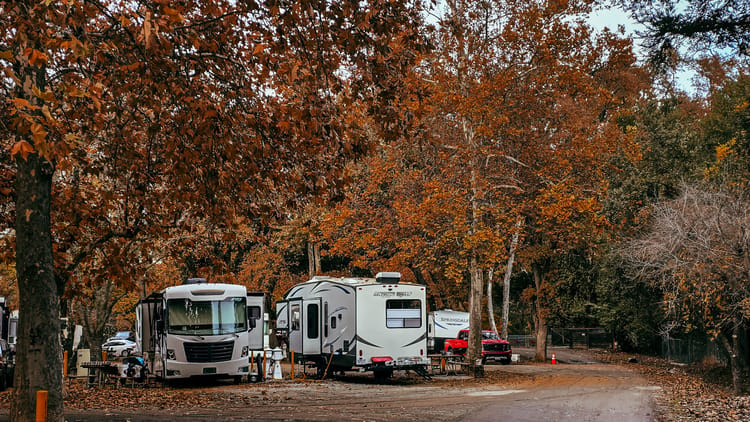
The couple in the site by the shuffleboard court have had it for nine winters. They booked the tenth in March, at the office, on the way out the gate, and the manager didn't need to look anything up. That's how a good winter RV park works. Most of next season is spoken for before this one ends, and the people holding the sites keep holding them.
Then there's you, in October, with a map of Florida open and the first frost in the forecast.
Winter RV parks run on a market, and the market has rules you can learn. Some parks book a year out. Some reservation systems open on a fixed clock. Some regions stay loose enough to decide in the fall, and one federal program has no line at all. Learn which is which and the couple by the shuffleboard court stop being the competition. The prize is a January where the morning walk is in shorts.
Some of you want the opposite, a plowed site with a chairlift up the road. That market runs backwards.
Snowbird RV Parks Book a Year Out, and You're Probably Already Late
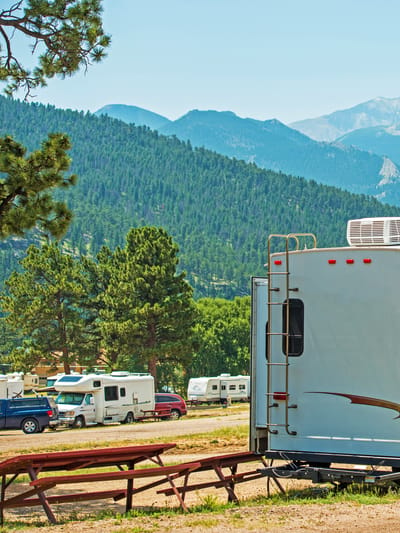
Popular RV parks for snowbirds in Florida, Arizona and along the Texas Gulf Coast fill six to twelve months ahead, according to Campspot's guide to snowbird parks, and peak arrivals run from late October into early January. The mechanism behind that number is the returning guest. Regulars rebook their own site before they leave in spring, so the inventory you see online in September is what the people who were there in March didn't want.
In the Rio Grande Valley, the University of Texas Rio Grande Valley's Winter Texan survey found the average returning visitor had been coming back for more than eleven years. Eleven winters in the same park is a neighbor, not a booking. You aren't competing with other searchers. You're competing with people who've already left a deposit.
So do what they do. Find a park you like in February and book next February at the office before you pull out. Ask to be put on the cancellation list, and mean it: January and February produce real cancellations, because people go home early, and a list only pays off if you can move within a week of the call. Be flexible on region before you're flexible on dates. Shifting a stay by three weeks rarely opens anything at the snowbird RV resorts on the Florida coast in January. Shifting to Alabama does.
Which is the other half of the market. Mississippi, Alabama and inland Texas hold availability far later than the coasts, per the same Campspot guide. Decided late? Shop there. The sites are open, the neighbors are fewer, and the Gulf is still the Gulf.
Public Winter RV Parks Open on a Clock, and Every State Sets Its Own
State parks and federal campgrounds don't run on rebooking. They run on a release window, and every winter state sets its own.
Recreation.gov, which handles most federal campgrounds, opens most sites six months before arrival, with shorter windows at some locations. Arizona State Parks takes bookings up to 365 days out and caps a stay at 14 nights in any 30-day period at one park. Texas State Parks open most camping five months ahead. Florida wrote its window into state law: residents can reserve 11 months out, everyone else 10. That month matters at a Gulf Coast state park in February. Residents have had first pick of every date before you're allowed to log in.
Put the release date in your calendar, not the arrival date. Count back from the night you want by that state's window and book the morning it opens. Miss it by a day at a popular park and the site may already be gone.
The stay caps change the shape of the plan. A state park is a two-week answer, not a season one, so a public-campground winter is a string of two-week stays stitched together with moves. The moves are where it gets good: a fortnight on the Gulf, a fortnight in the Hill Country, a fortnight in the desert, each booked on its own clock. For the dates you missed, set a Recreation.gov availability alert. It emails when a booked site frees up, and it emails everyone else watching too, so treat it as a starting gun.
Subscribe to our weekly newsletter.
GET THE WINTER RV SITE EVERYONE ELSE WANTED. FREE, EVERY WEDNESDAY.
The Season Permit With No Waiting List
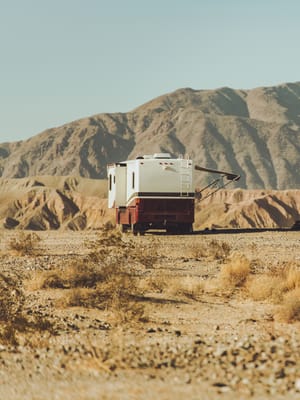
The Bureau of Land Management sells a permit that skips every line above. A Long Term Visitor Area is public desert in Arizona and southern California where an RV can stay for the entire long-term season, September 15 to April 15, on one permit, per BLM's La Posa page. No reservation. No release window. No returning guest holding your spot, because nobody has a spot. You drive in and pick one.
La Posa, just south of Quartzsite, Arizona, is the best known: roughly 11,400 acres in four areas, North, South, West and Tyson Wash. The permit is valid at every BLM LTVA, so a winter can start there and finish in the California desert without paying again. Services are central: eight water faucets, dump stations, vault toilets, and a lot of gravel between them and your door.
That gap is the cost. BLM's long-term camping brochure requires a self-contained unit with a fixed wastewater tank and says plainly that running water, showers and bathrooms are mostly not available on site. So your tanks set the rhythm of the week, and a portable waste tote you can roll to the dump station without breaking camp is the difference between a month and a fortnight. A gravity water filter makes hauled water something you'd drink. Know your numbers first: how long can you boondock is the arithmetic, desert boondocking is the daily practice, and winter rv camping prep is the part you do in the driveway, not the desert.
The permit costs a fraction of a month at a private park, and BLM posts the current fee on the La Posa page. Outside the long-term season the standard rule returns: 14 days in any 28. Two regimes on one piece of desert. New to public land? Start with the rules in BLM camping.
Winter RV Destinations, Read as Markets
Five regions take most of the snowbird traffic, and they behave differently as markets.
Florida is the tightest. The Keys book furthest ahead of anywhere, and the resident head start at state parks tells you how contested February is. The Gulf side runs warmer water and slower towns, the Atlantic side runs windier and busier, and snowbird campgrounds in Florida on either coast run full. If a beach site is the whole idea, RV resorts on the beach is the deeper cut. Book a season early or don't count on it.
Southern Arizona has the most winter RV infrastructure in the country and the public-land safety valve above, which is why a late decision still works there when it doesn't in Florida. The site is a base, not the trip; our Arizona winter road trip itinerary treats it as a route.
South Texas and the Rio Grande Valley is the value market and the most loyal one, with a returning community measured in decades. Warm, flat, full of birds, and a shorter drive for anyone starting in the Midwest. Its parks compete on activity calendars rather than scenery, and if you like knowing your neighbors' names by the second week, this is where it happens fastest.
The Gulf Coast through Mississippi and Alabama is where the sites still are. Fewer amenities, fewer organized potlucks, and a January warm enough to eat outside most days. A loose market with a real winter in it.
The Southern California desert is a longer haul and a colder night. The National Park Service calls Death Valley's low-elevation winter days mild, with nights that only occasionally reach freezing, and notes that temperatures drop 3 to 5 degrees for every thousand feet of elevation gained. Camp low. Death Valley is the standout, and our Death Valley winter itinerary runs the week.
If You'd Rather Stay in the Cold
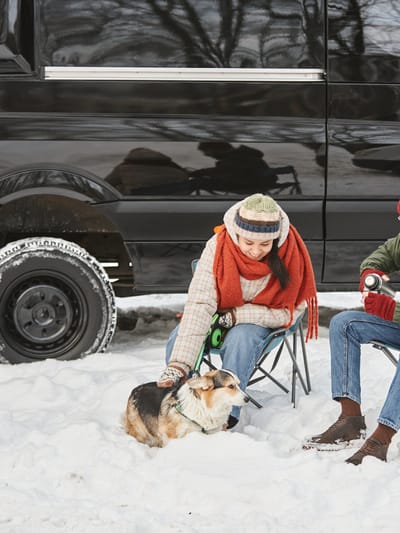
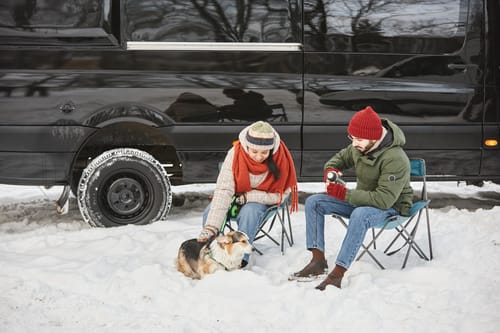
Some northern and mountain-town RV parks stay open all winter, often near ski areas, and here the market inverts. Nobody is fighting you for the site. The question is what's running once you're in it.
A plowed site, a lift you can see from the door, a town in its own off-season, and a campground that was full in July with three RVs in it now. Three questions when you call, because the answers vary by park and by month:
- Is the water turned on at your site, or do you haul from a central spigot?
- Is the dump station open, and if not, where's the nearest one that is?
- Are individual sites plowed, or only the main loop?
This reader's RV works harder than any snowbird's. RVing in cold weather is what that looks like over a month, and winter camping in an RV is the first-weekend version.
Work the Calendar, Not the Map
Whichever winter you want, the calendar is the tool. The snowbird parks were booked in March. The state parks open on a clock you can look up. The desert takes anyone with a permit. Choose a region by how tight its market is, not how it photographs, and next October you'll be the one rebooking on the way out the gate. And if this is the year the RV stays home, how to winterize an RV is the other job.
The Short Version
- Private snowbird parks: six to twelve months out in Florida, Arizona and the Texas Gulf Coast. Regulars rebook before they leave. Get on the cancellation list.
- Public campgrounds: Recreation.gov six months, Arizona 365 days, Texas five months, Florida 11 months for residents and 10 for everyone else. Calendar the release date, and plan around 14-night stay caps.
- No line at all: a BLM Long Term Visitor Area permit, mid-September to mid-April, valid at every LTVA. Self-contained camping; central water and dump.
- Decided late? Mississippi, Alabama, inland Texas.
- Staying north? Some parks stay open. Confirm site water, dump station and plowing before you book.
FAQs
How far in advance do you need to book a snowbird RV park?
Six to twelve months for popular parks in Florida, Arizona and along the Texas Gulf Coast, and the Florida Keys run longer. The reason is the returning guest: regulars rebook their own site before they leave in spring, so much of the inventory never reaches the open market. Shopping in the fall for the winter about to start means choosing from what's left, so get on a cancellation list and put next year's booking in your calendar for March.
Where do RVers go for the winter?
Five regions take most of the traffic: Florida, southern Arizona, south Texas and the Rio Grande Valley, the Gulf Coast through Mississippi and Alabama, and the southern California desert. Florida is the tightest market. Arizona has the most winter RV infrastructure plus public land you can sit on all season. Texas is the value pick with the most loyal returning community, the Gulf states still have sites when the others are full, and the California desert is a longer drive with colder nights.
Can you camp on public land all winter?
Yes, in designated places. The Bureau of Land Management runs Long Term Visitor Areas in the Arizona and southern California desert where a season permit covers mid-September to mid-April, about seven months. The permit is valid at every LTVA, so you can move between them without paying again. Camping is primitive: BLM requires a self-contained RV with a fixed holding tank, and water faucets, dump stations and vault toilets are central rather than at your site. Outside the long-term season the standard dispersed limit of 14 days in any 28-day period applies.
Are RV parks open in the winter?
Many are, and it depends on the region and the operator. Across the southern states winter is the busy season. In the north and in mountain towns, some parks stay open all year, often near ski areas, and others close until spring, so call and ask. When you do, confirm three things: whether your site's water is turned on, whether the dump station is open, and whether individual sites get plowed.
Do Florida residents get first pick of state park campsites?
Yes, by law. Florida statute lets residents reserve state park campsites up to 11 months before arrival, while nonresidents can book 10 months out. Every date at a popular Gulf Coast or Keys state park has therefore been open to Floridians for a full month before an out-of-state RVer can touch it. Count back 10 months from the nights you want and book the day the window opens, or aim for a private park or public land instead.
What's the difference between a snowbird RV park and a regular RV park?
A snowbird RV resort expects you for a month or a season, so it prices by the month, handles mail and laundry, runs an activity calendar, and carries a community that rebooks the same site every spring. A park that simply stays open through winter expects you for a few nights: open inventory, fewer organized activities, and no returning crowd ahead of you in line. For a week the difference barely matters. For February it shapes the entire stay.
Categories
Related Posts
Subscribe to the Swervia Newsletter
The best RV stories, tips, and destinations—expertly curated and always free.