BLM Camping: A Complete Beginner's Guide to Free Public Land in the US
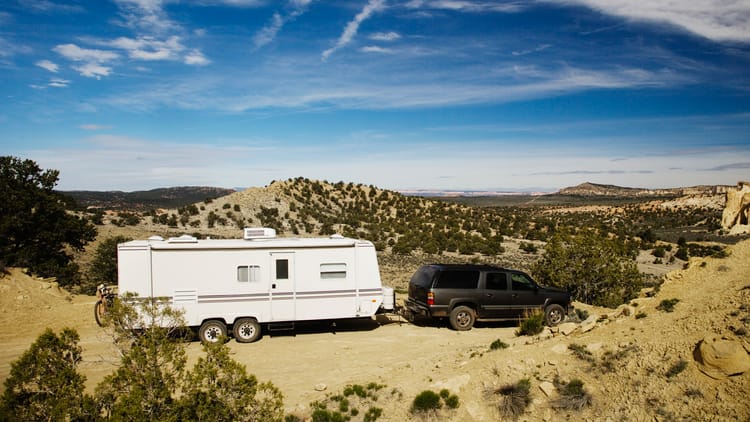
The Bureau of Land Management quietly stewards more than 245 million acres of public land across the United States — most of it in the West, almost all of it open to camping, and the vast majority of it free. This is BLM camping: a category of public-land overnighting that the federal government essentially lets you do for nothing, as long as you follow a few straightforward rules.
For RVers, boondockers, and weekend desert sleepers, that's an enormous amount of accessible, no-cost ground. The catch — and there is always one — is that BLM land does not come with hookups, dump stations, water spigots, or a friendly camp host pointing you toward site 17B. It comes with red dust, sunrise, and a deeply quiet kind of solitude most paid campgrounds cannot match.
Here is everything that actually matters about BLM camping in 2026: what it is, where to find it, what the rules are, what to bring, and how to do your first trip without making any of the rookie mistakes that get cited at the field office.
What Is BLM Camping
The Bureau of Land Management is a federal agency under the Department of the Interior, established in 1946 to oversee the public lands not designated as national parks, national forests, or wildlife refuges. The BLM manages roughly 245 million surface acres — about one-tenth of the entire United States — concentrated mostly in 12 western states: Alaska, Arizona, California, Colorado, Idaho, Montana, Nevada, New Mexico, Oregon, Utah, Washington, and Wyoming.
The phrase "BLM camping" almost always refers to dispersed camping — overnight stays in undeveloped areas of BLM land, outside of any official campground. There is no reservation system, no assigned site, no hookups, and usually no formal trail markers. You drive in, find a spot, set up.
A small number of BLM areas also operate developed campgrounds, with picnic tables, vault toilets, and sometimes a fee. Those are separate from the free dispersed camping discussed in this guide, but worth knowing about when the weather turns and a flat pad with a fire ring sounds appealing.
Where to Find BLM Camping
The single most underused tool for finding BLM camping is also the most official: the BLM's own map portal, which shows surface land ownership across every western state. Once you know what is BLM (yellow, typically) versus Forest Service (green) versus private (white) versus tribal (brown), you start seeing camping potential in places most maps do not surface.
For finding actual spots — meaning level pull-offs, established fire rings, and routes an RV can manage — apps make a measurable difference. iOverlander is excellent for international and remote sites. OnX Offroad is paid but unmatched for boundary mapping and back-road routing, particularly useful when a forest road transitions from BLM to private and the GPS does not know it.
Our complete guide to boondocking without hookups goes deeper on the apps-versus-maps decision tree, including which sources work better in cell-dead canyon country.
The lowest-tech option still works too: stop at a BLM field office during business hours, ask which dispersed areas are open and which are closed for restoration or wildlife, and they will tell you. Most field offices keep printed dispersed-area maps at the front desk. They are happy to be useful.
The 14-Day Rule and Other Stay Limits
The single most important rule of BLM camping is the 14-day limit. You can occupy any single dispersed site for up to 14 days within any 28-day period. After that, you must move — and the move is not symbolic. Most BLM field offices interpret it as a minimum of 25 to 30 miles to a meaningfully different area, though the exact mileage varies by district and is sometimes written into local supplementary rules.
This rule exists because dispersed camping is meant for transient use, not as a workaround for long-term residence. Rangers actively enforce it in popular areas, and a violation can result in a citation and a fine.
A handful of other limits worth knowing:
- Group size: most dispersed areas cap groups at 50 people and 25 vehicles, with special-recreation permits required above that
- Shortened stay limits in heavily used areas: some BLM districts compress the 14-day rule near major attractions (Moab, Sedona-adjacent areas, and several California desert districts have done this seasonally)
- Special closures: wildlife habitat, archaeological sites, and active grazing leases can be closed temporarily, which is why checking with the local field office before a trip matters
What BLM Camping Actually Costs
For dispersed camping on most BLM land, the answer is nothing. No reservation, no nightly fee, no permit. That includes overnight stays in an RV, in a tent, in a rooftop tent, or in a vehicle.
A few exceptions worth flagging:
- Developed BLM campgrounds typically charge $5 to $20 per night, often with vault toilets and a fire ring but no hookups
- Long-Term Visitor Areas (LTVAs) in the Southern California desert charge a flat seasonal fee and allow stays beyond the normal 14-day limit
- Special-recreation permits apply in a few high-use areas like Moab's Sand Flats Recreation Area, where dispersed camping requires a small day-use fee
The hardest part of free camping isn't the dirt. Subscribe to our weekly newsletter.
EVERY WEDNESDAY. ONE EMAIL. FREE.
What to Bring (Because There Is Nothing There)
BLM camping is a hookup-free environment by definition. That means everything an RV would normally plug into, fill up at, or dump into has to be carried with you. The practical implications:
Water capacity. A typical 14-day stay realistically needs 8 to 14 gallons of fresh water per person, assuming careful use. Most travel trailers carry 30 to 50 gallons of fresh water; most Class B vans carry 20 to 30. Plan accordingly, and consider a portable water container for the trip from the nearest fill station (often a city park, RV park dump station, or a Visitor Center). Our guide to portable water filtration for RVs covers the filter setups that turn questionable creek water into usable graywater backup; a gravity-fed countertop water filter is the simplest setup for camp use, with no electricity or pump pressure required.
Power. Without shore power, electricity comes from the battery bank, the alternator, solar, or a generator. For multi-day stays, solar is the most peaceful option — our complete RV solar setup guide on any budget breaks down what a real-world boondocking-capable system actually looks like. A reliable lithium battery and an efficient charge controller matter more than panel wattage on most rigs; a 100-amp-hour lithium iron phosphate battery is a common starting point for serious boondockers, with capacity to handle a fridge, lights, fans, and laptop charging without daily recharges. For situations where the panels can't keep up — extended cloudy stretches, heavy-draw devices, winter conditions — a portable solar generator with around 1,000 watt-hours of capacity makes a useful all-in-one backup.
Waste capacity. Most RVs have a 30 to 50 gallon black tank and a similar gray tank. Plan to dump at the nearest dump station before and after a multi-day boondock. For longer stays where breaking camp to dump every few days isn't practical, a portable 36-gallon waste-water tote tank lets you ferry grey or black water from the rig to a dump station without moving the whole setup. Our primer on the three RV tanks and what they actually do is the right starting point for anyone new to RV plumbing.
Communication. Most BLM areas have spotty or no cell service. A reliable mobile internet setup matters for safety and for any remote work — our breakdown of the best RV internet for remote work covers what actually works miles from the nearest cell tower, including Starlink for true off-grid scenarios.
Tire and route awareness. Many BLM access roads are dirt or graded gravel, and conditions change rapidly with weather. A properly inflated set of tires, a solar-charging tire pressure monitoring system (so the sensors don't drain a battery you can't easily recharge), and an honest assessment of the rig's ground clearance prevent the kind of stuck-in-the-mud situation that ends a trip and starts a tow bill.
BLM Camping Etiquette and Leave No Trace
The unwritten rule of dispersed camping is camp in already-disturbed sites. Look for existing fire rings, flattened ground, and visible vehicle tracks. Creating a new site in untouched vegetation is the single most damaging thing a camper can do, and it is the behavior that gets dispersed areas closed.
The seven Leave No Trace principles apply in full force:
- Plan ahead and prepare
- Travel and camp on durable surfaces
- Dispose of waste properly — that means trash, food scraps, and human waste
- Leave what you find
- Minimize campfire impacts
- Respect wildlife
- Be considerate of other visitors
The third item is the most-violated. Pack out everything, including biodegradable food waste — orange peels do not decompose in a desert climate the way they would in a compost bin. Burying human waste means a six- to eight-inch cathole at least 200 feet from water, trails, and camp.
Generator use is generally permitted with implicit etiquette: most dispersed campers consider 8 a.m. to 8 p.m. acceptable, with quieter hours bracketing both ends. Fire restrictions vary by season and district — check the BLM website or call the field office before lighting anything, especially in the West's fire-prone summer months.
Our guide to raising kids who follow Leave No Trace rules without the nagging is also a useful primer for adults — the principles do not change with age, only the explanations do.
Common First-Timer Mistakes
A few patterns repeat in field-office reports and ranger conversations:
- Underestimating water. First-timers run out around day four and start improvising in ways that compromise the rest of the trip
- Setting up a new site when an established one was a quarter-mile away. This destroys vegetation and shortcuts the area's usable life
- Ignoring road condition warnings. A "rough but passable" forest road in dry weather becomes impassable after a single afternoon thunderstorm
- Not checking fire restrictions. A summer campfire in Stage 2 restrictions is a federal citation, not a warning
- Skipping a backup communication plan. Cell service ends abruptly in canyon country. A satellite communicator (Garmin inReach, Zoleo, or similar) costs less than a single tow bill
Each of these is preventable with about 20 minutes of pre-trip planning.
Best BLM Camping by Region
Some regions reward first-timers more than others. The following five offer accessible roads, established dispersed areas, and reasonable safety margins for new boondockers.
Arizona — Sonoran Desert. The Quartzsite area, the Sonoran Desert National Monument, and the country around Lake Havasu offer easy access and large flat areas. Best from October through April; brutal in summer.
Utah — Moab and the Grand Staircase. Designated dispersed areas around Moab manage heavy use well. Grand Staircase-Escalante National Monument offers stunning red-rock camping with strict but clear rules.
Nevada — Valley of Fire surroundings, and Great Basin BLM. Often overlooked. Long sight lines, dark skies, and an empty-feeling expanse that rewards a longer stay.
Colorado — Western Slope. The high-desert BLM around Grand Junction and Gunnison offers elevation, juniper-pinyon forest, and proximity to small mountain towns when resupply is needed.
Oregon — Alvord Desert and Eastern Oregon. A serious adventure, with some of the most underused BLM land in the lower 48. The Alvord playa is legendary for clear-sky camping.
Our guide to what to know before a first RV trip out west covers the broader logistics of getting any of these regions onto an itinerary.
A Final Note on Why This Matters
BLM camping is one of the last meaningfully free pieces of American recreation infrastructure. It exists because federal lands were set aside in the 19th and 20th centuries with the idea that some land should belong to everyone. The 14-day rule, the LNT principles, and the regional restrictions are not bureaucratic. They are what keeps that idea functioning.
Most regulars treat BLM camping the way they would treat someone else's house: gratefully, carefully, and quietly. The reward is a kind of access no paid campground can replicate.
FAQs
Can you camp on BLM land for free?
Yes. Dispersed camping on most BLM land is free, with no reservations, permits, or nightly fees required. The exceptions are developed BLM campgrounds (which charge $5 to $20 per night), Long-Term Visitor Areas in the California desert (which charge a flat seasonal fee), and a small number of high-use special-recreation areas like Moab's Sand Flats. Stays of up to 14 days within any 28-day period are permitted at no cost in standard dispersed areas.
How long can you stay on BLM land?
The standard limit is 14 days within any 28-day period at a single site. After 14 days, campers must move — typically at least 25 to 30 miles, though the exact mileage varies by district. Some heavily used BLM areas have shorter limits during peak seasons, particularly around Moab, Sedona-adjacent districts, and several California desert districts. Long-Term Visitor Areas in the Southern California desert allow longer stays in exchange for a seasonal fee.
Do you need a permit to camp on BLM land?
No permit is required for standard dispersed camping on most BLM land. Permits are required only in specific high-use special-recreation areas, for groups of more than 50 people or 25 vehicles, or in seasonal restricted-access zones. The local BLM field office can confirm whether any permit applies to a specific area before a trip.
What is the difference between BLM camping and dispersed camping?
BLM camping is dispersed camping that happens to be on BLM-managed land. "Dispersed camping" describes the type of camping — undeveloped, no facilities, free in most cases — while "BLM camping" describes the land owner. Other federal agencies, most notably the U.S. Forest Service, also permit dispersed camping on their land under similar rules. The two terms overlap heavily but are not identical.
Is BLM camping safe?
It is, generally, safer than most people expect — but the safety profile is different from a developed campground. Risks come less from people and more from environment: weather extremes, dehydration, road conditions, and limited communication. Standard precautions cover most of it: tell someone the itinerary, carry a satellite communicator in dead-cell areas, monitor weather, and avoid summer desert temperatures without a heat plan.
Can you have campfires on BLM land?
Sometimes. Campfires are permitted in many dispersed BLM areas when fire restrictions are at Stage 0 (no restrictions). Stage 1 and Stage 2 restrictions limit or prohibit campfires entirely, often for months at a time during western summers. Always check the current restriction level on the relevant BLM district's website or by calling the field office before lighting any fire. A propane-fueled portable fire ring is sometimes permitted under restrictions when an open wood fire is not.
How do you find BLM camping near you?
Three reliable methods, in order of effort: stop at the nearest BLM field office and ask for dispersed-area maps; check apps like iOverlander and OnX Offroad for crowdsourced site information; use the BLM's own surface management mapping at blm.gov to identify yellow-shaded BLM acreage and explore from there. The official map portal is the most authoritative source for confirming whether a piece of land is actually BLM-managed before showing up at sundown.


Categories
Related Posts
Subscribe to the Swervia Newsletter
The best RV stories, tips, and destinations—expertly curated and always free.