These 9 Portable Water Filter RV Systems Actually Work When You're Miles From Nowhere
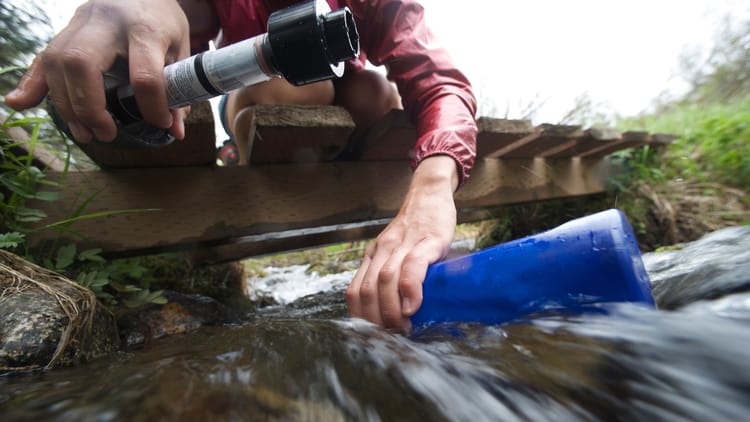
When you're parked in the middle of nowhere with nothing but stars overhead and questionable water sources nearby, your portable water filter RV setup becomes your lifeline. Understanding which filtration technology works best for different scenarios can mean the difference between confident exploration and risky gambles with your health. If you're still building out your full off-grid system, our guide to building a complete RV solar setup on any budget covers the power side of the equation — because UV purifiers and electric RO systems both need reliable juice.
Why Your Standard RV Water Filter Won't Cut It Off-Grid
Here's the thing about off-grid adventures: that cute little inline filter you bought at the RV store — something like a standard RV inline water filter — is about as useful as a chocolate teapot when you're dealing with creek water, sketchy well sources, or that mysterious spigot at the abandoned campground you found. Those filters are designed for campground hookups with municipal water, not backcountry sources.
Off-grid water sources throw curveballs that most standard RV water filters simply can't handle. We're talking sediment loads that would make your home filter weep, bacteria counts that require serious filtration muscle, and mineral content that varies wildly from source to source.
The portable water filter RV systems we're covering here represent different filtration technologies that off-grid enthusiasts rely on when clean water isn't guaranteed. For a broader look at what it actually takes to camp without hookups for days or weeks at a time, our complete guide to boondocking without hookups covers water sourcing alongside every other off-grid consideration.
Gravity Filters: The Set-and-Forget Champions
Gravity-fed systems offer the ultimate convenience for off-grid water filtration. These systems use physics to do the work, requiring no pumping, squeezing, or power source.
Hollow Fiber Gravity Systems
How they work: These systems use thousands of microscopic hollow fibers that physically block contaminants while allowing clean water to pass through. The pore size typically ranges from 0.1 to 0.01 microns. A solid entry-level option is a hollow fiber gravity water filter designed specifically for backcountry and off-grid use.
Filtration capability: Removes bacteria, protozoa, and sediment. Most cannot handle viruses due to their larger pore size.
Capacity: Usually 2-10 liters, with flow rates ranging from 1-3 liters per minute depending on the system size and water pressure.
Best for: Couples or small groups processing moderate amounts of water from relatively clean sources like mountain streams or wells.
Typical price range: $80-200
Pros: Fast flow rates, no pumping required, lightweight, easy to use
Cons: Limited virus protection, can clog with very turbid water, filters may freeze in cold weather
Ceramic Candle Gravity Systems
How they work: These systems use ceramic filter elements with extremely fine pore structures. Water passes through the ceramic, leaving contaminants behind. A ceramic candle filter element rated for countertop gravity systems — like the ultra sterasyl ceramic filter candle — drops into a standard gravity housing and provides significantly finer filtration than hollow fiber alone.
Filtration capability: Removes bacteria, protozoa, sediment, and some chemicals. Higher-end ceramic filters can handle viruses.
Capacity: Typically 1-4 gallons total capacity, with slower flow rates of 0.5-1 gallon per hour.
Best for: Stationary camps, extended stays, or anyone prioritizing thorough filtration over speed.
Typical price range: $200-500
Pros: Excellent filtration, long filter life, can handle turbid water, works in freezing conditions
Cons: Slower flow rates, heavier, requires more maintenance, takes up more space
Large Capacity Systems for Extended Off-Grid Stays
Stainless Steel Gravity Systems
How they work: These countertop-style systems use multiple filter elements in a stainless steel housing. Water filters through the elements into a lower chamber. The NSF/ANSI certified stainless steel gravity water filter system is a well-regarded option in this category — the NSF certification means the removal claims have been independently verified rather than just stated on the box.
Filtration capability: Comprehensive removal of bacteria, viruses, heavy metals, chemicals, and sediment. Often includes specialized elements for specific contaminants.
Capacity: 1.5-4 gallons total capacity, with flow rates of 0.5-1 gallon per hour per filter element. In a real-world setting, this is admittedly optimistic, especially with pre-filtration.
Best for: Full-timers, extended boondocking, or anyone prioritizing maximum filtration and capacity over portability.
Typical price range: $250-500
Pros: Excellent all-around filtration, high capacity, long filter life, works without power
Cons: Heavy, takes up significant counter space, slower flow rates, expensive initial investment
Clean water is the gear nobody talks about until they need it. Subscribe to our weekly newsletter.
OFF-GRID SYSTEMS, BOONDOCKING INTEL, AND GEAR THAT ACTUALLY HOLDS UP — EVERY WEDNESDAY, FREE.
Compact Powerhouses for Limited Space
Collapsible Bag Systems
How they work: Flexible reservoir bags with integrated or attached filter elements. Water is gravity-fed through the filter into a clean collection bag or container.
Filtration capability: Typically removes bacteria and protozoa down to 0.1 microns. Some models include additional purification stages.
Capacity: 6-18 liters dirty water capacity, but collapse to nearly flat when empty.
Best for: Families in smaller rigs, occasional use, or anyone prioritizing storage efficiency over processing speed.
Typical price range: $60-120
Pros: Minimal storage space, lightweight, large capacity when needed, affordable
Cons: Less durable than rigid systems, slower flow rates, limited filtration scope
High-Volume Portable Systems
How they work: Larger capacity versions of backpacking filters, designed for group use with faster flow rates and bigger reservoirs.
Filtration capability: Similar to standard portable filters — bacteria, protozoa, and sediment removal down to 0.1 microns.
Capacity: 10-20 liter dirty water capacity with flow rates of 2-4 liters per minute.
Best for: Groups, frequent use, or anyone who prioritizes speed and doesn't want to constantly refill the system.
Typical price range: $100-200
Pros: Fast processing, high capacity, proven reliability, field-maintainable
Cons: Bulkier storage, more expensive than basic models, limited virus protection
UV Filtration: High-Tech Water Safety
UV purification systems use ultraviolet light to destroy microorganisms at the DNA level. Unlike filters that physically remove contaminants, UV systems neutralize them. If your rig's electrical system isn't yet reliable enough to power UV or electric RO gear consistently, our piece on why RV batteries keep dying is worth reading before you invest in power-dependent filtration.
Handheld UV Purifiers
How they work: A UV-C lamp destroys bacteria, viruses, and protozoa by damaging their DNA. Treatment time is typically 60-90 seconds per liter.
Purification capability: Destroys 99.9%+ of bacteria, viruses, and protozoa. Does not remove sediment, chemicals, or improve taste.
Capacity: Treats 16-32 ounces at a time, with battery life for hundreds of treatments.
Best for: Final purification step after pre-filtration, situations where viral contamination is suspected, compact backup purification.
Typical price range: $80-150
Pros: Destroys viruses, very compact, fast treatment, no filter maintenance
Cons: Requires pre-filtration for sediment, battery dependent, doesn't improve taste, water must be clear
UV LED Systems
How they work: Use LED technology instead of traditional UV bulbs for longer life and lower power consumption.
Purification capability: Similar to traditional UV but with more efficient power usage and longer operational life.
Capacity: Similar treatment volumes with extended battery life — often 8,000+ treatments per charge.
Best for: Frequent users, extended off-grid periods, anyone prioritizing reliability and battery life.
Typical price range: $100-200
Pros: Long battery life, durable LED technology, compact size, virus protection
Cons: Higher initial cost, still requires pre-filtration, water clarity dependent
Reverse Osmosis: The Nuclear Option
Reverse osmosis (RO) systems force water through an extremely fine membrane that removes virtually everything, including dissolved salts, heavy metals, and chemicals. They're the heaviest investment in this category — both in cost and counter space — but for coastal adventures or areas with genuinely compromised water, nothing else comes close. If you're planning the kind of trip where RO capability matters, our Pacific Coast Highway RV itinerary is a good example of a coastal route where water source variability is a real consideration.
Manual RO Systems
How they work: Hand-operated pumps force water through RO membranes at high pressure. Can process any water source, including seawater. A compact option in this category is a portable 3-stage water purifier pump with reverse osmosis membrane — rated to 0.0001 micron filtration, which covers essentially everything including viruses and dissolved solids.
Filtration capability: Removes 99%+ of all contaminants including salts, heavy metals, chemicals, bacteria, and viruses.
Capacity: 0.5-1.5 gallons per hour depending on pump energy and water source salinity.
Best for: Coastal adventures, extremely contaminated water sources, situations requiring absolute water purity.
Typical price range: $400-2,000
Pros: Handles any water source, complete contaminant removal, emergency seawater capability
Cons: Expensive, labor-intensive, slow processing, produces waste water
Electric RO Systems
How they work: Electric pumps provide the pressure needed for RO processing, reducing manual effort but requiring power.
Filtration capability: Same comprehensive removal as manual systems but with consistent pressure and flow.
Capacity: 1-5 gallons per hour depending on system size and power available.
Best for: RVs with robust electrical systems, frequent use in areas with poor water quality, permanent installation.
Typical price range: $1,000+
Pros: Less manual effort, consistent performance, higher capacity
Cons: Power requirements, complexity, still produces waste water, expensive
Understanding Filtration Technology Performance
Different portable water filter RV systems undergo various types of testing to verify their performance claims. Manufacturers typically test their products according to NSF (National Sanitation Foundation) standards or EPA protocols.
Laboratory testing usually involves controlled conditions with specific contaminant concentrations to measure removal rates. These tests provide the percentage removal figures you see in product specifications.
Field testing by outdoor gear reviewers and user communities provides real-world performance data under varying conditions. Flow rates, durability, and ease of use often differ from laboratory conditions.
Independent testing by organizations like Consumer Reports or outdoor gear publications offers unbiased performance comparisons across brands and technologies.
Understanding test methodologies helps you interpret manufacturer claims and choose systems based on your specific water quality challenges and usage patterns.
Choosing Your Perfect Portable Water Filter RV Setup
The best system depends on your specific off-grid style and water sources:
Weekend Warriors: Hollow fiber gravity systems offer the perfect balance of performance, simplicity, and storage efficiency for occasional use.
Extended Boondockers: Stainless steel gravity systems provide unmatched capacity and comprehensive filtration for long-term stays.
Space-Conscious RVers: Collapsible bag systems deliver impressive capacity while virtually disappearing in storage.
High-Volume Users: Large portable systems process water quickly for groups or frequent use without constant refilling.
Paranoid Perfectionists: Combine a gravity system with UV purification for comprehensive protection against all biological contaminants.
Coastal Adventurers: Consider RO systems for ultimate versatility, including emergency seawater processing capability.
Pro Tips for Off-Grid Water Success
Pre-filter everything: Even the best systems benefit from basic sediment removal. A simple bandana or coffee filter can extend your main filter's life dramatically.
Know your source: Clear doesn't mean clean. That crystal-clear mountain stream might be loaded with giardia from upstream wildlife.
Have a backup: Water system failures in remote areas aren't just inconvenient — they're dangerous. Pack a backup purification method.
Test at home: Don't discover your new system's quirks when you're 50 miles from the nearest town. Run it through its paces in your driveway first. While you're at it, run through our RV setup checklist to make sure your full water system — fresh tank, pump, connections — is dialed in before you head somewhere remote. And if your RV security camera system is already sorted for remote stays, water filtration is the next piece of the off-grid puzzle worth getting right.
The Bottom Line
Your portable water filter RV system isn't just gear — it's freedom insurance. The difference between a good off-grid adventure and a nightmare often comes down to reliable water access.
Whether you choose gravity filters for convenience, UV purification for absolute safety, or a combination approach for maximum flexibility, the systems we've covered here represent the current gold standard for off-grid water security. And if you need a stainless steel water bottle to hold all your newly filtered water on-the-go that will NOT leak, we swear by the Contigo Autoseal series.
Stop gambling with sketchy water sources and start exploring with confidence. Your future self — and your digestive system — will thank you.
FAQs
What is the best portable water filter for RV use off-grid?
The best portable water filter for off-grid RV use depends on your camping style and water sources. For most boondockers, a hollow fiber gravity system ($80–200) provides the best balance of performance, simplicity, and storage. For full-timers or extended stays, a stainless steel gravity system ($250–500) offers higher capacity and broader contaminant removal including viruses and heavy metals. For anyone camping near coastal or heavily contaminated sources, a manual or electric reverse osmosis system provides the most comprehensive protection but at significantly higher cost and weight.
What is the difference between a gravity filter and a UV purifier for RV water?
Gravity filters physically remove contaminants by passing water through a membrane with pore sizes of 0.01–0.1 microns, blocking bacteria, protozoa, and sediment. They do not neutralize viruses in most configurations. UV purifiers use ultraviolet light to destroy microorganisms — including viruses — at the DNA level but do not remove sediment, chemicals, or heavy metals. The two technologies are complementary: a gravity filter handles particulates and most biological threats, while UV handles viral contamination. Many experienced off-grid RVers use both in sequence.
Can an RV water filter remove viruses?
Most standard RV inline filters and basic gravity filters cannot remove viruses, as their pore sizes (0.1–0.2 microns) are too large to physically block viral particles. Ceramic candle filters rated to 0.01 microns can remove some viruses. Stainless steel gravity systems with NSF-certified filter elements and reverse osmosis systems remove viruses reliably. UV purifiers destroy viruses without physically removing them. For travel in regions where viral waterborne illness is a risk, UV purification or RO is the appropriate choice.
How much water can a portable RV filter process per day?
Processing capacity varies significantly by system type. High-volume portable systems (10–20 liter capacity, 2–4 liters per minute flow rate) can process 50–100+ gallons per day with continuous use, making them appropriate for groups. Standard gravity systems with 2–10 liter capacity and 1–3 liters per minute flow rate can realistically produce 10–20 gallons per day for a couple. Stainless steel gravity systems at 0.5–1 gallon per hour produce 12–24 gallons per day under normal conditions. Reverse osmosis systems produce 0.5–5 gallons per hour depending on whether they're manual or electric.
What is NSF certification and why does it matter for RV water filters?
NSF (National Sanitation Foundation) certification means a water filtration product has been independently tested and verified to meet specific contaminant removal standards. NSF/ANSI Standard 42 covers aesthetic effects like taste, odor, and chlorine. NSF/ANSI Standard 53 covers health-related contaminants including cysts, lead, and VOCs. NSF/ANSI Standard 58 covers reverse osmosis systems. When a manufacturer claims a specific removal percentage, NSF certification means that claim has been verified under controlled laboratory conditions rather than being a marketing figure. Always check which specific NSF standard a product is certified to, as they cover different contaminant categories.
Do portable RV water filters work in freezing temperatures?
Performance in freezing temperatures varies by filter type. Hollow fiber gravity filters are vulnerable to freeze damage — ice forming in the fibers can cause irreversible cracking that compromises filtration integrity without any visible sign of damage. Ceramic candle filters generally handle freezing conditions better due to their dense structure. UV purifiers are unaffected by cold temperatures but may have reduced battery performance. If camping in below-freezing conditions, store hollow fiber filters inside your rig overnight and never allow them to freeze when wet.
What is reverse osmosis and when does an RV boondocker need it?
Reverse osmosis is a filtration process that forces water through an extremely fine semi-permeable membrane under pressure, removing 99%+ of dissolved contaminants including salts, heavy metals, chemicals, bacteria, and viruses. It is the only portable filtration technology capable of processing seawater into drinking water. Most boondockers do not need RO — gravity or UV systems handle the biological threats found in typical backcountry water sources. RO becomes relevant for coastal camping where seawater emergency processing matters, areas with known heavy metal or chemical contamination, and full-timers parked long-term in locations with poor municipal water quality.