Your First Time Towing a Travel Trailer? Here's Everything You Actually Need to Know
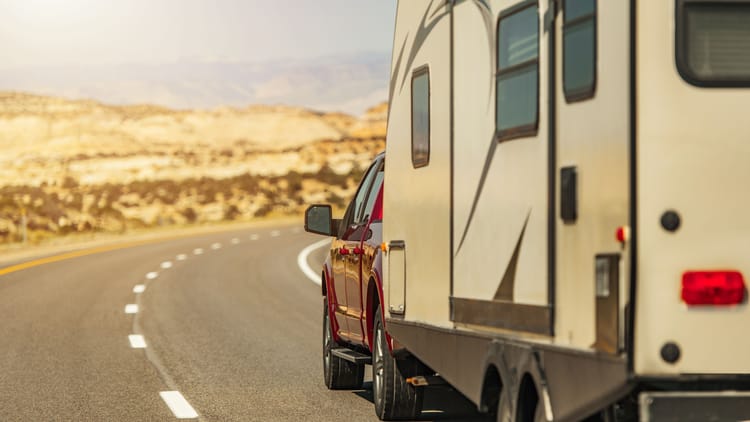
So you've pulled the trigger on that beautiful travel trailer you've been eyeballing for months. Congrats! Now comes the part that makes most new RVers break out in a cold sweat: actually learning how to tow a travel trailer without turning into that person blocking traffic on the interstate.
Look, we get it. The idea of pulling several thousand pounds of your home-away-from-home behind your vehicle can feel intimidating. But here's the thing—thousands of weekend warriors just like you master trailer towing every year, and most of them figure it out without any formal training. You've got this.
This guide breaks down everything you need to know about towing a travel trailer safely and confidently, from the essential gear you'll need to the driving techniques that'll have you backing into campsites like a pro. No gatekeeping, no overwhelming technical jargon—just practical advice from people who've been there. If you're still deciding what rig to buy before you even get to the towing stage, our RV buying guide for first-timers covers the full decision process from class to cost.
Know Your Vehicle's Towing Capacity (And Actually Respect It)
Before you even think about hitching up, you need to know exactly how much weight your vehicle can safely pull. Your vehicle's towing capacity determines whether it can handle the weight of your trailer, and ignoring this number is the fastest way to turn your dream vacation into a roadside nightmare.
Your towing capacity isn't just one number—it's actually three important figures you need to understand:
Gross Vehicle Weight Rating (GVWR): The maximum your vehicle can weigh when fully loaded, including passengers, cargo, and tongue weight from your trailer.
Towing Capacity: The maximum weight your vehicle can pull behind it. This is usually the number advertised by manufacturers, but it assumes ideal conditions.
Tongue Weight Capacity: How much downward force your hitch can handle. This should be 10-15% of your trailer's total weight.
You'll find these numbers in your owner's manual, on a sticker inside your driver's side door, or by searching your vehicle's specs online. Pro tip: Always leave yourself a buffer. If your truck can tow 7,000 pounds, don't buy a 6,800-pound trailer. Things like headwinds, hills, and that extra cooler of beer all add up. If you're still weighing which type of rig makes the most sense for your life before committing, our guide on what type of RV you should buy breaks down towables versus motorhomes side by side.
Essential Towing Gear You Can't Skip
Getting the right equipment isn't just about safety—it's about maintaining your sanity on the road. Proper RV hitching and towing require key accessories, including a hitch receiver, ball mount, weight distribution hitch, tongue jack, and trailer locks, ensuring safe and stable towing.
The Non-Negotiables
Proper Hitch System: Your trailer's weight determines what type of hitch you need. Lighter trailers (under 3,500 pounds) can usually get away with a standard ball hitch, while heavier rigs benefit from a weight distribution hitch that helps level your vehicle and trailer.
Safety Chains: Cross the safety chains under the trailer tongue and attach them to the hitch on either side. Make sure they're snug but not dragging on the ground. These are your backup plan if something goes wrong with your primary connection.
Brake Controller: If your trailer weighs more than 1,000 pounds, it likely has electric brakes that need a controller in your tow vehicle. This isn't optional—it's required by law in most states and crucial for safe stopping.
Extended Mirrors: You need to see around your trailer, period. Whether you go with clip-on extensions or full replacement mirrors, being able to see what's happening behind you is non-negotiable.
The Game-Changers
Backup Camera: An RV backup camera is not required, but absolutely worth it. Being able to see your trailer when backing up or parking transforms the most stressful part of RVing into something manageable.
Sway Control: A sway bar will help reduce sway caused by wind and passing traffic, though you'll need to remove it when backing up at an angle.
Tire Pressure Monitoring System (TPMS): Blowouts are dangerous and expensive. A good TPMS system lets you monitor your trailer's tire pressure and temperature in real-time.
Portable Tire Inflator: Even with a TPMS keeping you informed, carrying a portable tire inflator means you're never stuck waiting for roadside assistance over a low tire — especially when you're deep in a campground or miles from a service station.
Pre-Trip Safety Checklist That Actually Matters
Perform a safety inspection before each trip—yes, every single time. It takes five minutes and could save your life. Here's what to check:
Hitch Connection: Make sure the coupler is fully engaged on the ball and the latch is closed and locked. Give it a tug test—if it moves, it's not connected properly.
Safety Chains: Crossed under the tongue, properly attached, and with enough slack to allow turning but not dragging.
Electrical Connection: Test all lights—brake lights, turn signals, running lights, and hazards. Have someone help you with this or use the self-test function if your trailer has one.
Tire Condition: Check both your vehicle and trailer tires for proper pressure and obvious damage. Keep clearances in mind when pulling into gas stations since your trailer might be taller than your truck.
Weight Distribution: If you're using a weight distribution hitch, make sure everything is properly adjusted and locked in place.
Leveling Blocks: Pack a set of interlocking RV leveling blocks in an accessible spot before every trip — you'll want them within reach the moment you pull into an uneven site, not buried under gear in the back.
This pre-trip habit pays dividends beyond your first tow. Our RV maintenance checklist covers the full seasonal and trip-by-trip inspection routine that keeps your rig reliable long-term.
First tow coming up? The details that matter are in the weekly. Subscribe to our weekly newsletter.
THE ROAD GETS EASIER WHEN YOU KNOW WHAT'S COMING — EVERY WEDNESDAY, FREE.
Driving Techniques That Keep You Sane (And Your Marriage Intact)
Learning how to tow a travel trailer isn't just about the mechanical stuff—it's about developing new driving habits that account for your much longer, heavier rig. Fair warning: this is where most couples discover new and creative ways to argue.
The Golden Rule of RV Teamwork: Assign Roles Before You Need Them
Before you even attempt your first backing maneuver, have "the talk" with your co-pilot. Decide who's driving and who's spotting, because trying to figure this out while blocking a campground entrance is a guaranteed recipe for marital strife. The spotter gets out, uses clear hand signals (not vague pointing), and—here's the key—only ONE person gives directions. If Grandma wants to help from her lawn chair, politely ask her to hold her commentary until you're parked.
Pro tip: Agree on hand signals beforehand. "Stop" should be arms crossed in an X. "Come back slowly" is beckoning motions. "You're about to take out the camp store" is frantic waving. Practice these in your driveway before your maiden voyage.
Turning and Maneuvering: The "Pull Straight, Turn Late" Mantra
Here's your new turning mantra: "Pull straight, turn late." The trailer will naturally follow the path of your tow vehicle when moving forward, but it needs room to swing around corners. Think of it like leading a very obedient but slightly delayed dance partner.
When approaching a turn, pull farther into the intersection than feels natural—this gives your trailer room to clear the corner without kissing the curb. The longer your trailer, the later you turn. A good rule of thumb: if you can see the corner you're turning around in your side mirror, you've probably gone far enough.
The Tail Swing Reality Check: Remember that your trailer's rear end swings OUT during turns, not in. That means when you're leaving a gas station, your trailer's back corner might clip something even though your truck cleared it perfectly. Always check your mirrors and walk around if you're unsure—pride heals faster than fiberglass.
Backing Up: Where Physics Meets Psychology
Backing up with a trailer is like trying to push a rope—everything works backwards and your brain will hurt for the first few attempts. Here's the easiest way to remember it: Put your hand on the bottom of your steering wheel. The direction you move your hand is the direction the back of your trailer will go.
Start with tiny steering corrections. Aggressive wheel turns will jackknife your rig faster than you can say "expensive mistake." If things start going sideways (literally), pull forward and start over. There's no shame in the reset—even pros do it.
Highway Driving: Don't Let the Tail Wag the Dog
Keep your speed reasonable—most travel trailers aren't designed for sustained highway speeds over 65 mph. Not only is it safer, but you'll also get better fuel economy and put less stress on your equipment. Plus, going slower gives you more time to react when physics decides to remind you who's really in charge.
Speaking of roads that test your patience, our roundup of the 10 highways that will destroy your RV identifies the specific routes new towers should reroute around — and the safer alternatives to take instead.
When the Wind Gets Pushy: Crosswinds are your biggest enemy when towing, and they'll turn your relaxing road trip into a white-knuckle adventure real quick. When you feel the trailer pushing your vehicle around—what old-timers call "the tail wagging the dog"—slow down and keep a firm grip on the steering wheel. Don't fight the sway aggressively; small, smooth corrections work better than jerky "I'm-in-control" movements.
Large trucks passing you will create a brief wind vortex that can push your trailer around. When you see an 18-wheeler coming up behind you, grip the wheel a little tighter and don't panic when your trailer gets a little sassy for a few seconds.
Leave extra following distance. Brake controllers ensure smoother stops, but you still need more time and distance to stop safely when towing. The general rule: if you can't see the road behind the vehicle in front of you, you're too close.
Mirror Magic and Spatial Awareness
Set your mirrors so you can see a slice of your trailer and the lanes beside you. This isn't just about backing up—it's about knowing where your trailer is at all times. Some drivers use the "two-finger rule": hold up two fingers at arm's length, and your trailer should fill the space between them in your mirror.
The Gas Station Geometry Problem: This is where many new towers get their first reality check. Your trailer might be several feet taller than your truck, so pay attention to overhead clearances. Walk around and check if you're unsure—it's better to look paranoid than to explain to your insurance company why there's a chunk of canopy embedded in your air conditioner.
Handling Wind and Weather
In severe weather, don't be a hero. Pull over and wait it out. Your vacation can handle a delay better than you can handle an accident. There's no RV destination worth risking your safety over.
Parking Lot Boot Camp: Practice Makes Perfect (Not Embarrassing)
Before you attempt your first campground, find a large empty parking lot—preferably one without light poles, cart returns, or judgmental onlookers. Think of it as RV driver's ed, but without the instructor with questionable breath.
The Cone Course: Set up some cones, traffic cones, or even empty water jugs to create a practice campsite. Practice backing between them until you can do it without running over your makeshift neighbors. Start with a space that's way too big, then gradually make it more challenging.
Master the Pull-Through First: Most campgrounds have both back-in and pull-through sites. Master the pull-through sites first—they're like training wheels for your confidence. You can always upgrade to the back-in sites once you've got some miles under your belt.
The Patience Exercise: Practice the "get out and look" technique. It might feel silly checking your clearances every few feet, but it beats the alternative. Professional truck drivers do this constantly, and they're not embarrassed about it.
Once you're ready to pull into your first real site, our RV setup checklist walks through exactly what to do the moment you arrive at camp — from leveling and unhitching to hookups and safety checks.
Memory Tricks That Actually Work
For backing up: "Bottom moves the back"—put your hand on the bottom of the steering wheel, and whichever way you move your hand is where the trailer's rear will go.
For turning: "Pull straight, turn late"—don't turn until you can see the corner in your mirror.
For sway control: "Smooth and steady beats fast and jerky"—small corrections work better than dramatic ones.
For loading: "Sixty-forty, not fifty-fifty"—60% of your cargo weight should be in the front half of the trailer.
Common Mistakes Every New Tower Makes (And How to Avoid Looking Like One)
Loading Your Trailer Wrong: Too much weight in the back causes dangerous sway (and looks like you're doing the highway wiggle dance), while too much up front can lift your rear wheels off the ground. Aim for 60% of your cargo weight in the front half of the trailer. The "sixty-forty rule" isn't just about weight distribution—it's about not becoming a cautionary tale at the next RV rally.
The Height Amnesia: You've been driving a regular truck for years, so your brain automatically judges clearances based on that. But your trailer might be 13+ feet tall, which means that 12-foot drive-through is about to become a very expensive lesson in physics. Write your total height on a sticky note and put it on your dashboard until it becomes second nature.
Inadequate Gear for Your Trailer Size: A 6,000-pound trailer needs more than just a ball hitch and a prayer. Don't try to save money on safety equipment—it's like buying a parachute from the bargain bin.
The Jackknife Jitters: When backing goes wrong, new towers often overcorrect with aggressive steering inputs. This creates a jackknife situation where your truck and trailer form a sharp angle. If this happens, STOP immediately, pull forward, and start over. There's no salvaging a jackknife in progress.
Gas Station Geometry Gone Wrong: Your truck fits under that canopy, but your trailer might not. And that tight turn around the pumps? Your trailer's tail swing might take out a pump, even if your truck cleared it. Always do a walk-around if you're unsure about clearances.
The "I Don't Need to Practice" Syndrome: Every new RV owner thinks they can figure it out on the fly. Don't be that person holding up the campground entrance while you attempt your 17th backing maneuver. Practice in empty parking lots first—your fellow campers will thank you.
Electrical Hookup Errors: Shore power is one of the most commonly mishandled parts of campsite setup for new RVers. Our guide on RV shore power hookup mistakes covers the adapter confusion, amp mismatches, and connection order errors that can damage your rig before your first night is even over.
Ignoring the Battery: Your trailer's battery takes a hit during towing, especially if you've got electric brakes and running lights drawing from it continuously. If you've ever come back to a dead coach battery, our breakdown of why your RV battery keeps dying explains the most common culprits and how to fix them before your next trip.
Building Your Towing Confidence
The best way to get comfortable with towing is to start small and work your way up. Take a few short trips close to home before attempting cross-country adventures. Every mile you tow builds experience and confidence.
Remember, everyone was a beginner once. That couple effortlessly backing their 30-foot trailer into a tight campsite? They probably spent their first trip taking up three parking spaces at Walmart just like you might.
If towing is the technical hurdle, the mental and lifestyle adjustment that comes next is its own chapter. Our piece on the first-time RV living reality is an honest look at what the first 90 days on the road actually feel like — helpful reading for anyone about to make their first real trip.
Your Next Steps
Learning how to tow a travel trailer safely isn't rocket science, but it does require preparation, the right equipment, and practice. Start with understanding your vehicle's capabilities, invest in proper gear, and take time to develop good driving habits.
Most importantly, don't let towing anxiety keep you from experiencing the freedom that comes with having your home on wheels. With the right preparation and a bit of practice, you'll be confidently pulling your travel trailer down the highway, ready for whatever adventure comes next.
If you're weighing whether to buy or rent before you commit to your own rig, our RV rental vs. buying breakdown will help you run the real numbers. And for anyone thinking about what full-time life actually costs once you're hitched up and rolling, our guide on how much full-time RV living really costs covers monthly expenses by rig type in concrete detail.
FAQs
What is the towing capacity I need to tow a travel trailer?
Your towing capacity needs to match or exceed your fully loaded trailer weight, including all gear, water, and supplies. Most travel trailers range from 3,500 to 12,000 pounds, so your tow vehicle needs to be rated accordingly. Check your owner's manual or the sticker inside your driver's side door for your specific numbers: Gross Vehicle Weight Rating (GVWR), towing capacity, and tongue weight capacity. Always leave at least a 10 to 15 percent safety buffer — never tow at the absolute maximum rating. Tongue weight should be 10 to 15 percent of the trailer's total loaded weight.
Do I need a weight distribution hitch to tow a travel trailer?
A weight distribution hitch is strongly recommended for trailers weighing more than 5,000 pounds, though many experienced towers use them starting at 3,500 pounds. These hitches redistribute the tongue weight across all four wheels of your tow vehicle, which prevents rear-end sag, improves steering control, and significantly reduces sway. Without one on a heavy trailer, you may notice your headlights pointing skyward and your front wheels barely gripping the road — neither is a great situation at highway speed.
Is a brake controller required for towing a travel trailer?
Most trailers over 1,000 pounds are equipped with electric brakes, which require a brake controller installed in your tow vehicle to function. The specific weight threshold varies by state, but in most U.S. states, electric trailer brakes are legally required for trailers over 3,000 pounds. The brake controller allows you to adjust how aggressively the trailer brakes activate and to apply them manually if needed. Without one, your stopping distances become significantly longer and you risk flat-spotting your trailer tires.
How do I stop a travel trailer from swaying?
Trailer sway is most often caused by improper weight distribution, excessive speed, crosswinds, or passing trucks. The first fix is weight: make sure 60 percent of your cargo is in the front half of the trailer, and that tongue weight is 10 to 15 percent of total trailer weight. A sway control bar or friction sway control device adds mechanical resistance to lateral movement. If sway begins while driving, do not brake hard — instead, hold the wheel firmly and reduce speed gradually. A weight distribution hitch with integrated sway control provides the most comprehensive solution.
How do I back up a travel trailer without jackknifing?
The key is small, deliberate steering inputs. Put your hand on the bottom of the steering wheel: whichever direction you move your hand is the direction the rear of the trailer will go. Use this consistently and make tiny corrections rather than large turns. If the trailer begins to angle sharply toward your vehicle — the jackknife position — stop immediately, pull forward to straighten, and start the maneuver again. Never try to correct a jackknife in progress by turning harder. An RV backup camera removes a significant amount of guesswork and is worth the investment for any new tower.
What mirrors do I need for towing a travel trailer?
You need extended towing mirrors that allow you to see past the width of your trailer from the driver's seat. Standard truck mirrors are designed for vehicles, not trailers, and leave large blind spots on both sides. Clip-on mirror extensions are an affordable and easy solution that work with most factory mirrors. Full replacement towing mirrors provide better visibility and a more secure fit for frequent towers. Many states legally require that you be able to see 200 feet behind your trailer from both sides while towing — standard mirrors typically cannot meet this requirement.
What should I check before every towing trip?
Before every tow, check the hitch coupler engagement and latch, safety chain attachment and slack, all trailer lights including brake lights and turn signals, tire pressure and condition on both the tow vehicle and trailer, and weight distribution hitch adjustment if applicable. If you're connecting shore power at the campsite, always plug in with the correct adapter and check amperage compatibility before energizing. This full pre-trip inspection takes under ten minutes and catches the connection or pressure issues that are responsible for the majority of towing incidents.








Categories
Related Posts


Subscribe to the Swervia Newsletter
The best RV stories, tips, and destinations—expertly curated and always free.