RVing in National Parks: The Planning Guide Every RVer Actually Needs
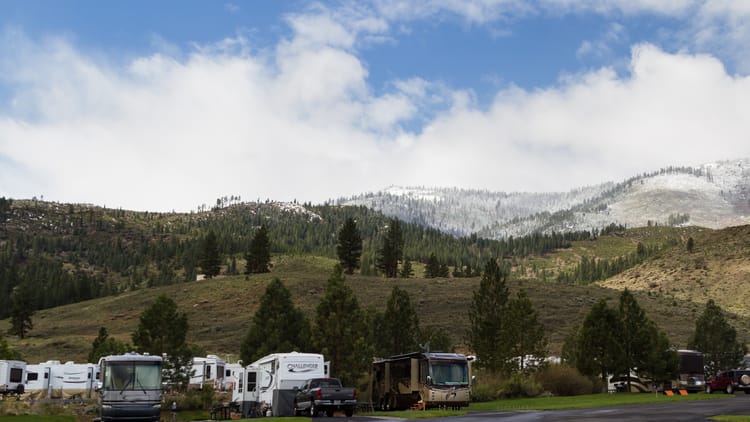
RVing in national parks is one of the best things you can do with a rig. It is also one of the most reliably misunderstood. The parks operate differently from private campgrounds — different systems, different rules, different relationships with visitors. Walk in without a plan and you will spend your first night in a gas station parking lot instead of under the sequoias.
This guide does not tell you what the current reservation window dates are, what timed entry permits cost this season, or which roads are restricted right now. Those details change regularly, and any source that gives you hard numbers will eventually be wrong. What this guide does is tell you exactly what categories of information you need to research before every national park RV trip — and where to find accurate, current answers. That turns out to be more useful than a checklist that expires.
Start Here: Is This Park Right for Your Rig
Not every national park is accessible to every RV. Some are genuinely difficult for larger setups. This is the first thing to research because it affects every decision that follows.
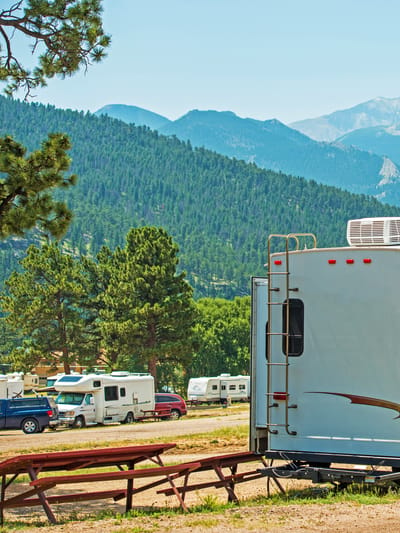
Most national park campgrounds were built decades ago, long before the modern era of 40-foot Class As and fifth wheels with dual slide-outs. Site lengths in some loops max out at 20 to 27 feet. Pull-throughs are rare. Loop roads are tight. Some parks have hard length and height limits on the roads leading to campgrounds — not suggestions, but enforced restrictions based on road width, hairpin turns, or structural limits on bridges.
Before you book anything, look up your specific campground on recreation.gov and check the posted site length limits. Then check the park's official NPS page for any road restrictions that apply before you even reach the campground. Parks with narrow canyon passages, high-elevation switchbacks, or tunnel clearances can eliminate certain rig configurations entirely. These infrastructure constraints do not change quickly.
The good news: some national parks are excellent for RVs, with long pull-throughs, straightforward road access, and hookup availability. They require research to find, but they exist. Our guide to top national parks for RV camping in the West is a practical starting point if you are still deciding where to go.
Know your rig's exact dimensions before you start comparing options. Length, height, slide-out width, and turning radius all matter in the national parks. Keep those numbers accessible during the planning process — you will reference them more than once.
How the Reservation System Works
Getting a national park campsite at a popular park in peak season is competitive. The primary reservation platform for federal campgrounds is recreation.gov, but the specifics — how far out reservations open, whether walk-up sites exist, how many sites are held for same-day arrivals — vary by park and change from season to season.
The pattern that consistently holds: popular campgrounds at well-known parks fill within minutes of their reservation window opening. That window is typically published in advance on the park's official NPS page. Check it early, note the date, and treat it like a limited ticket sale. Showing up at peak season and hoping for a site is a gamble with your entire trip.
A few specific things to research before booking:
Whether reservations are required or if walk-up sites are available, and for which loops. How far in advance the reservation window opens for the campground you want. Whether the park uses a lottery system for high-demand dates — some do, with lottery windows separate from standard reservations. The cancellation policy, since cancelled sites do get claimed quickly by people monitoring recreation.gov for openings.
First-come-first-served sites still exist at many national parks, even popular ones. They tend to be in less-convenient loops and require arriving early. Shoulder season — roughly spring and fall, depending on the park — improves your odds significantly on both reservations and walk-ups. The experience is often better anyway: cooler temperatures, fewer crowds, and better light for the scenery you came to see.
For context on planning a broader western parks trip, our guide to what to know before your first RV trip out West covers the regional logistics that shape the whole experience.
The Things That Change — and What to Verify Before Every Trip
This is the section that trips up RVers who did their research once and assumed it still applied. The categories below are stable. The specific rules within each category are not. Check the official NPS page for your specific park before every trip. Not a blog post from last year. Not a forum thread. The NPS page.
Timed entry and permit systems
Some of the most-visited national parks now require a timed entry permit on top of your campsite reservation — a separate pass just to enter the park during certain hours. Whether your park requires this, during which dates, and what it costs changes regularly. Look under "Fees and Passes" or "Permits" on the park's NPS page before you assume entry is automatic with a campsite booking.
Shuttle systems and vehicle restrictions
Some parks have implemented mandatory shuttle systems during peak periods, restricting or limiting private vehicle access to certain areas. If your campground is inside a shuttle zone, your tow vehicle may still face access restrictions even after you have settled into your site. Verify current vehicle access policies before planning how you will get around once you arrive.
Entrance fees and the annual pass
The America the Beautiful annual pass covers entrance fees at all national parks and most federal recreation sites. For RVers visiting more than two or three parks in a year, it typically pays for itself quickly. What it does not cover: campground fees, which are charged separately per night regardless of pass status. Both the pass price and campground fees are updated periodically by the NPS. Check NPS.gov for current pricing before every trip.
Generator quiet hours
National parks enforce generator quiet hours, and the restrictions tend to be stricter than what most private campgrounds post. If your setup depends on a generator for air conditioning, a CPAP machine, or a remote work situation, these hours matter. The specific hours vary by park. Check before you arrive and plan your power use around them.
National parks change their rules. We keep you up to date. Subscribe to our weekly newsletter.
THE RV INTEL THAT MAKES EVERY TRIP BETTER.
What Happens When You Arrive Late
Entrance station booths close at night. The parks themselves generally do not — you can usually drive in after hours without stopping at a booth, though some parks have self-pay kiosks for overnight arrivals.
What is less predictable is campground access. Most national park campgrounds use a self-registration envelope system that works fine for late arrivals: find your reserved site, fill out the envelope, hang the receipt. But some campground loops have their own vehicle gates with posted closing times that are separate from the park entrance. A gate that closes at 10pm does not care that you drove eight hours to get there.
A small number of parks also close certain roads after dark — typically high-elevation routes, narrow canyon roads, or areas with concentrated wildlife activity. These are usually posted, but finding out after you have already turned down the road is a significantly worse experience than knowing in advance.
The fix is a five-minute phone call or a quick check of the park's current conditions page on NPS.gov before you leave. Ask specifically whether your campground loop has a gate with overnight closing hours. Rangers know these details immediately, and no travel blog can reliably track them.
When you do arrive after hours at an open campground, our RV setup checklist for camp arrival still applies — just run through it at a quieter volume than usual.
Traveling with Pets in National Parks
RVers traveling with dogs and cats are working with a set of restrictions that is more limiting than most people expect and more variable than most summaries explain.
The general rule across most national parks: pets are permitted where vehicles are permitted. That means campgrounds, parking areas, and paved roads. It generally does not mean trails, backcountry areas, or park shuttles. Most national park trails are off-limits to dogs — including leashed dogs. This is not a minor footnote. It means if hiking is central to your visit, you need a concrete plan for your pet that does not involve bringing them along on the trail.
Some parks do have pet-friendly trail options and paved multi-use paths where leashed pets are allowed. These vary by park and sometimes by season. Look up the specific pet policies on your park's NPS page before you plan any hiking. What was permitted at the last park you visited does not carry over automatically.
Heat and unattended pets in RVs
This is the overlooked problem for RV travelers: leaving a pet in a parked rig in summer heat is dangerous, and many national parks with high visitation are in hot, high-altitude, or desert climates. Even with a vent fan running and windows cracked, interior RV temperatures can climb fast when the engine is off and the sun is on the roof.
If your visit involves long hikes or park exploration where the pet cannot come along, build a real plan before you arrive. Options include trip rotations where one person stays with the animal, shaded parking near campground amenities, or a temperature-alert monitoring system. It is not a reason to skip national parks with a pet. It is a reason to think it through before you go.
Food Storage, Waste, and the Rules Most People Learn the Hard Way
These rules exist because of genuine ecological pressure and wildlife conditioning issues in heavily-visited parks. They are consistently enforced. The good news: they are straightforward once you know what applies.
Bear country protocols
In bear-active areas — which covers much of the Rocky Mountain West, most of the Pacific Northwest, and parts of the Southeast and Appalachians — food storage rules apply even inside your RV. Hard-sided rigs generally satisfy storage requirements in most bear-country parks, but confirm this for your specific park before assuming compliance. Soft-sided campers and pop-up trailers often do not qualify as bear-resistant storage, requiring certified bear canisters or use of the provided bear boxes at campsites. The same rules extend to scented items: toiletries, trash, and pet food.
Firewood
Do not haul firewood from home if you are traveling any meaningful distance. Many national parks and surrounding areas have restrictions on transporting firewood across county or state lines due to invasive species and tree pest transmission. The rule is simple: buy firewood locally, at or near the park. It is posted at most park entrances and is genuinely enforced.
Dump stations and tank management
Most national park campgrounds do not have sewer hookups at individual sites. Dump stations exist at some parks, not all, and their locations are not always obvious on first arrival. Before you leave home, confirm whether a dump station is available at your park, where it is located, and whether there is a fee. If no dump station exists at the park, identify the nearest option outside before you need it. Running out of tank capacity mid-stay without a plan is an avoidable problem. Our guide to understanding your RV's three tanks covers the fundamentals of gray and black water management if you need a refresher before a longer dry stay.
The Adjacent Lands Strategy
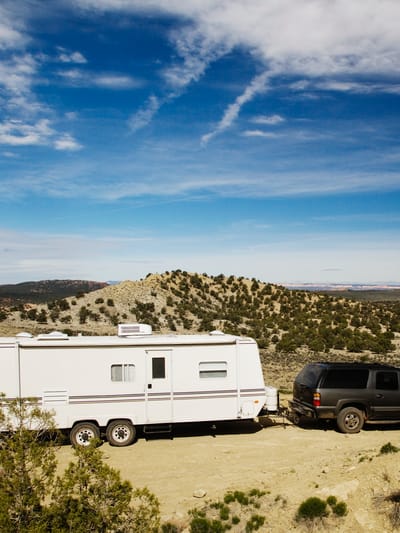
This is the approach that experienced boondockers know well and that most national park travel coverage never mentions: a large portion of the land surrounding many national parks is managed by the National Forest Service or the Bureau of Land Management, and both agencies allow dispersed camping on most of their land. No reservation system. No site fees. No size limits. No competition six months out for spots — though coveted dispersed areas near popular parks do fill on busy weekends, so earlier in the day still beats later.
For RVers visiting high-demand parks where campground reservations are nearly impossible to get on short notice — or where campground loops cannot accommodate larger rigs — dispersed camping on adjacent federal land is a legitimate and often excellent alternative. The proximity to the park entrance varies, but in many cases you are close enough to spend multiple days exploring the park from a campsite that cost nothing to book.
The tradeoff is that dispersed camping is fully dry camping. No hookups, no on-site dump stations, and often limited or no cell service. You need adequate water capacity, a power solution that does not depend on shore power, and good tank discipline for your planned stay. A well-planned RV solar setup and reliable portable water filtration make this approach considerably more practical. An inline water filter is a sensible addition when filling from sources you are less certain about.
For the full strategy on finding free and low-cost camping on public land, our guide to how RVers find free campsites on public land covers the approach in detail. Our complete guide to boondocking without hookups is the practical playbook for making it work once you are out there.
Connectivity and Cell Service: Set Realistic Expectations
Cell service in national parks ranges from limited to nonexistent across large portions of most parks. This affects navigation, communication, and — for digital nomads and remote workers — your ability to get anything done during your stay.
Navigation is the non-negotiable: download offline maps for every park before you enter. Do not count on any navigation app that requires a live connection. The NPS app is free, works with limited connectivity, includes offline maps for every national park, and displays current road conditions and alerts. Download it before you leave for the park.
For remote workers, the honest answer is that national parks are excellent places to disconnect and difficult places to stay reliably connected for work. Plan your work schedule around travel days when you have better coverage, and treat park stays as genuinely offline time when possible. Satellite internet has expanded access for RVers in a lot of remote locations, but national parks present a specific obstacle that no equipment upgrade solves: dense tree canopy. Old-growth forest, canyon walls, and heavy overhead cover at many of the most popular park campgrounds will block a satellite signal reliably enough to ruin any Zoom call you were counting on. Scout your specific campground on satellite view before building a work schedule around connectivity you may not have.
A high-capacity portable power bank keeps your devices running when you cannot plug in — useful for navigation, communication, and keeping devices charged during extended time away from the rig. For a broader look at connectivity options for working RVers, our guide to the best RV internet solutions for remote work covers the full landscape.
Practical Notes for National Park RV Stays
A few things that consistently separate smooth national park experiences from frustrating ones:
Arrive with full water and empty tanks. National park dry camping means limited opportunities to top off or dump during your stay. Fill your freshwater at the last reliable stop before the park and empty your tanks at a dump station beforehand.
Know what your rig needs before you need it on the road. Mountain approaches, unpaved campground access roads, and long stretches between services are exactly the conditions where a tire pressure monitoring system earns its keep. Knowing your tire pressure in real time on a long mountain descent is the kind of information that prevents problems rather than responds to them.
Plan for power independence. Most national park sites have no hookups, and the electric loops that do exist fill faster than any other site type. A portable solar generator with adequate battery capacity means you are not dependent on hookup availability and not running a noisy generator during enforced quiet hours. The latter matters significantly more at national parks than at a private campground.
Bring real leveling equipment. National park campsite terrain varies widely and uneven sites are common. Leveling blocks appropriate for your rig's weight keep your refrigerator running properly, your slides operating safely, and the sleeping situation tolerable. They are not optional gear in the national parks.
Water access varies — come prepared. When water is available at national park campgrounds, it is typically at communal spigots. A dedicated inline water filter lets you fill your tank cleanly regardless of water quality concerns at any given source.
The Bottom Line on RVing in National Parks
National parks reward preparation. Not because they are bureaucratic obstacle courses — though the reservation systems can feel that way during peak season — but because the planning is genuinely solvable with a few hours of research before you go.
The approach that works: treat the official NPS page for your specific park as the primary source for every category of information covered in this guide. Check it a month out. Check it a week out. Check the current conditions page the day before you leave. The parks do change their rules, their access systems, and their shuttle policies. The RVers who consistently have good experiences there are not necessarily the most seasoned — they are the ones who checked.
For anyone who wants to go deeper on the history and significance of the system itself, our piece on how a national park actually gets designated adds useful context to the places you are visiting.
FAQs
Can you RV in all national parks?
Most national parks allow RV camping, but not all parks have RV-accessible campgrounds, and many have size restrictions that limit which rigs can access certain loops or roads. Length limits, tunnel clearances, and road conditions vary significantly from park to park. Before any trip, check the specific campground and road restrictions on the park's official NPS page and on recreation.gov, where campsite length limits are listed at the individual site level.
Do national parks allow pets in campgrounds?
Most national park campgrounds permit leashed pets. However, pets are generally restricted from trails, backcountry areas, and park shuttles in most national parks. The standard rule is that pets are allowed where vehicles are allowed. Policies vary by park and can vary by season. Check the specific park's NPS page under "Pets" before planning any visit that includes hiking with an animal.
What size RV can I take to a national park?
This depends entirely on the specific park and campground. Some campground loops have site length limits as short as 20 to 27 feet, with only a limited number of sites that can accommodate larger rigs. Some park approach roads have tunnel height restrictions or enforced length limits that apply before you reach the campground. Check the campground detail page on recreation.gov for site dimensions, and the park's NPS page for road-level restrictions.
Do national park campgrounds have hookups?
Many do not. The majority of national park campgrounds offer dry camping only, with water available at communal spigots and dump stations at some — but not all — locations. A smaller number of parks have electric hookup sites, which typically fill faster than dry sites. Research the specific campground before booking to understand what utilities are available, and plan your power and water accordingly.
Can you boondock near national parks?
Yes. Much of the land surrounding many national parks is managed by the National Forest Service or the Bureau of Land Management, both of which allow dispersed camping on most of their land. This means free camping with no reservation system, no site fees, and typically no size restrictions — often within close proximity to the park entrance. Check with the relevant National Forest or BLM field office for current rules, fire restrictions, and road access conditions before you go.
What does the America the Beautiful pass cover for RV campers?
The America the Beautiful annual pass covers entrance fees at national parks and most other federal recreation areas. It does not cover campground fees, which are charged separately per night at the site level. For RVers visiting three or more national parks in a year, the pass typically pays for itself in entrance fees. Current pricing and available pass versions are listed at NPS.gov.
Do I need a reservation to camp at a national park in my RV?
At most popular national park campgrounds during peak season, yes. Reservations are made through recreation.gov, and competitive campgrounds fill within minutes of the reservation window opening. Some campgrounds hold a portion of sites for same-day walk-up arrivals, though these are limited and competitive. Check the specific park's NPS page and recreation.gov listing for the current reservation structure, including whether a lottery system applies for high-demand dates or seasons.
Categories
Related Posts
Subscribe to the Swervia Newsletter
The best RV stories, tips, and destinations—expertly curated and always free.