3 Days in New River Gorge: The RV Itinerary for America's Newest National Park
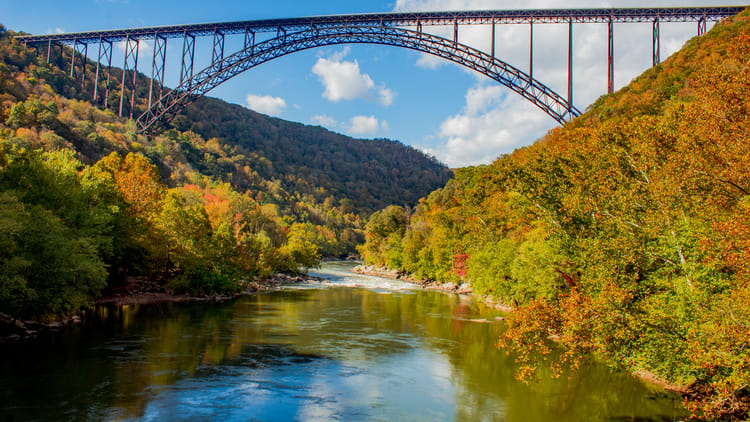
The New River is one of the oldest rivers in the world. Older, in fact, than the Appalachian Mountains it cuts straight through — which means the mountains rose up around it, not the other way around. That detail alone tells you something about what you're driving into.
New River Gorge became America's 63rd national park in December 2020, upgraded from national river status it had held since 1978. The park protects a 53-mile stretch of river canyon in the southern third of West Virginia, where sandstone cliffs drop hundreds of feet to whitewater below, coal mining ghost towns still stand in the woods, and a single steel arch bridge holds the title of longest single-arch span in the Western Hemisphere. It is not a subtle park.
For RVers, it's also a highly workable one — if you go in knowing a few things. The park is spread across four distinct sections that sit miles apart from each other, which means your itinerary is really a driving itinerary held together by short, punchy hikes and a handful of activities that reward advance planning. Three days is the right amount of time to see it properly. Here's how to use them.
What to Know Before You Go
New River Gorge is open year-round, but the practical window for most activities runs from April through October. Whitewater rafting season typically kicks off in early April. Fall foliage peaks in mid-to-late October, which is also when the park hosts Bridge Day — the third Saturday of October and the one day per year the road deck opens to pedestrians. BASE jumpers, rappellers, and zipliners take over the bridge for the day, and the festival draws tens of thousands of people.
Summer brings the biggest crowds, especially around rafting. If you want the hikes to yourself, shoulder season is the answer. Fall is the sweet spot: thinner crowds than summer, stunning foliage, and Bridge Day if your timing lines up.
Reserve ahead. Whitewater rafting, guided rock climbing, zipline tours, and the Bridge Walk all fill up on peak weekends. Decide early which activities matter most to your group and book before you leave home.
One critical note for RVers: Fayette Station Road (Route 82) is one of the most scenic drives in the park — a winding descent to the original river crossing beneath the modern bridge. It is also a series of tight hairpin switchbacks that are completely unsuitable for anything beyond a standard passenger vehicle or truck without a trailer. Do not attempt it in a Class A, Class C, or any rig towing anything. If you're in a smaller Class B or van build, it's worth every curve. Leave the big rig at camp.
The NPS publishes a dedicated RV tips page for New River Gorge that covers exactly where each size rig can and cannot go. Worth reading before you route your trip.
Where to Park Your Rig
Here's what most travel guides get wrong: there IS free camping inside New River Gorge National Park. The NPS operates eight primitive campgrounds along the river with no fees, no reservations, and a 14-day maximum stay. Several of them have drive-in sites that can accommodate small to mid-size RVs. The catch: no hookups, no electricity, no drinking water at any of them. You're boondocking — which for a lot of RVers is exactly the point.
Glade Creek Campground has five drive-in spots that can accommodate RVs up to about 31.5 feet, plus six walk-in tent sites. Grandview Sandbar Campground has ten wooded drive-in sites for small to mid-size rigs. Army Camp near Prince has 11 sites, including drive-in spots that work for smaller RVs. War Ridge sits at 2,536 feet elevation away from the river and has eight primitive drive-in sites for tents and smaller RVs under 25 feet — good for anyone who wants solitude over river access.
These fill up fast on weekends in peak season. Have a backup plan. If you do score one: evenings at a riverside site are about as simple and good as camping gets — a packable camp chair, a fire ring, and the New River moving past in the dark.
For RVers who want or need hookups — or are in a larger rig — the options nearby are solid:
Adventures on the Gorge Resort sits about 10 minutes north of Fayetteville with full-service RV sites alongside glamping tents and cabins. No water hookups, but water access is available with your own hose, plus a dump station on property. It's also the base for their rafting, zipline, and aerial park operations, which makes booking activities and sleeping in the same place genuinely convenient.
Ace Adventure Resort is roughly 20 minutes south of Fayetteville with RV sites and tent camping alongside their whitewater operation and zipline tours.
Arrowhead Bike Farm (8263 Gatewood Rd, Fayetteville) accepts small RVs and is positioned directly adjacent to the Long Point trailhead — meaning you can walk out of your campsite and into the park. More on this place in Day Two.
Rifrafters Campground, two miles from the bridge on US-19, offers 30 and 50-amp sites with water hookups and a dump station. Good option for big-rig campers who want proximity to Canyon Rim without resort pricing.
For a deeper look at dry camping and boondocking without hookups, our full guide covers exactly what you need. And if you're camping off-grid in the park with no water source: a gravity water filter takes the guesswork out of what's coming from that creek.
Day One: Canyon Rim and Getting the Lay of the Land
The Canyon Rim section — at the north end of the park, just across the bridge from Fayetteville — is where most first-time visitors spend the majority of their time. It's also where the park's most iconic views are concentrated. Start here.
Stop at the Canyon Rim Visitor Center
The Canyon Rim Visitor Center is your orientation point. Grab the park map, talk to a ranger about current trail conditions, and spend a few minutes at the overlook just outside the building. You get your first direct view of the New River Gorge Bridge from here: 876 feet above the river, 3,030 feet across, completed in 1977 in a way that reduced what was once a 45-minute drive to cross the river down to about 45 seconds. It's an impressive piece of engineering, and it only gets better from a hiking trail.
Hike Long Point Trail
Long Point Trail is a 3.1-mile out-and-back hike and one of the best things you can do in this park. The trail is easy for most of its length — mostly flat, well-shaded, and crisscrossed by mountain bike routes for the first mile and a half. The final stretch gets narrower and rockier as it descends through rhododendron tunnels to the overlook. The payoff is a north-facing rock outcropping that delivers an unobstructed view of the bridge and the gorge stretching away beneath it. Stay aware of the steep, unprotected drop-offs at the edge — the exposure is real — and plan on other hikers wanting the same photo you want. The whole thing takes about 90 minutes at a comfortable pace.
Hike Endless Wall Trail to Diamond Point
On the opposite side of the river from Long Point, the Endless Wall Trail runs 2.8 miles as a loop through a thick forest of Catawba rhododendron. The destination is Diamond Point, a crag that looks south along the river and gorge below. The cliffs along this stretch — the same Nuttall sandstone formation that makes this gorge one of the best climbing destinations in the eastern United States — rise more than 900 feet above the river. Look carefully at the wall from Diamond Point and there's a reasonable chance you'll spot climbers on it.
Drive Fayette Station Road (Smaller Rigs Only)
For those in a truck, van, or car: the drive down Route 82 is worth an hour of your afternoon. The road drops through a series of switchbacks beneath the modern bridge, all the way down to the original 1889 Fayette Station Bridge — now named the Tunney Hunsaker Bridge — which was renovated in 1997 and still stands at the river's edge. Park just past it on the west side and walk out to the middle. Looking north from the center of that bridge, you'll see the modern span framed above you in a way that compresses 88 years of engineering history into a single composition.
End the Day in Fayetteville
The town of Fayetteville is a real small-town main street with good restaurants and a handful of shops worth browsing. Pies & Pints has earned its default dinner recommendation. If you'd prefer something with more atmosphere, Bridge Brew Works is about five minutes from town with outdoor seating and a solid food truck setup.
West Virginia is one of the most underrated RV destinations in the country. Subscribe to our weekly newsletter.
EVERY ROAD WORTH DRIVING, EVERY PARK WORTH PLANNING — EVERY WEDNESDAY, FREE.
Day Two: Into the Gorge — Trails, History, Rock, and One Very Good Biergarten
Hike the Kaymoor Miners Trail
The Kaymoor Miners Trail is the park's most historically interesting hike and the one most likely to stick with you. The trail descends more than 800 stairs to reach the Kaymoor Mine Site, a coal operation that ran from 1900 to 1962. What you find at the bottom is genuinely worth the effort: remnants of buildings, coke ovens, and industrial equipment from a period when this gorge was at the center of the American coal economy. The trail is approximately three miles round-trip and takes most people two to three hours.
The stairs going back up are not a metaphor for anything. They are just stairs, and there are more than 800 of them. Bring water — and if you're doing a long active day, electrolyte packets are worth keeping in your pack.
Rock Climbing in New River Gorge
If you or anyone in your group climbs — or has been curious about it — this is one of the best places in the country to find out. The New River Gorge region has more than 1,400 established routes within the park itself, across some of the most varied sandstone cliff terrain on the East Coast. The rock is Nuttall sandstone, which is among the hardest sandstone in the world, providing excellent friction and holds for both traditional and sport climbing. Routes range from beginner-friendly to routes that draw serious climbers from across the country.
Guided full-day and half-day climbing trips are available through Adventures on the Gorge, which also offers rappelling instruction. If you're new to climbing, a guided half-day is the right call. If you're experienced, Kaymoor Top — the upper section accessible from the trailhead near the Kaymoor Miners Trail — is a premier destination. Our RV fitness and healthy living guide has more on staying active on the road when you're not standing on a cliff face.
The Bridge Walk — Know What It Is Before You Book
The Bridge Walk is a guided tour along the maintenance catwalk built into the underside of the New River Gorge Bridge, approximately 851 feet above the river and 25 feet below the road deck. The catwalk is 24 inches wide. You're harnessed to an overhead safety cable the entire time. Tours run approximately two to two and a half hours from start to finish and cost around $75–$79 per person as of 2025. The minimum age to participate is 8 years old, and participants must be at least 48 inches tall. Book at bridgewalk.com.
It is a genuinely unique experience. But at $75–$79 per ticket, a family of four is spending $300-plus before lunch. For that same money — or less — you can get on the river for a full morning of whitewater rafting. Which one's right for your group depends on what you're after. The Bridge Walk is best for adults and families with older kids who specifically want the bridge perspective and aren't splitting a budget across every other activity on this list. If that's you, book early.
Afternoon at Arrowhead Bike Farm
After a morning on the stairs or the rock, Arrowhead Bike Farm on Gatewood Road is the right place to spend the afternoon. It sits directly adjacent to the Long Point trailhead and is simultaneously a full-service bike shop, a restaurant, a biergarten, a campground, and home to several resident goats who are unambiguously comfortable being wherever you are trying to stand.
The Handlebar Kitchen serves bratwurst, pretzels, tacos — vegan options available — and a rotating selection of local and national craft beers. The outdoor seating overlooks the property and the woods beyond it. It is a specific and excellent kind of West Virginia afternoon.
If you want to actually ride: Arrowhead rents Trek mountain bikes and runs guided tours on the Arrowhead stacked-loop trail system, which rolls right out from the property. Skill levels range from approachable beginner loops to sections with real technical challenge. Two hours covers the trail network well and ends where the beer is.
Mountain biking is a legitimate way to spend a half-day or a full day in this park. The trail systems in and around New River Gorge range from short beginner loops to the 31.5-mile New River Coal Country trail, which climbs more than 3,000 feet and earns whatever is waiting at the end.
Day Three: On the Water and Into the South End of the Park
Go Whitewater Rafting on the New River
Whitewater rafting is the marquee activity of New River Gorge for a reason. The New River's rapids range from Class I-II on the Upper New (minimum age 6, good for families and first-timers) to Class III-IV on the Lower New Gorge run (minimum age 12, the more serious stretch). Half-day and full-day guided trips are available through multiple outfitters. Ace Adventure Resort and Adventures on the Gorge are both established operators with solid safety records.
Book in advance. Water levels affect rapid classification on any given day — don't stress if conditions adjust. The river still does what it does. Pack a quick-dry towel because you will be wet, and the drive back to camp in wet clothes in a rig that is already on the small side is its own kind of adventure.
Visit the Grandview Area and Hike Castle Rock Trail
With a morning on the water, the Grandview section of the park makes a strong afternoon stop. It's consistently underrated relative to Canyon Rim and worth the separate drive. The overlook at Grandview delivers one of the best views of the New River from above — a wide bend in the river flanked by forest.
The Castle Rock Trail, done as a loop with the Grandview Rim Trail, is a short but strenuous hike — 0.6 miles one-way to where it meets the Rim Trail, making the full loop about one mile. The NPS rates it strenuous and doesn't recommend it for young children due to uneven footing and steep drop-offs. What you get for that effort: close-up views of towering fortress-like sandstone walls and exposed coal seams, then wide river views from the Grandview Rim Trail on the return. It's a compact hike that packs in a lot. Budget about an hour.
Sandstone Falls (Worth It If You're Already Down South)
The Sandstone section sits at the southern end of the park and requires a separate drive from Grandview. If you're pushing this far south — or building a longer trip — Sandstone Falls is worth the stop. It's the most significant waterfall in the park, a wide multi-channel cascade across the New River reached via a short, flat boardwalk trail. Accessible to all ages, easy walk, and genuinely impressive. Not a full-day destination, but if you're already down there, spend the 45 minutes.
More to Do Near the Park
Three days covers the core of New River Gorge. For groups with more time or specific interests:
Zipline and Aerial Adventures: Both Ace Adventure Resort and Adventures on the Gorge run zipline operations on the gorge. Ace's cliffside tandem 9-zip tour runs along the rim with an optional nighttime version. Adventures on the Gorge offers the Gravity Ziplines experience — up to 65 mph, minimum age 12 — plus the Treetops Canopy Tour (10 ziplines, 7 sky bridges, minimum weight 90 lbs) and the TimberTrek obstacle park. All are reservation-based.
Jet Boat Tour: Adventures on the Gorge runs a 15-passenger jet boat trip out of Hawk's Nest Lodge. Approximately 30 minutes on the water with no age restriction, direct views of the gorge and bridge from the river below. Good for younger kids or anyone who wants the river experience without the rapids.
Gauley River National Recreation Area: About 45 minutes north of Fayetteville, the Gauley River protects a 25-mile stretch of water with Class III to Class IV+ rapids. Guided trips are available. Gauley season in late summer and early fall draws serious paddlers from across the country and is considered one of the premier whitewater experiences in North America.
Hawks Nest State Park: Just north of the national park boundary, with a tramway that descends from the overlook to the river and a jet boat option for a scenic river ride. The overlook views looking south into the gorge are worth a stop.
Babcock State Park: About 30 minutes from Canyon Rim, Babcock holds the Glade Creek Grist Mill — rebuilt to look and function as it did in the early 1900s, sitting at the confluence of two streams in a way that makes fall foliage season genuinely spectacular. One to two hours. Has a habit of becoming a trip highlight you didn't fully anticipate.
Cathedral Falls: A 60-foot cascade on Cane Creek, accessible via a short walk from roadside parking. Rarely crowded. Worth 20 minutes on your way through the area.
Getting There
New River Gorge National Park sits in the southern third of West Virginia, roughly one hour southeast of Charleston. From Columbus, Ohio, plan on four hours. From Roanoke, Virginia, about three hours. From Pittsburgh, Pennsylvania, roughly two and a half hours. The main approach for most RVers from the north or east is via US-19, which puts you directly at the Canyon Rim Visitor Center.
Roads within the park are paved and suitable for most rigs. The exception is Fayette Station Road — strictly for smaller vehicles. Make sure your tire pressure monitoring system is working before you arrive; the approach roads vary in quality, and the Appalachian terrain will remind you if anything is off.
For trip planning and campsite setup tips once you arrive, our RV setup checklist covers everything from leveling to water connections. And before you leave home, it's worth running through our RV maintenance checklist — mountain roads and variable road quality have a way of surfacing anything that was already a little loose.
New River Gorge rewards the people who show up with a plan and a little flexibility. The hiking is short and the payoff is high. The history is specific and surprising. The adventure options are varied enough that two different families can spend the same three days here and have almost no overlap in their itineraries. That's a good sign in a national park.
If you're camping inside the park, get there early — the free sites don't last. Book rafting before you leave home. And if you find yourself sitting next to a goat at a biergarten five minutes from the trailhead — bratwurst in hand, 800 stairs behind you — West Virginia would like you to know it planned that.
West Virginia tends to surprise people. New River Gorge is a very good reason to let it.
FAQs
Can you camp in New River Gorge National Park with an RV?
Yes. The National Park Service operates eight free primitive campgrounds inside the park boundaries, several of which have drive-in sites that accommodate small to mid-size RVs. Glade Creek, Grandview Sandbar, Army Camp, and War Ridge all have drive-in sites for RVs. There are no hookups, no electricity, and no drinking water at any park campground — you'll need to be fully self-sufficient. All sites are first-come, first-served with no reservations. For RVers who need hookups or are in a larger rig, developed options nearby include Adventures on the Gorge Resort, Ace Adventure Resort, and Rifrafters Campground.
How many days do you need at New River Gorge National Park?
Three days is the right amount of time to cover the park's main sections — Canyon Rim, Grandview, and Sandstone — while fitting in a major activity like whitewater rafting. With only one day, focus entirely on Canyon Rim: the Endless Wall Trail, Long Point Trail, and the bridge overlook. Two days allows you to add a full day of rafting or a guided rock climbing session. To add the Bridge Walk, zipline tours, and an afternoon at Arrowhead Bike Farm, you want three days minimum.
What is the best hike in New River Gorge National Park?
Long Point Trail (3.1 miles round-trip, easy to moderate, with a dramatic north-facing view of the New River Gorge Bridge) and Endless Wall Trail (2.8-mile loop ending at Diamond Point with views south along the gorge) are the most popular hikes and deliver excellent bang-for-effort. The Kaymoor Miners Trail (approximately three miles round-trip, descending 800-plus stairs to an abandoned coal mine that operated from 1900 to 1962) is the most historically immersive. The Castle Rock and Grandview Rim Trail loop in the Grandview section is a short but strenuous one-mile loop with close-up sandstone wall views and exposed coal seams — not recommended by the NPS for young children due to steep drop-offs.
Is the Bridge Walk at New River Gorge worth it?
It depends on your group. The Bridge Walk is a guided tour along the 24-inch maintenance catwalk approximately 851 feet above the New River on the underside of the bridge. Tours cost around $75–$79 per person as of 2025, and the minimum age is 8 years old. For families or adults who specifically want the bridge perspective, it's a genuinely unique experience. For families on a budget or those choosing between it and rafting, whitewater rafting on the New River offers more time, more collective experience, and more value per dollar. Book at bridgewalk.com if you go.
When is the best time to visit New River Gorge National Park?
April through October is the main operating window. Fall — specifically mid-to-late October — is peak foliage and coincides with Bridge Day, the third Saturday of October, when the bridge road deck opens to pedestrians. Summer is the busiest season for whitewater rafting. Spring (starting in early April) is when rafting season begins with lighter crowds than summer. The park is open year-round and is beautiful in winter, though most guided activities are seasonal.
Is rock climbing in New River Gorge good for beginners?
Yes, with a guide. The park has more than 1,400 established routes ranging from beginner-friendly sport routes to serious traditional climbing on Nuttall sandstone — among the hardest sandstone in the world for solid hand and foot holds. Guided half-day and full-day climbing trips through outfitters like Adventures on the Gorge provide safe introduction to the rock. First-time climbers should book a guided session rather than attempting routes independently.
Can you do whitewater rafting at New River Gorge without experience?
Yes. The Upper New River runs Class I-II rapids and accepts participants as young as 6, making it appropriate for families and complete beginners. The Lower New Gorge run features Class III-IV rapids with a minimum age of 12 — more exciting, still guided, and accessible to those in reasonable physical condition. Both Ace Adventure Resort and Adventures on the Gorge offer half-day and full-day guided trips. Book in advance, particularly for summer and fall weekends.

Categories
Related Posts

Subscribe to the Swervia Newsletter
The best RV stories, tips, and destinations—expertly curated and always free.