America's 64th National Park, Yellowstone's Last Driving Day, and 200 Road Trip Songs
Some links in this post may be affiliate links. If you click and make a purchase, we may earn a small commission—at no extra cost to you. Thank you for supporting Swervia.

Good morning! It's Wednesday, October 28. America has its first new national park in six years, Yellowstone's roads close to cars this Sunday, and Rolling Stone just ranked the 200 greatest rock songs of the century, enough playlist to outlast your longest driving day.
First time reading? This is your five-minute catch-up on everything that happened in the RV and outdoor world this week — timely, useful, and a little brighter than the rest of your inbox. Join us and sign up here.
Know someone who'd love this? Forward it. Thoughts on this issue? Hit reply (we read every one), or email hello@swervia.com.
— OK WHAT IS EVEN HAPPENING —
Your Newest National Park Has 26 Campsites
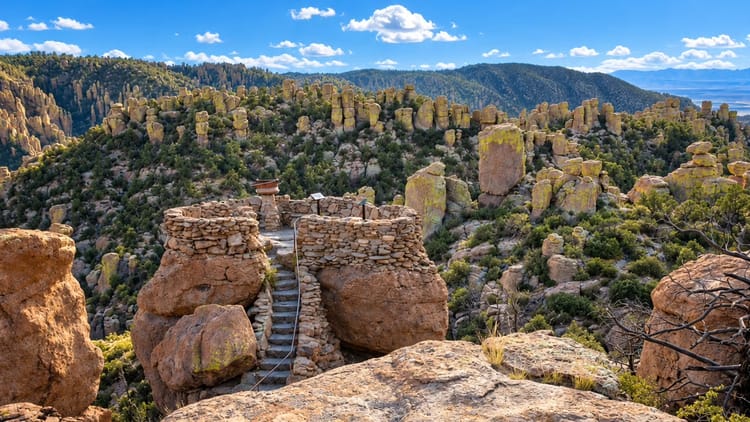
> America has a new national park, and almost nobody has been to it. On October 20, Chiricahua officially became the 64th, the first new park since 2020 and Arizona's fourth. The draw is the Wonderland of Rocks: a volcanic eruption 27 million years ago buried southeastern Arizona in ash, and the eons since have carved it into thousands of stone towers stacked and balanced like a game somebody walked away from mid-turn. The whole range is a sky island, one lone set of mountains rising out of the desert with four ecosystems piled inside it, so the drive up runs from cactus country to cool pine forest in an afternoon.
So why go now? All of 70,406 people visited last year. The busiest parks see that many over a holiday weekend. There's one campground with 26 sites and a 29-foot RV limit, no lodge, and a new title that changes almost nothing on the ground except the thing a title always changes: who shows up. The first new park in six years won't stay a secret past next summer, but the high desert is just cooling into sweater weather, the campground loop is still bookable, and for one more off-season you can have a national park almost to yourself. If your RV fits under 29 feet, this one's yours.
— OK BUT A LOT MORE HAPPENED —
One Last Drive, Two Closed Doors
> Headed anywhere near Pagosa Springs or Durango? Check the map twice. Flood damage is still closing roads across southwest Colorado: Wolf Creek Pass, the main way into Pagosa Springs from the east, has no reopening date, and more washouts are cutting routes out toward Mesa Verde and Four Corners. Check COtrip before you roll. (More)
> Alcatraz just closed for three weeks. The ferry dock is getting new pilings through about November 18, and if you'd booked a tour, you're getting a refund, not a new date. Build your San Francisco stop around something else until Thanksgiving. (More)
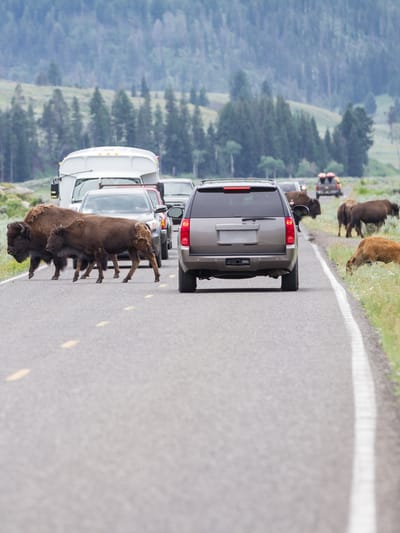
> Yellowstone's roads close to cars Sunday. Most park roads and three of the five entrances shut for the season November 1 at 8 a.m., so Saturday is the last driving day. The Gardiner-to-Cooke City road is the only one that stays open all winter. (More)
> California wants to bottle this winter's rain. With the strongest El Niño on record loading up a wet season, the state plans to steer floodwater into underground aquifers instead of out to sea. Anyone wintering on the Pacific coast should pack for the soggy version. (More)
> New York's backyard park out-sizes Yellowstone, Yosemite, the Grand Canyon, and Glacier combined. The Adirondacks pack six million acres of drive-in camping and fall color, and the reason they'll never join the national park list was written into the state constitution in 1894. (More)
— OK BUT YOU SHOULD KNOW THIS —
The Deer Are Not Watching for You
> Deer mating season peaks October through December, and the math gets grim fast: in New Jersey alone, about 41 percent of the year's animal collisions land in these three months, and animal strikes kill more than 275 drivers a year nationwide. A loaded RV needs every foot of stopping distance you can give it, so slow down on dark rural two-lanes and assume the first deer has friends right behind it. Help is coming: Virginia just ran a year-long pilot of solar-powered signs with thermal cameras that spotted animals 97 percent of the time and got drivers to lift off the gas before the deer made the decision for them.
— OK BUT YOU SHOULD TOTALLY GO HERE —
5 Trips to Bank Before Winter
> Drive the 122 miles between Bryce and Capitol Reef — There's a stretch of Utah's Scenic Byway 12 called the Hogback where the road rides a bare ridgeline and the ground falls away on both sides of the pavement, and your passenger will either go completely silent or narrate every foot of it. That's one stretch of a 122-mile drive that also runs through red canyons and Grand Staircase-Escalante, with the scenery changing about every five miles. A former ranger's advice: leave time for the overlooks, you'll be stopping at more of them than you planned. And if one afternoon of Utah isn't enough, the full Mighty 5 RV route is the week-long version.
> Camp where 111,000 reviews say to camp — A ranking built from more than 111,000 camper reviews just named 13 Arizona campgrounds among the best fall spots in the country, and the one to grab first is Desert View, number 10 nationally and sitting right on the Grand Canyon's South Rim. Book one of those, add the brand-new national park in the state's southeast corner, and you've put together the Arizona trip other RVers will be copying next fall.
> Beat the snowbird wave to South Carolina — Florida is about to absorb the winter RV migration, while South Carolina's small coastal towns sit quiet and 70 degrees. Paddle Bluffton's May River salt marshes where dolphins surface next to the boards, walk Hunting Island's five miles of beach near Beaufort, and catch the weathered tree skeletons of Edisto's Boneyard Beach. Swervia's founder is based in Charleston, so consider this a biased tip from somebody's home turf.
> Sandboard a 741-foot dune under a Gold-Tier dark sky — Great Sand Dunes holds North America's tallest dune and some of its darkest night sky, and the shoulder season thins the crowd to the people carrying boards. One RV note: there's no water fill inside the park, so top off in Alamosa, and give COtrip a glance after last week's floods farther west.
> Catch an olive harvest before November 3 — West Coast harvest season is peaking right now, and unlike everything else worth doing this fall, nobody's fighting over a reservation for it. McEvoy Ranch in Petaluma will walk you from the orchard to the olive mill through November 3, a southern Oregon farm will give you a bucket and put you to work on the 300 pounds of olives it picks a day, and Gopher Glen near San Luis Obispo grows 65 kinds of apples you can pull off the tree yourself. Any one of them turns a travel day down the coast into the stop everybody's still talking about at dinner.
— OK BUT DID YOU SEE THIS —
> A road-trip map of America's best Amish country bakeries.
> Ten breathtaking Southwest drives, and the best might be only 8 miles long.
> An easy way to spend less restocking the RV fridge: when an Aldi opens in town, grocery prices drop at every store around it.
> Chasing fall color through New York's Hudson Valley? The breweries there made a beer for exactly that.
The Dump Station Rolling Stone ranked the 200 greatest rock songs of this century for your road-trip playlist, and the campfire arguments start at number one.
The Odometer $50.2 million. What the National Park Service is spending to restore one 1904 building at Boston's Charlestown Navy Yard, the same free national park site where the USS Constitution is docked, right down to floors milled from salvaged warehouse timbers.
— OK BUT WHO EVEN IS THIS PERSON —
The New Park's Best View Honors an Escape Artist
> Drive to the top of brand-new Chiricahua National Park and the road ends at Massai Point, the overlook where the Wonderland of Rocks finally shows you the whole maze at once. The name belongs to Massai, a Chiricahua Apache who scouted for the U.S. Army and got deported anyway.
In 1886, after Geronimo's surrender, soldiers loaded Massai onto a prison train bound for Florida. Somewhere in Missouri he jumped from the moving train. Then he walked roughly 1,200 miles back to Apache country without being caught once.
He spent the rest of his life as a fugitive in these borderland mountains. In 1890 a posse chased a horse thief they were sure was Massai up Bonita Canyon and lost him, and the homesteading family nearby later asked that the high point carry his name. The Park Service will tell you it may have been somebody else's horse thief entirely.
Most accounts say Massai was killed around 1906. Others say he slipped into Mexico and vanished. Either way, nobody ever caught him here. The view kept his name as a trophy he never had to hand over.
Like this? Get it free every Wednesday. Subscribe →
OK but what’s with the name Swervia? It’s everything we love about RVing, packed into one name. “Swerve” for the twists, turns, and unexpected detours that make travel – and life – worth remembering. “We RV” because, well, we do. And “Via” for the roads that actually get you somewhere.
Send us your feedback at hello@swervia.com and help us avoid a wrong turn. We aren’t afraid to ask for directions.
Products you buy through our links may earn us a commission.
© 2026 Swervia, Inc.
You May Also Like
Categories
Related Posts
October 21, 2026
Subscribe to the Swervia Newsletter
The best RV stories, tips, and destinations—expertly curated and always free.
© 2026 Swervia. All rights reserved.