Stowe, Vermont RV Itinerary: 5 to 7 Days in the Green Mountains
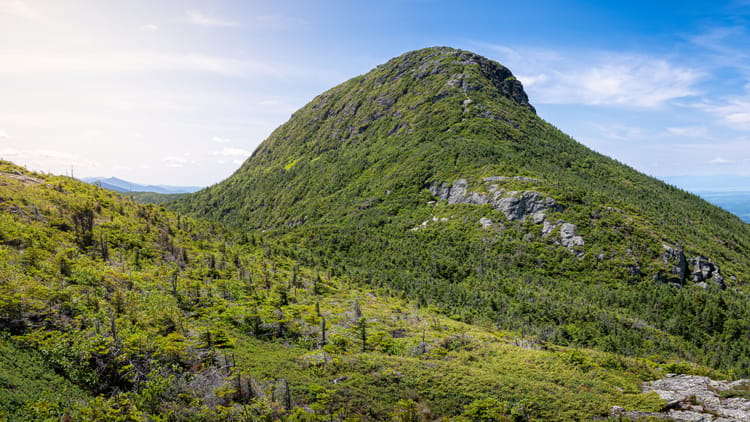
Stowe is the Vermont that ends up on the postcard: a white church steeple closing off Main Street, a red covered bridge over Gold Brook, and the Green Mountains stacked up behind the whole scene. What the postcard leaves out is how tightly it is all packed. Vermont's highest peak is a fifteen-minute drive from the village. The swimming holes are closer than that. Ben and Jerry's and a working cider mill are twenty minutes south in Waterbury, and Burlington and Lake Champlain are forty-five minutes west. It is the rare mountain region where you can level the RV once and still reach everything worth reaching.
Some travelers would rather wake up in a different valley every morning, and Vermont is happy to oblige: you could sleep somewhere new for a week straight and never repeat a view. If pulling up stakes at dawn is the part you actually look forward to, take the day trips below and build your own loop. This itinerary is for the other kind of traveler, the one who would rather set up camp once, keep the tow vehicle light, and let the same fire ring close out five different days.
It works whether you're traveling with kids or without, because the region forks cleanly in two directions. The family version leans on the paved rec path, the ice cream factory, and the swimming holes you can walk to. The hardcore version points at the Long Trail, the brutal climb up Hell Brook, and an alpine pond most visitors never see. Both start from the same campsite. Notes on which days bend which way are folded into each section, and a full fork breakdown sits near the end.
Why One Base Camp Beats Chasing the Green Mountains
The case for basing once comes down to honest drive times. In a lot of mountain country, "fifteen minutes away" means fifteen minutes as the crow flies and fifty as the switchbacks actually run, and the map quietly lies to you. Stowe's distances hold up. Mt. Mansfield is fifteen minutes up the access road. The Stowe Recreation Path starts in the village. Waterbury's food-and-drink corridor is a twenty-minute run down Route 100. Burlington and the Lake Champlain waterfront are forty-five minutes west on Interstate 89. The only thing the radius can't reach cleanly is the north side of Smugglers' Notch, which comes with a rule of its own, and it's the next thing to sort out.
So the arithmetic is simple: a little more tow-vehicle driving each day in exchange for zero teardown-and-setup in the RV. Five days covers the core of it without rushing. A sixth or seventh day buys the longer swings, Montpelier and the eastern lakes, without turning the week into a checklist.
Before You Drive: The Smugglers' Notch Rule
The single most important piece of planning for a Stowe RV trip is how you get the RV into the valley, and it comes down to one road. Vermont's transportation agency spells it out plainly: the Smugglers' Notch segment of Route 108 is off-limits to single vehicles over 40 feet and to any vehicle-plus-trailer combination over 45 feet, and GPS units route drivers into it constantly because on a map it looks like the short way. It is not the short way. It is a series of blind hairpins between boulders that has trapped enough oversize vehicles to justify its own warning signs and a fine schedule that reaches into five figures.
The practical rule: approach Stowe from the south. Coming from almost anywhere, you'll reach the valley via Interstate 89 to Waterbury, then Route 100 north into Stowe. That route never touches the Notch. If your itinerary tempts you toward Jeffersonville or the north side of the mountain, you drive the tow vehicle over the Notch, not the RV, and only after mid-May when the pass opens. If your RV is under the length limits and you're still unsure, skip it anyway; a mountain pass is a bad place to discover your turning radius. Our first-time towing guide covers the grade-and-brake habits that matter on Vermont's climbs even when you're staying off the Notch.
Where to Camp: Full Hookups in Town or Dry Camping on the Water
Where you set up comes down to whether you want hookups and proximity to the village, or a quieter site on the water and the reservoir with the tank math that comes with it. Both work from the same radius. Book early either way: the Stowe corridor runs tight from July through foliage season, and the good sites go months out.
Full-Hookup Private Parks: Closer to Town, Easier Week
For 30- and 50-amp full hookups within a few minutes of Stowe Village, Gold Brook Campground sits under two miles from the village center and runs the gamut from tent sites to full-hookup pads, which makes it the default for travelers who want to walk-or-short-drive into town.
North of Stowe near Morrisville, Mountain View Campground is the quieter pick and an easy one to recommend: a family-run park with 50 full-hookup sites strung along the Lamoille River, two pools, a hot tub, and tube-and-kayak rentals right off the property. It trades walk-to-the-village proximity for elbow room and a river out the door, and it's still a short run down into Stowe.
Farther out, Smugglers' Notch RV Village in Jeffersonville offers 60 full-hookup sites with 50-amp service and is open May through early November, but note the geography: it's on the north side of the mountain, so reaching Stowe from there means driving all the way around via Route 15, never over the Notch. Base there only if the north side is where you actually want to be.
State-Park Dry Camping: On the Reservoir, Off the Grid
For a site on the water, Little River State Park in Waterbury sits on the Waterbury Reservoir with wooded and waterfront sites, a boat launch, and a swimming area, and it's the prettiest base in the area, with the catch that it only accommodates small RVs and there are no hookups, only a dump station.
Smugglers' Notch State Park sits right on Route 108 below the pass; it has a dump station, no hookups, and only a handful of sites that fit an RV at all, so confirm your length before you book. Both are reservable through Vermont State Parks up to eleven months out, and both put you a short run from the village. If a no-hookup week is new to you, our complete guide to boondocking without hookups runs the fresh-water, power, and holding-tank arithmetic so three days off the grid doesn't end in a scramble.
A stabilizing kit that steadies a trailer on an unlevel site is worth packing for the state parks, where the pads are cut into a hillside and flat is a generous word. At the full-hookup parks, a 50-amp surge protector that reads the pedestal before you plug in is the cheap insurance that keeps an older campground's wiring from finding your converter.
Day 1: Roll In, Walk Stowe Village, and Moss Glen Falls
Plan to arrive at camp by early afternoon. Setup at a new site is a 45-minute ritual at minimum, level, chock, hook up, sewer, awning, settle the inside, and you want it done unhurried before you go anywhere. Our RV setup checklist is the running order to follow if it isn't muscle memory yet.
Once you're set, ease into the trip in Stowe Village. The white-steepled Stowe Community Church anchors a main street that has been photographed roughly as often as it has been plowed, and the shops, the general store, and the covered-bridge detour at Gold Brook fill an easy afternoon without asking anything of your legs. It's the low-stakes opener a travel day calls for.
Save an hour before dinner for Moss Glen Falls, a few minutes north of the village off Randolph Road. The walk in is short and mostly flat to a tall, narrow cascade dropping into a rock amphitheater, the kind of payoff-per-step ratio that makes it the right first-night stretch for every kind of traveler. Do not confuse it with the other Moss Glen Falls two hours south in Granville; Vermont named two of its prettiest waterfalls the same thing and left you to sort it out. Dinner at camp and an early night; Day 2 is the big one.
Day 2: Mt. Mansfield, Three Ways to the Top of Vermont
Mt. Mansfield is Vermont's highest peak at 4,393 feet, and its long summit ridge famously reads like a face in profile, with named high points called the Nose, the Chin, and the Forehead. The true summit is the Chin. How you get near it is the day's one real decision, and there are three answers, each a different trip.
The easiest is the Auto Toll Road, a 4.5-mile gravel road that climbs from the Stowe Mountain Resort base to a parking area near the Nose in about 20 minutes of careful driving. It runs late May through mid-October, weather permitting, and the 2026 rate is $37 per car plus $14 per additional passenger. Drive the tow vehicle, not the RV; the road is narrow and steep, and trailers have no business on it. From the top parking area, a rocky ridge walk toward the Chin is open to anyone willing to scramble, with the whole of Vermont, the Adirondacks, and, on a clear day, the White Mountains laid out below.
The middle option is the Gondola SkyRide from the resort, which runs roughly 10 a.m. to 4:30 p.m. from June into October. It lifts you to the shoulder of the mountain near the Cliff House, short of the true summit but high enough for the view and the least strenuous way up, which makes it the family and mixed-ability pick.
The hard option is to hike: the Long Trail to the Chin from the Route 108 side is the classic Stowe-side summit route, a steep and rooty haul that experienced hikers plan a full day around. The Green Mountain Club, which built and maintains the Long Trail, is the authority to check for trail conditions before you commit. Whichever way up you choose, this is Vermont's rooftop.
You just built a week in Stowe out of one free guide. Every Wednesday, we send RVers the next one. Subscribe to our weekly newsletter.
THE HONEST DRIVE TIMES, THE ROADS THAT'LL TRAP AN RV, AND THE FREE SPOTS NOBODY TELLS YOU ABOUT — EVERY WEDNESDAY.
Day 3: Waterbury, Ben and Jerry's, Cider Donuts, and the Reservoir
Day 3 leaves the mountain for the valley floor. Waterbury sits 20 minutes south on Route 100 and has quietly become the food-and-drink center of the region, which makes this the day the whole family agrees on.
Start at the Ben and Jerry's Factory, where the guided tour walks you over the production floor, ends in a sample, and lets you pay respects in the Flavor Graveyard, the hillside of headstones for discontinued flavors that is somehow both a marketing exercise and genuinely funny. Tours run daily in summer and are cheap enough that the line is the only real cost, so go early. A few minutes up the road, Cold Hollow Cider Mill presses cider you can watch being made and sells warm cider donuts that have converted people who thought they didn't care about donuts. Between the two, Waterbury's main drag carries enough lunch options that nobody leaves hungry, and the region's well-known brewery scene gives the adults a reason to linger; keep the tastings on the far side of the drive home.
Spend the afternoon on the Waterbury Reservoir. If you based at Little River State Park you're already on it; if not, the state park's day-use area is the easy entry. It's a long, quiet reservoir ringed by forest, ideal for a paddle, and local outfitters in Waterbury rent kayaks and paddleboards by the day if you didn't bring your own. An insulated cooler bag that keeps lunch cold on the water is the difference between a picnic and a sad warm sandwich when the afternoon runs long. For families, the reservoir's swimming area is the low-drama option after a factory-tour morning; for couples, the far coves stay quiet enough that you can lose an afternoon out there without meaning to.
Day 4: Swimming Holes and the Stowe Rec Path
Day 4 is where the trip forks hardest, and both forks are good. The connective tissue is water: the streams coming off Mt. Mansfield have carved a set of swimming holes cold enough to make you gasp and clear enough to see the bottom of.
Bingham Falls is the one everybody photographs, a short but steep trail off Route 108 (drive the tow vehicle, and stop well below the Notch narrows) that drops to a gorge, a waterfall, and a deep green plunge pool. The scramble down is wet granite, so wear real shoes; flip-flops lose here. Go look at it and swim somewhere else. Stowe Mountain Rescue was called here six times in 2020 alone, a visitor drowned in the plunge pool that September after slipping on the sloping rock at the base, and the team's published position is that they have to advise against the jumping spots. Standing at the bottom of the falls is a fine afternoon on its own.
For actually getting in the water, Warren Falls south down Route 100 is the better answer, with a marked Green Mountain National Forest lot and a stepped series of shallow pools rather than one deep one. The rock there is polished and the current between pools runs stronger than the surface suggests, so keep everyone off the high ledges. Families are better off with the reservoir swimming area from Day 3 anyway: gradual entry, no current, nothing to jump from. Cold-water swimming holes go easier with a little gear: oversized quick-dry towels that dry a whole family and pack down small beat the bath towels you'll otherwise ruin. Our guide to nine RV-accessible swimming holes covers the criteria that separate a great family swim spot from a single-shot wonder worth a long drive.
The other half of the day belongs to the Stowe Recreation Path, a 5-plus-mile paved greenway that runs from the village along the West Branch of the Little River with mountain views the whole way. It's flat, stroller- and bike-friendly, and dotted with spots to drop down to the water, which makes it the family fork's afternoon and a genuinely pleasant evening spin for anyone. If the kids are along, our guide to raising kids who follow Leave No Trace turns the swim-hole day into the low-key lesson it's built to be. The hardcore fork spends this day differently, and the pacing section lays that out.
Day 5: Burlington and Lake Champlain
Day 5 points west. Leave the RV at camp, load the tow vehicle, and drive 45 minutes down Interstate 89 to Burlington, Vermont's lakefront city and the natural counterweight to a week in the mountains.
Church Street Marketplace is the four-block pedestrian spine downtown and the right lunch destination, with restaurants across the price range, street performers working the crowd, and the New England red-brick storefront grammar at full concentration. The waterfront is the afternoon: the Burlington Bike Path runs along Lake Champlain with the Adirondacks rising across the water, and the ECHO Leahy Center for Lake Champlain is the lakeside science museum that anchors the day for families with kids. Rentals along the waterfront put you on the water if you want it.
Lake Champlain is also the literal bridge to the next trip. Ferries and the lake crossings connect Burlington to the New York side, which is the front door to a different itinerary entirely: our Adirondacks RV itinerary across five days at Ausable Chasm and Lake Champlain runs the same one-base-camp play from the far shore, and a Stowe week and an Adirondacks week stitch together across the lake if you have the calendar. Dinner back in Stowe, or on Church Street before the drive; either way it's an easy close to the core five days.
Worth Adding If You Have Six or Seven Days
A handful of pieces sit outside the core five but are real options if you have the extra days or want to swap out a lighter afternoon.
Montpelier and the State House (south, ~35 minutes)
The smallest state capital in the country, Montpelier is a walkable half-day: the gold-domed Vermont State House offers free tours, the downtown is a few blocks of independent shops and good lunch, and the whole thing pairs naturally with a Waterbury morning since they're on the same side of the valley.
Trapp Family Lodge Trails (Stowe, ~15 minutes)
The Austrian-style property founded by the family whose story became The Sound of Music sits above the village on 2,500 acres, with a network of walking and mountain-biking trails open to day visitors and a bierhall at the end of them. It's a low-effort morning with an outsized view and the rare on-site brewery that makes sense as a lunch stop rather than a detour.
Lake Willoughby (northeast, ~70 minutes)
If you want one more piece of dramatic Vermont, Lake Willoughby is a glacial lake pinched between two cliff-faced mountains that looks transplanted from a fjord. It's a real drive, so treat it as a full day rather than an afternoon, and go for the swim and the view rather than to check a box.
Trip Logistics: Driving, Fuel, and Connectivity
Total tow-vehicle driving across the core five days runs roughly 200 miles: the Mansfield access road, the Waterbury food-and-reservoir day, the swimming-hole loop, the Burlington run, and local village hops. The days read short individually and stack up across the week, so keep the tow vehicle fueled rather than counting on a top-off in the village.
Fuel in the Stowe corridor runs a touch above the Vermont average, as mountain-town pricing tends to; Waterbury and the I-89 corridor are the cheaper fill. The full-hookup parks handle propane and have on-site dump stations, so tank math is a non-issue if you're plugged in. The state parks are dry, with dump stations but no hookups, so plan a dump-and-fill stop on your way out and ration fresh water across the stay. Our only RV maintenance checklist you'll ever need is worth a pass before a trip with this much mountain grade in it, and a tire-pressure monitor that warns you before a hot climb becomes a blowout is the sensor you want on Vermont's long descents.
Cell coverage is generally workable in the Stowe and Waterbury valleys on the major carriers, thinner as you climb toward the Notch and out toward Lake Willoughby. The valley sites aren't deeply tree-shaded, so satellite internet has open sky for a remote-work-from-camp setup, but the state-park sites under heavier canopy are a different story; download your maps and trail notes before you leave the RV.
Two Ways to Run This Trip: The Family Fork and the Hardcore Fork
The same five days bend to fit the group. Two versions cover most travelers.
The family fork trades the summit sweat for the payoff without it. Take the Gondola SkyRide up Mt. Mansfield instead of hiking, lean the swimming-hole day toward the reservoir beach and the flat Stowe Rec Path, and give Day 3 its full weight, the Ben and Jerry's tour, the cider donuts, and an afternoon on the reservoir's swimming beach. It's a week of short walks, big views, and few tears, which is the correct goal when the youngest member of the party sets the pace.
The hardcore fork points the free days at the mountain. Summit the Chin via the Long Trail from the Route 108 side, add the Hell Brook Trail (one of the steepest maintained routes in the state, and a genuine test) for anyone who wants it, and swap the rec-path afternoon for the hike up to Sterling Pond, a high alpine tarn near the top of the Notch that most visitors never see. The swimming holes become the recovery, not the main event. The full Stowe hiking guide lays out a dozen trails across all three difficulty tiers with the trailhead-parking notes that matter when you're arriving in a tow vehicle.
A Note on Pacing
Five days is the right length for this itinerary if you want one easy day, one big mountain day, one food-and-water day, one swim-and-path day, and one lake day to close. Four days works if you drop the Burlington run and save Lake Champlain for a trip of its own. Seven days absorbs a Montpelier morning and a Lake Willoughby day without rushing, plus a slow recovery afternoon on the reservoir with a hammock and a book. Setting up camp once and using the radius, rather than moving every two nights, is the difference between a week that feels like a vacation and one that feels like a logistics exercise.
For the same one-base-camp play in a different geography, our Seneca Falls RV itinerary across five days on Upper Cayuga Lake runs the identical structure in the Finger Lakes.
FAQs
How many days do you need in Stowe with an RV?
Five days is the sweet spot for a Stowe RV trip: one arrival-and-village day, a full day on Mt. Mansfield, a Waterbury food-and-reservoir day, a swimming-hole-and-rec-path day, and a Burlington and Lake Champlain day. Three days is enough if you focus on the village, one way up Mt. Mansfield, and a single swimming hole. Seven days adds a Montpelier morning, a Lake Willoughby day, and a slow recovery afternoon on the Waterbury Reservoir without turning the week into a checklist.
Can you drive an RV through Smugglers' Notch?
No. Vermont law prohibits single vehicles over 40 feet and any vehicle-and-trailer combination over 45 feet from the Smugglers' Notch segment of Route 108, and the pass is a series of tight switchbacks between boulders that has trapped many oversized vehicles. GPS units route drivers into it because it looks like a shortcut on a map. Approach Stowe from the south via Interstate 89 to Waterbury and Route 100 instead, drive only the tow vehicle over the Notch, and note that the pass itself is closed from mid-October to mid-May.
Where should you camp with an RV near Stowe, Vermont?
It depends on whether you want hookups or a site on the water. For full 30- and 50-amp hookups close to the village, Gold Brook Campground is under two miles from Stowe Village, and Mountain View Campground near Morrisville is a quieter family-run park with 50 full-hookup sites on the Lamoille River. For dry camping, Little River State Park on the Waterbury Reservoir has wooded and waterfront sites with a dump station but no hookups, and it's the prettiest base in the area. Smugglers' Notch RV Village in Jeffersonville has full hookups but sits on the north side of the mountain, so reaching Stowe from there means driving the long way around, never over the Notch. Book months ahead for July through foliage season.
What's the best way to get to the top of Mt. Mansfield?
There are three ways up Vermont's highest peak. The Auto Toll Road is a 4.5-mile gravel road from the Stowe Mountain Resort base to a parking area near the Nose, open late May through mid-October at $37 per car plus $14 per passenger in 2026; drive the tow vehicle, not the RV. The Gondola SkyRide lifts you to the mountain's shoulder near the Cliff House from June into October and is the easiest option for mixed-ability groups. Hiking the Long Trail to the Chin from the Route 108 side is the classic summit route for experienced hikers and takes a full day. The true summit, the Chin, sits above all three, reached by a rocky ridge scramble.
Is Stowe good for an RV trip with kids?
Stowe is one of the more family-friendly RV destinations in the Northeast because the region forks toward easy wins. The Gondola SkyRide delivers a summit view without the hike, the Stowe Recreation Path is a flat 5-plus-mile paved greenway good for bikes and strollers, Waterbury Center State Park has a designated swimming beach with gradual entry and no current, and the Ben and Jerry's factory tour with its Flavor Graveyard is a reliable crowd-pleaser. Base at a full-hookup park with a pool or at Little River State Park's swimming area, and the off-day energy has somewhere to go.
What's the best time of year for a Stowe RV trip?
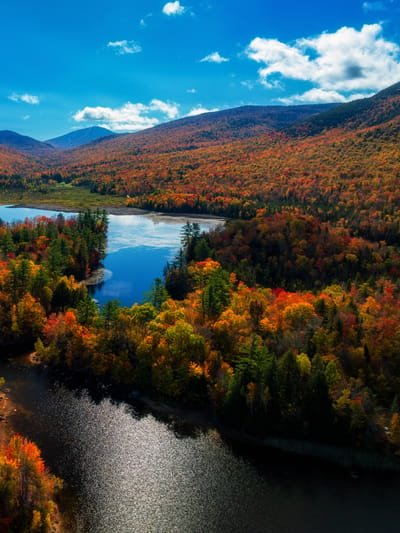
Summer, roughly mid-June through August, is peak season: the Auto Toll Road and Gondola SkyRide are running, the swimming holes are in play, and the campgrounds open all sites. Late September into early October is foliage season, when the Green Mountains turn and the valley fills, so book far ahead and expect company. Smugglers' Notch Route 108 closes from mid-October to mid-May, and winter RVing in northern Vermont is the exception rather than the norm because of pipe-freeze risk. Shoulder weeks in June and early September are the quiet sweet spot for anyone without a school schedule.
How far is Burlington from Stowe?
Burlington is about 45 minutes west of Stowe via Interstate 89, which makes it an easy tow-vehicle day trip rather than a reason to move camp. Leave the RV at your site and drive over for Church Street Marketplace, the Lake Champlain waterfront and bike path, and the ECHO Leahy Center for Lake Champlain. Lake Champlain is also the crossing point to New York's Adirondacks, so a Burlington day can double as the hinge between a Stowe week and an Adirondacks week if you're stitching two trips together.
Categories
Related Posts
Subscribe to the Swervia Newsletter
The best RV stories, tips, and destinations—expertly curated and always free.