Vermont Swimming Holes Near Stowe: 5 Stops and Where to Actually Park an RV
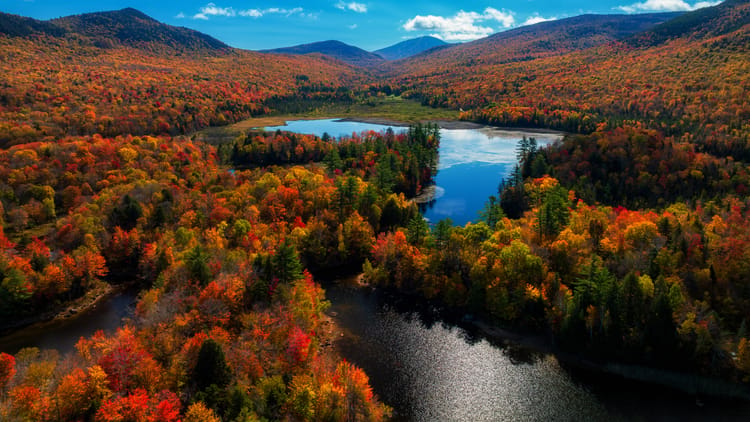
Vermont's best swimming water sits within about an hour of Stowe village, and most of the roads to it were laid out before anyone imagined a 32-foot travel trailer. That's the real planning problem here, and no other guide to this topic addresses it. The pretty parts get photographed constantly. The parking is what decides your afternoon.
So this list sorts five stops by what you can arrive in. Two have real lots that hold a full-size vehicle. Three are tow-vehicle errands. And two of the most famous names in Vermont swimming are not on the list at all, for reasons worth reading before you plug either one into a map.
The working model is simple: park the RV once, then swim from the tow vehicle. Everything below assumes that.
Route 108 and Smugglers' Notch: The 40-Foot Rule
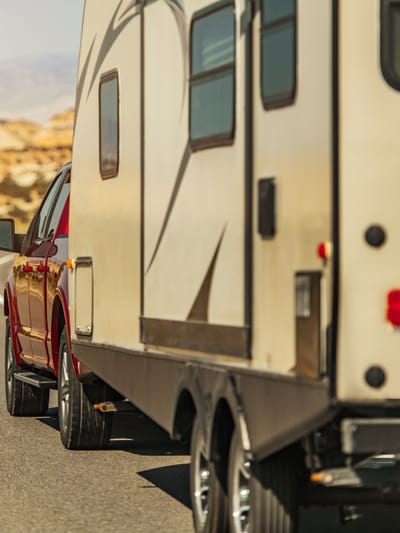
Vermont law prohibits single vehicles over 40 feet, and any tow-vehicle-and-trailer combination over 45 feet, from the Smugglers' Notch stretch of VT Route 108. This isn't a caution sign. It's a statute, and the state's own framing is worth absorbing: it isn't a driving-skill problem, it's a geometry problem. The 3.5 miles through the pass squeeze between boulders that have been there considerably longer than the road.
The penalty for taking a prohibited vehicle through is $10,000 as of July 1, 2026, and $20,000 if you wedge yourself somewhere that stops traffic. For a personally owned vehicle, that lands on whoever was driving. The pass also closes seasonally, roughly mid-November through mid-May, because it can't be plowed.
Everything north of Stowe village on Route 108 is therefore tow-vehicle territory. If your combination runs under 45 feet you're legal, but legal and advisable are separate questions on a road with blind hairpins and rock where the shoulder should be. Our guide to the highways that will destroy your RV covers the same category of road elsewhere in the country.
To the van and truck-camper readers: yes, you can genuinely take 108, and yes, you can fit in the pull-offs the rest of this article tells people to skip. That advantage is real and it's most of the reason to own a small vehicle in New England. The rest of this is for the people towing something.
Waterbury Center State Park: The Big-Lot, Small-Kids Answer
Waterbury Center State Park is the one stop on this list where the swimming is a designated swimming area rather than a river you're reading yourself. It's a 90-acre peninsula on Waterbury Reservoir, a quarter mile off Route 100, with a beach, 17 picnic sites, a boat launch, and enough parking that arriving at noon on a Saturday isn't a gamble.
It's day-use only and a fee area, open 10am to official sunset, with a season running from the Friday of Memorial Day weekend through Labor Day weekend. The water is reservoir water: warmer than the rivers, no current, no ledges to jump from, gradual entry. If you're traveling with anyone under about ten, this is the correct answer and the rest of the list is optional.
Two things to know before you commit the day. Pets are not permitted at this park — not on the beach, not in the lot, not in the picnic area. Dog owners are a large share of the RV population and this rule surprises people who've already made the drive.
Speaking of which: canoes, kayaks, and paddleboards rent right at the water's edge from the outpost at 177 Reservoir Road, the same address as the park. It runs 10am to 6pm with the last boat going out at 4pm, first come and no reservations, on roughly two-hour rentals. A swim plus a paddle is a full afternoon without moving the vehicle twice, which is the sort of thing that makes basing here worth it. Check Vermont's recreational water status page for beach closures and test results before you drive.
Where to swim, where to park, and which famous spots to skip. Subscribe to our weekly newsletter.
SMART RV TRAVEL INTEL, EVERY WEDNESDAY. ONE EMAIL. FREE.
Warren Falls: The Only River Swimming Hole With a Real Parking Lot
Warren Falls sits in Green Mountain National Forest on Route 100, about eight miles south of the Route 100/17 junction, and it has the only marked, ample lot of any river stop in this region. That single fact makes it the one genuinely drive-up swimming hole for someone who hasn't unhooked.
The water is a stepped series of pools running roughly one to ten feet deep, carved into smooth rock, with a few hundred feet of walking from the lot. Leashed pets are fine. It looks engineered and it isn't, which is most of its appeal.
Be straight with yourself about two things. Roadside parking on VT 100 is prohibited, so if the lot is full the answer is to keep driving rather than improvise — the sightlines are poor and the corridor carries a lot of cyclists. And Warren Falls has a real injury history. A swimmer drowned here in August 2024 after slipping while crossing the river, and Mad River Emergency Medical Services had already logged two other fatalities in recent years. The rock is polished, the current between pools is stronger than the surface suggests, and most incidents here start with a foot slipping rather than a swim going wrong.
It's also a legitimate drive from Stowe, down Route 100 through the Mad River Valley. Treat it as a Waitsfield-and-Warren day rather than something you squeeze into a Stowe afternoon.
Lareau Farm Swim Hole: The Gentler Stop on the Same Day
If Warren Falls reads as too much rock for your group, the Mad River Valley has softer water a few miles north. The swim hole across from Lareau Farm on Route 100 south of Waitsfield has a sandy bank, a grassy picnic area, toilets, and shallow edges where small kids can stand up. There's a ledge on the far side that older swimmers jump from, and no lifeguards anywhere. There is a dedicated parking lot nearby.
Little River State Park: Swimming That Comes With the Campsite
Little River State Park is the stop where being an RVer stops being a constraint and starts being the advantage. It sits three and a half miles up Little River Road off US 2, with 81 tent and RV sites, 20 lean-tos, five cabins, and a sanitary dump station. There are no hookups. The season runs from the third weekend in May through the third weekend in October.
The relevant part: the swimming areas here are for campers. Day users get directed to Waterbury Center. If you're booked at Little River, you have reservoir water inside the campground and you don't drive anywhere to reach it, which after three days of trailheads and pull-offs is worth more than it sounds.
Because the park is a reservation-driven state campground rather than a private one, book early for July and August weekends. Our RV setup checklist covers getting level and settled fast enough that the first afternoon is still swimmable.
Foster's Hole, Stowe: A Real Swimming Hole With Nowhere to Park an RV
Foster's is the emerald pool people mean when they say Stowe has a swimming hole. It's on the West Branch of the Little River, reached from Notchbrook Road off Route 108 past the Matterhorn, roughly five miles up from the village, then a short walk down through woods to the water. It's small, it's cold, and there's one sensible place to jump from.
There is no lot. None. Access is worn shoulder pull-offs on a narrow residential road where people live, and the difference between parking and blocking a driveway is about four feet of judgment. Tow vehicle or bikes, and nothing else — this is the stop where the base-camp model stops being a suggestion.
It fills fast on hot afternoons. Early morning or a weekday is best, and if you arrive to find cars nosed into every gap, the correct response is to leave rather than invent a spot. Access to places like this survives on the behavior of the last hundred people who visited. A quick-dry towel that packs down to nothing matters more here than at the beach stops, because there's nowhere to spread out and dry off.
Is "the Swimming Hole" in Stowe the Same Thing?
No. The Swimming Hole is Stowe's indoor recreation center pool on Weeks Hill Road, and it's what a lot of people are actually searching for. It's a genuinely good rainy-day answer, and a better one than the rivers on any day the water is running high after a storm. Different thing entirely, same two words.
Bingham Falls and Bolton Potholes: Why We're Not Sending You There
Two spots dominate every other Vermont swimming-holes list. Both are left off this one deliberately, and the reasoning matters more than the omission.
Bingham Falls: Worth the Walk, Not the Swim
Bingham Falls is the most photographed swimming spot in Stowe and it has an injury record that a travel article shouldn't paper over. Stowe Mountain Rescue responded there six times in 2020 alone; a 36-year-old visitor drowned in the plunge pool that September after slipping on the sloping rock at the base, and a UVM student died there in 2018. Crews were still pulling people out in August 2025. The team's own published position is that they have to advise against the jumping spots, because they have gone badly wrong enough times.
The falls are beautiful and the quarter-mile walk down is worth doing. Standing at the bottom and looking is a fine afternoon. Swervia isn't going to write the sentence that puts a stranger's family in that pool, so this is a look-at-it stop, and the parking answer is the same as everything else on Route 108: two small paved pull-offs, tow vehicle only, and they fill by mid-morning.
Bolton Potholes: No Legal Way to Arrive by Vehicle
Bolton Potholes is simpler. There is no legal way to arrive by vehicle. Parking is prohibited on US 2 by state statute, prohibited for two miles along the Bolton Valley Access Road by town ordinance, prohibited at the elementary school, and residents-only on Curtis Lane, and vehicles in violation can be removed at the owner's expense. Access is on foot or by bicycle. The Vermont River Conservancy, which stewards the site, documents at least seven drownings there. It is not a stop, and listing it with a warning attached would still be listing it.
Vermont River Swimming Safety: What the Water Is Actually Like
The rivers here run cold into August and the rock stays slick even where it looks dry. Nobody is watching. There are no bathrooms at the river stops, no posted depths, and the pools change shape after big rain events, which Vermont has had a lot of lately. A spot somebody swam in comfortably for fifteen years can be reorganized by one storm.
The mechanism that actually kills people at these places is worth naming, because it doesn't look dangerous. Water churning below a falls is full of air, and aerated water doesn't float a body the way flat water does. A strong swimmer can go under in a plunge pool they'd cross easily in a lake. That, and the plain slip on wet rock, account for most of what Vermont's rescue teams respond to. Neither one is about swimming ability.
The practical version: mid-June through early September is the window, footwear with tread beats anything you'd wear on a beach, and after heavy rain the answer is the reservoir instead. Pack out everything, including what feels like it'll rot. If kids are along, the habits stick early, which we get into in our guide to raising kids who follow Leave No Trace rules.
A few things to pack for a swimming day out of a base camp:
- Oversized pre-washed towels that survive a sandy beach day hold up better than the bath towels living in the RV, which never fully dry in a wet bay.
- A soft cooler you can carry from the lot to the water matters at Waterbury Center, where the beach is a walk from where you parked.
- A compartment box that keeps snacks separated and cold buys roughly an extra hour at the reservoir with small kids, which is the entire difference between a good beach day and a short one.
- A camp chair that packs flat in a truck bed is what makes a full lot survivable while you wait for someone to leave.
Where Swimming Fits in a Stowe RV Trip
Swimming is the recovery day, not the destination. The pattern that works is one base camp, a hard day out, then a reservoir afternoon while everyone's legs recover, then something else. If you're building the whole week, our stowe vermont rv itinerary lays out the shape of it, the Stowe hikes for RVers piece covers the trail side including the walk down to Bingham Falls, and RV day trips from Stowe handles everything beyond the swimming radius.
Heading west across Lake Champlain afterward is a natural continuation, and the Adirondacks RV itinerary picks up on the other side. The Ausable River swimming holes there solve the same problem with better parking and warmer water, and our national roundup of RV-accessible swimming holes covers the spots worth routing around elsewhere in the country.
FAQs
Can you drive an RV to Bingham Falls?
Not if it's over 40 feet. Bingham Falls sits on VT Route 108 in Stowe, where Vermont law prohibits single vehicles over 40 feet and tow-vehicle-and-trailer combinations over 45 feet, with a $10,000 fine as of July 1, 2026. Parking is two small paved pull-offs that fill by mid-morning on summer weekends. Even in a legal vehicle, the practical answer is to leave the RV at camp and drive the tow vehicle.
Which Vermont swimming hole near Stowe has an actual parking lot?
Warren Falls has a marked Green Mountain National Forest lot on Route 100 about eight miles south of the Route 100/17 junction, and it's ample even on busy days. Waterbury Center State Park has a day-use lot serving a beach with a designated swimming area. Those two are the only stops in the region with parking that reliably holds a full-size vehicle. Roadside parking on VT 100 is prohibited, so a full lot at Warren Falls means driving on.
Are dogs allowed at Vermont swimming holes near Stowe?
Not at Waterbury Center State Park, which prohibits pets entirely, including in the parking area. Leashed pets are permitted at Warren Falls in Green Mountain National Forest. The undeveloped river stops have no posted pet rules, which means normal leash courtesy and picking up after your dog on land that stays open because visitors behave. Check the specific park page before driving, since state park pet rules vary by property.
Is Smugglers' Notch open to RVs?
No. VT Route 108 through Smugglers' Notch prohibits single vehicles over 40 feet and combination vehicles over 45 feet, and the fine rose to $10,000 on July 1, 2026, with $20,000 for substantially blocking traffic. The road also closes seasonally from roughly mid-November to mid-May because it can't be plowed. Vehicles under the limit are legal but the pass is a narrow boulder-lined series of hairpins, and the state encourages trucks, buses, and RVs to route around it year-round.
When is the water warm enough to swim in Vermont?
Mid-June through early September is the realistic window for river swimming, and even then the water runs cold — these are mountain streams fed by snowmelt and shaded runs. Waterbury Reservoir warms earlier and stays warmer than any of the rivers because it's a large standing body of water. After heavy rain, river levels and currents change fast and the pools can physically reshape, so the reservoir is the safer default for a few days following a storm.
Do you need to pay to swim at these spots?
Waterbury Center State Park is a fee area with a day-use charge, open 10am to official sunset from Memorial Day weekend through Labor Day weekend. Warren Falls is free, on Green Mountain National Forest land with no entrance fee. Little River State Park's swimming areas are for registered campers, so the cost is folded into a campsite. The undeveloped river stops are free and have no facilities of any kind.


Categories
Related Posts
Subscribe to the Swervia Newsletter
The best RV stories, tips, and destinations—expertly curated and always free.