Desert Boondocking 101: Heat, Water, and Where to Camp in AZ, NV, UT
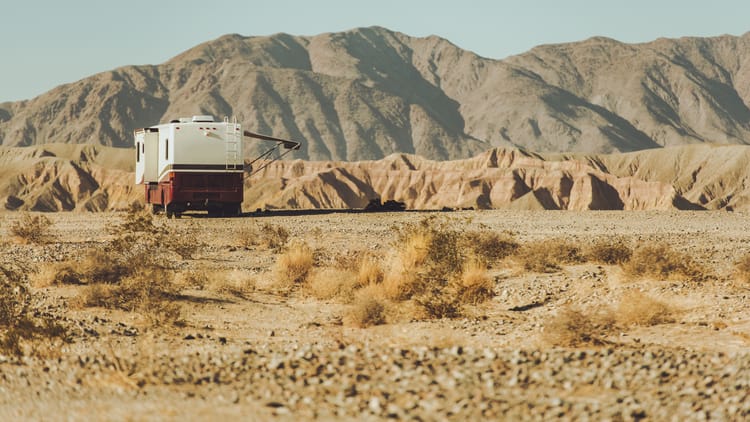
If your boondocking experience so far has been pine trees, mountain creeks, and forty-degree nights that make the furnace earn its keep, the desert is going to feel like a different sport with the same name. Forest boondockers have shade by default, water nearby more often than not, and a climate that punishes you for being cold. The desert flips all three. There's no canopy, the nearest potable spigot might be the town you passed an hour ago, and the thing trying to end your trip is heat, not frost.
Desert boondocking is also the version most people are picturing when they daydream about free camping: wide-open public land, a rig parked alone against a horizon of red rock and saguaro, not a hookup pedestal in sight. Arizona, Nevada, and Utah hold an enormous share of the country's accessible free public land, which is exactly why the Southwest is the spiritual home of the activity. It rewards self-reliance and it punishes improvisation, and the gap between those two outcomes is mostly planning.
This is a regional companion to our complete guide to boondocking without hookups, focused on the three things the desert makes non-negotiable: managing heat, managing water, and knowing where you're actually allowed to park.
Why the Desert Rewrites the Boondocking Rules
The desert doesn't just turn up the temperature. It changes which problems are even solvable. In a forest, an afternoon thunderstorm cools things off and your batteries recharge under the same sun the next morning. In the desert, the heat is relentless from mid-morning to past sundown, the air is dry enough to dehydrate you without sweating visibly, and the ground itself radiates warmth back at your rig long after dark.
Three realities drive everything else. First, shade is a resource you have to find or create, because nothing is providing it for you. Second, surface water effectively doesn't exist, so every drop you use is a drop you hauled in. Third, fine dust gets into hinges, slide seals, water filters, and lungs, and it never fully stops. If you understand boondocking categories generally — and our breakdown of dispersed camping versus boondocking versus stealth camping is the place to start — the desert is dispersed camping with the difficulty dial turned to the right.
The payoff is real, though. The Southwest gives you stays measured in weeks instead of nights, dark skies that make a planetarium look stingy, and a sense of space you can't buy at a resort. You just have to earn the view.
Surviving the Heat Without Shore Power
Here's the hard truth that surprises first-timers: your rooftop air conditioner is essentially useless when you're off-grid. A single AC unit pulls more continuous power than almost any reasonable battery bank can sustain, and running it off an inverter for an afternoon will flatten your system before dinner. Desert heat management is therefore an avoidance game, not a cooling game. You're keeping heat out, not pumping it back.
Start with orientation and shade. Park so the largest windows and the refrigerator side face away from the afternoon sun, and chase shade where it exists — the north side of a rock formation, a lone tree, a canyon wall that goes dark by mid-afternoon. An awning shading the sunny wall lowers the surface temperature of that wall meaningfully.
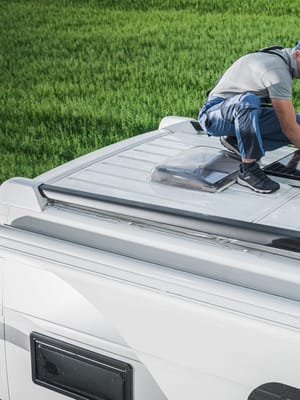
Then seal the rig against radiant gain. Windows are the biggest leak, and covering them with reflective window insulation that bounces solar heat back outside does more than any curtain. Move air aggressively: opening vents and running a powered roof vent fan that pulls hot air out of the rig creates a chimney effect that keeps the interior closer to outside temperature instead of baking above it. The real fix is the desert's one gift to the overheated — nights cool off fast, so you open everything after sunset, flush the heat, and seal the cool air back in before the sun comes up.
The pattern, once you accept it, is simple: defend the rig during the day, ventilate hard at night, and plan your actual living for the cool hours. Hike at dawn. Nap at noon. Cook outside so you're not heating the cabin from the inside.
Power in a Place That Overheats Your Batteries
The desert hands you abundant sun and then quietly taxes you for it. Solar panels lose efficiency as they get hot, so a 200-watt array on a 110-degree roof produces less than its rating suggests, right when you want it most. Batteries dislike the heat too, and lithium chemistry in particular will refuse to charge above certain temperatures to protect itself. Free energy, with an asterisk.
You plan around it by oversizing and by timing. More panel than you think you need covers the heat derate, and our guide to building the perfect RV solar setup on any budget walks through the math without assuming you have a five-figure budget. A lithium house battery in the 100-amp-hour range gives you the storage to run fans and a residential fridge through the night, after the panels have stopped producing and you're living entirely off what you banked during the day. For shorter trips or as a backstop, a portable solar generator with around 1,000 watt-hours covers laptops, fans, and device charging without touching the house bank.
Run your heavy loads at night and your charging during the day, and watch your numbers. If your batteries keep dying faster than the spec sheet promised, the desert is often the culprit, and our piece on why your RV battery keeps dying and how to fix it covers the failure modes worth ruling out before you blame the heat.
The desert rewards the campers who plan the water and the heat first. Subscribe to our weekly newsletter.
THE BEST THING IN YOUR INBOX ON WEDNESDAYS. ONE EMAIL. FREE.
Water Math When the Nearest Spigot Is 40 Miles Back
Water is the variable that ends desert trips early, and it ends them quietly — not with a dramatic failure, but with an empty tank and a long drive back to civilization you didn't budget for. The standard planning figure is roughly a gallon per person per day for drinking and cooking, but desert heat pushes real consumption higher, and the National Park Service's own summer guidance for Death Valley leans hard on drinking before you feel thirsty. Plan for a gallon a day per person, then add a generous buffer on top.
Add in the rest of life — dishes, a rinse, the occasional navy shower — and your fresh tank disappears faster than the calendar suggests. The fixes are habits, not gadgets: navy showers, capturing the cold water that runs before the hot arrives, wiping dishes before washing them. For the deeper conservation playbook and tank care that keeps a fresh supply safe to drink, our RV plumbing breakdown of all three tanks is the foundation.
When the grey and black tanks fill up, you don't have to break camp to empty them. A portable waste tote you can tow to a dump station hauls the dirty water out and brings the empty tank back, which is what turns a three-night stay into a two-week one. A few stackable jugs handle the other direction, carrying fresh water back from a fill station. And because desert fill sources range from town spigots to questionable rural taps, a portable water filtration system that works miles from a clean source earns its storage space the first time you're grateful you didn't trust the spigot.
Desert Hazards Nobody Puts on the Brochure
The desert's dangers are less about drama and more about the quiet ways it tests an unprepared rig. Heat is the headline, and the National Weather Service's heat safety resources are worth reading before a summer trip, because heat illness sneaks up in dry air where you don't feel yourself sweating.
A few specifics that catch people off guard:
- Tire blowouts. Hot pavement plus an underinflated tire plus a heavy rig is a recipe for a roadside afternoon you'll remember. A tire-pressure monitoring system that warns you before a tire fails is cheap insurance on long desert hauls.
- Monsoon flash floods. From roughly July through September, the Southwest gets sudden, violent storms. Never camp in a wash or dry riverbed, no matter how convenient and flat it looks. Water arrives from miles away under a sky that's blue overhead.
- Dust storms. Visibility can drop to nothing in minutes. If you're driving, the rule is pull aside, turn off your lights so no one follows you into the ditch, and wait it out.
- Wildlife that bites and stings. Rattlesnakes and scorpions share your campsite, so shake out boots before you step into them, watch where you put your hands on rock, and carry a light after dark.
- Ground that doesn't heal. Cryptobiotic soil crust — the dark, crumbly stuff holding the desert together — takes decades to regrow once a tire or boot breaks it. The Leave No Trace seven principles apply with extra weight in an ecosystem this slow to recover.
None of this should scare you off. It's the price of admission for the country's best free camping, and respecting it is what separates a great trip from a tow bill.
Where to Camp in Arizona
Arizona is the desert boondocking capital of the lower 48, and most of its free camping sits on Bureau of Land Management land governed by the standard 14-day dispersed camping rules. The famous winter gathering point is the Quartzsite area, where the BLM runs Long-Term Visitor Areas built specifically for snowbirds who want to settle in for the season.
The flagship is the La Posa Long-Term Visitor Area just south of Quartzsite, where a long-term permit runs about $180 for up to seven months from mid-September through mid-April, with potable water, dump stations, and trash service on site. It's the rare desert spot where you can stay put for months legally and cheaply. Beyond the LTVAs, the broader Quartzsite desert, the area around Why and Ajo in the south, and the high desert near Flagstaff for summer escapes all offer classic dispersed camping. Note the elevation play: when the low desert bakes, the rim country up north stays bearable.
Where to Camp in Nevada
Nevada is mostly federal land, which makes it one of the most open states in the country for dispersed camping — and one of the least crowded once you leave the Las Vegas orbit. Public land near Valley of Fire and the desert basins north of the city give you proximity to attractions without resort prices, and the vast BLM holdings across the central part of the state mean you can find solitude that's genuinely hard to find elsewhere.
The trade-off is services. Nevada's open spaces are open precisely because there's nothing around, so fill-and-dump runs are longer and cell coverage is spotty. This is country for the self-sufficient end of the spectrum, and our look at how the RVers who never pay for a campsite find their spots is useful homework before you head for an empty basin.
Where to Camp in Utah
Utah pairs free desert camping with the most concentrated scenery in the Southwest, which is both the appeal and the catch. The BLM land surrounding the Mighty Five national parks lets you sleep for free within striking distance of paid, crowded park campgrounds, and the San Rafael Swell in the center of the state is a boondocking favorite for red-rock solitude.
The catch is that popularity has tightened the rules. Areas like Bears Ears and the corridors near Moab now have designated dispersed sites and stricter regulations in places that used to be open free-for-alls, so checking the current local rules before you arrive matters more here than almost anywhere. If Utah is part of a bigger Southwest loop, our primer on what to know before your first RV trip out west covers the regional logistics that trip up first-timers, and the foundational beginner's guide to free public land explains how to read BLM access in the first place.
Putting a First Desert Trip Together
The desert is the most forgiving place to learn boondocking in one specific way: dry weather and long stay limits mean you're not racing a storm or a checkout time, so you have room to figure out your systems. Start in the shoulder seasons — October and November, or March and April — when daytime highs are pleasant and the overnight lows do your cooling for free. High summer is for the experienced and the heat-tolerant.
Build the trip backward from your two limiting resources. Know how many days of water you carry at a realistic desert consumption rate, know how many days your batteries last through hot nights, and stop at the shorter of the two numbers. Add a margin, because the desert is not the place to discover you misjudged. Get those two numbers right and everything else — the views, the silence, the months-long winters at fifteen dollars a week — is just the reward for doing the math.
FAQs
How hot is too hot to boondock in the desert?
Most RVers find that daytime highs above the mid-90s make off-grid desert camping uncomfortable, and above about 105 degrees it becomes genuinely difficult without shore power for air conditioning. The bigger factor is overnight lows: if nights drop into the 60s or 70s, you can flush the day's heat and reset the rig, making even hot afternoons manageable. When overnight lows stay above 80, there's no relief window, and that's the real signal to move to higher elevation or a campground with hookups.
How much water do I need for desert boondocking?
Plan for at least one gallon per person per day for drinking and cooking, and realistically closer to two gallons in desert heat once you account for higher fluid loss. Add more for dishes and minimal washing — a couple traveling for a week should budget 25 to 35 gallons total beyond hygiene. A portable water tote lets you refill from a fill station without breaking camp, which is what extends a desert stay from a few nights to a couple of weeks.
Can I run my RV air conditioner while boondocking in the desert?
Not for long on batteries alone. A rooftop air conditioner draws more continuous power than typical battery banks and solar setups can sustain, so running one off an inverter will drain a standard system within an hour or two. Desert heat management relies on prevention instead: reflective window covers, roof vent fans, shade positioning, and living by the cool hours. A large lithium bank with substantial solar can run AC briefly, but most boondockers avoid it entirely off-grid.
How long can you camp on BLM land in the desert?
Standard BLM dispersed camping is limited to 14 days within a 28-day period, after which you must move, often at least 25 miles away, and not return for 28 days. The exception is Long-Term Visitor Areas like La Posa near Quartzsite, Arizona, where a seasonal permit of around $180 lets you stay up to seven months from mid-September through mid-April. Always check the specific field office rules, since stay limits vary by location.
Where is the best free desert camping in the Southwest?
Arizona's Quartzsite area, including the BLM Long-Term Visitor Areas, is the most popular winter desert boondocking destination in the country. Nevada offers the most open and uncrowded dispersed camping thanks to its vast federal land, especially outside the Las Vegas area. Utah delivers the best scenery, with free BLM land surrounding the Mighty Five national parks and the San Rafael Swell, though rules there have tightened around popular spots like Moab and Bears Ears.
What's the difference between desert boondocking and regular boondocking?
The core skills are the same, but the desert intensifies three of them: heat management replaces cold management, water becomes the hardest resource to source because there's no surface water, and dust gets into everything. Desert boondocking also tends to offer longer legal stays and more open land than forested areas, but with fewer services nearby. The trade is more solitude and bigger views in exchange for hauling your own water and defending the rig against heat instead of cold.
When is the best time of year for desert boondocking?
The shoulder seasons are ideal: October through November and March through April bring comfortable daytime highs and cool nights that handle your cooling for free. Winter is excellent in the low desert of southern Arizona and Nevada, which is why snowbirds flock to Quartzsite from November through March. Summer is best left to experienced campers or higher-elevation desert above 5,000 feet, where temperatures stay far more reasonable than the valley floors.
Categories
Related Posts
Subscribe to the Swervia Newsletter
The best RV stories, tips, and destinations—expertly curated and always free.