Winter Camping in an RV: What Your First Cold Trip Is Actually Like
It's the first week of December and the RV is still in the driveway with water in it, because winterizing kept sliding down the weekend list. The forecast says 29 overnight. Somebody in the house finally says it out loud: what if we just used it one more time?
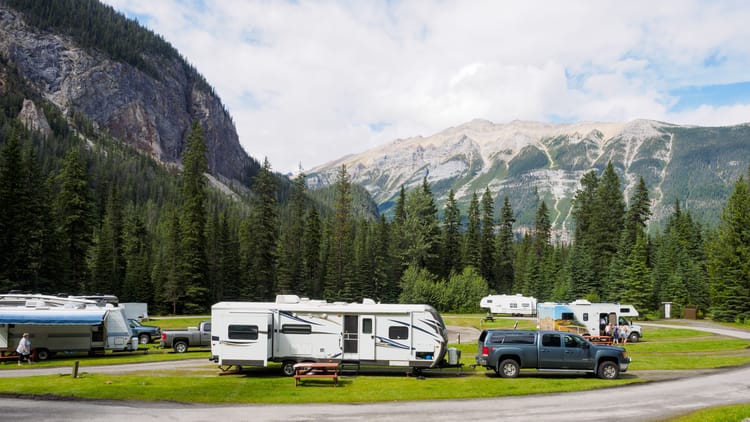
Yes. Use it. Winter camping in an RV is mostly a matter of picking the right first trip, and the people who come home swearing off it almost always picked the wrong one: too cold, too long, too far from home, nothing plugged in. Pick the easy version and you get a campground loop with three RVs in it, a trail you don't share, and a sun low enough all afternoon to make everything look like a photograph.
Plenty of people look at the same forecast and drain the water instead, and plenty more drive south until the cold stops. Both are fine winters. This is for the ones who'd rather find out.
One fact first. If you already winterized, the RV has no running water, and there's no camping in it until you undo that. If the water's still in it, keep reading.
Can You Camp in an RV in the Winter?
Yes. An ordinary RV with no four-season sticker and no upgrades will get you through a cold weekend, and people do it every December in the RV they already own. What changes from one RV to the next is how much work the cold hands you, not whether you can go.
Most of that work is decided under the floor. Tanks and pipes inside a heated, enclosed underbelly mostly look after themselves overnight. Tanks hanging in open air need watching. If a purchase is in your future, the best RV for winter is the longer conversation.
The one real disqualifier is the RV that's already been put away. How to winterize an RV is a storage procedure, and it ends with every line, tank and faucet empty on purpose. Reversing it is an afternoon of flushing and refilling, so know which state yours is in before you book. If fresh, gray and black don't mean much to you yet, our rv plumbing primer is a ten-minute read.
Pick Your Difficulty: The Four Dials on a First Winter Trip
A first winter trip has a difficulty setting. Most people don't know they're choosing one, so they pick hard by accident: a week, in January, in the mountains, off-grid. Then they decide winter camping isn't for them, when what wasn't for them was that trip.
Four dials. Turn every one down the first time.
How cold. A night in the upper 20s and a night in the single digits are different sports. In the first, the furnace cycles and the windows fog. In the second, the furnace barely stops, the propane bottle is a countdown, and anything under the floor is at risk by morning. Go when it freezes overnight and thaws by lunch. You'll learn nearly everything January teaches, minus the dangerous part.
How long. Two nights. That's enough to hear the furnace at night, test the bedding, watch the propane gauge move and wake up to the windows. By the third morning you're repeating the second. Save the week for when you know you like it.
How connected. Book the full-hookup site with power. If you change one thing about the trip, change that. Shore power means a small electric heater sharing the load with the furnace, water you don't have to ration, and no arithmetic about the bottle at midnight. Read the rv shore power mistakes first; the pedestal is where a lot of first nights go sideways.
How far. An hour or two from home. Close enough that leaving at breakfast is an errand, not a rescue. A bad night four hours into the mountains becomes a decision made on an icy road at first light, and nobody's judgment is at its best there.
Turning all four down isn't timid. The job of a first winter trip is to make a second one happen. Our two best first weekends for beginners run on the same logic in warm weather.
One question when you book, asked out loud: is the water on at the site, and is the dump station open? Both vary by park and by month. For RV camping in winter, that answer changes what you pack more than the forecast does. A site with power and no water is still a good weekend if you arrive with a full fresh tank.
Subscribe to our weekly newsletter.
A FIRST WINTER RV TRIP GOOD ENOUGH TO BOOK A SECOND. FREE, EVERY WEDNESDAY.
Winter Camping in a Motorhome, a Camper or a Trailer: What Changes
For one cold weekend, less than you'd think. Winter camping in a camper, a van or a fifth wheel turns on the same handful of things, and over two nights the differences mostly stay theoretical.
A motorhome keeps more of its plumbing inside the heated space and has an engine to think about on a cold morning. Parked and plugged in for two nights, that engine is just a thing you start on Sunday.
Winter trailer camping comes down to where the tanks live. Hanging in the open, they're the first thing you check in the morning. Sealed into a heated underbelly, they aren't. Skirting, tank pads and the rest of the trailer conversation exist because of that one difference, and a good cold-weather travel trailer is built to make it go away.
A van is quick to heat and quick to fog. Small volume cuts both ways.
None of that is a ranking. If you're still deciding which shape fits, our guide to the right type of rv settles it better than a cold weekend can.
Fifteen Hours of Dark, and What to Do With Them
Winter RVing runs on a short day. In December, much of the country is dark by late afternoon and stays that way until after breakfast. Call it fifteen hours in a space the size of a small bedroom. The Naval Observatory's duration-of-daylight tables give the exact figure for wherever you're going.
People pack for the cold. Almost nobody packs for the evening.
So pack for the evening. Bring a lamp you'd want to read under; overhead RV lighting is for finding dropped forks. Bring a card game or a book, something that doesn't need a charger. A heated blanket does more for a long evening than turning the furnace up, and on a hookup site it costs you nothing in propane. A wearable blanket is faintly ridiculous right up until the second night.
Plan the drive so you're parked with daylight left, too. Backing into a strange site by flashlight, on gravel that might be ice, is a bad start.
Then the flip side. The same low sun that ends the afternoon early is why the light is good for hours instead of minutes, and why sunrise happens at an hour you'd be awake for anyway. Winter is the one season you can watch it from the bed.
Wet Windows on the First Morning
You'll wake up to condensation running down the glass, and the first thought is a leak. It isn't. Every breath, every shower and every pot of boiling water goes into the air, and a warm RV in the cold has exactly one place to put it: the coldest surface in the room, which is the window.
Sealing up tighter makes it worse. The EPA's household advice is the RV advice: increase ventilation and keep indoor humidity between 30 and 50 percent. Crack a roof vent overnight, run the bathroom fan longer than feels necessary, wipe the glass while the coffee brews, and let a small dehumidifier handle the nights nobody wants anything open. Decide where wet coats and boots go before you arrive, because the default is the floor.
Over two nights, a damp window is a chore. Over two months it's a daily one, and our guide to rving in cold weather covers what that turns into.
What to Check Before a First Winter Trip, and What to Leave for Later
For a first weekend of RV winter camping, five things, and then stop.
Propane, full. The furnace is the biggest propane draw in the RV, and on a cold night it runs most of the night instead of in short bursts. Plan in multiples of what a summer weekend used, and know where the nearest refill is before you leave.
A water plan that doesn't depend on a garden hose surviving the night. Arrive with the fresh tank full and top up during the day, if at all. A heated hose is the permanent fix; for a first weekend, the tank is the plan.
Bedding for a colder night than the forecast shows. RV furnaces cycle, and the low end of the cycle is what you sleep in.
The forecast for the whole stay, not just the drive out. The drive home is the part that changes.
Tire pressure, checked the morning you leave. It falls with the temperature.
One thing to read once: batteries hold less usable charge when cold, and a lithium battery will refuse to charge below about freezing. That's a feature, not a fault, and on a hookup site it barely comes up. If the bank was already unreliable in September, start with why an rv battery keeps dying.
Everything else, meaning skirting, heated hoses, tank heaters and the pre-season countdown, is the winter rv camping prep job, and it's for when you know you're coming back.
Leaving Early Is a Normal Ending
Winter driving is a weather-window decision, so leave slack in the plan: shorter driving days, a start that gets you parked before dark, and a call to your state's 511 line for road conditions before you pull out. The National Weather Service keeps the before-you-drive list in one place.
Then give yourself permission in advance. If the forecast turns, if the water freezes, if you're just not enjoying it, you pack up at breakfast and drive home. That isn't a failed trip. It's a trip that answered its question early, and it cost you a Saturday instead of a plumbing invoice. Booking an hour from home is what makes that sentence true.
Why the Second Trip Happens
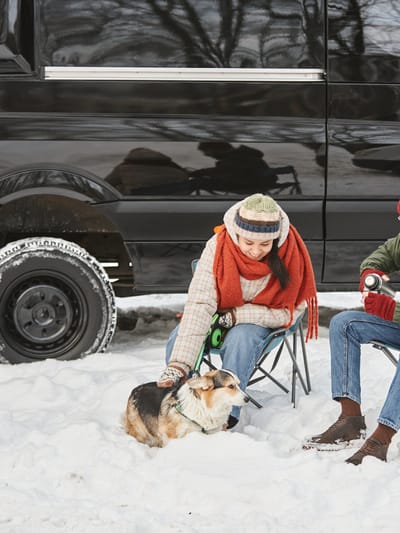
Because of the morning after the first night, mostly. Coffee in hand, frost on the outside of the glass and you on the inside of it, a campground loop with three sets of tire tracks in it, and a trailhead that had a line in July and has nobody now. Snow does something to a familiar place that makes you look at it again.
And there's the small, specific pleasure of being warm in something the size of a bedroom while it's properly cold two inches away. It doesn't happen in July, and people who try a weekend of winter in an RV tend to book another.
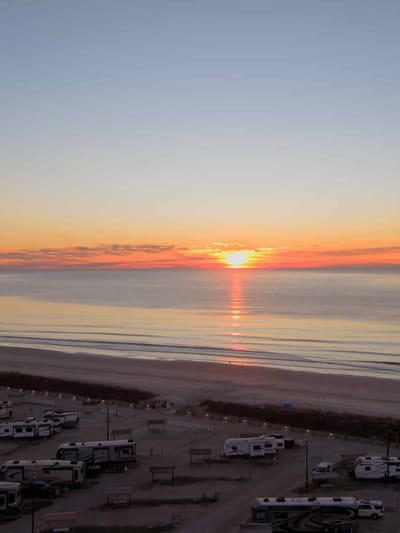
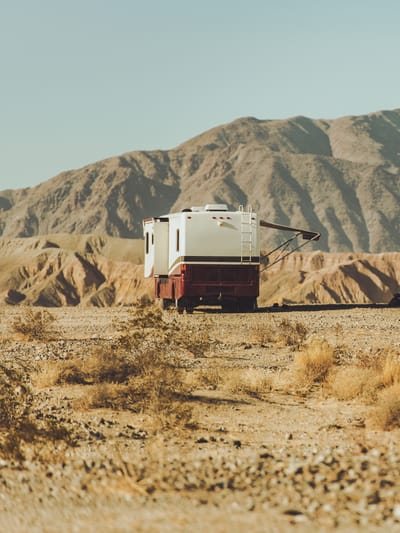
If what you want is winter with no winter in it, the desert and the Gulf states stay open all season, and choosing among the winter RV parks that stay open is its own kind of planning.
Otherwise: two nights, an hour from home, plugged in, water in the tank. Go find out.
The Short Version
- The RV you own can do it. Effort differs between RVs, not possibility. A winterized RV is the one blocker.
- Turn the four dials down. Upper 20s, two nights, full hookups, an hour from home. Ask when you book whether the water and dump station are on.
- Plan the evening. Around fifteen hours of dark in December.
- Wet windows are normal. Ventilate, don't seal. And leaving early counts as a finished trip.
FAQs
Can you camp in an RV in the winter?
Yes, and in the RV you already own. An ordinary RV with no four-season package handles a cold weekend; what differs between models is how much the cold makes you do. What matters most is whether the tanks and lines sit inside a heated, enclosed underbelly, because that decides whether the plumbing looks after itself overnight. The one thing that rules a trip out is an RV that has already been winterized, which has no working water until it's de-winterized.
Can you camp in an RV that's already been winterized?
Not until you reverse it. Winterizing drains the fresh tank, the water heater and every line, and leaves them empty or full of RV antifreeze, so there's nothing to drink, flush or shower with. De-winterizing means flushing the antifreeze out, sanitizing, refilling and checking for leaks, which is an afternoon's work. Either budget the afternoon or wait for spring.
How cold is too cold to camp in an RV?
There isn't one number, because it depends on the RV, the wind and how long the cold lasts. A well-sealed RV with a heated underbelly and full propane is comfortable through nights that would end a weekend in an RV with tanks hanging in open air. For a first trip, aim for nights in the upper 20s that thaw by midday, and save sustained single digits for after you know how your RV behaves.
Do you need a four-season RV for winter camping?
Not for a weekend. Four-season, arctic package and all-weather are labels each builder defines for itself, so two RVs wearing the same sticker can be built quite differently. What they usually point at is an enclosed heated underbelly, more insulation and better glass, which cut the work winter hands you without unlocking anything. For a short trip in mild cold, the RV you have is fine.
What do you do all evening when you're winter camping?
You plan it, because in December the dark arrives in the late afternoon and lasts roughly fifteen hours in much of the country. Bring a lamp you'd want to read under, a book or a game that doesn't need a charger, and something warm to wear sitting still. Cook something slow, sit outside for the first hour with a blanket, and be awake for a sunrise at a civilized hour.
Are campgrounds open in the winter?
Many are, and it depends on who runs the park and where it is. Private parks in the southern states often stay open all year, some northern state parks keep a loop open with reduced services, and others close until spring. The thing to confirm when you book is not whether the gate is open but what's running behind it: whether the water is on at the site and whether the dump station is available.


Categories
Related Posts

Subscribe to the Swervia Newsletter
The best RV stories, tips, and destinations—expertly curated and always free.