Niagara Gorge Hikes for RVers: US and Canada Ranked by Difficulty
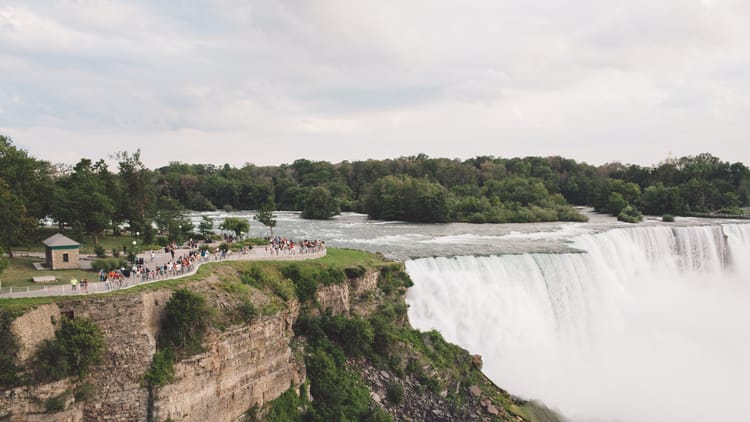
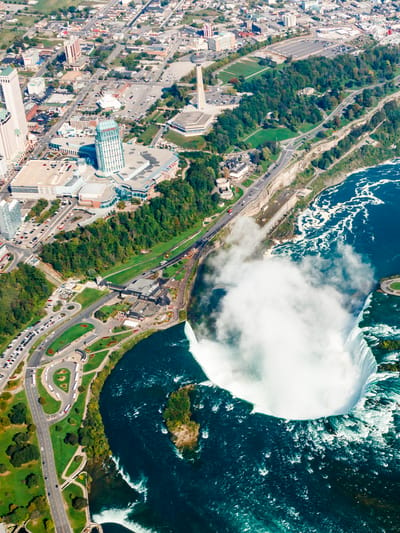
Most people come to Niagara for the Falls, ride a boat into the mist, buy the poncho photo, and leave without ever learning that the best part of the river starts a mile downstream. That trip is a great trip, and if the roar and the rainbow are all you want, the region hands them over without asking anything of you. But the seven miles below the Falls, where the river slams through a rock canyon on its way to Lake Ontario, is where Niagara stops being a postcard and starts being a place you hike.
The Niagara Gorge is a stacked corridor of trails on both sides of an international border, and they range from a flat rim stroll a grandparent can do in sandals to a rope-assisted scramble that closes in the rain. The whitewater in the gorge is rated Class 5 and 6, which is the kind of rapid that has no business existing a short walk from a parking lot. The trails let you stand next to it.
This guide ranks the best Niagara gorge hikes on both the US and Canadian sides from easiest to hardest, so you can match the trail to the legs in your group and the weather on the glass. Every one of them is a day trip from a single base camp on Grand Island, which sits in the middle of the river almost exactly between the American trailheads to the north and the Canadian escarpment trails across the water.
How the Niagara Gorge Trail System Actually Works
The gorge trails split cleanly along the border, and knowing which side does what saves you a wasted morning. The US side is river-level drama: trails that drop off the rim on stone staircases and run right alongside the rapids, stacked into a three-park corridor between the Falls and the Whirlpool. The Canadian side is escarpment country: trails that follow the top edge of the gorge and the Niagara Escarpment, with the continent's oldest marked footpath running through them and boulder fields big enough to draw rock climbers.
On the US side, nearly every gorge trail begins at the Niagara Gorge Trailhead Center in Niagara Falls State Park, or at the Whirlpool and Devil's Hole state park lots a few minutes north. There's no trail fee; parking is the only cost, and it's plentiful on weekdays and tight on summer weekends. Two of the harder trails require hikers to be at least eight years old, and the park closes the descent trails when conditions turn, so the posted status at the trailhead is the final word regardless of what the forecast said that morning.
The Canadian trails sit across the river and require a passport and a border crossing to reach, which turns them into their own day rather than an add-on. Once you're across, the Niagara Glen, Queenston Heights, and Woodend trails are free to walk, and Short Hills is a provincial park about forty minutes on. The border logistics are worth their own planning, and they're covered at the bottom of this guide.
One rule spans both countries: the rock in this gorge is slick. It's shale and dolostone polished by four hundred million years of water, and it does not forgive a smooth-soled sneaker after rain. The difficulty ratings below assume dry conditions. Add a full grade of caution to anything after a storm.
Easy: Rim Walks and Overlooks Anyone Can Do
If your group includes someone who wants the view without the knees, the gorge rim is where you start. These trails stay up top, trade elevation for distance, and still hand over the canyon.
Great Gorge Scenic Overlook Trail (US)
The gentlest real look into the gorge, this one runs about an hour round trip from the Trailhead Center and follows the rim past views of the river, the escarpment, and the ruins of the old Schoellkopf power station without asking you to descend into anything. It's the trail for the morning someone in the rig woke up sore, or for the first hour of a trip when nobody's warmed up yet. Rated easy, no age minimum, no drama.
DeVeaux Woods (US)
For the absolute gentlest option, DeVeaux Woods State Park sits on the rim just north of the Whirlpool and protects one of the last stands of old-growth forest in western New York. The trails here are flat, shaded, and short enough to be a stroller-friendly leg-stretch rather than a hike, which makes it the right call for a hot afternoon or a group that's already hiked once that day. The old trees are the draw; some of them predate the state.
Niagara Gorge Rim Trail (US)
The full rim trail runs about 5.3 miles point to point and threads three state parks: Niagara Falls State Park, Whirlpool State Park, and Devil's Hole State Park. The terrain stays easy the whole way, but the length earns it a spot above the shorter walks. Hike it one direction and shuttle back with your towed vehicle, or turn around at the Whirlpool for a flat out-and-back with the single best overlook on the US side as your reward for turning at the right moment.
Queenston Heights (Canada)
Across the border and atop the escarpment, Queenston Heights is the southern terminus of the Bruce Trail, Canada's oldest and longest marked footpath. Up top it's a picnic park with monuments and shade; the paths are easy and the views run down the lower Niagara River toward Lake Ontario. A short spur descends the escarpment slope for anyone who wants a taste of elevation, but the top-of-the-hill loop is a flat, kid-friendly walk with a War of 1812 history lesson folded in.
Woodend Conservation Area (Canada)
A little farther into Niagara-on-the-Lake, Woodend Conservation Area runs a loop of roughly 3.5 kilometers with about 180 feet of gentle climbing through hardwood and Carolinian forest on the escarpment. The Bruce Trail passes through here too, and the whole property sits on ground that was strategically central to three War of 1812 battles. It's an easy hour in the trees, best paired with the Niagara-on-the-Lake town day rather than treated as a destination on its own.
The trails are free. Knowing which one to skip when the rock is wet is the part worth having in your inbox. Subscribe to our weekly newsletter.
SUBSCRIBE FREE — RV-SMART TRAVEL, EVERY WEDNESDAY, ONE EMAIL
Moderate: Down Into the Gorge and Back
This is where Niagara earns its reputation. The moderate trails drop off the rim, put you at river level beside genuinely violent water, and then make you climb back out. None of them are long. All of them are steeper than the mileage suggests, and the climb out is the honest part of the day.
Devil's Hole Rapids Trail (US)
The signature moderate hike, Devil's Hole drops into the gorge on a stone staircase of roughly 300 steps, runs along the river past the Devil's Hole rapids and the giant tumbled boulders that give the place its name, and climbs back out the way you came. The park rates it moderate and clocks it at about two and a half hours round trip; hikers need to be at least eight. The descent feels easy and lies to you about the return. Save some legs for the stairs, because they're all waiting at the end.
Niagara Glen (Canada)
The Canadian answer to Devil's Hole, the Niagara Glen Nature Reserve offers about 2.5 miles of rugged trail that switchbacks down into the gorge a few minutes north of the Whirlpool. At the bottom you're among boulder fields left by the retreating Falls, large enough that bouldering is a separate ticketed activity here and serious enough that climbers drive in from across the region. Trail access and parking are free; the optional bouldering permit is bought at the Nature Centre up top. The rock is slippery when wet and the climb back to the rim is the workout. Plan two hours and don't rush the footing.
Swayze Falls Loop, Short Hills Provincial Park (Canada)
The moderate hike that isn't on the river at all, Short Hills Provincial Park sits about four kilometers southwest of St. Catharines and protects 660 hectares of escarpment forest, streams, and a seasonal waterfall. The Swayze Falls loop runs roughly five kilometers with real elevation change along the Bruce Trail, and the falls itself is best in spring and after rain, quieter by August. This is the trail for a day you want woods and a waterfall instead of canyon walls, and the drive out is worth it for anyone who's already done the river trails and wants a different flavor of the same escarpment.
Hard: The Scramble Route
There's really one trail in the gorge that graduates from hiking to scrambling, and it's honest about it.
Whirlpool Rapids Adventure Trail (US)
The hardest trail in the corridor, the Whirlpool Rapids Adventure Trail begins at Whirlpool State Park, runs about three hours round trip, and includes rope-assisted sections and unmaintained terrain where you use your hands as much as your feet. It runs beside the Whirlpool Rapids, some of the most powerful accessible whitewater in North America, where the river makes a right-angle turn and spins into a standing whirlpool below. The park recommends it for experienced hikers eight and up and closes it outright when the rock is wet, and that closure is not a suggestion. Attempt this one only on a dry day, in real footwear, with a group comfortable using ropes to get down and back up. Done in the right conditions, it's the best few hours in the whole gorge.
What to Pack for a Niagara Gorge Hike
The gorge punishes two things: bad footing and a casual hydration plan. The descent trails are wet-rock stone staircases, and the summer humidity off the river turns every climb back to the rim into more work than the distance implies.
Footwear does the heavy lifting. Trail shoes or boots with real tread beat sneakers by a wide margin on the polished shale, and a cushioned ankle sock with a heel tab that keeps blisters off a 300-step climb matters more here than on flat ground. For water, an insulated stainless bottle that seals one-handed while your other hand's on a rope is worth more than a floppy plastic one you can't manage on a scramble, and a zero-sugar electrolyte packet for the humid haul back up to the rim is the difference between a good afternoon and a headache. If you're building a broader kit, our guide to the camping and RVing gear every RVer actually needs covers the pieces that carry over to any trailhead.
For a trailhead lunch, a divided snack box with built-in ice packs keeps a real meal together in the truck, and an expandable insulated cooler bag for the drinks you want cold at the bottom earns its keep on the river-level trails where there's shade and a rock to sit on. Since the gorge trails have spotty cell coverage in the lower sections, download your maps before you descend. And if hiking's part of a longer trip, our take on RV healthy-living hacks for staying fit on the road has more on keeping the body ready for days like these.
Border Logistics for Hiking Both Sides
Reaching the Canadian trails means a real border crossing, and treating it as a whole day rather than a quick hop keeps the plan realistic. Every US traveler needs a passport or an enhanced license to cross and to come back. The Rainbow Bridge and the Lewiston-Queenston Bridge are the two crossings closest to the gorge trails, and wait times are predictable midweek and unpredictable on summer weekends and holidays.
Cell service is the quiet trap. US phones roam the moment you cross unless your plan includes Canada, so either turn off cellular data for the day or add a short-term international option before you go. Download your trail maps and your route back to camp while you're still on your own network. Canadian trail fees are simple, most of these are free to walk, but bring some Canadian currency or a tap card for parking and the Niagara Glen bouldering permit if you want it.
If crossing the border isn't in the cards for this trip, the US side alone holds enough trail to fill two full days, from the flat rim walks to the Whirlpool scramble. The Canadian escarpment trails are a reason to come back, not a requirement to enjoy the gorge.
How to Sequence Gorge Hikes Across a Trip
The smart move is to spread the trails across a trip rather than stacking them into one leg-destroying day. Open with an easy rim walk on an arrival or travel-weary morning, save a moderate descent like Devil's Hole or the Niagara Glen for a day with fresh legs and dry rock, and slot the Whirlpool scramble only on a clear, dry forecast when nobody's already worn out. After a big descent day, the river cools you off, and our roundup of RV-accessible swimming holes worth planning a trip around is the natural next stop for anyone who wants to wash the climb off.
Basing on Grand Island keeps all of it inside a day's reach without moving the rig, the same single-base-camp play that makes our Adirondacks RV itinerary work a few hours east. If you'd rather chase gorges than base near one, the Watkins Glen RV itinerary in the Finger Lakes runs a very different canyon with a paved gorge trail past nineteen waterfalls, and our Seneca Falls RV itinerary covers the quieter end of the same region. For anyone hiking the gorge on a first RV trip, our two best RV trips for beginners is the confidence primer.
FAQs
What is the best hike in the Niagara Gorge?
For most hikers, the Devil's Hole Rapids Trail on the US side is the best combination of drama and effort: a roughly 300-step descent to the river, a walk past genuinely violent rapids, and a climb back out, all in about two and a half hours. If you want the hardest and most rewarding option and the rock is dry, the Whirlpool Rapids Adventure Trail delivers rope-assisted scrambling next to Class 5 and 6 whitewater. For the best view without descending, the Niagara Gorge Rim Trail stays on top and threads three state parks.
How hard are the Niagara Gorge trails?
They range from easy to genuinely challenging. Rim trails like the Great Gorge Scenic Overlook and the full Niagara Gorge Rim Trail stay flat on top and suit almost anyone. The descent trails, Devil's Hole on the US side and the Niagara Glen in Canada, are moderate: short in distance but steep, with the climb back to the rim being the real work. The Whirlpool Rapids Adventure Trail is the only one that crosses into scrambling, with rope-assisted sections and unmaintained terrain, and the park closes it when conditions are wet.
Do you need a passport to hike the Niagara Gorge?
You need a passport only for the Canadian-side trails like the Niagara Glen, Queenston Heights, Woodend, and Short Hills, which require crossing the border. The US-side gorge trails in Niagara Falls, Whirlpool, and Devil's Hole state parks need no passport and hold enough trail to fill two full days on their own. Every US traveler crossing into Canada needs a passport or enhanced license both to enter and to return.
Are the Niagara Gorge hikes free?
Yes on both sides of the border. There is no fee to hike the US gorge trails; you only pay for parking, which is plentiful on weekdays and tighter on summer weekends. The Canadian trails at the Niagara Glen, Queenston Heights, and Woodend are also free to walk, though the optional bouldering permit at the Niagara Glen is purchased separately at the Nature Centre and some lots charge for parking.
Can you hike into the Niagara Gorge with kids?
Yes, with the trail matched to the age. The rim walks, DeVeaux Woods, Queenston Heights, and Woodend are flat and kid-friendly with no age minimum. The descent trails, Devil's Hole and the Niagara Glen, require hikers to be at least eight years old and involve a real climb back out, so they suit older kids who already enjoy hiking. The Whirlpool Rapids Adventure Trail also lists an age-eight minimum but its rope-assisted scrambling makes it a poor choice for most families regardless of age.
When is the best time to hike the Niagara Gorge?
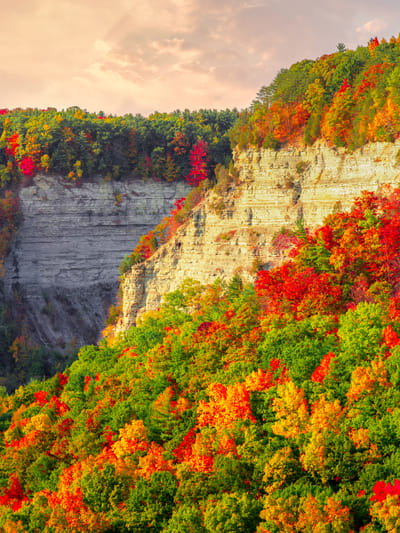
Late spring through early fall, on a dry day. Summer offers the longest daylight and warmest water for a post-hike cool-off, though the humidity off the river makes the climbs harder, so start early. Early fall brings cooler air and the escarpment foliage turn, which is among the best in the Northeast. Avoid the descent and scramble trails right after rain, when the shale and dolostone turn slick and the park closes the hardest routes outright.
How long does it take to hike Devil's Hole?
The Devil's Hole Rapids Trail takes about two and a half hours round trip at a moderate pace. That covers the roughly 300-step stone staircase down into the gorge, the walk along the river past the Devil's Hole rapids and the giant boulders, and the climb back up the same staircase. Budget extra time on summer weekends for parking at the Devil's Hole State Park lot, and more if you stop to watch the whitewater, which most people do.
Categories
Related Posts
Subscribe to the Swervia Newsletter
The best RV stories, tips, and destinations—expertly curated and always free.