When Fall Colors Peak: A Region-by-Region Timing Guide for RVers
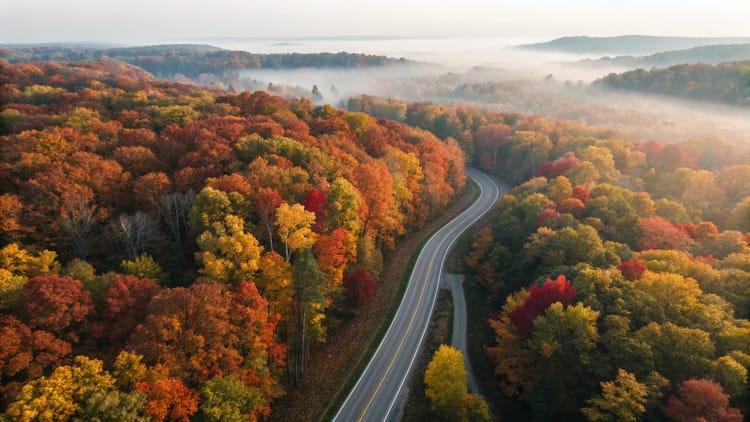
Somewhere right now, somebody is booking a Vermont campsite for the second weekend of October because a website called it peak. Maybe it is. Or an early frost moves the show up ten days and they get a lovely week under bare sugar maples.
You as an RVer get the better version of that problem, because you can leave. Color sweeps the country north to south across about six weeks, then comes down a single mountain across two more. Camp in the valley, drive up in the morning, catch two peaks without breaking camp. What it takes is knowing the real windows, which mostly means distrusting anybody who hands you a date.
What Peak Actually Means, and Why Nobody Can Give You a Date
Let go of the idea that a region flips all at once on one glorious Saturday. It doesn't, and the Park Service says so out loud. Great Smoky Mountains allows that "predicting the exact dates of the 'peak' season is often difficult." The Blue Ridge Parkway is blunter: exact peak dates along the road are "impossible to predict in advance."
The Forest Service explains the why: the calendar is set primarily by lengthening nights, the one input that doesn't vary year to year. Weather decides intensity and duration, not timing.
So the useful question isn't which weekend is peak. It's where color will be while you're out there. Plan a one-to-two-week window, and treat any weekend promised six months out as a guess wearing a confident face.
More fall route intel where this came from. Subscribe to our weekly newsletter.
Peak-color windows, campground closing patterns, and the mountain roads that turn a big RV around. Free, every Wednesday.
The Regional Windows RVers Can Plan Around
Northern New England and the Upper Midwest
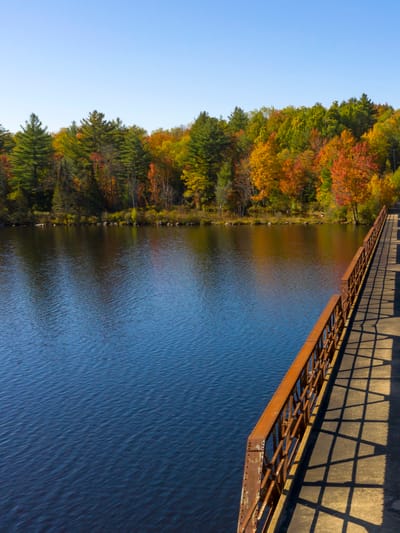
Late September into early October is the earliest reliable color in the country, and the reason people will drive nine hours to sit in Vermont traffic. Vermont's foresters report it starting high and in the north in early to mid September, then working downhill and south, peaking the last week of September into the first or second week of October. Our Stowe Vermont RV itinerary sits at that latitude.
Minnesota runs nearly the same clock. The DNR's Fall Color Finder puts peak in the northern third of the state between mid September and early October, then buries the line that matters most: peak in any one place lasts about a week. Don't build ten nights around one campground and expect the trees to wait.
The Mountain West
September into early October, and a completely different tree. Colorado's aspens go gold instead of red, in big connected stands that can turn a whole hillside at once. The Colorado State Forest Service puts color at the higher elevations and in the north of the state through September and early October, with lower and more southerly stands following behind. The window stays wide because the state is: a 12,000-foot pass and a 7,000-foot valley are never on the same schedule.
The Mid-Atlantic
October is the forgiving middle of the map. Shenandoah's season stretches from late September into November, and the park won't name a peak inside it. When your dates are locked, a long vague season is the good kind of vague. The Finger Lakes sit at the northern edge of the same band, which makes our Seneca Falls RV itinerary a smart second act once New England has gone brown.
The Southern Appalachians
October into early November, and the longest season in the country. In Great Smoky Mountains, color above 4,000 feet develops from early to mid October, while the brightest displays below it come between mid October and early November. Seven weeks of color somewhere inside one park, which makes it the safest bet here if your calendar won't budge. West Virginia runs the same band, and our New River Gorge RV itinerary puts the gorge walls to work.
Texas Hill Country
Late October into November brings the last color in America, and the one most people don't believe exists. Lost Maples holds an isolated stand of Uvalde bigtooth maples that turns through the final two weeks of October and peaks in the first half of November. Miss New England and you haven't missed fall. You've just got a longer drive.
Elevation Buys You Extra Weeks
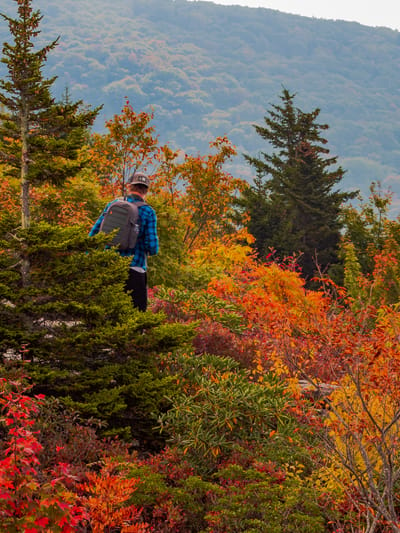
You've probably read that color moves a week for every thousand feet you climb. Some state guides do use it as a rough rule of thumb, but don't route a trip on it. The real story is more useful than the rule: the forest itself changes as the mountain climbs. The Park Service names the high-elevation species that turn first in the Smokies, yellow birch, American beech, mountain maple and pin cherry, then the lower cast that peaks weeks later, sugar maple, scarlet oak, red maple and the hickories. Different trees on different schedules, in a high country the park describes as resembling New England. The Forest Service adds that a given species colors at about the same time up high as in warmer lowlands at the same latitude. The mountain isn't running the same trees late. It's running different trees.
For an RVer that's a dial you can turn without moving anything heavy. Leave the RV level and hooked up and go find the color by car. The Blue Ridge Parkway alone varies over 5,000 feet. Some days you don't need a new campground. You need to drive uphill.
Chasing Color in an RV: Reservations, Closures, and the Season's Hard Edges
This is where a beautiful trip quietly comes apart, so it gets more than a footnote.
Peak-color weekends are the hardest campground bookings of the year outside summer holidays. Shenandoah's campgrounds and lodges fill months ahead for September and October weekends. Down in Texas, Lost Maples hits capacity most fall days and requires a reserved day pass to guarantee you get in at all. Go midweek if you have any flexibility at all. It's the difference between watching all this through a line of brake lights and actually seeing what you drove out for.
Then there's the closure problem, which never shows up on the pretty foliage maps. Northern campgrounds close on the calendar, not on the leaves. Plenty across New England and the Upper Midwest shut down while the trees around them are still going. Confirm your site's closing date before you route around it.
And stretches of the Blue Ridge Parkway close for storm repair, washouts, and winter weather, sometimes for a whole season at a time. The North Carolina high country takes the worst of it. Sections reopen on their own schedule while the communities along the road do their own rebuilding, so check the Parkway's road status page before you route through it, and keep Great Smoky Mountains or the New River Gorge in your back pocket.
Plan the Window, Not the Weekend
Pick a band instead of a date, leave a week of slack on either side when the calendar allows, and camp somewhere with real elevation nearby, so an early year and a late one both still have an answer.
Then run one check the week before you roll. A window you picked in July gets you close; a report from last Tuesday gets you there. Three sources, five minutes: the state foliage report for this year's read (Vermont and Minnesota both publish weekly, Texas posts straight from Lost Maples), the park's NPS page for the elevation breakdown no statewide map can give you, and the road status page for whether the drive is open at all.
Color you can drive up to is color you can't really miss.
When to Go Where: The Short Version
- Mid to late September. Northern Vermont and New Hampshire, the northern third of Minnesota, and Colorado's high country.
- Late September into early October. The rest of northern New England, the Upper Midwest, and Colorado's lower valleys.
- October. The Mid-Atlantic, including Shenandoah and the Finger Lakes, plus the Southern Appalachians above 4,000 feet.
- Mid October into early November. The lower elevations of Great Smoky Mountains, and the New River Gorge.
- Late October into November. Texas Hill Country and Lost Maples, the last color of the year.
FAQs
When is the best time to see fall colors?
Mid September through early November, depending on where you're headed. Northern New England and the northern Upper Midwest peak between late September and the first half of October. The Southern Appalachians run from early October above 4,000 feet into early November below it. Texas Hill Country goes last, peaking in the first half of November.
Where is the best place to see fall colors?
Start from your dates, not from a list of pretty places. Late September into early October favors Vermont, New Hampshire, and northern Minnesota. October belongs to the Mid-Atlantic and the high Southern Appalachians. Late October into November means the lower Smokies, the New River Gorge, or Texas Hill Country. If your trip is locked in, Great Smoky Mountains is safest: its elevation range gives it a seven-week season.
When is peak fall color in New England?
Northern New England generally peaks in the last week of September through the first or second week of October, starting high and in the north, then moving down into the valleys and south. Southern New England runs one to two weeks behind. Vermont's weekly forester reports are the only current-year read worth trusting.


Categories
Related Posts
Subscribe to the Swervia Newsletter
The best RV stories, tips, and destinations—expertly curated and always free.