RV Height Clearance: What to Know Before You Hit a National Park Tunnel
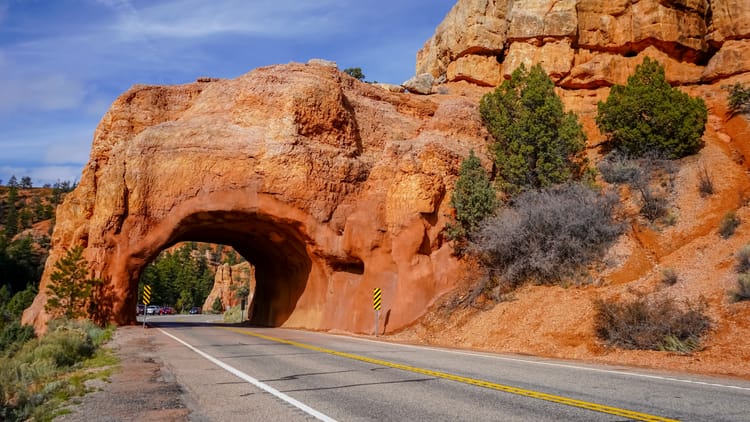
Somewhere this week, somebody is going to roll up to Zion's East Entrance in a fifth wheel and get told to turn around. Not fined. Not escorted through behind a ranger. Turned around, with Bryce Canyon still a hundred and fifty miles away down a road they hadn't planned on driving.
They measured, sort of. They knew the brochure said 12'6" and they knew 13'6" is the number that matters on most US highways, so they stopped thinking about it somewhere around the second gas stop.
Most RVs are built to clear 13'6", which is the limit in the majority of states. Texas and Illinois allow 14'. Colorado goes higher on some routes. None of that helps you inside a national park, where the tunnels were blasted through rock in the 1930s and the number on the sign is whatever the mountain allowed.
Three of the most-visited parks in the country run traffic through one. Zion, Shenandoah, and Sequoia. None of them are secret, and all three still catch people who never measured against anything but the highway limit.
Why Your RV Is Probably Taller Than You Think
The spec sheet is a decent starting number and a bad final one.
Most manufacturers already include the factory rooftop AC in the published exterior height, so the unit you've been picturing as your hidden six inches is usually counted. What isn't counted is everything that went up there afterward: a satellite dome, a second AC, an upgraded AC that sits taller than the one it replaced, an antenna, a roof rack, a cargo box, a solar array on standoffs. Buy used and the number gets softer still, because you inherited whatever the last owner bolted to the roof and they didn't leave a note.
Six inches sounds like nothing. Six inches is the whole margin between clearing a stone arch and stopping traffic on a two-lane road while a ranger works out how to reverse you off a mountain.
How to Actually Check Your Number
Park on level ground, because a slope adds inches you don't have. Tape a straight board across the roof at the genuine high point, which is usually the AC shroud or an antenna rather than the roofline itself, and measure from the ground to the top of the board. Round up.
Then write it somewhere you'll actually see it at 60 mph: the dash, the visor, a strip of tape on the wheel. Do it once, redo it after anything new goes on the roof, and the number is settled for the life of the RV.
Three Real Park Tunnels That Catch People Off Guard
Zion National Park changed the rules, and if you're working from an older guide you have bad information. For years the park ran a permit and escort system: oversized RVs paid a fee, waited for a gap in traffic, and got walked through the Mount Carmel Tunnel straddling the center line.
That's over. Zion now posts hard size limits for the entire stretch between Canyon Junction and the East Entrance, not just the tunnel itself. A single vehicle has to come in under 35'9" long, 7'10" wide, 11'4" tall, and 50,000 pounds, and towing it's 50 feet combined with a 26-foot trailer maximum. Mirrors count. Tires count. So does the bike rack.
Go over on any one of those and there's no escort to wait for. You'll be given instructions for turning around safely at the South or East Entrance, and you'll need another way to Bryce. That way is Highway 20 north of Cedar City, roughly 150 miles and two and a half hours. It's 63 miles longer than the scenic route and costs you about 42 minutes, because the scenic route runs under 30 mph anyway. Worse on paper than it is in practice.
An oversized RV can still get into Zion from the South Entrance for the large-vehicle lot, Watchman and South campgrounds, Zion Lodge with a reservation, or the Scenic Drive by shuttle in the off-season. You just can't cross to the east side.
Shenandoah National Park's Skyline Drive has exactly one tunnel, and it's been there since Civilian Conservation Corps crews blasted it through the mountain in 1932. Marys Rock, at mile 32.2. Clearance is 12'8", measured for both lanes, and the mountain isn't negotiating.
Skyline Drive is otherwise one of the friendliest long scenic drives in the country for a big RV. Which is why this one number is worth having before you commit to all 105 miles of it.
Sequoia National Park's Tunnel Log isn't the drive-through tree you're picturing. That one was the Wawona Tree, in Yosemite's Mariposa Grove, and it came down in a snowstorm in 1969. It's gone. People still turn up looking for it.
What Sequoia has going for it is that its tunnel is real and you can still drive through it. A giant sequoia fell across the road in 1937 and crews cut a passage through the trunk the following summer. Clearance is 8 feet, which rules out essentially every RV on the road. There's a marked bypass a few yards away, and it's the normal way through rather than a consolation prize.
Subscribe to our weekly newsletter and stay up to date on RV travel.
Sent straight to your inbox every week, free.
Building the Habit Before You Go
The RVers who never have a tunnel problem all do one small thing: they check the park's official vehicle-restrictions page before leaving home, not on the access road with a line behind them. A car GPS routes for a sedan, and it will happily send you at a 12'8" arch in a 12'11" motorhome and feel good about the mileage.
So if you drive anything over 11 feet, get the RV-rated GPS or a trip-planning app that takes height, length, and weight as inputs. If you buy one thing on this page, buy that.
None of this is a disaster scenario, either. Parks with real restrictions post bypasses because oversized vehicles are common rather than rare, and the rangers turning RVs around at Zion every summer day have the script memorized. The difference between a bad afternoon and a non-event is knowing your real number before the entrance station instead of after. One is a route you planned. The other is a three-point turn on a canyon road with an audience.
The Short Version
- Zion, Zion-Mount Carmel Highway: 11'4" tall, 7'10" wide, 35'9" long for a single vehicle, 50,000 lbs. No permits, no escorts. Over on any one and you turn around. Detour to Bryce runs Highway 20, about 63 extra miles for 42 extra minutes.
- Shenandoah, Marys Rock Tunnel (mile 32.2): 12'8", both lanes, no exceptions.
- Sequoia, Tunnel Log: 8 feet. Nearly every RV takes the marked bypass instead.
- Your number: measured on level ground to the top of whatever is genuinely highest, rounded up. Not the spec sheet.
FAQs
How do I know if my RV is too tall for a tunnel?
Measure to the highest point on the roof on level ground, which is usually the AC shroud or an antenna rather than the roofline. The factory spec sheet typically includes the original rooftop AC but nothing added later, so a satellite dome, a second AC, or a roof rack installed after delivery won't be in that number. Use your measured height for every low-clearance road from that point forward.
Do you need a permit for the Zion tunnel?
No. Zion retired the permit and escort system. The Zion-Mount Carmel Highway now runs on hard size limits: 11'4" tall, 7'10" wide, 35'9" long, and 50,000 pounds for a single vehicle, measured including mirrors, tires, and anything mounted on the roof. Exceed one of them and you'll be directed to turn around at the South or East Entrance rather than escorted through.
Can I drive my RV through the Tunnel Log at Sequoia?
Only under 8 feet tall, which rules out nearly every RV. A marked bypass sits a few yards away and handles everything larger. It's the normal route through, not a detour you got stuck with.



Categories
Related Posts
Subscribe to the Swervia Newsletter
The best RV stories, tips, and destinations—expertly curated and always free.