Historic Flooding, the Deadliest Thing in a National Park, and the World's Tallest Barber Pole
Some links in this post may be affiliate links. If you click and make a purchase, we may earn a small commission—at no extra cost to you. Thank you for supporting Swervia.

5-minute read
Good morning! It's Wednesday, November 4. Fall color is still peaking in ten places, the deadliest thing in a national park is the drive in, and one man just finished a walk home that took 28 years.
First time reading? This is your quick catch-up on everything that happened in the RV and outdoor world this week — timely, useful, and a little brighter than the rest of your inbox. Join us and sign up here.
Know someone who'd love this? Forward it. Thoughts on this issue? Hit reply (we read every one), or email hello@swervia.com.
— OK WHAT IS EVEN HAPPENING —
You Haven't Missed Fall
> Everyone quit on fall two weeks early. The maps went brown, the group chat moved on to Thanksgiving, and yet ten American places are in full color right now: Asheville holds its leaves into November, north Georgia is building to its loudest week, Napa's vineyards are turning gold. There's even a Florida state park on the list.
Better news: the crowds that turned the Blue Ridge Parkway into a parking lot last month went home, and campgrounds booked solid in September have open loops today. Late fall is the only leaf season where you get the view and the campsite. Our region-by-region peak schedule shows where the color is this week, and when the last leaf drops, these parks are just getting started.
— OK BUT A LOT MORE HAPPENED —
Flipped RVs, Free Parks, and One Deadly Drive
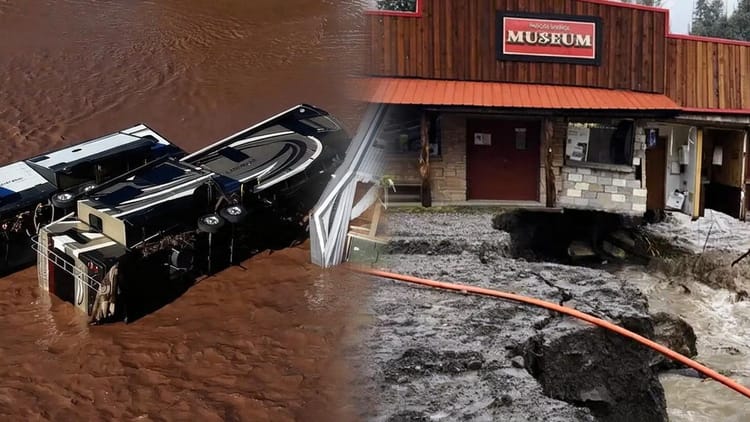
> Flash floods just tore through Arizona's RV country. In Camp Verde, about 30 miles south of Sedona, floodwater flipped RVs and got into more than 100 homes. If Arizona or the Four Corners is on your route this week, check road and campground closures before you drive. (More)
> Every national park that charges an entrance fee waives it next Wednesday, November 11, for Veterans Day. Camping, tours, and reservations still cost what they cost, and if you served, there's a pass that makes every day the free day. And thank you for your service. (More)
> Seven more condors are flying over the redwoods as of this week. They just took their first wild flights near the California-Oregon line, and not long ago the worldwide count of wild condors was zero. Worth a glance up on your next north-coast drive. (More)
> Lake Tahoe tried to become a national park four times and got told no. So did Mount Shasta, and one bill made it through Congress before a president killed it on his way out the door. See the rest of the places that made a run at national park status and lost. (More)
> Nobody is buying RVs right now, which is great news if you want one. One of the country's biggest RV retailers just posted a quarter bad enough to spook Wall Street and cut its own forecast. A dealer staring at a lot full of unsold inventory all winter answers the phone fast. (More)
> The deadliest thing in a national park is the drive in. A decade of fatality data across all 63 parks found wildlife caused less than 1 percent of accidental deaths, while falls and crashes caused more than half. At one of the most famous parks in the country, the leading killer is the drive itself. (More)
— OK BUT YOU SHOULD KNOW THIS —
You Hit a Deer, Now What?
> As of Sunday, dusk lands squarely on your drive time, and dusk is when deer move. Most deer-vehicle crashes happen October through December, so the thud is likeliest right now, and almost everyone's first instinct after it, going to check on the animal, is the one that gets people hurt. The two-minute drill for the moment after is worth reading before you need it. One piece to keep up front: deer walk single file, so the first one through your headlights is rarely the last.
— OK BUT YOU SHOULD TOTALLY GO HERE —
Two California Trips the Crowds Haven't Found
> Stand under 1,000 giant sequoias without the Yosemite line — Twenty minutes after you park, you're standing at the foot of trees so big the rest of the forest looks like shrubbery, and in November there's a good chance it's just you out there. Calaveras Big Trees State Park puts the giants on an easy loop right off Highway 4 in Gold Country, and a thousand more hide in a second grove for anyone willing to walk for them. The road to that far grove closes for the season mid-month, so this is the time. A short row of campsites goes first-come in the off-season so call the park before you haul in.
> Drive the hour of coastline San Francisco keeps for itself — Just south of Half Moon Bay, you can walk a retired stretch of Highway 1 that hangs right over the Pacific, eat artichoke soup at a tavern that's been ladling it since 1894, and drive home with a warm loaf of artichoke garlic bread riding shotgun. That's one day on the Coastside, and winter is when it shows off: elephant seals pile onto the beach at Año Nuevo for breeding season, and the big-wave crowd starts watching Mavericks for the first real swell. Leave the RV on its site and make it a day run in the toad or the truck.
— OK BUT DID YOU SEE THIS —
> America's six most alligator-filled rivers, in case you like knowing the odds.
> A college student just found Yellowstone's rarest local, an insect that dies of warmth.
> Florida's ten best RV campgrounds, ranked worst to best.
> One Texas town just did the unthinkable and made a Buc-ee's go smaller.
> Death Valley's castle is giving tours again, but its 100,000 furnishings are still locked away.
The Dump Station Oregon has a barber pole so tall the town built a park around it.
The Odometer 75,000,000. The estimated steps it took Karl Bushby to get home. Everyone reading this prefers to drive; Bushby walked, from the bottom of Chile all the way back to England, and on Monday, 28 years after he left, he finished with a three-mile stroll into Hull.
— OK BUT WHO EVEN IS THIS PERSON —
The Big Trees Are Named for Skulls
> The story goes that around 1806, a Spanish explorer named Gabriel Moraga rode up to a river in California's Gold Country and found its banks littered with human skulls. He named the water for what he saw, El Río de las Calaveras, the River of Skulls. His own diary says a battle between tribes left them there; later tellings say the river simply collected its dead from somewhere upstream, and nobody ever settled it. The name outlived the mystery, creeping from the river to the county to the state park where this week's giant sequoias stand. So if you take the big-trees detour, that's the name on your GPS: Calaveras. Moraga went on to name rivers and valleys all over inland California, but the skulls are why this one stuck. The sequoias, for the record, predate everyone involved.
Like this? Get it free every Wednesday. Subscribe →
OK but what’s with the name Swervia? It’s everything we love about RVing, packed into one name. “Swerve” for the twists, turns, and unexpected detours that make travel – and life – worth remembering. “We RV” because, well, we do. And “Via” for the roads that actually get you somewhere.
Send us your feedback at hello@swervia.com and help us avoid a wrong turn. We aren’t afraid to ask for directions.
Products you buy through our links may earn us a commission.
© 2026 Swervia, Inc.
You May Also Like
Categories
Related Posts
October 28, 2026
Subscribe to the Swervia Newsletter
The best RV stories, tips, and destinations—expertly curated and always free.
© 2026 Swervia. All rights reserved.