11 Best Beach RV Sites in America Worth Planning a Trip Around
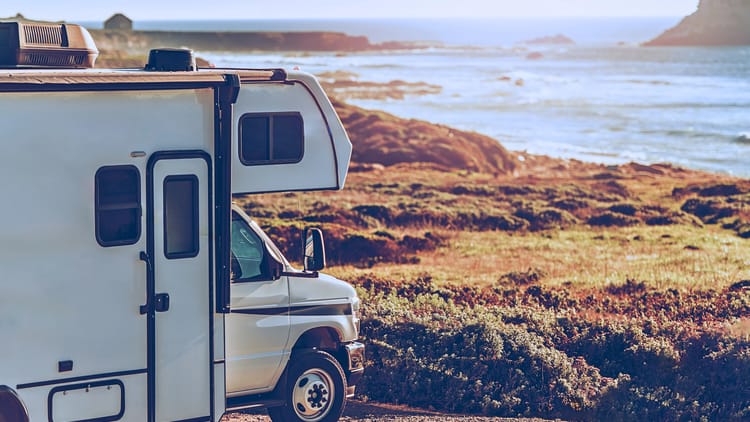
Most beach campground lists are full of spots that sound incredible until you realize you're parking in a gravel lot a quarter mile from the water, paying for the idea of the coast more than the coast itself. This is not that list.
This is the list of beach RV sites worth building a trip around — places where the research holds up, the reviews are honest, and the access is real. Eleven spots, coast to coast, ranked for how wild or how welcoming they actually are. Whether you're a boondocker who wants toes in the sand and nothing else, or someone who wants a full-hookup site with a Gulf breeze and a cold drink at sunset, at least three of these belong on your list.
Eleven spots, coast to coast, verified and fact-checked — from the Gulf of Mexico and the Florida Keys to the Pacific coast of California, the rugged Oregon shore, the mid-Atlantic, and Cape Cod. Whether you're a boondocker who wants toes in the sand and nothing else, or someone who wants a full-hookup site with a Gulf breeze and a cold drink at sunset, at least three of these belong on your list.
Each entry carries a boondock-friendliness rating that reflects how truly off-grid and self-sufficient the experience actually requires you to be — not how good the location is. A 4/10 means hookups are available and the barrier to entry is lower; it's a great destination, just not a primitive one. A 9 or 10 means bring everything, read the permit rules twice, plan your tank dumps, and arrive knowing it's the real thing. The score tells you what to pack, not whether to go.
1. Padre Island National Seashore — Corpus Christi, Texas
This is the one every beach RV camping list starts with, and for good reason. Padre Island is the longest undeveloped barrier island in the world at 66 miles, and you drive your rig directly onto hard-packed sand and camp for free. No hookups anywhere on the beach. No designated sites. Just you, the Gulf, and as much separation from other rigs as you want — reviewers consistently describe hundreds of feet between campers. Self-registration at a kiosk, limited to 14 consecutive days, with a nearby dump and fill station that makes tank management manageable.
The first five miles are two-wheel-drive-friendly. Beyond that, 4WD is non-negotiable. The nearest fuel is roughly 25 miles away. Summer heat is punishing. Tides and storm surge deserve respect — read the NPS tidal info before you set up camp. Awnings take a beating from wind. Before heading out, a tire pressure monitoring system is worth having on your list — soft sand at Padre will drop your PSI fast, and checking manually after every mile of beach driving adds up. None of that diminishes what this place is: a life-changing amount of solitude on a wild stretch of coastline that most people never see. Our complete guide to boondocking without hookups covers the tank and power management principles that make trips like Padre fully sustainable.
Boondock-friendliness: 10/10 Permit required: Self-registration only (free); park entrance fee applies
2. Race Point ORV Beach Camping — Cape Cod National Seashore, Massachusetts
Camping on the tip of Cape Cod, surrounded by rolling dunes, whale-watching waters, and some of the best surf fishing on the East Coast. This one has a cult following among Northeast RVers, and it earns it. The solitude is exceptional for a destination this close to a major metro area.
The access to Race Point is legitimate work. No hookups, no trailers — motorized self-contained rigs only (Class A, C, or truck camper with permanently installed holding tanks). Rigs must exit the beach every 72 hours to dump tanks. Tire size requirements are enforced at the ORV Ranger Station inspection, and rigs have been turned away on the spot for non-compliance. That inspection is not a formality. Camping season runs roughly April through November, limited to 100 vehicles total. Permits run approximately $75–$110 (depending on permit type) for seven nights.
Everyone who clears the requirements consistently says it was worth every step of the process. Our beach RVing guide for boondockers goes deep on what to prep before an ORV beach permit inspection.
Boondock-friendliness: 9/10 Permit required: ORV oversand permit required; inspection mandatory before entry
3. Assateague Island National Seashore — Maryland
Wild horses wandering through your campsite. That sentence alone is enough to get this place on any best-of list. But the camping itself on Assateague is genuinely excellent — oceanfront sites on a pristine 37-mile barrier island, with the Atlantic on one side and Sinepuxent Bay on the other. The National Seashore side is dry camping with no hookups, cold showers only, and campfires permitted on the beach, with some restrictions.
The OSV (over-sand vehicle) permit system allows beach driving in designated corridors, and the Bull Pen overnight area permits self-contained vehicle camping directly on the sand. Trailers are not permitted in the OSV camping area — this is motorized rigs or truck campers only for on-sand overnight stays. The adjacent Assateague State Park offers hookups and is better for larger setups. Biting insects in summer are relentless. Book well in advance — this fills fast.
Boondock-friendliness: 8/10 Permit required: OSV permit required; fees currently run $70–$150 depending on access type
4. Thornhill Broome Beach — Point Mugu State Park, California
If you want to RV next to a Pacific beach and wake up to the Channel Islands on the horizon, this is your spot. Thornhill Broome sits in Point Mugu State Park off Pacific Coast Highway in northern Malibu — roughly 35 miles northwest of Santa Monica — and the campground is exactly what it looks like: sites in a row along the edge of the sand, nothing between you and the surf. Reviewers mention dolphins and seals visible from camp on back-to-back mornings.
The setup is primitive: no hookups, vault toilets, and token-operated showers (bring one-dollar bills — the machines don't make change). Sites accommodate RVs and combined truck-and-trailer rigs up to 31 feet total. That combined-length limit is strictly enforced. No exceptions, no refunds for rigs that don't fit. Wind can be ferocious. But with 70-plus miles of hiking trails out the back door, Mugu Rock visible from camp, and direct sand access, it earns its following. A waterproof outdoor rug anchors the patio at a site like this — flat sand makes setup easy, and the reversible mat doubles as a gear staging area when the wind picks up. This stretch of the PCH is also part of our Pacific Coast Highway RV itinerary if you're building a longer coastal run around it.
Reservations open 6 months in advance via ReserveCalifornia and summer weekends fill fast. Some first-come, first-served sites exist, but don't count on them in peak season.
Boondock-friendliness: 8/10 Permit required: Reservations via ReserveCalifornia; nightly fee applies (currently around $35)
Your beach setup deserves the same research as your destination. Subscribe to our weekly newsletter.
COASTAL INTEL, GEAR PICKS, AND CAMPSITE TIPS — EVERY WEDNESDAY, FREE.
5. Kirk Creek Campground — Big Sur, California
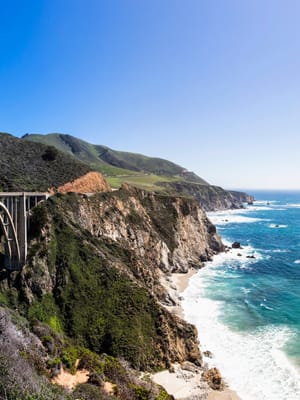
For dramatic coastal camping rather than flat beach boondocking, Kirk Creek is the West Coast answer. Sites sit on a bluff directly above the Pacific in Los Padres National Forest, with unobstructed ocean views and trail access down to the water. Reviewers consistently describe it as one of the most visually stunning campgrounds in the country, and the Highway 1 location makes it a natural anchor for a Big Sur road trip.
Primitive sites with no hookups, vault toilets, and picnic tables — run by the Forest Service, so fees are modest. No cell service to speak of. The trailhead to Sand Dollar Beach, one of the largest sand beaches on the Big Sur coast, is a short drive away. Rigs up to about 35 feet can make it, but the winding approach on Highway 1 makes anything larger genuinely difficult. Reservations are strongly recommended — this fills weeks out in summer and fall. Watch for poison oak on established paths.
Boondock-friendliness: 8/10 Permit required: Reservation via Recreation.gov
6. Cape Hatteras National Seashore — Outer Banks, North Carolina
The Outer Banks is legendary RV beach camping territory, and Cape Hatteras was the first National Seashore established in the US, which means the infrastructure is mature and the experience is dialed in. Four campgrounds — Oregon Inlet, Cape Point, Frisco, and Ocracoke — spread across the seashore give you real options. Oregon Inlet and Ocracoke are open year-round.
Oregon Inlet has 47 sites with a blend of electric-only and full hookups; Cape Point and Frisco run more primitive. The ORV permit program allows driving on designated beach corridors, and surf fishing, lighthouse access, and water sports give this one of the richer activity menus of any beach RV destination in the country. Seasonal bird closures can affect significant stretches of beach from spring through late summer — check the current closure map before you plan. Sites run roughly $20–$35 per night, with reservations available up to six months in advance.
Boondock-friendliness: 6/10 (semi-developed, wildly worth it) Permit required: ORV permit via Recreation.gov
7. Delaware Seashore State Park — Rehoboth Beach, Delaware
Sandwiched between the Atlantic Ocean and Indian River Bay on Delaware's southern coast, Delaware Seashore State Park is one of the most accessible true beach RV destinations on the mid-Atlantic seaboard — and consistently underrated compared to its more famous Outer Banks and Assateague neighbors.
The park runs two campgrounds on either side of the Indian River Inlet: South Inlet (151 full-hookup RV sites plus standard no-hookup sites, accommodating rigs up to 45 feet) and North Inlet (88 full-hookup sites, slightly larger lots, dog-friendly beach access nearby). South Inlet is a 500-yard walk to the ocean. North Inlet is a 150-yard walk. Neither puts you on the sand directly, but the beach access is legitimate, the location is hard to beat, and the surrounding area — Bethany Beach, Rehoboth, Dewey Beach — means you're never far from a meal, a brewery, or a boardwalk.
Campfires are permitted only in the communal fire rings. Sites are open, exposed, and can feel tight in peak summer. Reviews across camping communities consistently praise the park's proximity to both the beach and the boardwalk towns nearby. Reservations open up to one year in advance and summer weekends book fast. Nearby Cape Henlopen State Park offers a nearby alternative if sites are booked.
Boondock-friendliness: 4/10 (hookups available; strong mid-Atlantic base camp) Permit required: Reservation via Delaware State Parks; entrance and camping fees apply
8. Sunshine Key RV Resort & Marina — Big Pine Key, Florida Keys
Sunshine Key occupies a category of its own: a 75-acre private island in the lower Florida Keys, about 30 miles from Key West and within a mile of Bahia Honda State Park. It's not boondocking — it's a full-service resort with hookups, a marina, a fishing pier, a pool, sand volleyball, and watersports rentals including kayaks, paddleboards, and fishing charters. But parking your rig on an island in the Keys, with the Gulf of Mexico out your window and manatees in the marina, earns a spot on any serious coastal RV list.
Elite Waterfront sites sit directly on the water with full hookups at 30 and 50 amp. Premium sites are the next row back, most with glimpses of the water. The resort accommodates big rigs — 45-foot motorhomes and large fifth wheels are routinely seen here — and pull-through sites are available. Cell service in this stretch of the Keys is genuinely poor. Plan for that. The sunset pier access, the proximity to Bahia Honda, and the tropical island setting make the connectivity tradeoff easy to accept. If you're considering membership pricing for a resort like this, our breakdown of RV membership programs covers when Thousand Trails access actually pays off.
Part of the Thousand Trails network, so membership holders can access significant rate reductions.
Boondock-friendliness: 3/10 (full resort amenities; the location is the whole point) Permit required: Reservation required; rates vary by site tier
9. Bahia Honda State Park — Big Pine Key, Florida
Bahia Honda is consistently rated among the best state park campgrounds in the entire country, with water described as Caribbean-clear and sunsets that reviewers call some of the best they've seen anywhere. The park holds the only natural white sand beaches in the Florida Keys — accessible from both the Atlantic and Gulf sides — and the snorkeling, kayaking, and historic Bahia Honda Bridge walkway add depth that pure beach spots often lack.
Buttonwood Campground, the RV-accessible area, has electric and water hookups for rigs up to 50 feet. This is not a boondocking destination — it's a premium developed site in one of the most beautiful locations in the continental United States. Road noise from US-1 affects some sites; waterfront spots in Buttonwood offer the best balance of views and quiet. A set of oversized quick-dry beach towels earns its bag space here — the snorkeling and kayaking at Bahia Honda mean you'll be wet more than you're dry.
One of the hardest reservations to get in the Florida state parks system. Sites open 11 months in advance and fill immediately. Set a calendar reminder, book the morning your window opens, and don't look away from the screen.
Boondock-friendliness: 4/10 (hookups available; this is entirely about the location) Permit required: Reservation only; no walk-ups
10. Cape Blanco State Park — Port Orford, Oregon
Oregon's coast draws West Coast RVers every year, and Cape Blanco is consistently singled out as the standout coastal campground in the state. It sits at the westernmost point of Oregon — one of the westernmost points of the contiguous US — with dramatic cliffs, a working lighthouse, and the kind of remote, wind-swept scenery that makes people feel genuinely far from the world.
Full hookup sites and electric-only sites are available, plus a handful of primitive spots. This is a developed Oregon State Parks campground, not wilderness boondocking, but the coastal setting, consistent reviews, and access to miles of trails and undeveloped shoreline make it a legitimate destination. Horses Creek runs through the property. The beach below the bluffs is often completely empty. Wind here is not coastal breeze — it's relentless and can be genuinely ferocious. Awnings get destroyed regularly. The lighthouse tours are excellent, and the bluffs offer some of the best land-based whale watching on the Oregon coast during migration season. Salt and moisture at a site like this will find every unsealed gap in your rig — our RV maintenance checklist covers the post-coastal inspection items that most RVers skip until something fails.
Boondock-friendliness: 5/10 (hookups available; the experience is wilder than the infrastructure suggests) Permit required: Reservation via Oregon State Parks; seasonal fees apply
11. Galveston Island State Park — Galveston, Texas
For Gulf Coast RVers who want an accessible, well-maintained option with genuine beach access, Galveston Island State Park consistently outperforms its neighbors on review platforms. Beachfront camping on the Gulf side with electric and water hookups, plus a bayside area for birding, kayaking, and quieter evenings. Proximity to Houston makes it one of the most-visited beach RV destinations in the South.
This is a developed state park with hookups, not a wild experience. But beach-facing sites with morning surf views, solid facilities, and a well-run operation make it a practical, highly-rated choice for RVers who want Gulf Coast access without the complexity of primitive sites. It's also a strong entry point for first-time beach RVers who want to build comfort and confidence before attempting something like Padre Island. Using a portable misting system at a Gulf Coast site in peak summer isn't optional — it's the difference between sitting outside in the evening and retreating inside by 4pm. Before your first arrival at any of these parks, running through our RV setup checklist will save you the scramble of figuring out leveling and hookup sequencing with salt wind in your face.
Hurricane season and storm surge risk are real on Galveston Island — the park closes during storm watches and evacuation orders are taken seriously. Infrastructure has been reconfigured recently following hurricane damage, so some site layouts have changed. Be sure to call ahead for the most recent details. Spring and fall offer the best weather; summer is hot, humid, and crowded. Reserve early for holiday weekends.
Boondock-friendliness: 4/10 (hookups available; excellent entry point for newer beach RVers) Permit required: Reservation via Texas Parks and Wildlife; entrance and camping fees apply
One Last Thing Before You Book
For all eleven spots, verify current rules, seasonal closures, and permit availability directly with the land manager before you go. Conditions change, closures happen, and what was accurate when this was written may have been updated since. That five-minute confirmation call is always worth making. If you're heading somewhere truly remote — Padre Island, Race Point, Assateague OSV — our guides on building reliable off-grid power and filtration for water you're not sure about are worth a read before you pull out of your driveway.
FAQs
Can you camp on the beach in an RV?
Yes, beach RV camping is legal and accessible at dozens of locations across the United States. Some sites — like Padre Island National Seashore in Texas — allow you to drive directly onto hard-packed sand and camp for free with no designated sites. Others, like Cape Hatteras and Assateague Island, require ORV or OSV permits before vehicles can access the beach. Requirements vary significantly by location, covering vehicle type, rig length, holding tank capacity, and tire specifications.
What RV type is best for beach camping?
Motorized self-contained rigs — Class A, Class B, and Class C motorhomes — have the broadest access to beach campgrounds. Many ORV beach permit programs, including Race Point at Cape Cod and Assateague Island's Bull Pen area, explicitly prohibit trailers in on-sand camping zones. Shorter rigs (under 31 feet combined length) access more sites overall. Truck campers clear nearly every beach restriction and are the most versatile option for true primitive beach camping.
What does a boondock-friendliness rating mean for beach RV sites?
The boondock-friendliness rating used in this list reflects how self-sufficient you need to be at each location — not the quality of the destination. A score of 9–10 means no hookups, no water, and full off-grid management of your power, water, and waste systems is required. A score of 3–5 means hookups are available and the site functions more like a developed campground. The score tells you what to pack and prepare for, not whether the spot is worth visiting.
Do you need 4WD to camp on the beach in an RV?
For the first five miles of Padre Island National Seashore's beach camping area, two-wheel drive is generally sufficient on packed sand. Beyond that, 4WD is non-negotiable at Padre. At most ORV beach permit locations — including Race Point, Assateague, and Cape Hatteras — four-wheel drive or all-wheel drive is either required or strongly recommended, and permit inspections often verify drivetrain capability. Deflating tires to 15–20 PSI significantly improves traction on soft sand; a portable tire inflator is required to re-inflate before returning to paved roads.
How do you manage tank and water at a primitive beach RV site?
At no-hookup beach sites, fresh water must be fully onboard before arrival — there are no water connections at primitive spots like Padre Island or Race Point. Black and gray tanks need to be empty at arrival and dumped at designated stations, which at Padre Island is located near the Malaquite Visitor Center. Race Point requires rigs to leave the beach every 72 hours specifically for tank dumps. A gravity water filtration system can supplement freshwater reserves if potable fill stations are nearby. Solar and battery management are critical at sites without shore power.
What are the best beach RV sites on the East Coast?
The strongest East Coast beach RV destinations are Race Point at Cape Cod National Seashore (Massachusetts), Assateague Island National Seashore (Maryland), Cape Hatteras National Seashore (North Carolina), and Delaware Seashore State Park (Delaware). Race Point and Assateague offer true primitive on-sand camping for self-contained motorized rigs, while Cape Hatteras provides a mix of hookup and primitive sites across four campgrounds. Delaware Seashore is the most accessible full-hookup option in the mid-Atlantic region, with sites accommodating rigs up to 45 feet.
Is beach RV camping safe during hurricane season?
Beach RV camping along the Gulf Coast and Atlantic coast during hurricane season (June 1 through November 30) carries real risk. Galveston Island State Park closes during storm watches and follows mandatory evacuation orders. Padre Island National Seashore and Cape Hatteras are both in high-risk storm surge zones. Always monitor the National Hurricane Center's active storm tracker before and during any coastal trip between June and November. Most coastal campgrounds have cancellation policies that allow refunds during official evacuation orders — confirm this when booking.

Categories
Related Posts
Subscribe to the Swervia Newsletter
The best RV stories, tips, and destinations—expertly curated and always free.