How to Choose Between Compact Travel Trailers and Van Life as a Digital Nomad

You have a laptop, a reliable hotspot, and a boss who stopped caring where you work eighteen months ago. What you do not have yet is the right four walls to put around all of it. That is the decision that determines everything else — your focus, your sleep, your relationships, how you sound on Tuesday's client call, and whether you are actually living the life you planned or just managing a slightly more scenic version of stress.
Most remote workers who go nomadic spend months researching the wrong things. They optimize their productivity apps and debate hotspot carriers. They compare solar setups and mattress foam densities. And then they buy a rig based on what looked good in someone's YouTube series and spend the next year finding out what the algorithm left out.
This article is the part the algorithm leaves out. No sides taken, no highlight reels. Just the honest tradeoffs between two setups that can both work brilliantly — and both fail you completely — depending on who you are and how you actually travel.
What Is a Compact Travel Trailer — and What Counts as Van Life?
Definitions first, because this comparison only works if we're starting from the same place.
A compact travel trailer is a towable, non-motorized unit that hitches to a truck or SUV. In the compact category, units generally run between 12 and 24 feet in length, with dry weights from around 2,000 pounds on the lighter end up to 5,000 pounds for more feature-loaded builds. The structural signature of a compact travel trailer is separation: your living space and your vehicle are two distinct things. You drive one, unhitch, and your home stays put.
Van life, as the term is broadly used, means living full-time or long-term in a converted cargo or passenger van — either a factory-built Class B motorhome or a DIY conversion. High-roof full-size cargo vans are the most common platform, offering enough vertical clearance to actually stand up. The van is simultaneously your vehicle, your bedroom, your kitchen, and your office. Everything moves every time you move.
The structural difference shapes every other comparison on this list. It's not just about square footage or amenities — it's about whether your home and your transportation are the same object or two separate ones. If you are still deciding which broader RV category fits your life, our guide to what type of RV to buy walks through the full spectrum of options before you narrow to this choice.
Setup and Mobility: Which Lifestyle Moves Faster?
Speed of movement is one of the most consequential day-to-day differences, and it compounds quietly over months of full-time travel.
Vans win on raw departure speed. You wake up, pack your bedding, start the engine, and go. No leveling, no hookup disconnect, no walk-around checklist. A practiced van lifer can be rolling within fifteen minutes of deciding to move.
Compact trailers require a process. Disconnecting hookups, completing a hitch check, verifying brake controllers and trailer lights, doing a walk-around — for most people this runs 20 to 45 minutes depending on experience level. That cost shows up on departure. The return comes at the destination: once you park and unhitch, you have a vehicle again. Day trips, grocery runs, a spontaneous afternoon somewhere new — none of those require moving your home.
Urban access favors vans clearly. A truck-and-trailer combo needs wide roads, generous parking, and planning before you arrive. A van parks where any other vehicle parks, which matters if your work pattern keeps you near cities.
Where compact trailers surprise people is terrain flexibility in the other direction. Many can be towed by capable 4x4 trucks that handle rough access roads comfortably, and the lighter builds in the compact category can be pulled by mid-size SUVs — which opens up dispersed camping options that people assume require a more expensive vehicle setup. Our complete guide to boondocking without hookups covers the specific access and gear considerations for remote camping regardless of which rig you choose. If you are newer to towing, our guide to towing a travel trailer for the first time covers the full process, from hitch setup to highway technique.
Workspace Practicality for Zoom Calls and Deep Work
This is the section that determines whether remote work on the road is actually sustainable or just a permanent negotiation between your career and your living situation.
Van workspaces can be genuinely functional, but you are working within the same footprint as your kitchen, bedroom, and storage. Most van setups involve a fold-down table, a bench or swivel chair, and a laptop at whatever angle the conversion allows. Standing room depends almost entirely on whether you chose a high-roof configuration — standard-height vans do not give most adults room to stand. Background aesthetics for video calls can be managed with intentional design, but the limited visual depth means the camera almost always reveals that you are in a small space. A portable standing desk can add meaningful ergonomic range in either setup, particularly in a van where fixed furniture is limited to what the conversion allows.
Compact travel trailers — even in modest size ranges — often feature dinettes that convert into proper work surfaces, built-in seating at ergonomic heights, and floor plans with enough depth to give your video background real visual variety. The interior reads differently on camera: there is actual distance between you and the wall behind you, and that distance registers.
Here is where the video call question gets genuinely interesting for remote workers: a virtual background might seem like the obvious workaround, but it is not a reliable one. Virtual backgrounds require stable signal and processing headroom to render properly. On marginal wifi — which is a real and regular feature of off-grid camping life — they are often the first thing to degrade or drop entirely. The blurred background option is less demanding, but it still breaks down visibly on a weak connection. When your signal is mediocre, your actual physical background is your background. A trailer interior with depth and visual interest gives you more to work with in that scenario than a tight van interior does.
For sustained deep work — the kind that requires focus across several hours, consistent posture, and acoustic separation from the rest of your life — compact trailers generally offer better ergonomics. A dedicated workspace that is physically separate from your sleeping area is not a luxury when you are working full-time from a moving home; it is the difference between a sustainable routine and a slowly accumulating sense that you are always working from bed. Our deep dive on building an RV deep work routine goes further into the specific habits and physical setups that make focused work actually possible on the road. A quality pair of noise-canceling wireless headphones also goes a long way toward creating acoustic separation regardless of which rig you choose — campground noise is a universal issue. And if screen real estate matters to your work, a portable secondary monitor can transform either setup into a functional dual-screen workstation without taking up significant space.
Living Space and Daily Comfort
Square footage is the most obvious difference, and it is also the one that compounds most aggressively over time.
Vans typically offer between 60 and 100 square feet of total living space. That means a bed that may need to convert into a workspace each morning, a kitchen that amounts to one counter and a two-burner stove, and a bathroom situation ranging from a compact wet bath to a composting toilet behind a curtain to a gym membership and a good attitude. Storage requires radical discipline. Hosting another person — a partner, a friend, a dog over 40 pounds — begins to feel like a logistical negotiation.
Compact travel trailers in the 18-to-22-foot range reframe what is possible on the road. A bedroom that stays a bedroom. A bathroom with a shower that is not also the toilet stall. A kitchen with a full-size stove and a counter you can actually prep food on. Storage that does not require unpacking your camping gear to reach your work bag. For couples or anyone who has tried sharing a small space and knows what happens to a relationship when there is no such thing as a separate room, the livability difference is significant.
Shower access is a practical issue that van life content tends to underplay. Van life often means gym memberships, campground day passes, or portable solar shower setups outdoors. Compact trailers with enclosed wet or dry baths let you shower on your own schedule, whenever the tanks allow. That sounds minor. After two weeks of coordinating shower access around campground hours, it stops sounding minor.
Bed configuration is another daily friction point worth naming. Many van builds require physically rearranging the sleeping setup each evening, which is charming for a weekend and genuinely wearing over months. Compact trailers almost universally have a fixed bed in a dedicated area. You make it once.
NEVER BOUGHT AN RV BEFORE?
GET OURFREE 75-PAGE GUIDE TO BUYING YOUR FIRST RV
Fuel Efficiency and Long-Term Travel Costs
Neither setup is categorically cheaper. The cost structures are just different, and understanding which one matches your travel pattern matters more than comparing top-line prices.
Vans consolidate everything into one vehicle: one insurance policy, one maintenance budget, one set of tires. The initial price on a quality DIY conversion or a factory Class B can run from roughly $60,000 into six figures for newer builds, but there is no separate tow vehicle in the equation. The financial picture is simpler even when the upfront number is large.
Compact trailers introduce dual-vehicle math. You need a capable tow vehicle, and towing meaningfully impacts fuel economy — a truck or large SUV pulling a trailer can see fuel efficiency drop 30 to 50 percent on the highway depending on weight and aerodynamics. Across a full year of travel, that number is real. The counterweight is that the trailer itself typically costs considerably less than a comparable van conversion, and your tow vehicle is available for day-to-day use without the fuel penalty every time the trailer is parked. Our full breakdown of what full-time RV living actually costs runs both vehicle types through real annual budgets, including fuel, campground fees, insurance, and maintenance line items.
Campsite access adds another cost variable. Many state and national park campgrounds cap total vehicle length — including the tow vehicle — at 27 feet, which restricts options for longer trailer setups and requires planning. Vans access essentially any parking spot, and the culture around dispersed camping opens free or low-cost options that are simply not available to a rig with a trailer attached.
Off-season storage is a trailer-specific line item that surprises people who do not plan to full-time immediately. The trailer needs somewhere to live when you are not in it. RV storage runs anywhere from $50 to over $200 per month depending on region and facility. That adds up across a year faster than people expect.
Flexibility Once You Arrive
Dropping the trailer and having your truck back for the day is the compact travel trailer's most underrated quality of life feature, and it is one that is almost impossible to fully appreciate without experiencing it.
When your trailer is parked at a campsite for a week, you drive into town in a normal vehicle. You reach a trailhead the full rig would never fit into. You run errands, meet someone for lunch, explore a side canyon — all without moving your home. The separation of living space from vehicle sounds structural on paper. In practice, it is freedom.
Van lifers carry everything everywhere. Parking the van at a trailhead means leaving your entire home and all your belongings in a parking lot for hours. Getting groceries means navigating a large vehicle into spaces not designed for it. If something needs a repair, your bedroom and your office are in the shop.
That said, the van's version of mobility is real. You can leave any spot at any moment without a setup or disconnect process. If conditions change overnight — weather, noise, a spot that stops feeling right — you start the engine. There is no ritual, no checklist, just movement. For some travelers, that immediacy is the point.
Weather and Seasonality
Both rigs contend with the same weather. How well they handle it depends significantly on how they were built — and the honest answer is more complicated than the marketing suggests for both.
Vans live and die by their insulation and climate control, and the range is enormous. A well-built conversion with quality spray foam, insulated flooring, and a properly sized diesel parking heater can handle genuinely cold winters in real comfort. A cheap DIY build with minimal insulation can be miserable in the same conditions. The van's smaller interior volume means temperature changes are felt immediately — door-opening, thermal bridging from the metal body, even a change in cloud cover affects the space fast. In summer, a van without adequate ventilation and shading becomes an oven with a steering wheel.
Standard production travel trailers are frequently oversold on weather performance. Most use inexpensive foam insulation with R-values in the R-3 to R-5 range, which is well below what is needed for genuine cold-weather comfort. True four-season trailers — a specific, more expensive subset of the market — are built meaningfully differently, with heated underbellies, quality foam block insulation, tank heaters, and thermal windows. If all-season performance matters to you, it has to be a deliberate buying decision, not an assumption. The marketing term "all-season" is not standardized across the RV industry and should not be taken at face value.
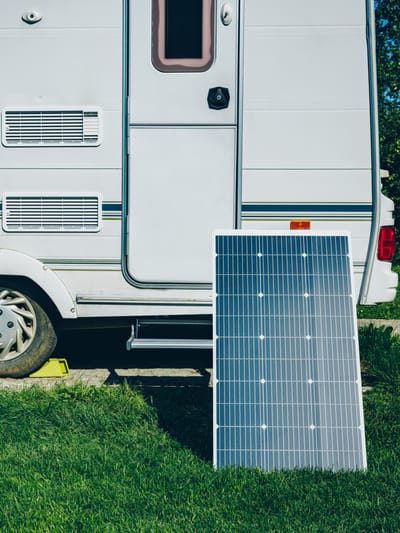
The short version: a quality van conversion can outperform a standard-spec travel trailer in cold weather. A purpose-built four-season trailer can outperform most van builds. What you get depends almost entirely on what you buy, not what category it falls into. Our RV solar setup guide covers how to build an off-grid power system appropriate for either rig, including cold-weather battery performance considerations.
Snow driving favors the van on logistics. Towing a trailer through mountain passes or icy roads adds complexity and risk that solo van driving avoids. If your travel pattern involves regular winter movement through mountain regions, that is a real planning variable, not a theoretical one.
Stealth, Urban Parking, and Public Perception
If city access and overnight flexibility matter to your lifestyle, this comparison has a clear tilt — but it comes with caveats worth naming.
Vans are naturally stealthy. A plain cargo van parked on a residential street at night reads as a commercial vehicle in most urban contexts. Nothing on the exterior announces habitation. That low profile opens overnight options that simply do not exist for a trailer setup. The legality of vehicle dwelling, however, varies enormously by municipality — some cities have explicit ordinances against sleeping in vehicles, others are effectively permissive, and enforcement is rarely consistent. Doing local research before depending on urban overnight parking is necessary, not optional. Resources like Freecampsites.net and Recreation.gov can help identify legal dispersed camping on public land within driving distance of urban areas for both setups. Our guide to the best RV internet for remote work also covers how to maintain reliable connectivity whether you are parked in a city or camped on public land.
Compact trailers are not stealthy. A trailer is identifiable from a block away, and most urban overnight situations are not designed for them. They require established campgrounds, RV parks, or dispersed public land with enough space and clearance to set up properly. If your lifestyle is centered on cities, this is a real constraint on where you can sleep on a given night.
On public perception more broadly: vans read ambiguously, which works in their favor in urban environments. A compact travel trailer reads clearly as a recreational vehicle, which is entirely positive at campgrounds and outdoor destinations, and draws more attention anywhere people are not expecting to see one parked for the night.
Resale Value and Exit Strategy
Full-time remote workers tend to think in terms of flexibility and reversibility. Understanding the secondary market for each setup before you buy into one is worth the time.
Travel trailers from established manufacturers hold their used market value reasonably well. Without an engine or drivetrain aging out, the depreciation curve is gentler than on motorized vehicles. A well-maintained trailer from a reputable builder retains recognizable value — and the used trailer market is active, with buyers who know what they are evaluating.
Factory van conversions also hold value well, sustained by ongoing demand in the van life market. DIY conversions are harder to price. A beautifully built custom van can sell at a premium, or it can sit on the market for months while buyers struggle to assess the systems work they cannot see. The uncertainty is a real variable.
Upgrading from one trailer to another leaves your tow vehicle untouched. Upgrading a van setup means selling the whole vehicle. If your lifestyle changes — more people, more space, a decision to stop traveling — exiting a compact trailer is typically a simpler transaction than untangling a van setup. For anyone approaching this as a first purchase, our first-time RV buying guide covers negotiation, inspection, and financing considerations that apply equally to trailers and van conversions. A solar-powered wireless backup camera is worth factoring into any trailer build or purchase — both for day-to-day towing safety and as a practical upgrade that adds genuine resale value.
Lifestyle Personality Fit
Every section above is about tradeoffs on paper. This one is about whether the life actually fits.
Vans reward frequent movers: people who travel solo or with a close partner, want to stay flexible in urban environments, and find satisfaction in the discipline of minimalism. The van life identity is real. There is a community, a visual language, and a culture that many people find genuinely energizing. If your natural rhythm is to spend a few nights somewhere and keep moving, the van's frictionless departures match your pace perfectly. Our roundup of underrated US cities for RV digital nomads identifies the specific places where the remote work infrastructure, outdoor access, and RV community align well for both van and trailer setups.
Compact trailers reward deliberate travelers: people who prefer to arrive somewhere interesting and stay for a stretch rather than chasing the next spot. They suit couples who have tried sharing a small space and know they need defined areas for sleeping and working. They suit remote workers who need a consistent, ergonomic workspace more than they need to move on a Tuesday. They suit people who want to close the laptop at the end of the day and sit somewhere that does not also contain their unmade bed. Our collection of RV office setup ideas covers the specific gear and layout approaches that translate into both trailer and van environments, worth reviewing before you commit to either floor plan.
Solo travelers can thrive in either. Couples almost universally report that the extra space of a compact trailer changes the interpersonal math of living together on the road in ways that no amount of "we just need to be flexible" can replicate.
Neither identity is better. But they are genuinely different ways of living, and buying the wrong one because a lifestyle looked seamless in someone else's content is an expensive lesson.
So, Is a Compact Travel Trailer or Van Life Actually Right for You?
A few honest questions tend to cut through the noise faster than any spec sheet.
How often do you actually move? If multiple times per week, the van's frictionless departure rhythm is a real match. If you are more of a "plant for ten days and relocate" traveler, the trailer's setup process is unlikely to bother you.
How central is city access to your work and your life? If you cycle through urban areas regularly, the van's flexibility is a meaningful operational advantage. If your instinct is to head for public land and open country, that advantage matters considerably less.
How important is bathroom privacy and shower independence? If very, the trailer's dedicated bathroom is a strong pull. If you are genuinely comfortable working around campground facilities, the van's compromises are livable.
Do you want your home and your vehicle to be separate things? If dropping the trailer and having the truck available for the day sounds like freedom, the compact setup is your pace. If managing two vehicles sounds like friction, the van's simplicity is the better fit.
What environments actually excite you? Remote desert access, coastal campgrounds with hookups, cities every few days — each has a rig that fits it better. Be honest about the answer, not aspirational about it. Our RV healthy living guide covers how to maintain fitness and wellness routines across all of these environments, since the physical demands of life on the road are part of the decision too — not just the square footage.
Neither setup is a shortcut. Both require more adaptation and problem-solving than the highlight reels suggest. The right choice is the one that matches how you actually travel, not how you would travel in a frictionless world where the wifi is always strong and the campsite is always level.
Start there. The rig follows.
Whichever way you lean, the free Ultimate RV Buyer's Guide covers both categories in detail, plus the financing and inspection steps that come next.
FAQs
Is van life or a travel trailer better for working remotely on video calls?
Compact travel trailers generally perform better for video calls because their larger floor plans create real visual depth behind you, whereas van interiors often reveal that you are working in a very small space. Virtual backgrounds are an imperfect workaround — they degrade on weak connections, which are common in dispersed camping scenarios. A trailer's dedicated workspace with actual background depth gives you more control over how you appear on camera, particularly during marginal signal conditions.
How much does a compact travel trailer cost compared to a van conversion?
Compact travel trailers in the 18-to-24-foot range typically cost between $20,000 and $55,000 new, with quality used options starting lower — though you also need a capable tow vehicle, which adds $30,000 to $60,000 or more. Factory Class B van conversions run from roughly $70,000 to well over $100,000 new. DIY van conversions vary widely based on the base vehicle and build quality, typically ranging from $25,000 to $60,000 all-in. Neither category is categorically cheaper; the cost structures are simply different.
Can you boondock with a compact travel trailer the same way you can with a van?
Yes, though with more logistics. Many compact trailers can be towed by capable 4x4 trucks to dispersed BLM and Forest Service land, and lighter-weight models expand your access to tighter spots. The difference is that a van can park essentially anywhere a passenger vehicle can, while a trailer requires routes and sites with adequate clearance and turning radius. Power and water independence are achievable in both — a well-equipped trailer with solar and sufficient tank capacity can manage extended boondocking without hookups.
What are the biggest hidden costs of travel trailer ownership for remote workers?
The most consistently underestimated costs are the tow vehicle fuel penalty (30 to 50 percent reduced fuel economy while towing), RV storage fees when not traveling ($50 to $200-plus per month), and the additional maintenance of running two separate vehicles. Tire replacement on a travel trailer adds another line item most first-time buyers underestimate. On the van side, the biggest hidden costs tend to be conversion quality problems that reveal themselves over time and the high purchase price of factory Class B units.
How do I decide between a van and a travel trailer if I work remotely and travel solo?
Solo travelers can thrive in both setups. The decision tends to come down to movement frequency and workspace needs. If you relocate multiple times per week and prize the ability to park anywhere, the van's simplicity and urban flexibility are hard to beat. If you tend to stay in one place for one to two weeks at a time, work long hours that benefit from a dedicated desk, and want a bathroom you control, a compact trailer's livability advantages accumulate quickly. Be honest about your actual travel rhythm rather than the aspirational version of it.
What should I look for when test-driving or inspecting a compact travel trailer before buying?
Check the roof seams and any exterior seals for evidence of water intrusion, which is the leading cause of long-term structural damage in travel trailers. Open every cabinet and closet and look for soft flooring near the seams — soft spots indicate past or current moisture issues. Test every electrical system: water pump, slide-outs if applicable, all lights, and the charge controller if solar is included. Verify the insulation specification if four-season use matters to you — many trailers marketed as all-season use R-3 to R-5 foam, which is insufficient for winter camping in most climates. Ask for service records and, if buying used, get an independent RV inspection before committing.







Categories
Related Posts



Subscribe to the Swervia Newsletter
The best RV stories, tips, and destinations—expertly curated and always free.