
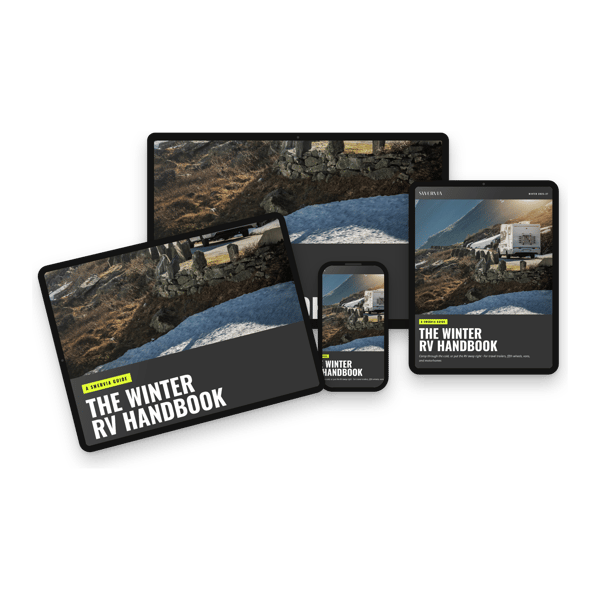
THE WINTER RV HANDBOOK
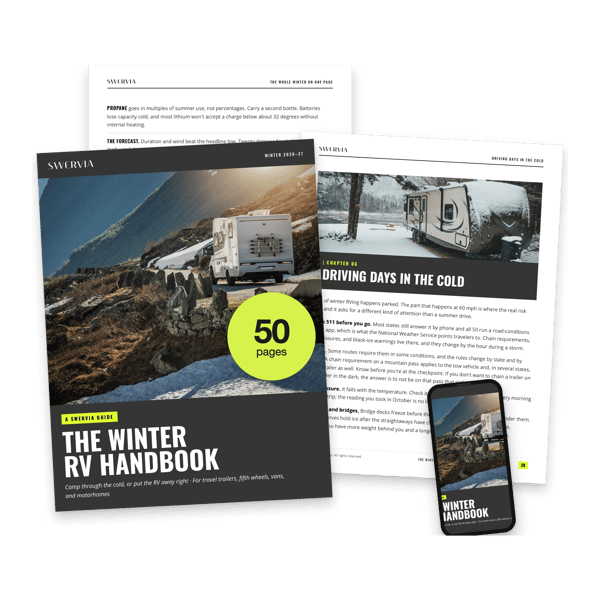
Winter with an RV usually goes one of two ways: you put it away properly, or you keep using it and head for the cold, the desert, or somewhere in between. Either way, a few small mistakes can turn into a split fitting, a frozen hose, or a very expensive weekend. This [PAGE COUNT]-page handbook shows you what to do from the first hard freeze to the winter trip you've been planning all year.
✔️ THE FIRST DECISION: STORE YOUR RV, OR KEEP CAMPING
✔️ THE 14-STEP WINTERIZING ORDER, USING ANTIFREEZE OR COMPRESSED AIR
✔️ HOW TO KEEP YOUR WATER SYSTEM FROM FREEZING WHILE YOU CAMP
✔️ THE SNOWBIRD TIMELINE, PLUS PUBLIC LAND OPTIONS FOR WINTER
✔️ [PAGE COUNT] PAGES, PLUS THREE PRINTABLE CHECKLISTS
✔️ OFFLINE-READY PDF THAT WORKS WITHOUT A CELL SIGNAL
Every fall, people winterize their RV, then realize a few weeks later they actually wanted to use it. That's where things get confusing. Before you drain anything, figure out what kind of winter you're having. Store it. Camp in it. Or do a little of both. Once that's clear, the rest gets much easier.
Storing it? The handbook takes you through the job in the right order, whether you're using antifreeze or compressed air. It covers the easy-to-miss stuff, too: the outside shower, the ice maker line, the check valve behind the city-water inlet. Skip the water heater bypass and you pump six to ten gallons of antifreeze into a tank you already drained.
Still camping? Then don't winterize it. Your job is different: keep the water from freezing, keep the heat where you want it, and make sure you have enough propane to get through the night. The handbook walks through all three, plus the booking timeline, because the popular snowbird parks fill six to twelve months ahead.
Travel trailer, fifth wheel, van, or motorhome. Parked for the season, used all winter, or somewhere in between. Start with your plan, and the handbook takes it from there.
GET THE HANDBOOK FREE, STRAIGHT TO YOUR INBOX.
KNOW WHAT KIND OF WINTER YOU'RE PLANNING
Putting it away, camping through the cold, or doing both. Figure that out first and you'll know what to drain, what to buy, and what to book.
KNOW HOW TO WINTERIZE WITHOUT GUESSING
Fourteen steps in the order that makes sense, using antifreeze or compressed air. Set the regulator to 30 PSI, never over 40 unless your manual says otherwise, and don't forget the P-traps.
KNOW HOW TO KEEP YOUR WATER FROM FREEZING
The hose is usually the first trouble spot. A heated hose helps, and so do the details around it: skirt the base, manage the vents, and don't let a cold snap turn the plumbing into your next repair bill.
KNOW WHERE TO GO WHEN IT GETS COLD
Five popular snowbird regions, when people start booking them, public-land options for the season, and the questions worth asking before you pay for a winter site.
Every drain, valve, and fixture in the order you'll actually work through them, from the black-tank flush to the reminder over the city-water inlet. Print it, save it, or tape it inside a cabinet.
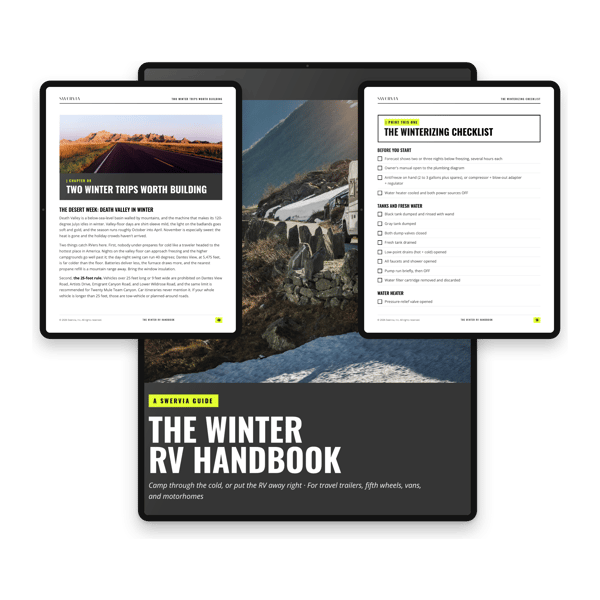
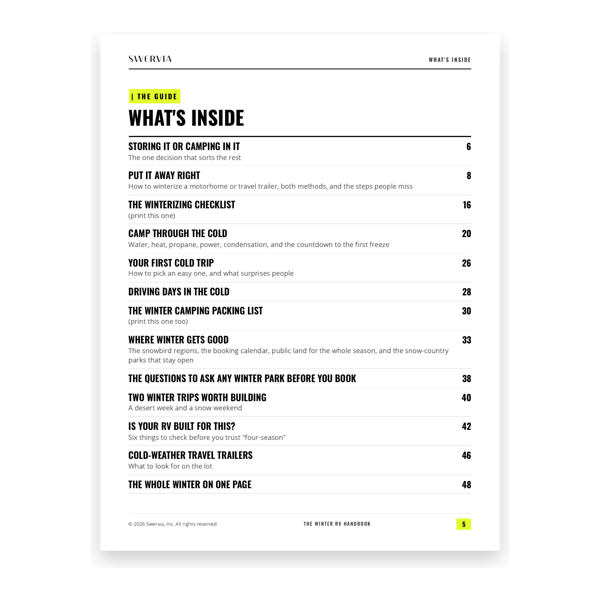
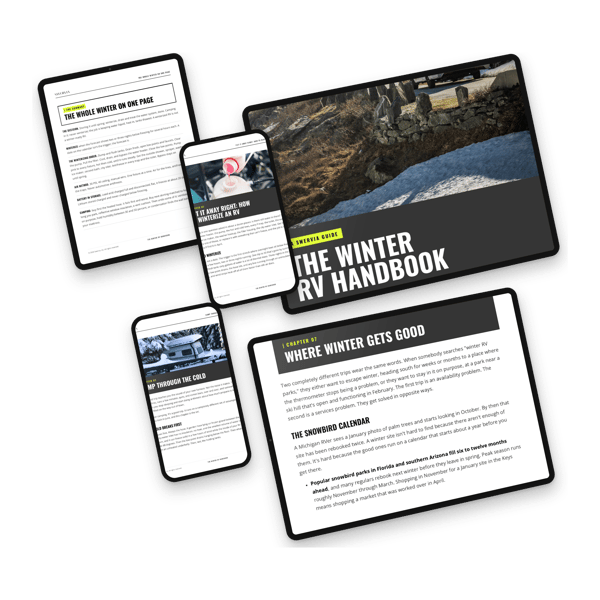
Winterizing both ways, keeping water and heat working, propane, condensation, cold-weather driving, snowbird timing, public land, and six things to check before you trust a "four-season" badge.
Is the water actually on? Is the dump station open? Do they plow the sites or just the main loop? What's the monthly rate, and is electric included? This printable list gets you the answers before you arrive, instead of the hard way.

NEVER FIND A SPLIT FITTING IN SPRING AGAIN.
▷ DECIDE WHETHER YOU'RE STORING OR CAMPING BEFORE YOU START
▷ FOLLOW THE WINTERIZING STEPS IN THE RIGHT ORDER
▷ KEEP THE WATER SYSTEM WORKING THROUGH A REAL FREEZE
▷ START LOOKING FOR WINTER SITES BEFORE THEY'RE ALL GONE
▷ LEARN WHAT YOUR RV NEEDS INSTEAD OF TRUSTING A STICKER
We're Swervia, and we build guides for RVers who'd rather know how things actually work than find out the hard way. We wanted answers to the questions that come up every winter: why the hose freezes first, what happens when you forget the water heater bypass, how much air pressure the plumbing can take, why a battery bank that held fine on shore power can struggle off-grid, and how a January site in the Keys somehow disappeared months before the weather turned cold. So we went through the details, checked the numbers, and put the useful stuff in one place. That research is the handbook. It's free, it works with zero signal, and it's yours in about a minute.
GET THE HANDBOOK. BE READY FOR THE FIRST FREEZE.